Kirtipur
Another ancient city in Nepal, Kirtipur is the home base of the Newars, who call it Kipoo. It is located in the Kathmandu Valley, 5 km south-west of Kathmandu. The city was listed as a tentative site for UNESCO in 2008.
The name Kirtipur comes from the Sanskrit terms Kirti or glory and pur or city as well as the Kirat Kingdom of Yalamber’s dynasty. The colloquial term used for the city is Kipoo. Originally a Newar foundation, Kirtipur is still a centre of Newar culture. The southern part of Kirtipur is surrounded by the ChampaDevi Hill. On Nepali new Year or Bishak 1, people round the Kathmandu Valley hike up to the hill. It has many temples, gumbas and churches. Due to the presence of Tribhuvan University, Kirtipur is a popular area for out-of-town students and professors to rent houses and they are major contributors to the local economy.
Kirtipur’s history dates from 1099 A.D. It was part of the territory of Lalitpur at the time of the invasion of the Kathmandu Valley by the Gorkhali king Prithvi Narayan Shah in the 18th century. Kirtipur has initially been the capital of the Kathmandu Valley and was always known to be a land of rebels. King Prithvi Narayan Shah invaded the town in the 18th century when it was a part of Patan, and eventually, Kirtipur broke away and became a separate kingdom. In 1767, Kirtipur was annexed to the Gorkhali kingdom by Prithvi Narayan Shah following the Battle of Kirtipur. He conquered the town on his third attempt, after entering it by trickery. After this, he cut off the noses of the people, both male and female, over 13 years of age in the city. In 1767, the town was brought back again into the kingdom, after 23 failed attempts by the King to conquer it. These battles, later on, came to be known as the Battle of Kirtipur. As an aftereffect of these battles, the town became an anti-monarchy due to the negligence of the administration and lack of development under the former monarch. Consequently, in 2006, Kirtipur again became the hub of an uprising against the monarchy in Nepal.
Offering a breathtaking panoramic view of the valley, the town hides some of the best Newari restaurants in the valley. Being vehicle free, the town is well safeguarded and is ideal for strolling and wandering in the mornings and evenings.
The Bagh Bhairab Temple is one of the most popular temples dedicated to the angry incarnation of lord Shiva in the form of an angry tiger. This deity is regarded as the guardian of Kirtipur and the locals call it Ajudeu, a grandfather god. Bhairab, the most terrifying and awful form of Shiva, is the destroyer on one hand and the guardian on the other. Ceremonial rituals in relation to the important events of life such as rice-feeding, puberty, marriage and even the construction of houses cannot be done without propitiating this deity in most of the towns and cities of Nepal.
Bagh Bhairab is mainly worshiped by the Munsi Newars. Each of the male family members, on a yearly basis, are supposed to take the chest of Bagh Bhairab turn by turn and keep it in a secret room and worship it twice a day. It is believed that any wrong method applying for worship might curse the individual. Denial for taking the chest home accounts for a fine equivalent to US$2000.
The present three-storeyed temple of Bagh Bhairab, probably built in the 16th century, stands in the brick-paved rectangular courtyard with rest houses around it. Some small shrines and stone idols are spread over the courtyard. The main gate is at the southern side of the courtyard. There are two other gates on the eastern and western sides. The two roofs of the temple are made of tiles, while the third is covered with gilt copper. Wooden posts with the carvings of Hindu gods and goddesses adorn the temple in addition to supporting its roof. They have been installed in between windows of the second storey, and the names of the carved deities have been finely cut out below them on the pedestals.
There are eighteen pinnacles: one on the first roof, six on the middle and eleven on the top. Beneath the eaves of the first roof there are very old but faded murals depicting the stories of Ramayan. Maha Bharat and the various manifestations of Durga, the mighty goddess. These paintings are frescoes in red with white plaster background. At the right side of the main gate of the temple there is Hifa Dyo, the god of blood sacrifice is allowed directly to Bagh Bhairab, all animal offerings here are made to this deity just like the animal sacrifices are made to Kumari, a stone idol, placed at the second gate in the left side of Chandeswori in Banepa and to the Chhetrapal which is at the very beginning of the final series of the steps to the temple of Khadga Jogini in Sankhu.
There are two torans over Hifa Dyo. They bear very fine cuttings of Asta-Matriks, Asta-Bhairabs and other gods and goddesses. In the western wall of the temple there is a hollow space regarded by the local people as Nasa Dyo, the god of music and dance. Bagh Bhairab made of clay has been enshrined in the left side corner in the temple. The three glass-eyed tiger-god is tongue-less and tooth-less but covered with silver and copper plates and heavily ornamented. This deity as mentioned in the stone inscriptions has been called Bagheswor or the tiger god, Bhimsen Bhattarak or the governing deity, Gudei Sthanadhipati or the lord in the form of tiger and Ajudyo, the ancestral god. Locals regard this deity as the embodiment of prudence, knowledge, productivity and strength to resist all evils. Hence, the auspicious ceremonies such as weddings, Bratabandha or the rite of passage for adolescent boys, Pasni or the rice-feeding ceremony and other ritual performances in Kirtipur are done only after a ceremonial worship to this deity.
Chilancho Stupa is a Buddhist shrine is situated on the southern hill. Built by Emperor Ashoka back in 1515, Chilancho Vihar or monastery is situated on the eastern side of Kirtipur. Constructed in the medieval period, it has an inscription of Nepal Samvat 635 or the Licchavi period. It is one of the most important historical stupas of this region. In Nepal Bhasa, the word Chilan means immortal and the word Cho means Hill. Therefore, its literal meaning is the immortal god situated on the hill. The stupa is about 9.0-10.5 high on a quadrangular base. On all four sides, there are small chaityas. The dome is plastered white.
The Uma Maheshwor Temple, locally known as Kwacho Dega, is one of the important heritage sites of Kirtipur. This pagoda-style three-storied temple is situated at the highest point of Kirtipur at 1414 m . Since this temple is at the top of the hill, one can enjoy picturesque view of the Kathmandu valley and mountains like Langtang, Dorge Lakkpa, Chobhu Bhamure, and Gaurishankar. The temple was constructed in 1655 A.D. by Rautra Vishwanath Babu, a son of King Sidhhi Narsinga Malla. It was destroyed in an earthquake in 1832 A.D. After remaining dilapidated for about a century, it was restored in 1933 A.D. after it was again destroyed by an earthquake. The restoration process was completed only in 1982.
There is an artistic stone gate at the entrance. On each side of the stone staircase leading to the temple is a stone elephant, with sculptures of Bhimsen and Kuber as protectors of the temple. The main deities in this temple are standing Lord Shiva and Parvati. There are other images of deities like Sarasvati and Mahismardini on false doors around temple. The wooden doors, pillars, and beams are crafted with artistic figures of different gods and goddess such as Astamatrika and Asta Bhairav. Similarly, erotic figures are also carved in wooden beams. According to archeologists, these figures on beams have tantric values. The bell on the northern side of temple was cast in 1895 by Gillett & Johnston Founders, Corydon. It was one of the four quarter bells of Ghantaghar of the central Kathmandu and was reallocated to this temple after the Ghantaghar was destroyed by the earthquake in 1933.
The primary water source of Kirtipur is Dev Pukku, which is fed by underground water. Visitors can also see the well preserved Royal Palace here, to the left of the tank. Other than this, the courtyard of the Bagh Bhairab Temple is also fantastic and well maintained, and is a must visit. The Naya Bazaar or the New Market is located at the foothill, and this is where all trading and commerce take place. The market also houses the Thai style Theravada Buddhist Temple.
Nagarkot
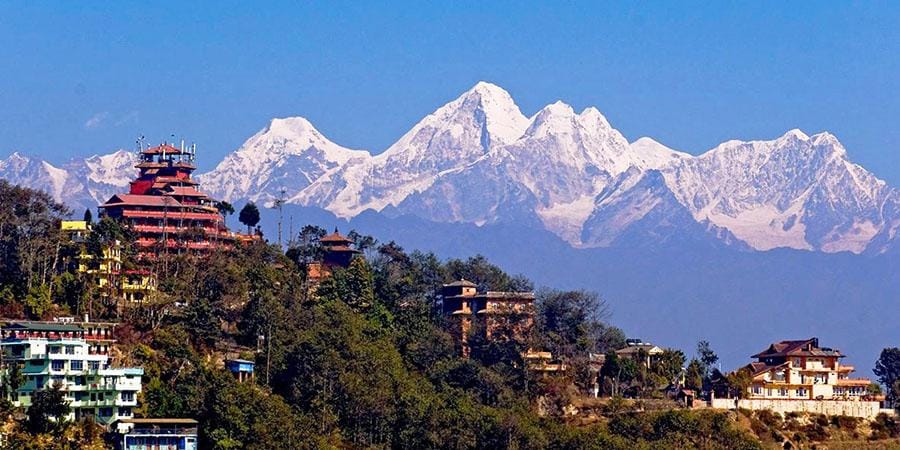
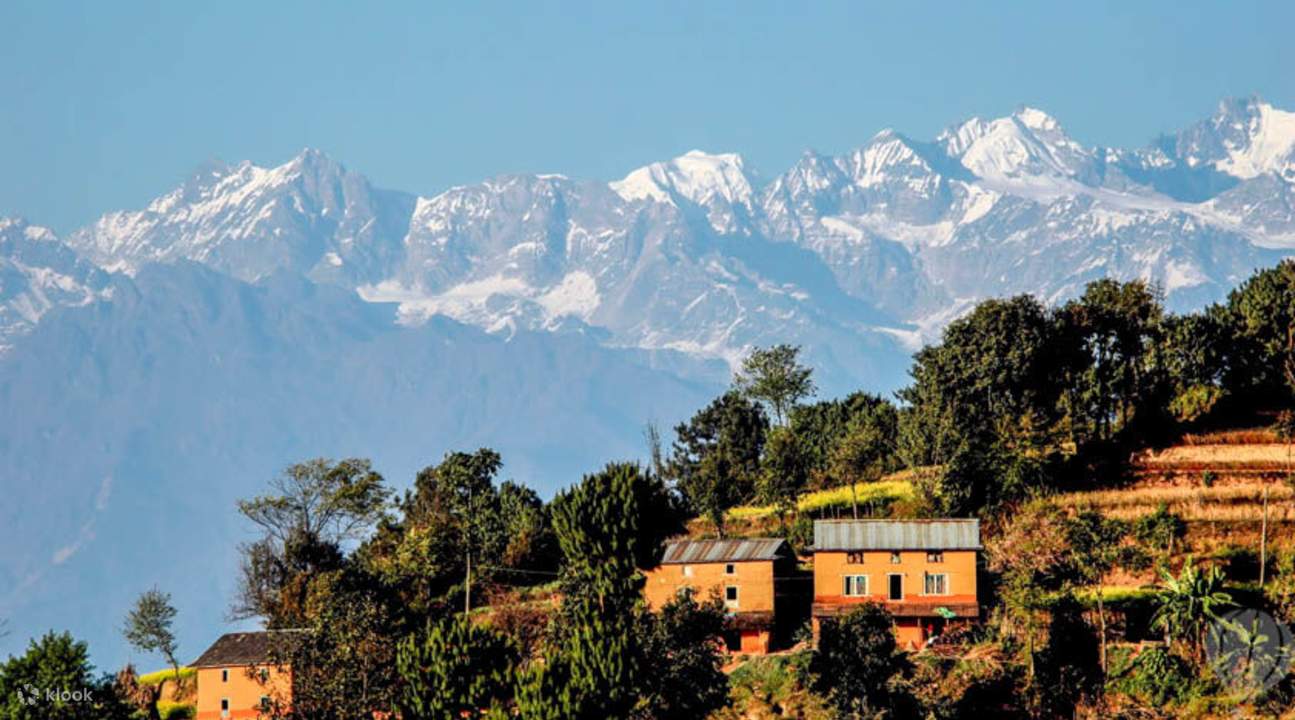
Located 28 km northeast of Kathmandu, Nagarkot offers one of the best views of the Himalayas in the entire region as it is on an altitude of 2000 m. Perched at the edge of Kathmandu Valley, Nagarkot gives one of the widest panoramas of the Himalayan ranges – one can spot eight out of the 13 Himalayan ranges from there. The Annapurna, Manaslu, Langtang, Jugal, Everest, Numbur, Ganesh Himal and the Rolwaling ranges can be seen from Nagarkot on a clear day.
An erstwhile summer retreat of Nepali, Indian, and British royalty, this village rose to fame recently after being rediscovered by tourists. The idyllic village sits serenely in the midst of nature; the only sounds are the birds chirping and the breeze whistling through the pines.
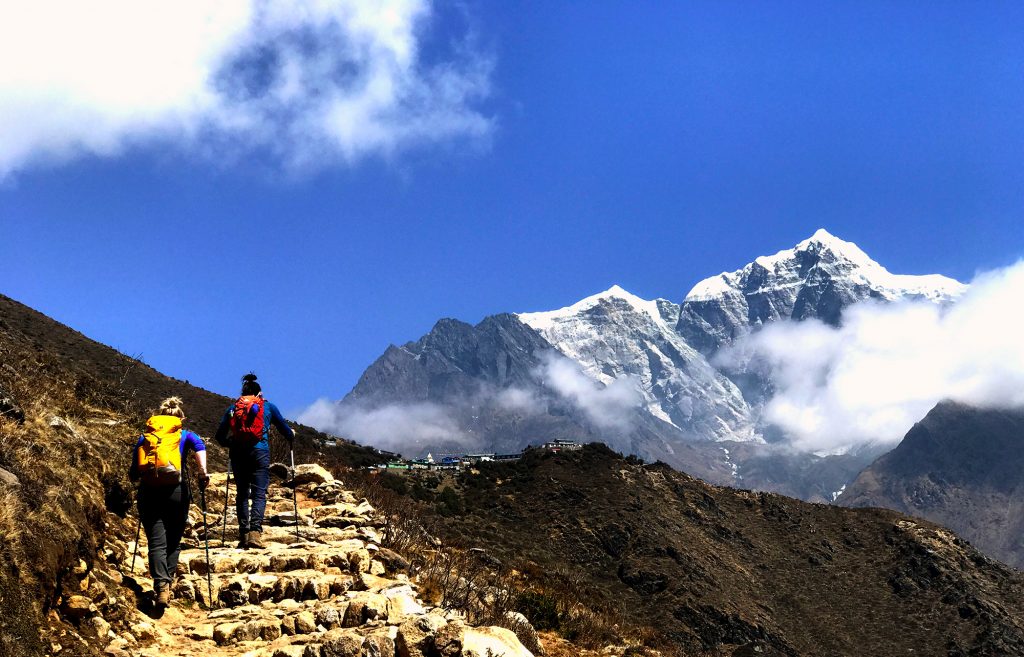
For nature lovers and outdoor enthusiasts, there are many hiking opportunities in and around Nagarkot. Among them, the Nagarkot eco trail along with the Nagarkot panoramic hiking trail are the most popular ones. It is also possible to do paragliding with Everest view in Nagarkot. Situated in a strategic location, Nagarkot was an ancient fort of the Kathmandu valley built to monitor the external activities of other kingdoms. Later, it became a summer retreat for the royal family before becoming popular as an international hill station.
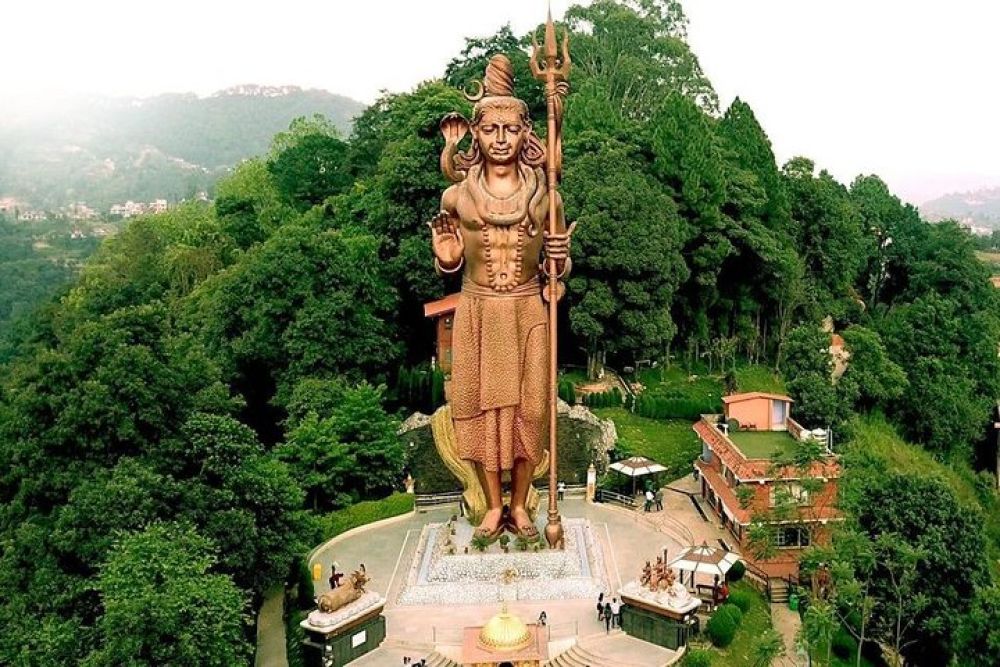
Completed in 2011, the Kailashnath Mahadev Statue in Sanga is the world’s tallest Shiva statue and the second tallest Hindu deity statue after Bali’s Garuda Wisnu. The iconic 144-feet-tall structure presents Lord Shiva in the hand gesture or mudra of blessing, surrounded by 12 Shiva lingams, and is made of copper, concrete, zinc and steel. The views of the Himalayas and Kathmandu Valley are alone worth the hike to the statue.
At an elevation of 2,195 metres, Nagarkot commands magnificent panoramas of the Himalayas, Everest and Kathmandu Valley, particularly at sunrise. With eight ranges visible from town, namely Annapurna, Manaslu, Ganesh Himal, Langtang, Rolwaling, Numbur, Mahalangur and Jugal, there are fantastic sunrise viewpoint hikes in Nagarkot. The most famous spots include Nagarkot Nature Trail, and Nagarkot Geodic Survey Tower, best visited between 5 and 5:45 am.
The Nagarkot View Point Tower or Geodic Tower, offers a 360-degree vista of eight Himalayan mountain ranges and is considered the town’s best sunrise viewpoint. This observation deck sits at the end of an hour-long east trek and has a steel staircase one can climb for views of Everest, terraced farms, villages, pine forests, and national parks. Binoculars are recommended.
The first half of the larger Nagarkot Panoramic Hiking Trail, Nagarkot Nature Trail, is a six-kilometre-long leisure walk circuit in the Himalayas. This initial trail is a 1-hour walk, running through a coniferous forest with tall pines overlooking rolling valleys, villages and terraced rice farms, and is less steep than the remainder. It starts from Danda Gaon and ends at Kartike Village.
The Nagarkot Panoramic Hiking Trail is a 12-kilometre-long hike famous for rewarding views of the Himalayas, countryside, villages and rice terraces. It includes the Tamang Village Walk and the Nagarkot Nature Trail and can be covered on foot in under 3.5 hours. In addition, there is a viewpoint explicitly built to watch the sunrise over Everest. Hikers would make one whole loop of the villages and coniferous jungle on this trail.
Commanding some of Nepal’s most awe-inspiring views of the Himalayas, the Nagarkot Buddha Peace Park Hiking Trail is a leisure hike from Nagarkot town to Buddha Peace Park. The trail is eight kilometres long, leading through pine jungles, quaint villages, viewpoints and terraced plantations in the mountains. At the end is a massive golden Buddha depicting “Bhumisparsha Mudra” amidst manicured gardens.
Amidst the snow-tipped Himalayas and valleys out of the crowded city area, paragliding in Nagarkot offers a quintessential adrenaline rush and views of Everest. The takeoff site is Lapsiphedi at an elevation of 1,905 metres, from where one can paraglide past the Annapurna, Manaslu, Ganesh Himal, Langtang and Jugal ranges with their professional guide pilot. Tandem paragliding lasting 30 minutes costs around NPR 10,224.
Chitlang
An ancient Newari village, Chitlang is surrounded by the Chandragiri hills, and is acclaimed as one of the most popular stops in the old trading routes from Tibet to India. Chitlang also serves to be the most preferred destination from Kathmandu for hiking as it is home to more than 100 species of birds, making it a haven for ornithology.
Inscriptions dating back to the Lichchavi era have been found there. Among historians, there was confusion of whether Licchavi King Udaydev was throned there or not but the inscriptions at Ganeshthan of Chilang Village proved that he was made king at that time. According to an inscription found in Toukhel, Amshubarma had given the land to shepherds and established a settlement for shepherds there, Nhulgaun and Kunchhal of Chitlang. Some historians believe that these people, called Gopalis are the descendants of rulers of the Gopal era.
The trail in Chitlang came to be known as the Rolls Royce trail. In 1900s automobiles were only for the royalties and rich aristocrats and foreign dignitaries, and this trail was used to for their transportation, that too not on wheels, but on bamboo poles borne by 60 porters, while hymning the Nepalese cry- ‘hoste- hainse’. In 1940 porters carried a 1939 Daimler-Benz gifted to King Tribhuvan by the then German Nazi Leader Adolf Hitler. The vintage car is kept on display at the Narayanhity Palace Museum.
Chitlang hosts multiple cultures, including the Tamang, Khas, Newar and Brahmin. Chitlang celebrates many Jatras and festivals throughout the year, inheriting the culture of Patan as once it was under rule of Lalitpur or Patan principalities in the Malla era and of Kathmandu as it is proximate to it. The dominant religion of the village is either Hinduism or Buddhism. During the Red Machhendra Nath Jatra at Lalitpur, Puja used to be collected from Chitlang village too. A small temple of Karunamaya or Machhindra Naths still stands at North East to Tahaphale of Chitlang. Similarly, showing its connection to Kathmandu, it celebrates the yemba thanegu festival similar to small scale Indra jatra of Kathmandu. Kartik Purnima Nach is the most popular cultural event in Chitlang. It is basically celebrated on the day of Tripurari Poornima, which is believed to be when Lord Shiva defeated Tripurasura. In Nepal, this celebrated with a religious dance.
Located just off the main street of Chitlang, the Swochhanda Bhairab Temple is an important place of worship for the locals. It is quite a calm spot and is off the radar for most tourists but still worth a visit. Resembling seven taps set in stone, Satdhara is another popular place to visit in Chitlang. It is a small trek of about an hour to get to these falls. One can witness the true Newari culture and customs while there. A scenic, open plain set against the backdrop of mountains, Bhedafarm is purported to be Nepal’s largest ground. Located close to the Markhu and Kulekhani villages, it has been used as a backdrop for a few film songs as well. At the topmost point of the Lamicchane village lies Shikhardham, which is a well-known Brahmin settlement popular for its Shiva Temple. It is said that one can get a glimpse of the Brahmin way of life here and it is nonetheless, a scenic outpost to admire the valley.
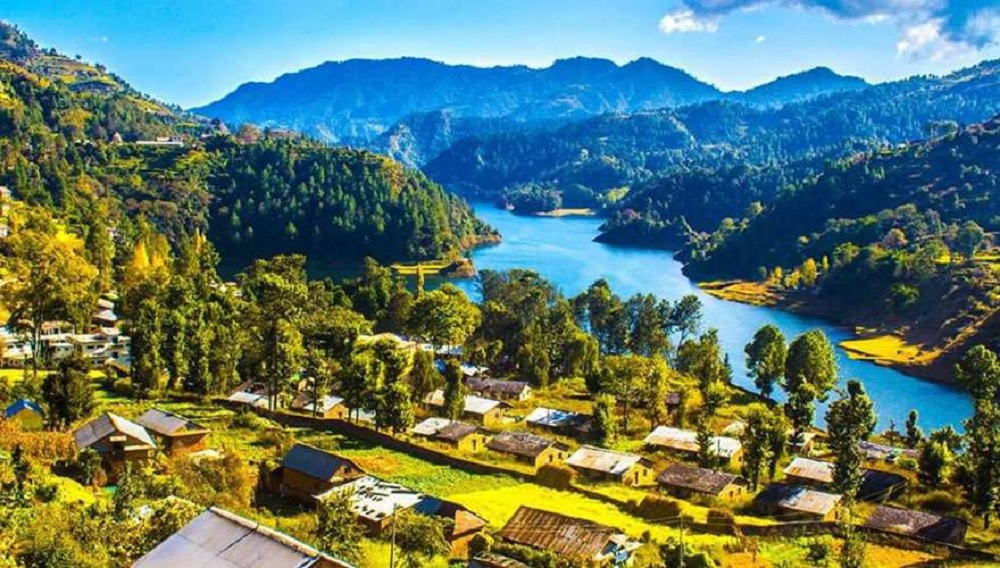
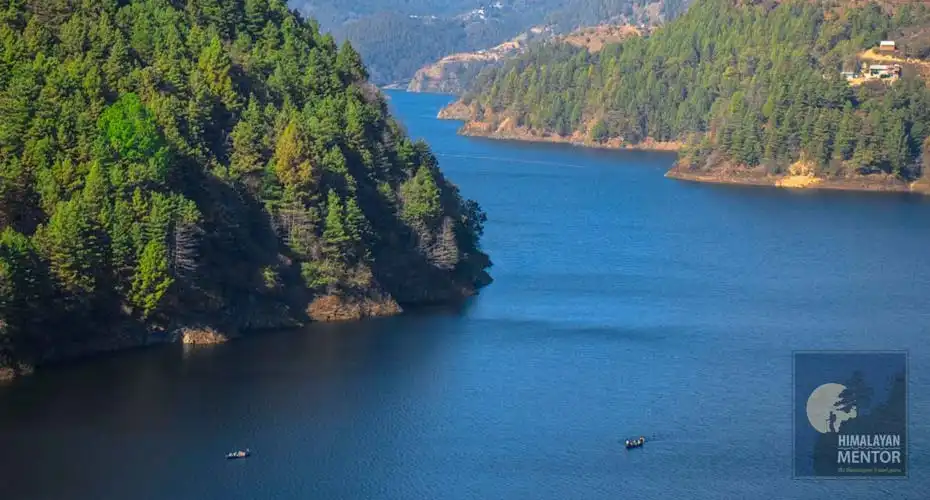
Home to the widest manmade lake in Nepal – the Indra Sarobar Lake – Markhu and Kulekhani are remote villages that still look like a land lost in time. Daily buses run here from Kathmandu and the drive through the mountain pass is a bit scary albeit scenic. It is common to do a day hike here from Chitlang and takes about 3 hours. There isn’t much to do as such, except enjoy the landscapes.







 Memories and Such