Mumbai Memories: Our Music Journey

In Tamil Brahmin families, it is almost a rite of passage for children to begin learning music, dance, or both from a very young age. This practice, deeply woven into the cultural fabric, is not merely a hobby or extracurricular activity but a tradition that carries historical, spiritual, and social significance.

Carnatic music and Bharatanatyam are two of the most celebrated classical art forms in South India. Both have ancient origins and have been closely associated with temple rituals, devotional practices, and the cultural identity of the Tamil Brahmin community. Historically, Brahmin families became custodians and prominent patrons of these arts, especially as royal patronage declined and the arts transitioned from temples and courts to urban centres.

The Bhakti movement, which swept South India from the 7th century onwards, emphasised personal devotion to deities through poetry, music, and dance. Brahmins, with their access to education and Sanskritic traditions, played a leading role in this movement, using music and dance as vehicles for spiritual expression and community identity.

As Carnatic music and Bharatanatyam gained prestige, mastery of these arts became a symbol of social status among Tamil Brahmins. The ability to sing or play an instrument or to perform classical dance was seen as a marker of refinement, education, and cultural capital. Families took pride in their children’s artistic accomplishments, which were showcased during family gatherings, religious festivals, and community events.

The rise of music “sabhas” (cultural organisations) in urban centres provided platforms for performances and further cemented the association of these arts with Tamil Brahmin identity. Participation in these sabhas, both as performers and as audience members, became a way for families to assert their place in the social hierarchy and maintain connections within the community.

For many Tamil Brahmin families, enrolling children in music or dance classes is a way to honour their heritage and ensure the continuity of tradition. Parents, often themselves trained in these arts, see it as their responsibility to pass on this legacy to the next generation. In Tamil Brahmin culture, music and dance are not just artistic pursuits but acts of devotion. Many compositions in Carnatic music are devotional hymns, and Bharatanatyam originated as a form of temple worship. Learning these arts is seen as a way to connect with the divine, cultivate discipline, and develop a sense of humility and reverence.

Research and anecdotal evidence suggest that children who begin learning music or dance at a young age develop better memory, concentration, and coordination. The structured practice of swaras (notes), talas (rhythms), and choreography enhances cognitive abilities and fosters discipline. Stage performances, which are an integral part of music and dance training, help children overcome stage fright, build confidence, and learn to express themselves creatively. These skills are valued not just in the arts but in academic and professional spheres as well.
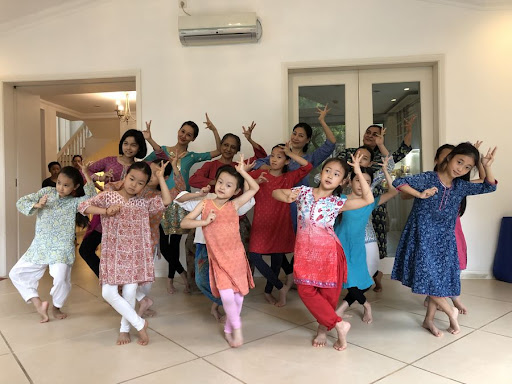
Growing up in the Bombay of the seventies and eighties, it was very common for most young girls and boys in our area to learn music or dance, or sometimes, even both. In my family, I leaned toward music while my sister chose to learn dance. I learned music in two stages. The first time I was probably 5-6 years old, and as all young girls were wont to do, my mother put me in a music class next to my home. This was a centre of Carnatic music, but after about 1.5 years, I wanted out. So I quit. But the seeds were sown, and slowly over the years, I started getting interested in music, and at about the age of 12-13, I restarted my music journey. This time, I learned from an independent teacher close to home. This time, I lasted about three years, and when I reached class 10, I dropped out again because of the demands of school.

My sister was interested in dance, and so she was enrolled on a Bharatanatyam class conducted by an independent teacher who taught many girls in our area. She learned this art for about 4-5 years, from the age of about 6-7 until she too dropped out because of the demands of school, extracurricular activities, and tuition.

I have always loved music, and I am someone who is constantly singing, irrespective of the genre. So when GG and BB were young, I also enrolled them in a local Carnatic music class. GG also chose to learn dance, but in her case, she learned classical ballet. GG has been consistent with going to music class since she started around the age of 7. Even during her PSLE and O-level years, she didn’t stop, as, according to her, this was her stress relief. BB, on the other hand, stopped learning music when he hit puberty and his voice broke. But he has a very good voice and is a great singer. In secondary school, when he was about 13-14, they had a music show in school, and he was the lead singer for the band that he and his friends came up with. He was so good that the day after, his school principal stopped him in the corridor to compliment him on his singing.

So that’s our music journey! It was nice walking down memory lane, remembering all the memories.
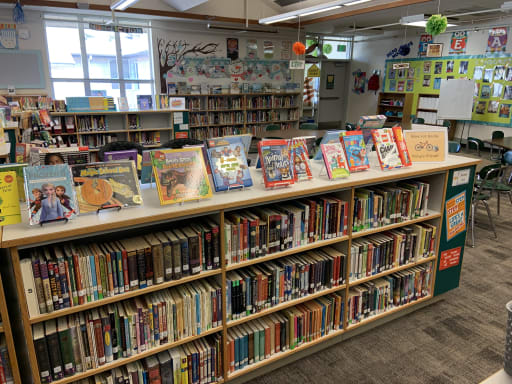
School Stories: The School Library

As regular readers know, I am a voracious reader. I have been teased about this all my school life because I used to prefer going to the library to playing with my friends.

My school had two libraries: the bigger one, which was located in the secondary section, and a smaller one in the primary section. The primary section was meant for the younger readers, and I had outgrown this library by the time I reached grade three.

I was what I now know to be hyperlexic. Hyperlexia is a syndrome characterized by a child’s precocious ability to read. Children with hyperlexia have a significantly higher word-decoding ability than their reading comprehension levels and also show an intense fascination for written material at a very early age. Hyperlexic children are characterised by word-reading ability well above what would be expected given their age.

Because the books in the primary school library were below my reading ability, I used to use the lunch hour to go to the secondary school library to read. Our lunch hour was divided into two, and even if I was put in the second half, I used to eat quickly in the first half, return my lunch box to my mom, and then run to the secondary school library to read. The way my school was constructed, the primary and kindergarten sections were in one building, then we had our school hall with the laboratories, and then the secondary building with the library on level 2 of that building. To get to my class from the library, walking at a normal pace would take about five minutes. So the minute the bell would ring to indicate the end of lunch, I would get up and make a run to my class. During the monsoon season, there have been many instances where I have slipped and gotten my uniform dirty, and I have also been late to class countless times and would have gotten a scolding from my teacher. If I were lucky, I would reach the class just before the teacher and escape the scolding, but those times were few and far between.

Once I reached secondary school, life became slightly easier. I used to still go to the main library, and because this library catered to students from the secondary section, we used to go there as a class once a week to borrow books. Again, because I was already reading way above my level, I also became the librarian’s favourite. And I was given a privilege that I don’t think anyone else until then had received. I was allowed to borrow books from the adult section. So while still in school, when my peers were still reading Nancy Drew and Hardy Boys, I had graduated to reading unabridged versions of Shakespeare and George Orwell. It used to be so much fun because when it was our class’ turn to visit the library, while the others used to use the age-appropriate shelves, I would go to the librarian and get the key to the locked cupboard, which the teachers and other adults used, and borrow books from there. I was also the unofficial book consultant for my class and used to advise them on books to read based on what they wanted to read.

After eighth grade, our weekly visits to the library ended as they were replaced by other subjects as we got closer to our version of the O levels, but I continued to visit the library during my lunch break and read so many wonderful books. In fact, at some point in time, I wanted to become a librarian when I grew up, but after I realised the practicalities of life, I gave up that dream. But my love for books, which was ignited in that little school library, has never gone away, if anything, it has increased, and I am forever reading and espousing the love of reading to everyone I meet.

Memories: Grandmother Tales 4 – The Travel Edition

I guess I get my love for travel from my paternal grandmother, my ammama. She used to take off as the urge struck her and has travelled the length and breadth of the country. There are three such stories which I remember even today, two in which I star in and one which I remember.

When my sister was born, I was about less than a year and a half and because my mother could not handle a newborn and a toddler, my grandparents took off to New Delhi with me. Her daughter lived there with her husband, who worked in the Indian Air Force and they must have lived in airforce quarters. This would a when India’s then Prime Minister, Mrs Indira Gandhi imposed a state of emergency in the country. I was barely eighteen months at that time, so don’t have many memories of that period, but I remember the name Indira Gandhi used to be used to evoke fear, especially among children. So when I refused to do something, say eat my food, or drink my milk, I would be threatened by Mrs Gandhi. It’s a wonder that I didn’t develop any irrational fear of the government and especially Mrs Gandhi. But kudos to my grandmother, who at that age, (she must have been in her late forties or early fifties) took a toddler with her and looked after her for a few months. We returned to Bombay about three months or so later and by this time, my mum and sister were back home from my maternal grandmother’s house where she had gone for her delivery.

The next story is also from my childhood. I must have been around 7 or 8 and we were travelling by train to our ancestral village in the Tirunelveli district in the Tamil heartland. We were travelling with my father’s cousin for his wedding. My grandparents were also travelling with us but in a different compartment. After we reached Chennai, my parents, uncle and we children were supposed to take an overnight train to reach the district headquarters of Tirunelveli and my grandparents were to take the overnight train to the same destination. My sister and I threw a tantrum at the station and insisted we travel with my grandparents and not our parents. They had to give in, my grandparents giving in to us was a huge reason, and so we took the train. We were ticketless and had nothing with us, which was with our parents. I remember my grandfather talking to the ticket checker to buy tickets in the train and scrambling to find space for us to sleep in. They found space and we managed to get to Tirunelveli in one piece.

The last story does not have either my sister or me in a starring role. Around the time I was around 6, after my grandfather retired, my grandparents decided to go on an all-India pilgrimage. I don’t remember the specifics after all these years, but I do know it was led by a tour leader and was aimed at mostly senior citizens. They would take the train and maybe also travel by road and visit many of the important places of worship. The tour also included a trip to Kathmandu in Nepal to visit the Pashupatinath temple and other places of worship in that city. I do know they visited the temples of Badrinath and Kedarnath and from the north went all the way down south to Kanyakumari. I remember them making a stop in Mumbai during the trip and we went to the station to meet them. I have a memory of my uncle taking me with him to the station and then because I was so upset of meeting my ammama and then getting separated from her, he took me out and we came home quite late, after eating ice creams and chocolates. I remember this was during our summer holidays and because we reached home so late, I overslept the next day and was still asleep when my friends came to call me to play in the morning. From Kathmandu, my grandparents got me and my sister a beautiful chain with a butterfly pendant which I treasured for many years.

I hope you enjoyed this edition of my grandmother’s tales. If you want to read more about my memories of my ammama, here’s part 1, part 2, part 3 and one about my maternal grandmother.

Grandmother Tales: The Maternal Edition

In today’s Grandmother Tales, the spotlight is on my maternal grandmother whom I also called ammama just like my paternal grandmother. And following me, all my maternal cousins also called my grandmother ammama while their paternal grandmothers used to be called pati, the traditional moniker for a Tamil grandmother

We lost my K ammama last December at the age of 91 and this was a huge blow to all of us. Because of COVID restrictions, none of us had met her in over two years and I was stoked to be able to meet her when I planned my India trip in January, but it was not meant to be. My mother had met her in September and she was so thankful to have made that trip because otherwise, she would have lived with the regret of not meeting her mother even though they both lived in the same country.

Ammama lost her mother when she was about 9 or 10 and she and her younger brother were brought up by per uncle and aunt (her father’s older brother and his wife). Her father was a teacher and retired as the principal of a school in the south. She was a very petite lady and barely came up to my shoulders, but had a superb work ethic, one that I can only hope to emulate. Even at the age of 91, she would work tirelessly until late at night, finding something or the other to do, instead of just sitting down and wasting time.

She was married to my tatha or grandfather when she was about 18 or so and moved to what was then Bombay. Initially, they lived in a joint family, but when everyone’s family grew, they moved to a one-room apartment. My tatha worked for Indian Airlines on the operations side and so had to work shifts. They had four daughters, of which my mother was the oldest. After the youngest daughter was born, they gave her to her childless sister-in-law (my tatha’s older sister) who lived nearby to raise her. There was no legal adoption done and my aunt used to call her adoptive parents uncle and aunt and my grandparents as mother and father but lived separately. The sisters used to meet daily and knew of their relationship, it’s just that this aunt was raised in a different building. My grandmother always yearned for a son and so my male cousins quickly became her favourite, but we girls never really minded this.

Growing up, of all the sisters, only my mum lived the closest and so my sister and I spent many holidays at ammama’s house.  I remember the times when we were in kindergarten and the early primary school years when my mum would come to school during dismissal time to pick us up and take us to our grandmother’s place. We would spend the whole day there and go back home after dinner when my dad would come to pick us up.

When I was moving from grade 9 to 10, I had tuition in the summer holidays, so after spending a couple of weeks in Bengaluru, I took my first flight alone back to Mumbai where my grandfather picked me up and I stayed with them for the rest of the summer until my mum and sister came back from their holiday. My father came home earlier, but he lived at home while I was at my grandparent’s house and used to travel to my tuition centre daily.

One of my best friends lived next door to my grandparents’ home and my grandmother used to always complain that when we visited, I used to pop in, say hello, leave my shoes and then run to my friend’s house. I have so many memories of playing with her all day and when I stayed overnight there, late into the night. We played so many games and had so many heart-to-heart talks. I am still in touch with her and used to go and visit her parents every time I visited Mumbai until they passed away.

I was in my teens when my grandparents moved to Chennai after my grandfather retired. They were able to sell their small flat for a larger flat so they could finally enjoy the space in their retirement years. When they moved to Chennai, we used to split our holidays between their home and my other grandparents’ home in Bengaluru. I remember taking the train to Chennai, spending a couple of weeks there and then taking the overnight mail train to Bengaluru where my grandparents used to wait at the Cantonment station.

My grandmother had a great work ethic and I remember waking up at almost midnight when we used to stay over and see her either cleaning the kitchen or some other work because she could not sleep. And even just a few days before she fell and had to be hospitalised, she was working daily, cooking and cleaning. She was very particular about cleanliness and would spend hours making sure everything was spotless and in its correct place. She was also very particular about other things in her life and would spend hours making sure her clothes and her children and grandchildren’s clothes were clean, and neat and would immediately stitch anything that needed stitching.

In the last few years of her life, she slowed down considerably. She lived alone in Chennai for a few years after my grandfather passed away and then moved to Bengaluru to live with my mum’s third sister. And then after her second daughter’s husband passed away and my aunt had some issues, both physical and mental, she moved in and started looking after her daughter. She spent almost 10 years with this particular daughter and my aunt has been especially hit hard by her death.

When she died, because of COVID, nobody could go down and see her one last time. But thanks to technology, we were able to see her death ceremony rituals streamed live and even though it was via my phone and laptop screen, we all could see her one last time. When I was in Bengaluru earlier this year, my aunt who also lives in the same community as my parents and I spoke a lot about my grandmother and shared so many memories. This is the same aunt with whom my grandmother lived before she moved in with my second aunt. I was quite heartbroken that I could not see my grandmother one last time, and missed her by just about a month.

Writing this blog post has been quite cathartic and I found myself smiling at memories of my ammama and also shedding a few tears. Thanks for reading and allowing me to share some memories of my maternal grandmother. If you haven’t yet, but want to read my memories about my paternal grandmother, click here, here and here.

Mumbai Memories

Source

A couple of days back, I was struggling to write something when I chanced upon some writing prompts. One of them stood out for me which said to write about a time when the community came together and displayed solidarity. And since I am in Mumbai right now, this prompt seemed apt to showcase the Mumbai spirit that I have witnessed.

The first experience was during the bomb blasts that shook the city in 1993. This was the first time something like this had happened. On March 12, 1993, a series of bomb blasts brought Mumbai, then known as Bombay, to a wailing stop. Twelve bombs went off within two hours and ten minutes that rocked several parts of the city, killing over 250 people. The explosions were the first large-scale coordinated terror attack to be carried out in the world and were the first terror attack where RDX was used as an explosive. The first bomb exploded in the basement of the Bombay Stock Exchange (BSE), followed by blasts in the Fisherman’s Colony in Mahim causeway, the Air India Building, Zaveri Bazaar, Hotel Juhu Centaur, Plaza Cinema, Hotel Sea Rock, Century Bazaar, Katha Bazaar, Worli and the Passport Office, over the next few hours.

My sister and I were in college then with my sister’s classmates coming from different parts of the city as it was a specialised college. There was chaos in the city and public transportation was shut down and if I remember correctly the city came under curfew. Because of the blasts, telephone exchanges were disabled or rather restricted. We could make calls to only numbers from the same exchange or possibly the next one. Educational institutions and offices all shut down and everyone was asked to go home and stay home. My sister called home in a fix because two of her classmates stayed in different parts of the city, and not at a walkable distance, so they were worried they could not get home. So we asked them to come home and my mum prepared extra food for the girls. They stayed in our home for the next two or three days until their families could pick them up. So how did the community come into the picture? Since we could not call their homes to let them know they were fine in our home, we started a phone chain. We called as many numbers as we could dial and in turn, asked them to try the girls’ numbers or if they could not get through, try to call as many people as they could and ask them, in turn, to try and call the girls homes. Everybody we called and they in turn called did this phone chain and by the end of the day, the parents of the girls knew about their whereabouts. This was the first time I saw what everyone always talks about the spirit of the city. Years later when I was working at my first job, I learnt from the old-time staff there that a bomb had blasted just meters away and they told me how they found burnt and charred pieces of flesh just outside the office complex. Everyone ran outside when heard the blast and tried to help as much as possible, both in terms of getting medical aid to those who needed it as well as food and water.

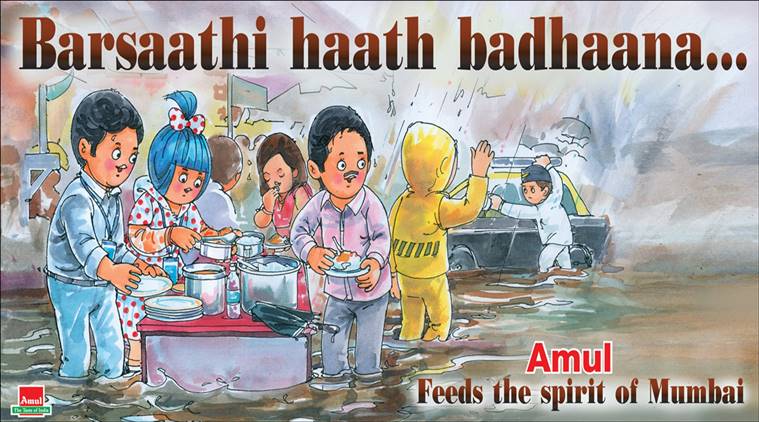
The next episode is a compilation of how people helped each other during the monsoon floodings that affect Mumbai every year. Since Mumbai is more or less reclaimed low lying land with an antiquated sewage system, inherited from the British during their rule, flooding during the monsoon season is par on course. The first one was in one of my first years of working. It had been raining for the whole day and by the time it was time to go home, the situation had become dire. I got on the bus and for some reason, fell asleep. When I woke up about 30 minutes later, I found that we were barely 10 minutes into a 30-minute journey and the bus had completely stopped. After waiting for another 10 minutes, I decided to just get off the bus and start walking. After walking for a while on a bridge, we realised that the bottom of the bridge was flooded and to add insult to the injury, there were open potholes. But then as we reached the bottom of the bridge, we found people from the nearby buildings helping those walking and walked them through the potholes, holding the hands of the elderly and those who had difficulty in walking. There were also women from the area with pots of hot tea and biscuits passing them around to the people. This was the pur Bombay spirit in action.

Another time was yet again when the rains played havoc in the city. This was either in 1999 or 2000 and I was working out of a small office of our company in south Mumbai. As before, it had started raining and the others in the office wanted to go back home. As the seniormost person in the office, I had to call the head office to get permission to leave around 2 pm. They gave us that permission after an hour after checking the situation. My sister who was also working close by suggested we take a taxi to get home and so we did. But because many areas of the city were waterlogged, we could only get as far as Dadar West, near Plaza to those who know the place. The taxi refused to move further because of the flooding and so we had to get out and walk. I remember at Khodadad Circle, the water was as high as my waist and I am not a very short person. Walking or rather wading in waist-deep water is pretty hard and by the time we got out of that area, we were exhausted. But there were so many people looking out for others during that hour-long walk that it didn’t feel so bad. A cousin who was doing an internship was stuck in Dadar station because the trains stopped running. After waiting for hours for the trains to restart, she finally called my mother and came to our home because there was no way she would make it to her house in one of the northern suburbs. Another friend who also lived in a far-flung suburb tried to get a lift from a colleague to get to a point from where she could go home was stuck in traffic for almost 7 hours with the car not moving an inch. Some people in the buildings nearby then came down and asked women and children to come up to their homes to spend the night because it would not be safe and that’s how she spent the night.

Source

I could go on and on about stories about how Mumbai’s people are super resilient and always come together, especially when there is a tragedy, but I think these stories showcase this wonderful city with a heart of gold. Mumbai is my hometown and even though I no longer live here, it will always be home and have a very special place in my heart.