Sacred Stones, Spaces, and Stories: Divya Desams Part 3

Thirukoḻi Temple, Uraiyur, Tamil Nadu
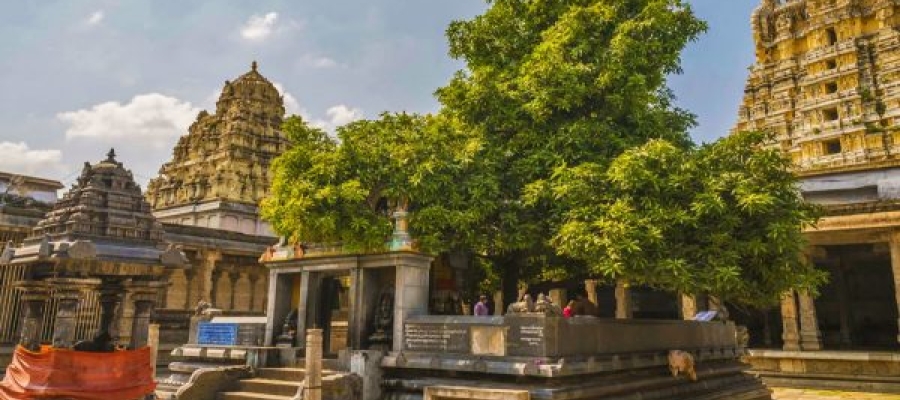
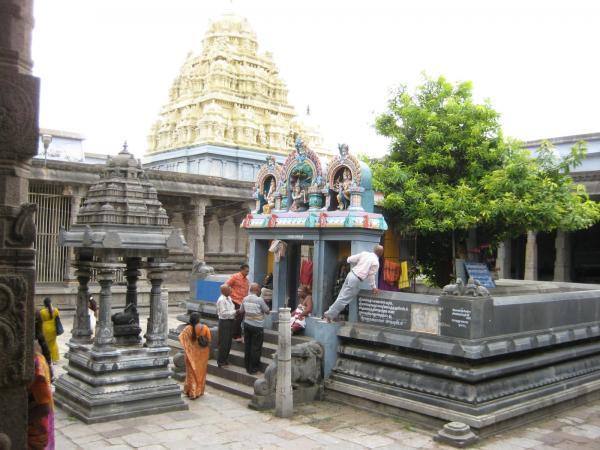
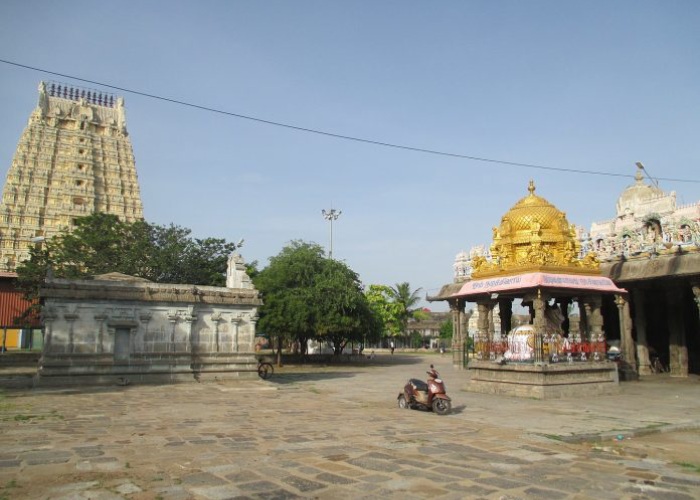
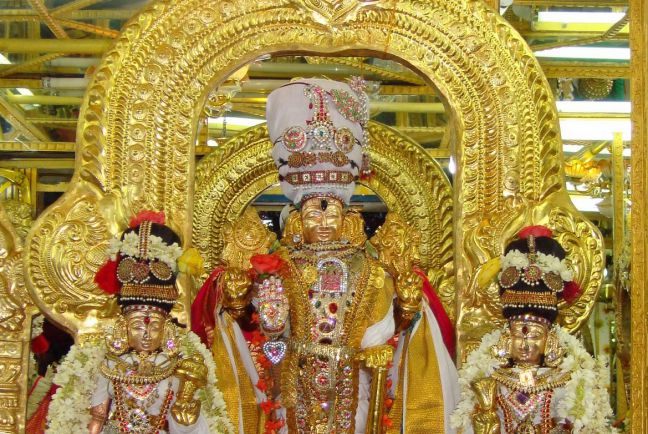
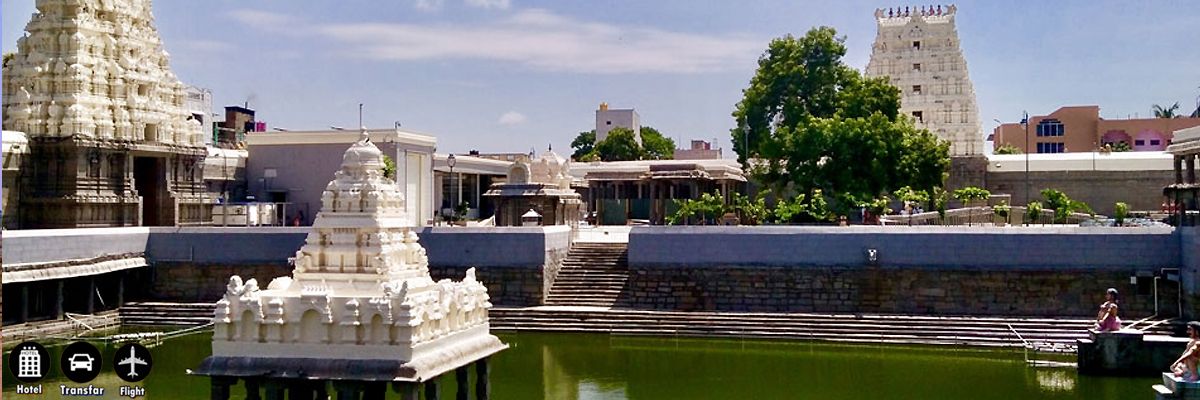
Thirukoḻi Temple, now often referred to as Nachiar Koil, stands in Uraiyur, a suburb of Tiruchirappalli in Tamil Nadu. It’s one of the 108 Divya Desams, the sacred temples dedicated to Vishnu. But this place flips the usual script. Here, the goddess takes centre stage. Kamalavalli Nachiyar leads every procession, while the god follows. That alone makes the temple worth a closer look.

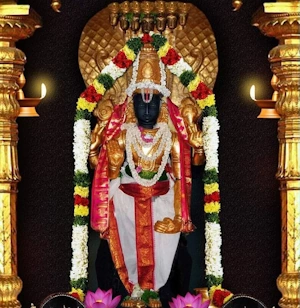
The story behind Thirukoḻi begins with a curse and a childless king. Rishi Brighu cursed Lakshmi to be born as a mortal. Meanwhile, Nanda Chola, a Chola king desperate for an heir, prayed to Mahalakshmi. His prayers worked. While hunting near a lotus pond, he found a baby girl nestled among the petals. He named her Kamalavalli, the child of the lotus. When Kamalavalli grew up, she visited Srirangam and fell in love with Ranganatha, the reclining Vishnu. She vowed to marry him. Ranganatha appeared in the king’s dream, revealing that the girl was Lakshmi herself. The king dressed her in bridal clothes and took her to Srirangam. As she approached the deity, she vanished. Ranganatha had accepted her. To honour the marriage, Nanda Chola built a temple at Uraiyur. Vishnu appears here as Azhagiya Manavala Perumal, the beautiful groom, standing in a wedding pose, facing north. Kamalavalli sits beside him, lotus in hand, as his bride. Another legend adds local flavour. A fowl and an elephant fought at this spot. The fowl won. So the place became known as Kozhiyur, kozhi meaning fowl in Tamil.

The temple likely existed before the seventh century, though exact dates blur into the past. The Medieval Cholas built the core structure around the eighth century CE. Later dynasties: Pandyas, Vijayanagar kings, Madurai Nayaks, added layers, renovations, and inscriptions.

Uraiyur itself holds weight in Tamil history. It was the early capital of the Chola dynasty, one of the great powers of South India. Karikala Chola, a legendary ruler known for building the Grand Anicut on the Kaveri River, made Uraiyur his base before the capital moved to other cities. The town thrived as a centre of trade and cotton production during the Sangam period, from 300 BCE to 300 CE. The temple also marks the birthplace of Thiruppaan Alvar, one of the 12 poet-saints who sang hymns to Vishnu. Thiruppaan’s verses appear in the Nalayira Divya Prabandham, the sacred canon of the Alvars. His presence here connects the temple to a broader spiritual and literary movement that shaped South Indian Vaishnavism.

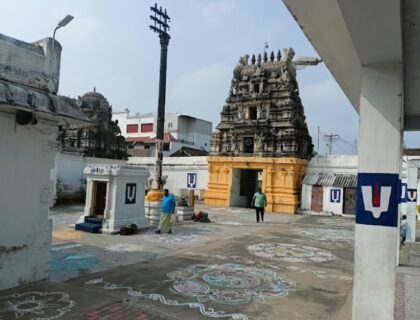
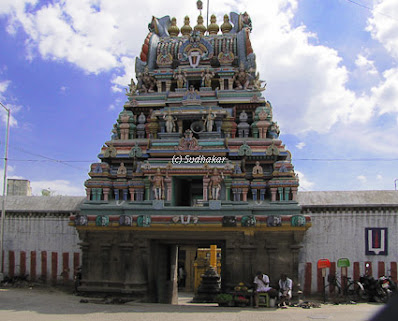
The temple follows classic Dravidian design. A granite wall surrounds the complex, enclosing shrines, courtyards, and water tanks. The five-tiered Rajagopuram, the gateway tower, rises above, marking the entrance with carvings of gods, mythic creatures, and scenes from epics. Inside, the main shrine houses Azhagiya Manavala Perumal, standing in wedding attire and facing north. North-facing shrines are rare in Divya Desams, making this layout unusual. Kamalavalli Nachiyar sits beside him, no separate sanctum, lotus in hand. The vimana above the shrine is called Kamala Vimanam.

The temple has separate shrines for Ramanuja and Nammalvar, two towering figures in Vaishnavite tradition. Inside the Nammalvar shrine, paintings line the walls, images of Vishnu’s avatars, Vaishnava teachers, and scenes of dharma and justice. These murals date to the early 1800s, bright hues fading but still vivid. The layout isn’t grand by the standards of Srirangam or other large temple-cities. But it’s intimate, with detail packed into every corner. Carvings, inscriptions, and architecture all speak to centuries of devotion and craft.

Worship at Thirukoḻi follows a strict daily rhythm. Priests perform rituals six times a day, from 7 am to 8 pm. Each ritual has three steps: alangaram (decoration), neivethanam (food offering), and deepa aradanai (waving of lamps). During the final step, nagaswaram pipes and tavil drums fill the air, priests chant from the Vedas, and devotees prostrate before the temple mast.

The temple honours the goddess first in every ritual and procession. Kamalavalli Nachiyar moves ahead; Azhagiya Manavala Perumal follows. This reversal of typical temple hierarchy gives Thirukoḻi its nickname: Nachiar Koil, the goddess’s temple.

Festivals bring drama. Serthi Sevai, the homecoming festival, is the biggest. During the Tamil month of Panguni (March–April), the processional idol from Srirangam, Namperumal, arrives at Thirukoḻi. The images of Namperumal and Kamalavalli are adorned together in the Serthi hall, celebrating their eternal union. Special rituals, processions, and thousands of pilgrims fill the temple grounds.

Another festival honours Thiruppaan Alvar’s birthday. His processional idol is brought from Thirukoḻi to Srirangam, where he receives grand honors: a silk turban, garlands, sandal paste, and a shawl. These gestures are meant to bring a smile to the saint’s face. After, the idol visits the shrines of Nammalvar and the goddess, accompanied by chanting from the Nalayira Divya Prabandham. Other festivals: Dolostava, Vasanthothsava, and Navaratri keep the temple active year-round. Community involvement runs deep. Locals prepare offerings, organise annadhanam (free meals), and maintain traditions passed down through generations.

Reaching Thirukoḻi is straightforward. The temple sits about three km from Tiruchirappalli Junction, connected by frequent town buses and auto-rickshaws. The surrounding streets are busy with vendors selling flowers, garlands, and incense. The atmosphere is lived-in, not curated for tourists. Pilgrims remove their shoes at the entrance and step into a different rhythm. The temple is open from 5 am to 12:30 pm. and again from 4:30 pm. to 8:30 pm. Devotees line up for darshan, waiting patiently, sometimes in the heat, sometimes in the rain. After darshan, many sit near the water tanks or under the shade of temple trees. Some walk to the shrine of Thiruppaan Alvar or Nammalvar, pausing to reflect or chant. The temple feeds a hundred devotees daily through its annadhanam scheme, funded by donations. Sharing a meal in the temple hall becomes part of the experience: food as blessing, community as ritual. Local hospitality shows in small gestures: directions offered, prayers shared, stories told. Uraiyur feels quieter than Trichy proper, less rushed. The pilgrimage isn’t about ticking off a site, it’s about slowing down, noticing details, and absorbing the place.

Thirukoḻi shaped Vaishnavite culture in subtle but lasting ways. The temple appears in 24 hymns in the Nalayira Divya Prabandham, composed by Kulasekara Alvar and Thirumangai Alvar. These verses are still chanted during rituals and festivals, keeping the Alvars’ voices alive. The temple’s emphasis on the goddess influenced how communities thought about divine hierarchy. In most Vishnu temples, the god dominates. Here, Kamalavalli’s prominence flipped that script, creating space for female-centred worship within a predominantly male-focused tradition.

Today, the temple is managed by the Hindu Religious and Endowment Board of the Government of Tamil Nadu. Management balances tradition with practical needs: maintaining structures, funding festivals, and supporting daily worship. Restoration efforts are ongoing. Old murals need care, gopurams need repair, and water tanks require cleaning. Government and private donations fund these projects. Technology plays a role, online booking for accommodations, digital archives of inscriptions, and social media updates about festivals. Tourism is modest compared to Srirangam, but steady. Devotees make up most visitors, though historians, architecture enthusiasts, and curious travellers also come. The temple’s annadhanam scheme continues, feeding devotees daily and keeping the tradition of communal meals alive.

Thirukoḻi Temple stands apart in the Divya Desam circuit. Its goddess-centred worship challenges assumptions. Its connection to Uraiyur ties it to Tamil history and kingship. Its architecture, though modest, carries centuries of craft and care. For pilgrims, it offers something rare: a temple where the goddess leads, and the god follows, where legends of love and devotion play out in stone and ritual. For anyone interested in Indian spirituality, it’s a reminder that tradition isn’t static; it shifts, adapts, and sometimes flips the script. Visit if you can. Walk the streets of Uraiyur. Sit by the lotus tank. Watch the rituals. Listen to the stories locals tell. And maybe you’ll leave with a different sense of what sacred space can mean.

Thirukkarambanoor Temple, Uthamarkoil, Tamil Nadu
Thirukkarambanoor, better known today as Uthamarkoil or Sri Purushothaman Perumal Temple, sits on the outskirts of Tiruchirappalli in Tamil Nadu, near the Kollidam (Coleroon) river. It is a Divya Desam, but a very unusual one. Here, Vishnu, Shiva, and Brahma all have shrines inside the same complex, making it the only Divya Desam where the Trimurti share one sacred space.

The core legend begins with Vishnu testing Brahma. Vishnu takes the form of a kadamba tree at this spot, without announcing himself. Brahma recognises the presence of the lord and starts worshipping the tree with thirumanjanam, the ritual bath. The water from this worship collects and becomes Kadamba Theertham, the temple tank. When Vishnu is satisfied with Brahma’s devotion, he grants him a boon: Brahma will have a shrine here and receive worship alongside him. That alone flips the standard storyline where Brahma is usually sidelined.

Another track brings in Shiva. After Shiva cuts off one of Brahma’s five heads in anger, the severed head sticks to his hand as a karmic stain. To get rid of this burden, Shiva wanders as Bhikshatana, the begging ascetic, asking for alms. When he reaches Thirukkarambanoor, Vishnu asks Lakshmi to give alms to Shiva. She fills Shiva’s begging bowl completely, which is why she is called Poornavalli, “the one who filled the bowl.” Shiva’s sin starts to ease here and is finally erased later at Thirukandiyur.

So in this one story, you have Vishnu testing Brahma, Brahma worshipping Vishnu, Shiva depending on Lakshmi’s grace, and all three ending up with shrines in the same compound. The core message is not subtle: no single form of God is enough. They all lean on one another, and the devotee is asked to look beyond faction lines.

Historically, the temple seems to have taken shape in the late eighth century CE under the Medieval Cholas. Later, Vijayanagara rulers and the Madurai Nayaks added to the structures, gopurams, and mandapams, as they did across the Kaveri belt. Inscriptions trace donations, land grants, and festival endowments, tying the place into the political economy of temple Tamil Nadu. The site also appears in the Nalayira Divya Prabandham, the Tamil Vaishnava canon. Thirumangai Alvar sings of the lord here as Uthamar, “the perfect one.” A local tradition says Thirumangai Alvar stayed at Uthamarkoil while working on the fortification walls of Srirangam, using this temple as his base. That connects the place to the much larger project of building up Srirangam as a Vaishnava centre.

In 1751, during the Carnatic conflicts between the British and French, the temple reportedly served as an infantry base for both sides. Unusual detail: the complex came through with minimal structural damage. It’s a small example of how these temples were not just spiritual spaces, but also strategic assets in a war zone. When we romanticise “timeless” temples, we forget they sat right in the path of empires and gunpowder.

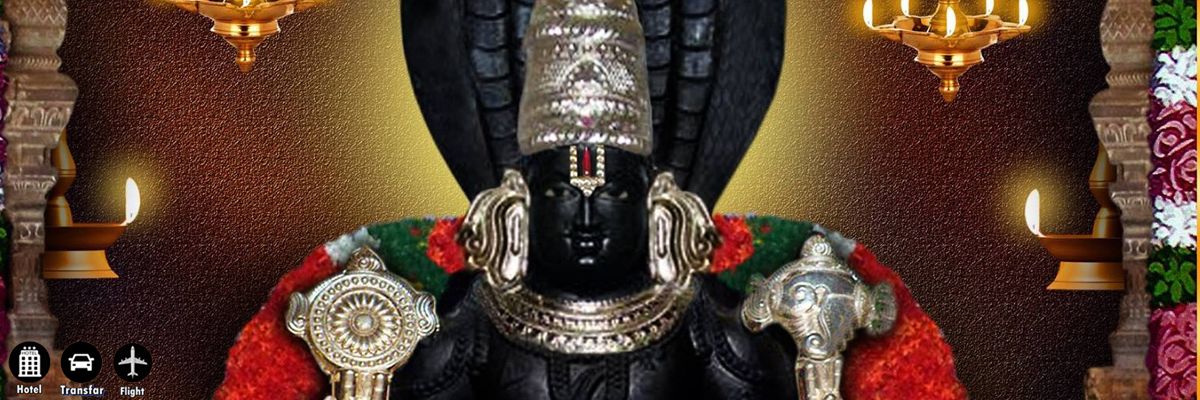
Uthamarkoil follows the Dravidian model but with its own logic. A granite wall encloses the complex, with the main tank just outside the gateway. Inside, shrines for Vishnu, Shiva, and Brahma are housed within the same campus, each with its own sanctum and tower, yet visually and ritually linked. Vishnu is worshipped here as Purushothaman Perumal, with Lakshmi as Poornavalli Thayar. Shiva appears as Bhikshadanar, the begging ascetic, and Brahma sits in a separate sanctum, a rare working Brahma shrine in South India. The very act of walking between these shrines makes you physically experience the unity the myths talk about.

Architecturally, you get the standard features: gopurams, pillared halls, subsidiary shrines. But the mood is different from the massive temple-cities. It feels compact and layered rather than overwhelming. Add in the Kadamba Theertham tank, the river nearby, and the relatively low-rise surroundings, and there’s a strong sense of human scale. Not every sacred space has to shout. Some accounts mention that the temple’s strategic role during the eighteenth-century conflicts led to minor defensive modifications without sacrificing the core iconography. That mix of sacred and practical is part of the aesthetic story too.

Ritual life here runs on a tight routine. There are six daily pujas for each of the Trimurti deities, from early morning to night. Each cycle includes alangaram (decoration), naivedyam (offering of food), and deepa aradanai (lamp worship). Priests chant Vedic mantras and Tamil hymns, and the deities receive separate but coordinated attention.

The major festival is the Brahmotsavam in the Tamil month of Karthigai (roughly November–December). Processional images of Purushothamar and Bhikshadanar are taken through the streets around the temple, side by side. Again, the temple refuses to choose one god over another; it stages them together. Another key event is the Kadamba Tiruvizha, when the festival image of Ranganatha from Srirangam is brought to Kadamba Theertham here for the ceremonial bath. That links Uthamarkoil into a larger ritual circuit with Srirangam. Tradition also says King Dasharatha performed a yajna here to ask for sons, long before Rama’s birth. Childless couples still come with that story in mind, seeking fertility blessings.

In practical terms, Uthamarkoil is easily accessible. It lies just off the Trichy–Salem highway, about 10 km northwest of Tiruchirappalli, near the banks of the Kollidam. Buses and shared autos run regularly; the last stretch is walkable through a typical temple-side settlement with tea stalls, small shops, and houses. The first thing that may strike you is that the place is not overrun. Compared to Srirangam, there is breathing room. You can stand in front of each sanctum without being pushed, let your eyes adjust to the dim light, and actually look at the deities. The space invites a quiet pause rather than a rush. Many take time by the Kadamba Theertham tank nearby, believed to have healing powers. The sound of temple bells, birds, and the river nearby creates a blend both calming and alive.

Thirukkarambanoor’s unique tri-deity setup has inspired Tamil literature and art for centuries. The temple entrances and pillars bear carvings not only of the Trimurti but also festive scenes and sacred dances, connecting the place to vibrant local traditions. Poets like Thirumangai Alvar included this temple in their hymns, bringing it spiritual prominence. The temple challenges rigid classification of sects. Here, Shaivism and Vaishnavism coexist visibly, influencing regional identity. Festivals often blend music, dance, and recitation traditions from different streams, making Thirukkarambanoor a cultural meeting point.

Today, Uthamarkoil is managed by the Tamil Nadu Hindu Religious and Endowment Board. The temple hosts six daily rituals for each of the three deities, plus major festivals like Brahmotsavam in the Tamil month Karthigai (November-December). Despite modern pressures, traditions of daily worship continue uninterrupted. Restoration projects focus on preserving the temple’s distinctive stone carvings and murals. Crowds are moderate, mostly pilgrims and devotees from nearby towns, though interest from history and architecture buffs is growing.

Thirukkarambanoor Temple stands as a rare see-through lens into Hinduism’s fluid unity. By housing Brahma, Vishnu, and Shiva side by side, it asks us to rethink boundaries: sectarian, architectural, ritual, and cultural. The temple isn’t just a sacred space for worship but a symbol of harmony and complexity within Indian spirituality. Its layered stories, intimate scale, and lived traditions challenge assumptions about what a Divya Desam can be. This temple offers not just a place to pray, but a place to reflect on how diverse beliefs weave together to form a living, breathing spirituality. If you visit Uthamarkoil, slow down. Notice the quiet dialogues between the gods. Listen to hymns sung for both Shiva and Vishnu. Walk the stone paths shaped by centuries of devotion and conflict. You might leave recognising how faith is less about dividing lines, and more about shared sacred space.

Earth Day 2026: Small Steps, Lasting Change

Every year, on April 22, the world pauses to honour the only home we’ve ever known: Mother Earth. It’s a day when the planet’s beauty, fragility, and resilience come together in a single reminder: that we share a collective responsibility for its care. As we approach Earth Day 2026, there’s a renewed urgency to rethink our choices and realign our actions with the world we inhabit.

The question is simple, yet profound: what does it mean to live gently on this Earth?

The first Earth Day was held in 1970, a time of political unrest, oil spills, polluted cities, and rising awareness of the environmental toll of industrial progress. It began with the vision of Senator Gaylord Nelson, who wanted to channel the energy of the student anti-war movement into environmental activism.

What started as a nationwide “teach-in” across the United States became a massive grassroots movement. More than 20 million people took to the streets to demand clean air, clean water, and a livable planet. That moment sparked the creation of the U.S. Environmental Protection Agency (EPA) and major environmental laws like the Clean Air Act and Clean Water Act.

By 1990, Earth Day had gone global. Over 140 countries participated, and environmental issues became part of mainstream international discourse. Today, more than a billion people across 190+ nations mark Earth Day in some form; from schoolchildren planting saplings to global corporations pledging carbon neutrality. Earth Day is now the largest secular civic event in the world, a powerful testament to what collective awareness can achieve.

Each year, Earthday.org announces a global theme that unites efforts around a shared goal. Recent years have brought messages like Invest in Our Planet and Planet vs. Plastics.

If the last few years have taught us anything, it’s that climate change isn’t an abstract threat; it’s happening right now. From intense heatwaves to melting glaciers, from droughts to floods, the Earth’s rhythm is shifting. Yet, amid the chaos, hope endures. Across the world, innovators, scientists, and ordinary citizens are rewriting the story of sustainability, one conscious act at a time.

Fifty-six years after the first Earth Day, humanity stands at a crossroads. On one hand, we’ve made progress that once seemed impossible. Renewable energy like solar, wind, and hydro, now powers more homes than ever before. Countries like Denmark and Costa Rica are leading the way toward carbon neutrality. Electric vehicles have gone from niche luxury to mainstream transport. Cities are reimagining themselves as green, walkable spaces.

On the other hand, the challenges remain stark. Global temperatures continue to rise. Forests are shrinking. The oceans are warming and acidifying. Plastics have invaded even the deepest marine trenches. Species are disappearing before we’ve even had a chance to name them.

But Earth Day 2026 isn’t about despair, it’s about possibility. Because every problem, no matter how vast, carries within it the seed of change.

When we think of saving the planet, it’s easy to imagine that the work lies in the hands of governments or corporations. But the truth is, change begins with each of us. Our daily choices, how we consume, travel, eat, and dispose, ripple outward in ways we rarely see.

Here are small, sustainable actions that, when multiplied across millions, can lead to lasting impact.

At Home: Simple, Sustainable Swaps
Reduce, Reuse, Repair: Before buying new, ask if you can fix or repurpose what you have.
Compost your kitchen waste: Turn food scraps into nutrient-rich soil instead of sending them to landfills.
Mind your electricity: Switch off unused lights, unplug idle devices, and choose energy-efficient appliances.
Shop local and seasonal: Support farmers’ markets and reduce the carbon footprint of imported goods.
Ditch single-use plastics: Carry your own bottle, straw, and cloth bag. It’s such a small act, yet deeply symbolic of responsibility.

At Work: Greening Your Routine
Go paperless where possible: embrace digital receipts, notes, and reports.
Host green meetings, reduce printed agendas, opt for reusable mugs, and minimise travel through virtual calls.
Encourage team challenges like carpool days or plastic-free weeks.
Be an advocate: small office initiatives can grow into company-wide culture shifts.

In the Community: Collective Effort
Participate in a clean-up drive or a tree-planting event in your area.
Volunteer for local environmental NGOs or school eco-clubs.
Donate gently used items rather than discarding them.
Share your sustainability stories, awareness spreads through connection.

Online: Responsible Advocacy
The digital space can be both a tool and a trap. Misinformation spreads fast, so share verified sources and positive stories.
Follow credible environmental voices.
Support eco-conscious brands, artists, and initiatives.
Use your social platforms not for fear, but for inspiration and education.

Every small step counts. As author Anne-Marie Bonneau beautifully said, “We don’t need a handful of people doing zero waste perfectly. We need millions of people doing it imperfectly.”

At its heart, Earth Day is not just about activism; it’s about mindfulness. It asks us to slow down, to pay attention, and to live with intention. Think of the times you’ve stood at a beach and felt the tide wash over your feet, or walked through a forest and breathed in the scent of earth after rain. That connection, silent yet profound, reminds us of how deeply intertwined we are with nature. When we live mindfully, sustainability becomes more than a checklist. It becomes a way of honouring life itself.

Today, pause and step outside. Look up at the sky, notice how the clouds drift without effort. Feel the breeze brush past you. Remember, this air, this light, this moment, is a gift shared by all living things. The Earth asks for so little in return. Only that we tread gently.

World Book and Copyright Day 2026: The Case for Reading in a Visual Age

World Book and Copyright Day happens every year on April 23. And each year brings new reminders about why books matter and why copyright law exists. UNESCO started the event in 1995, picking the date because it marks the death anniversaries of three huge literary figures: William Shakespeare, Miguel de Cervantes, and Inca Garcilaso de la Vega. The day isn’t just about buying a book or reading. It’s about remembering how stories and ideas travel across generations. And it’s about protecting the rights of writers, publishers, and anyone who works with words and ideas.

Why is this day important? Simple. Books are more than objects. They store culture, preserve facts, spark arguments, and help us figure out who we are. Without them, ideas might fade, and knowledge could get lost. Copyright keeps creators safe. If authors and illustrators couldn’t own their work, would we have the stories we cherish? On this day, the world is supposed to pause and remember that every book is the result of hard work, imagination, and someone’s hope that their words will matter.

Rabat, Morocco, is the 2026 World Book Capital. That means Rabat will host special events, talks, readings, and programs throughout the year to promote reading and creativity. The city will get global attention for putting books first and linking culture, education, and diversity.

Are books losing ground to screens? That’s the real question. We live in a world ruled by images. Social media, video streaming, short clips—everywhere we look, we’re bombarded by visual content. TikTok, Instagram, YouTube, and endless memes shape what we see, what we know, and even how we think. The average person’s daily diet is snapshots, sound bites, and fleeting info hits. Attention spans keep shrinking. A single tweet can cause outrage or joy in seconds. This isn’t just about technology. It’s a change in how brains work and how society measures value. So, where does reading fit in?

There’s no pretending that reading a book is easy. It demands time, focus, and patience. But the same things that make reading hard are what make it valuable. Books force us to pause. They ask us to do the work of imagining, questioning, and connecting dots. Screens give quick thrills; books demand slow engagement. That gap matters. Reading develops the mind in ways that short videos and quick posts can’t. And even though social media challenges old habits, book communities online (like #BookTok or virtual book clubs) have sparked a fresh wave of interest, especially among teens. People still crave stories, depth, and connection; only now it’s happening in new ways.

But what gets lost when images replace text? Words build complex thoughts. Books let us see inside someone else’s mind in detail. Reading isn’t just about gathering facts; it’s about empathy, perspective, and learning how other people view the world. When we trade books for visuals, we lose context and subtlety. Attention flickers instead of settling. If a story’s too slow, too complicated, or too challenging, it gets skipped. There’s risk in letting quick images become the only way people engage with knowledge. Easy answers and “hot takes” can replace understanding.

Books also push back against bias. They make us question, argue, and even change our own minds. Social media often puts people in echo chambers. Algorithms repeat what you already believe. But literature, if you let it, breaks cycles and reveals contradictions. Reading gets us uncomfortable and forces us to grow. If the world forgets how to do this, what kind of culture will we have? Will people still build new ideas or just repeat old slogans?

It’s tempting to blame technology for stealing attention. But the truth is more complicated. People still love stories. They just want them in formats that fit their lives. Audiobooks, podcasts, and short-form essays reach millions. Libraries lend digital books. Smartphones let people read anywhere. In fact, the digital transformation can expand access. It can help people in places without bookstores get fresh ideas—and that’s huge for closing knowledge gaps. We shouldn’t view technology as the enemy of books. Instead, every new platform is a chance to connect reading with lives.

World Book and Copyright Day asks us to protect the right to read and create. Copyright isn’t just about money or ownership; it’s about dignity. If ideas belong to everyone, then creators get cheated. Society loses innovation. But copyright must strike a balance. Information should be free enough to spread, but not so open that writers, artists, and researchers go broke. Rabat’s year as Book Capital is a reminder that stories need support, but so do the people who imagine them.

Does any of this matter in a world hooked on images? Yes. Because conversation, real conversation, needs nuance. Social media speeds up talk but weakens arguments. Books slow us down but sharpen our thinking. As attention spans shrink, society faces risks. People forget how to focus, analyse, or remember. World Book and Copyright Day is needed to remind everyone: deep reading builds minds, helps solve problems, and keeps ideas alive.

So, question the value of books if you want, but look at history. Every major movement, revolution, or cultural leap started with words. Images are powerful, but words build meaning. They explain, persuade, and push people to act. The world’s biggest changes, political, scientific, or artistic, began with a sentence somewhere. Maybe on a page that a reader stubbornly finished, even when distracted.

World Book and Copyright Day won’t fix short attention spans overnight. And it won’t make everyone ditch their phones for libraries. That’s not realistic or even necessary. Instead, the day stands for balance. It’s about making sure stories don’t get lost in the flood of images. And it’s about making sure those who create stories get respect, protection, and a place at the table. In 2026, as screens speed up society, Rabat will push reading as a way to slow down, dig deep, and build culture.

Sacred Stones, Spaces, and Stories: Divya Desams Part 2

Ranganathaswamy Temple, Srirangam, Tamil Nadu
The Ranganathaswamy Temple isn’t just a landmark in Tamil Nadu. It’s considered the foremost Divya Desam, the sacred abode of Vishnu. Located on Srirangam Island in Tiruchirappalli, it stands as both a spiritual heart and a living city. Pilgrims see it as the gateway to heaven. Locals see it as the soul of their community. And for anyone curious about faith, architecture, or Indian culture, it’s a site where every stone tells a story.

Stories shape Srirangam’s sacred identity. Legends say the idol of Ranganatha, the reclining Vishnu, was first worshipped by Brahma in the celestial world. The god then gave it to King Ikshvaku of the solar dynasty. The idol was passed down through generations before Rama, the hero of the Ramayana, gave it to Ravana’s brother Vibhishana as a blessing. Vibhishana set out for Lanka, but as he rested on the banks of the Kaveri, the idol rooted itself at Srirangam, refusing to be moved. Vishnu had chosen where he’d rest eternally.

Another legend tells how the temple became central to spiritual drama. The four child sages, Sanaka and his brothers, wanted to see Vishnu in heaven. Blocked by Jaya and Vijaya, the lord’s guardians, they cursed them, leading the doorkeepers to be born as powerful opponents in three lifetimes. Vishnu took avatars to defeat them each time. In this tale, the temple’s idol facing south is a reminder: Srirangam wasn’t just a holy site but a stage for cosmic justice, love, and spiritual growth.

The temple’s stone walls have witnessed centuries of history: worship, war, and renewal. The first structure was built by the Chola king Dharmavarma. It was destroyed by Kaveri floods and rebuilt by the early Cholas, with major work happening between 100 CE and 300 CE. Later rulers, Chola, Pandya, Hoysala, Maratha, and Vijayanagara, added halls, towers, and shrines, leaving inscriptions from the seventh to seventeenth centuries.

History wasn’t always kind. In 1311, Malik Kafur, a general of the Delhi Sultanate, raided Srirangam, looted its treasures, and took the temple’s golden idol to the north. Tamil legends describe how the priests and devotees risked their lives to bring the idol back. Sometimes, the story pivots to the Sultan’s daughter, who fell in love with the idol and eventually surrendered it after much drama and music. Even when invaders controlled the temple for years, spiritual life somehow endured, and the community kept its identity. Restoration only began after Vijayanagara rulers conquered the region in the 1370s, bringing the temple back to life.

During these centuries, the temple drew great saints and thinkers. Ramanujacharya, the influential philosopher who shaped Vishistadvaita, spent years at Srirangam. His teachings, shaped inside these walls, spread far beyond, defining a major tradition of Hindu thought. Scriptural study, scholarship, and fresh rituals flourished, making the temple not just a place of prayer but a centre of learning.

Srirangam is more than ornate; it’s awe-inspiring in scale and detail. Spread over 156 acres, it’s the largest active Hindu temple complex in the world. There are seven concentric walls or prakarams, creating nested enclosures for shrines, water tanks, residential quarters, and even shops. This design mirrors cosmic ideas: circles within circles, each wall carrying its own history and role.

The Rajagopuram, the grand entrance tower, rises to nearly 240 feet, one of the tallest in Asia. Other gopurams, spaced along the walls, guide crowds like beacons, their vibrant colours seen from miles away. Every inch brims with carvings, mixing mythic tales and celestial beings. The temple’s mandapams, pillared halls for worship, songs, and gathering, are full of stories etched in stone.

Dravidian architecture shines here. No detail is overlooked. Pillars show gods, mortals, animals, and scenes from epics. Ceiling panels glow with paintings from different eras, each restoration adding layers. Sacred water tanks, or pushkarinis, sit at the heart of community and ritual. All of this turns the temple into a living museum, capturing centuries of artistry and devotion.

Ritual is the heartbeat of Srirangam. The daily pujas follow strict tradition, with priests tending the main deity early each morning, chanting ancient hymns, and decorating the idol with fresh garlands. Offerings of food, music, and light keep spiritual life moving. Special agro-based rituals keep in sync with the harvest, a sense that God and nature work together.

Festivals here are unforgettable. Vaikunta Ekadasi stands out: for 21 days in December-January, the temple is packed to the brim. Devotees line up to walk through the Vaikunta Dwaram, a gateway imagined as the door to paradise; hundreds of thousands come in hope. The temple organises annadhanams, free meals for all. Songs, drums, and processions fill the streets. Other festivals cleanse the sacred spaces, celebrate solar movements, and mark calendar milestones. Certain rituals involve purifying the sanctum with herbal oils, changing the sacred thread on idols, or massive ablutions.

Local customs shape the rhythm of the temple’s days. In Srirangam, worship spills out into the lanes: residents keep altars in their homes, offer produce, and gather for prayers in open courtyards. Priests and devotees share ties across generations, linking ritual to community.

For pilgrims, reaching Srirangam is both ordinary and profound. The island sits between two branches of the Kaveri River, so approaching often means crossing a bridge, winding through busy streets, and passing vendors selling flowers and beads. As you move closer, gopurams rise on the skyline. The temple-city feels alive at all hours, full of people and bustling shops. Everything centres on the main deity, Sri Ranganatha, inside.

In the village atmosphere, hospitality runs deep. Lodges and dharmshalas welcome travellers. Local people often share directions, offer advice, and sometimes offer simple food. A pilgrimage here means walking: the temple’s gates require devotees to remove shoes, be patient in crowds, and soak up the energy rather than rush through. Collective memories colour the experience; everyone has a story, whether about a lucky prayer answered, a hardship overcome, or just the generosity of Srirangam folk.

After darshan, seeing the deity, many eat in the temple’s annadhanam hall, a communal ritual of sharing food as a blessing. Some wander side streets visiting shrines; others sit quietly by the water tank or under shade trees. The pilgrimage isn’t a single event; it’s an immersion in something larger than oneself.

Srirangam influences more than ritual; it sinks roots into art, literature, and identity. The temple’s music and dance traditions run deep. Famous poets and musicians have performed here, making it a hub for kirtans and recitals. Ramanujacharya didn’t just meditate; he argued, taught, and wrote here, his works changing the direction of Hindu philosophy.

Manuscripts and palm-leaf books in the temple’s library are treasures for researchers. Over time, local festivals and processions have shaped collective memory. The colours, drums, and chants have made their way into Tamil literature, storytelling, and even film. The temple grounds also functioned as schools, the learning centres where kids from local families studied not just scripture but also poetry, math, and ethics.

The blend of spiritual and worldly culture means Srirangam is more than itself. Its stories, of how gods, kings, and poets met are the frame for a resilient local identity. For artists, it’s a source of inspiration. For writers and singers, it’s a stage.

Today, Srirangam Temple balances tradition and change. Management includes both hereditary priests and modern administrative boards. Government and local organisations fund restoration, clean water tanks, and maintain the gopurams. Technology comes in: electric lights brighten the halls, tourists book rooms online, and social media shares festival livestreams.

Tourism is booming: crowds swell during festivals, with hundreds of thousands of visitors from across India and the world. Restoration efforts are ongoing, with the government and private groups intent on safeguarding what remains. Local initiatives rebuild roads, renovate shrines, and install new signage to ease visitor flow.

Despite crowds, the temple holds its heart. Annadhanam traditions run strong. Outreach to the poor and local schools keeps the temple rooted in daily life. At the same time, debates keep going on: how best to balance modern needs with sacred roots? Not every visitor is a devotee. Many come for history, art, or just the atmosphere. But for those seeking spiritual renewal, Srirangam remains a place where mystery and meaning endure.

The Ranganathaswamy Temple in Srirangam isn’t just another stop on the Divya Desam circuit. It’s the centre, a place where myth, history, art, and life come together. Its legends speak of cosmic drama and divine mercy. Its walls hold centuries of struggle and renewal, from Chola kings to modern engineers.

For pilgrims, the journey here means more than seeing the idol, it means tracing footsteps, learning old stories, and living communal ties. The temple’s architecture and rituals inspire wonder and reverence, driving continued scholarship and creativity. Festivals and daily worship give rhythm to the city, keeping old traditions alive in new ways.

In the broader landscape of Indian spirituality, Srirangam stands out as proof that faith can build more than walls; it can sustain a living culture, weather upheaval, and renew generation after generation. If you visit, don’t just look at the carvings or join the crowds. Slow down. Notice how history, legend, and everyday life all mix. Listen to the stories. Carry the experience back with you, and see how it shapes your view of the divine.

Short Story: When the City Sleeps

(Mumbai, late 1980s)

By the time the last local groaned into Marine Lines, Ramesh’s ledger lines were still dancing in his head like impatient ants. Columns that refused to add up, numbers that snickered at him from the margins. He had stayed back again, Junior Clerk (Probation) at Mehta & Sons Exporters, Fort, because Mr. Mehta had started dropping words like “tightening belts” and “rationalisation,” which were dignified ways of saying “some of you are unnecessary.” Ramesh had never liked the feeling of being unnecessary. It followed him to the train like a stray dog.

He stepped onto the platform and swallowed the tang of sea salt and iron. The station, which earlier in the evening had pulsed with elbows and voices and bodies, now yawned like a huge mouth catching its breath. One stall was still open, its owner scraping burnt tea leaves from a vessel, the air fragranced with cardamom and something singed. A bored constable leaned against a pillar, tapping a stick gently on his calf, eyes distant. Somewhere above the glass roof, a gull scolded something invisible, and then the sound was gone.

Ramesh adjusted the cloth bag at his shoulder. It held the day’s leftovers: a steel tiffin dabba with the last smear of baingan bharta, a fountain pen with its cap cracked, and his worries, which seemed to take the most space.

Outside the station, a kaali-peeli idled under a sputtering streetlamp. The driver’s turban had slipped, the fabric a little tired at the edges. He dozed with his mouth half open, the ghost of a bidi clinging to his fingers. A few steps away, the tea stall that never slept, the one everyone called “Karim’s,” though the painted board claimed “Lucky Tea & Snacks”, was open, as it always was, regardless of storms, cricket matches, or election nights.

“Arre, Ramesh bhai,” called Karim without lifting his eyes from the kettle. He had memorized his regulars’ footsteps long ago. “Late again?”

“Hmm,” Ramesh said, the sound falling somewhere between a yes and a sigh.

Karim poured chai into a glass so thin it was almost cruel, tied a knot with his rag, and slid it across the counter. “Sugar less today. Your face is already sweet sad.”

Ramesh smiled despite himself. “Bas, Karim bhai. Aap bhi na.”

He cupped the glass and let the heat bite his palm just enough to remind him he was alive. Behind him, the sea growled and spat, throwing foam at the tetrapods as if annoyed by the very idea of concrete. A boy pedalled by, wobbling slightly, newspapers stacked so high they orbited him like a satellite. He would soon deliver headlines to doors still heavy with sleep, ringing small bells that said everything and nothing at once: Wake up, something’s happened again.

“Office?” Karim asked. He didn’t look up, just listened to the pitch of Ramesh’s breathing, to the city’s residual hum. The kettle hissed. A moth auditioned for suicide against the yellow tube light.

“Office,” Ramesh said. “Figures don’t behave.”

“Figures are like people,” Karim said, stirring. “They behave if you hold them gently and threaten them at the same time.” He grinned, revealing a gold tooth that caught the light like an extra star.

Ramesh laughed, the sound surprising himself. He finished the tea and placed the glass upside down, respectful. The habit came from his father, who had believed that the way you left things mattered: a glass, a conversation, a day.

He ambled toward Marine Drive. At this hour, it belonged to dogs and whisperers. Yellow pearls of light looped the curve of the Queen’s Necklace, the streetlamps leaning like sleepy sentries. On a bench, an old man stared so hard at the horizon it seemed he might pull dawn up by its ears. A couple walked shoulder to shoulder, not touching, measuring a distance only they understood.

Ramesh sat on the seawall and let the damp creep into his trousers. He watched the moon wipe its face on a passing cloud. He wondered, not for the first time, if he should give up and go back to Nagpur. There was safety back there: a mother who would still scold, a sister who saved the crispest bhakris for him, an old bicycle with a bell that sounded like a cough. But the thought also made him restless in a way that felt like suffocation.

He looked at his palm lines. Somewhere in them, a fortune-teller had once said, there was water. “You will live near water. Or drown in it,” the man had added, noncommittal, as if hedging his bets against karma.

The taxi under the streetlamp coughed awake. The driver rubbed his face and squinted at the road. He spotted Ramesh and raised his chin in inquiry.

“Girgaon,” Ramesh said, getting up. “Near Thakurdwar.”

“Chalo,” the driver said, patting the seat in a way that suggested the car was a temperamental animal that needed soothing.

As the taxi nudged into motion, the driver flicked the radio on. A woman’s voice floated, Lata, as soft and inevitable as the ocean. Advertisements for Nirma and Rasna elbowed their way in between. The city’s soundtrack, even at this hour, asked you to buy and believe.

“Late night?” the driver asked.

“Late year,” Ramesh said before he could simplify the truth. The driver chuckled.

They glided past an Irani café with its shutters half down. A solitary man sat on a chair outside, smoking into a notebook. Grant Road’s corners still held their secrets; a line of posters: Mithun’s dance pose, Amitabh’s fist, a sari-clad heroine with eyes like dark lakes, wrinkled in the damp.

At a red light, obedient to rules because it was too sleepy to think otherwise, the taxi slowed. A group of young men in shirtsleeves pushed a stalled truck, laughing at their own effort. From a nearby building, a night watchman’s whistle punctured the air at timed intervals. A rooftop flapped with laundry long forgotten.

“Nights suit you?” Ramesh asked the driver, surprising himself again with a question.

“Nights suit my face,” the driver replied, tapping the mirror. “Less scrutiny.”

Ramesh looked properly at him now. He had the kind of face that had once been beautiful and then decided to become interesting: cheekbones chipped by life, eyes like old coins. He wore a thin gold chain with a tiny Ganesha that lurched with the car’s movements.

“I am Shankar,” the driver said, as if meeting in darkness demanded some exchange of names. “And you?”

“Ramesh. Clerk. Mehta & Sons.”

“Ah,” said Shankar, as if this explained some philosophy. “I used to be a clerk in my first life. Textile mill. Parel side.”

“What happened?”

Shankar smiled without teeth. “Bombay happened,” he said. “Then taxi happened. To drive is to be in motion even when life stalls.”

The signal changed to green as if in agreement. The taxi slid forward like a yawn. As they approached Charni Road, a burst of light exploded from a paan shop shuttering itself; tin clapping like a cymbal. Ramesh thought of Mr. Mehta’s watch: thin, silver, cutting seconds into obedient slices. He sometimes felt he lived inside that watch.

A boy darted across the road suddenly, a stack of newspapers teetering in his arms. Shankar braked gently. The boy wobbled, steadied, but a single paper escaped, skittering to the median and plastering itself there like a tired fish.

“Tomorrow’s truths, scattering,” Shankar murmured. “Every night I think of the boys. They are the first to know and the first to be forgotten.”

They were two lanes from Girgaon when the taxi shuddered, complained, and died. Shankar petted the steering wheel. “Bas, bas, darling,” he muttered, then sighed. “She wants tea.”

He pulled over near a small island of a tea stall, the flame underneath a blackened kettle painting the faces around it with a mythic glow. The board read “Sagger Cold Drinks & Tea,” but nothing could be more ironic. It was pure heat.

“Two cutting,” Shankar said, lifting two fingers. Ramesh pulled out money reflexively.

“Arre, Ramesh-bhai,” called the tea boy. It was Karim’s cousin, as it seemed every tea seller in the city was. “Second shift? You’re becoming a bat.”

“Bas yaar,” Ramesh said, and leaned on the counter. Tea arrived: bitter, sweet, scalding. He felt it spread through him as a small courage.

Next to him, a man in a watchman’s cap blew into his hands. His whistle dangled from a braided rope like an amulet. He nodded at Shankar, then at Ramesh. “Night is long if you watch it alone,” he said. “Name’s Lobo.”

“Ramesh.”

“Shankar.”

Introductions done, the city ticked forward by another, different measure.

“What building?” Shankar asked.

“Art Deco one,” Lobo said, jerking his head toward a handsome facade with curves like a thoughtful woman. “We call it ‘Seaview,’ but the sea is shy behind other buildings now. Once upon a time you could see ships.”

“Ships are like promises,” Shankar said. “When you see them, you believe. When they go behind buildings…”

“You keep believing,” Lobo finished. He laughed, and the laugh made them like him.

“Any ghosts?” Ramesh asked lightly, unsure if the question was the kind of night question that would make morning regret it.

“Plenty,” Lobo said cheerfully. “Mostly of rent-controlled tenants. They never leave.”

Ramesh imagined these gentle, stubborn ghosts bristling at renovations, at VCR stores, at the first whispers of satellite television like contraband.

A small commotion erupted near the PCO booth on the corner, a glass cubicle with a phone that ate coins and gave back hope. A woman in a faded sari was banging the receiver cradle repeatedly. “Koi nahi uthata!” she hissed. No one is picking up.

“Problem?” Lobo asked, approaching with a professional authority he wore lightly.

“My husband,” she said. Her voice carried exhaustion and a dignity that refused to outsource itself to panic. “Taxi driver. He should have been home by now. Whole evening gone. I called the stand. They say he left. Where is he to go? Our boy…fever.”

“What’s the taxi number?” Shankar asked, stepping forward.

“MH-01 G something something,” she said, flustered, wiping her forehead with the edge of her sari. “I forget. It is always the same and then today…”

“We’ll help,” Shankar said, as if the city had deputised him. “Come, sit. Drink water.” He looked at Ramesh, then at Lobo. The unspoken math was simple: three people divide the night into manageable parts.

“Which stand?” Ramesh asked. “Where does he usually take last fare?”

“Near Crawford,” she said. “Sometimes Opera House. He does vegetable market mornings.”

Shankar glanced at his car. “She’ll start,” he said, patting the bonnet, making a promise he had no right to make. He slid into the seat, turned the key, whispered something that sounded like a prayer, and the engine answered like an old lion, grumpy but game.

“You come,” Shankar said to Ramesh. “Two eyes more. Lobo?”

“I will be here if the police van comes, to direct,” Lobo said, tapping his whistle. “I’ll speak to Sub-Inspector if needed. And I’ll keep the phone line for you.”

The woman hesitated, then nodded. “I am Savita,” she said. “Thank you.”

“Chalo,” said Shankar. “We’ll go Crawford first.”

They slid into the lane, the city obliging by making space because it always did, somehow, even when it insisted there was none. The roads wore monsoon’s leftover scars, potholes like bad memories. At an intersection, two dogs conducted a long conversation in barks that sounded like philosophy.

“What is his name?” Ramesh asked gently.

“Ravindra,” Savita said. “He complains of back. He says he will leave taxi and go back to village. But the village…” She didn’t finish the sentence, and she didn’t have to.

Crawford Market rose from the darkness like a red-brick ship anchored in a sea of crates. It smelled of coriander dreams and fish arguments and wet jute. A few men squatted on upturned baskets, playing cards by the light of a single dangling bulb. A tea seller sloshed hot liquid from glass to glass like a magician passing light through his fingers.

Shankar slowed at the taxi stand. A man in a vest approached, scratching his chest theatrically. “Kya hua?”

Shankar described Ravindra as best he could with Savita feeding details. The man nodded as information slotted into a mental register he kept more reliable than any notebook. “Haan, haan, he took a fare to Opera House, then said he will drop taxi here later. But a police nakabandi is near Lamington Road. Maybe he got stuck.”

“Lamington then,” Shankar said, and they were off, the engine developing a companionable clatter that suggested it had accepted its role in this small crusade.

Lamington Road was a sleeping dragon. Electronic shops with names like “Sancheti Radios” and “Vijay Time” had pulled their shutters like eyelids. A paan stain on a wall glistened, surprisingly elegant in the lamplight. A constable waved them down at a makeshift barricade.

“Routine checking,” he said, peering in. “Theft at Grant Road. You from where?”

“Looking for a driver,” Shankar said, his voice both humble and official. He explained rapidly, oiling the facts with familiarity. The constable muttered into a walkie-talkie that crackled back a universe of half-heard instructions.

“Two taxis detained for papers,” he said finally. “Take left, go towards Opera House. Maybe he is waiting near the Irani on the corner. Or at police chowky.”

Opera House held itself like a dowager, elegant even in the rain’s afterthought. The Irani café on the corner had its shutters up halfway, enough for a boy to sneak in and out with bun maska for the policemen inside the chowky. A small group had gathered: a driver gesticulating, an officer making notes lazily, and a boy with a black-and-white puppy cradled in his arms.

“Ravindra!” Savita cried, and the driver’s head whipped around. His eyes were bleary with hours and worry.

“Ai, Savita!” He grabbed her shoulders as if to confirm she wouldn’t evaporate. “I tried calling, but line busy. I stopped at chowky to report; there’s a boy I found near Kalbadevi, lost. He wouldn’t speak. Only the dog would wag its tail. So I brought him.”

“Boy speaks now,” said the Sub-Inspector mildly, chewing on a pencil. “Name is Selvam. He ran away. He says he lives, what is it, Grant Road chawl, near the tailoring shop with Amitabh poster. Father drinks. Mother cries. He got bored of it today and followed puppy.”

The boy stared at the floor, embarrassed at having ended up the subject of adult narratives. The puppy sneezed.

“We will take him home,” the Sub-Inspector said. “I sent constable. These are everyday things at night. The day has headlines. Night has footnotes.” He looked at Ramesh and Shankar and Savita. He nodded, a small gratitude.

Ravindra fished at his pocket, came up with a paper-wrapped parcel. “I brought medicines,” he told Savita. “For fever. The pharmacist near Majestic gave discount. He knows us.”

“You didn’t come home,” she said, the reprimand dilute with relief. “I was scolding you in my mind and worrying at the same time.” She swatted his arm with two fingers and then squeezed that same arm, both acts having equal force.

“Come, come,” said Shankar. “Let us leave the police to their footnotes.”

Outside, the city seemed to have shifted again. The sky had paled by a degree you could only measure with a night worker’s eye. The first BEST bus sighed awake somewhere far and near. A rooster, imported perhaps by mistake into Mumbai’s logic, crowed from a corrugated roof.

They sat in the taxi for a moment, all four of them, and listened to the engine, which seemed to have acquired a heart.

“Come home,” Savita said to Ravindra, the words plain but landing like a warm blanket. “Then you can go again.”

Ramesh watched them go, a pair that made sense even when the city did not. He looked at Shankar.

“You drive nights to be alone?” he asked.

“I drive nights to remember I am not,” Shankar said, and smiled with his eyes.

They returned to the tea stall, which had welcomed crises and reunions for years without committing to either as a policy. Lobo was there, of course, pouring tea into saucers for two constables who were pretending not to enjoy the decadence. He waved. “All sorted?”

“All sorted,” Shankar said. “Boy followed a dog. Man followed a conscience. Woman followed a fear. We followed them.”

“City followed itself,” Lobo said, satisfied. He pushed a cup toward Ramesh. “It’s on me. Actually it’s on the building’s watchman fund. Same thing.”

They drank, all of them, the cup a small anchor against the flood of time. Ramesh felt the tea move into him with authority. Around them, the city tested its limbs, flexing the parts that would soon need to run: the baker lighting ovens, the first dabbawalas tying their white Gandhi caps and aligning their tiffin codes like mantras, the milkman rattling aluminum cans like bells. The streets corresponded with the sky in a language that was not taught but inherited.

“Sometimes I think of leaving,” Ramesh said, surprising himself for the third time in one night. “Nagpur. My mother is there. She’ll be happy if I come back. The city will not notice if I leave. The city has too many faces to miss one.”

Lobo nodded, a slow, sympathetic metronome. “I’m from Vasai,” he said. “Came in seventy-nine, when the trains still believed in empty seats. I have left Mumbai many times, on days off, for weddings, for funerals. Each time I arrive back at Churchgate, my feet accelerate on their own. That is how I know I belong to the city. Not the other way around.”

Shankar scratched the back of his head. “We think city is a machine,” he said. “But it is a net. If you fall, someone catches. Not always with soft hands. But still catches.”

Ramesh thought of the night’s choreography: Karim’s cousin’s tea, Shankar’s engine prayers, Lobo’s whistle diplomacy, the PCO’s stubborn dial tone, the chowky’s footnotes, a lost boy and a found dog. He felt, for a precise second, the city’s pulse line up with his own. It was not romantic. It was mechanical and magnificent, like a lung.

“I am a clerk,” he said softly, perhaps only to himself. “I make columns add up. Maybe I can make something else add up.”

“Arre wah,” Lobo grinned. “Listen to poet-saab. You write?”

“Sometimes,” Ramesh said, thinking of a notebook under his mattress where he collected sentences like bus tickets.

“Write about us,” Shankar said, patting the dashboard. “Write about the city when it is pretending to be asleep.”

They parted like people on a platform; tidily and forever and for now. Lobo returned to his building, where a tenant would soon complain about the lift’s noble decision to rest between floors. Shankar slid back into the stream, his taxi’s meter clicking into moral ambiguity. Ramesh walked toward Girgaon, his bag lighter, though he had not removed anything.

At the mouth of his lane, a man in a lungi hosed down the front step in a ritual that declared: new day, old dust, we will do this again. A woman on a balcony shook a doormat as if punishing it for its hospitality. The faint drift of agarbatti threaded the air. An elderly neighbor, a Parsi auntie with her hair in a stubborn bun, wiped her glasses with the end of her sari and said, “Good morning?” like a question that suspected it knew the answer.

“Good morning,” Ramesh said, and meant it.

Inside his kholi, he put his tiffin on the shelf, peeled his shirt off, and washed his face with water so cold it argued with his sleepiness. In the mirror, his eyes looked like they belonged to an older man and a younger boy at the same time. He reached under the mattress and pulled out his notebook.

He wrote quickly, before the day’s logic marched in with its boots: When the city sleeps, it is not silence. It is a low hum, a hand on your shoulder telling you to keep breathing. A dog leads a boy home. A watchman’s whistle is a metronome for faith. A taxi requests tea and receives it. A clerk decides to do sums that cannot be written in ledgers.

He paused and drew the edge of his thumb along the paper, savouring the grain. He flipped to a new page.

Then, for reasons he would later explain as borrowed bravery, he wrote a plan. Not poetry, not anything fine. Just a list of neat, practical steps like the ones he imagined the dabbawalas must use in their heads each day:

  • Review the dispatch registers at Mehta & Sons; spot bottlenecks like a watchman spots shadows.
  • Suggest a dabba-code system for consignment tracking. Simple marks. No fancy machines.
  • Volunteer to coordinate between back office and drivers. Be the knot in the net.
  • Ask for a trial week. Promise measurable outcomes. Numbers that do behave.
  • If they laugh, smile. If they listen, work. If they refuse, leave with dignity and join someone who understands nets.

He closed the notebook and lay down, the city’s sounds pinwheeling into a lullaby: a vendor calling “doodh!”, the temple bell just down the lane offering its daily deal to god, the train in the distance rehearsing its promise of return. He slept with his mouth slightly open, like a man who has let something go.

When he reached the office later that morning, wrinkled shirt ironed by the pressure of resolve, Mr. Mehta was already in. He wore a tie that had prevented him from entirely swallowing his moustache. “Late again?” he said, checking his watch for drama rather than information.

“Sir,” Ramesh said, standing in the doorway with his cloth bag clutched politely. He felt the usual stage fright, the feeling of being a small character auditioning for a generous role. Then he remembered Shankar’s calm and Lobo’s grin and Savita’s blended scold-love, and the feeling dissolved like jaggery in hot tea.

“I have a suggestion,” he said. “For reducing dispatch delays. No cost, small system. One week trial. You can fire me if it fails.”

Mr. Mehta took his glasses off. It made him human for exactly three seconds at a time. “You?” he said, not unkindly, just surprised to see a clerk misbehave with initiative. “Explain.”

Ramesh explained. He drew the marks on a scrap of paper: circles and slashes, dots in quadrants. He spoke of routes and rhythm, of stitching two departments with string rather than rope. He did not use big words. He did not apologise for small ones.

Across the window, Fort peeped at them with its colonial eyebrows. The noon bell from a church somewhere cleared its throat respectfully.

“Hmm,” Mehta said at last, the syllable like a suitcase being unlatched. “We can try. One week. You will coordinate. I will not pay extra. If it fails, you will not cry.”

Ramesh shook his head. “No crying, sir,” he said, and thought of the sea’s refusal to apologize for its moods.

The week that followed felt like balancing on a bamboo stick held up by two acrobats. He listened to drivers who had developed skepticism the way others developed ulcers. He learned the names of loaders whose backs held the city like invisible scaffolding. He mapped the building’s stubbornly independent floors into a partnership. He stood at the godown door, at the dispatch gate, at the office window, and drew dots on paper that ended up being more persuasive than a memo.

At night, he still walked past Marine Lines, sometimes. Karim would look up and say nothing, which was his way of saying everything. Shankar flashed by occasionally, two fingers lifted in a salute that belonged to a shared country. Lobo’s whistle kept time with the city’s arterial beat. The boy Selvam, it turned out, had been enrolled in a night school run by a church and delivered newspapers in the morning with the same puppy (now named Raja) trotting like a secretary. Ravindra and Savita waved sometimes from a corner near Opera House, their marriage looking like a busy shop: crowded but open.

By Friday, Ramesh’s code had begun to bite. The numbers arranged themselves like mild-mannered guests. A consignment that had previously sulked for hours in the courtyard now made it from receiving to loading with the efficiency of a rumor. The drivers nodded at him with something like respect, which in Mumbai was more precious than any recommendation letter.

On Saturday, Mr. Mehta called him in. Ramesh stood again in the doorway, the hallway fans chopping the air into obedient squares.

“Not bad,” Mehta said, his moustache dislodging the syllables gently. “We saved thirty-seven minutes on an average per consignment. This is not a small thing. Who taught you this?”

“Night taught me,” Ramesh said, then realized how it sounded and corrected himself without correcting himself. “The city taught me, sir.”

Mehta stared at him. The gaze lasted exactly as long as it takes a ledger line to accept a correction. Then he nodded. “You will oversee dispatch for two weeks,” he said. “Then we will talk. Do not make me regret believing a clerk.”

“I won’t,” Ramesh said, and meant it so precisely that the sentence could have balanced on a fingernail.

That night, he walked again to the sea. The sky had decided to be generous with stars, an act it rarely performed in the city out of what Ramesh suspected was a commitment to realism. He sat on the seawall, trousers damp in the usual places, and listened.

The city was, again, in that half-sleep that belonged to it like a habit: one eye closed, the other on duty. Somewhere a radio sang of unfulfilled love in a voice that made unfulfillment sound like a virtue. A bus rattled by, half full of people who did not owe the morning any explanation. On a bench, a woman in a cotton sari unwrapped a foil packet and ate quietly, each bite measured, her eyes on nothing in particular. Two friends argued about cricket with the seriousness that had saved whole neighborhoods from despair.

Ramesh thought of Nagpur, of his mother, of letters written and not sent. He thought of boys with puppies. He thought of nets that did not look like nets, and of columns that held up buildings as well as pages. He thought of the way the city, even when it looked away, still watched you enough to keep you standing.

“When the city sleeps,” he whispered into his sleeve, “it is learning your name.”

The sea obliged him with a salty nod. The lights along Marine Drive blinked, each doing its little job of burning without complaint. The old man on the bench from nights ago was not there, but Ramesh could imagine him anyway, waiting for horizons to behave.

He got up. He had a day to meet halfway. Behind him, the city rolled onto its other side, adjusted its pillow, and kept its ear open, listening for the footfalls of all those who belonged to it, whether they admitted it or not.