
Today’s two Punjab cities are Jalandhar and Kapurthala, both in the notthwest region of Punjab.

Jalandhar
Known as Jullundur during the British period, Jalandhar lies along the Grand Trunk Road, one of Asia’s oldest and longest major roads which is at least 2,500 years old and has linked Central Asia to the Indian subcontinent. It runs roughly 3,670 km from Cox’s Bazar in Bangladesh to Kabul, Afghanistan, passing through Howrah, Allahabad, Delhi, and Amritsar in India, and Lahore, Rawalpindi, and Peshawar in Pakistan.
The history of Jalandhar District comprises three periods — ancient, medieval and modern. It is said that the city may be named after Jalandhara, a demon king, who is named in the Puranas and Mahabharata. The city was founded by Devasya Verma as mentioned in Vedas. Other possibilities include that it was the capital of the kingdom of Lava, son of Rama or that the name derives from the vernacular term Jalandhar, meaning area inside the water,or the tract lying between the two rivers Satluj and Beas. The city was also part of the Indus Valley Civilization. Excavations in recent years have put the age of Jalandhar to be in the time of the Harrapan period. Jalandhar was conquered by the Ghaznavids during the reign of Ibrahim of Ghazni between 1058–89 and later formed part of the province of Lahore during the Delhi Sultanate and Mughal Empire. The 18th century saw upheavals in Jalandhar amidst an anarchy caused by the disintegration of the Mughal empire and power struggles involving the Persians, Afghans and Sikhs. It was captured by the Faizullahpuria Misl in 1766, and in 1811 Ranjit Singh incorporated it within the Sikh Empire.
In 1849, following the annexation of the Punjab by the East India Company, the city of Jalandhar, now spelt Jullundur, became the headquarters of the Division and District of the same name. In the mid 19th century, British officials regarded Jalandhar as densely populated and farmed to capacity. This led to the district being a chief recruitment area for settlers to colonise the newly irrigated Punjab Canal Colonies in western Punjab. The Khilafat Movement started in the district in early 1920 to bring pressure on the government to change their policy towards Turkey. Mahatma Gandhi extended sympathy and support to this movement however in response the district was declared a ‘Proclaimed Area’ under the Seditious Meetings Act. The Partition of India in 1947 saw Jalandhar become part of India. The resulting rioting and violence caused by Partition led to major demographic change in the district, with the exodus of the large Muslim population and the arrival of Hindus and Sikhs from newly created Pakistan.
Jalandhar is famous for its sports industry and equipment manufactured in Jalandhar has been used in many international sporting games including the Olympics, the Commonwealth Games and the Asian Games, among others. It is also a hub for the manufacturing of hand tools and is famous for its leather industry.
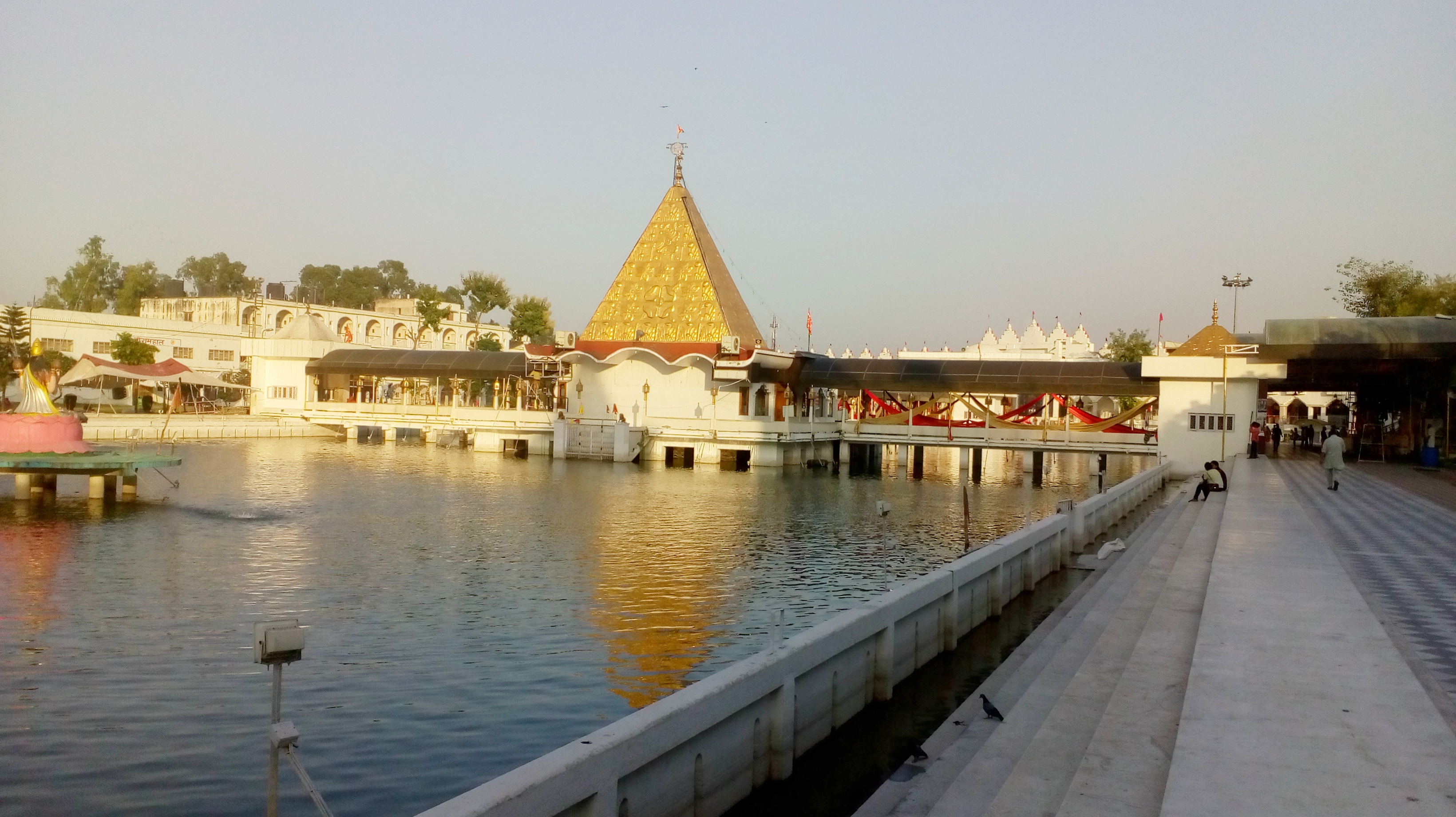
A 200-year-old Hindu temple the Devi Talab Mandir is located in the heart of the city. The main goddess in the temple is Goddess Durga, and the temple is one of the 51 Shakti Peethas in India. In recent times, the temple was renovated, and a few changes have been made to the original structure. The tank within the temple, which is just as old as the temple is considered to be sacred. You can also find a shrine for Lord Shiva inside the temple which depicts him seated on a tiger. The temple is open all day from 7 am to 8 pm.
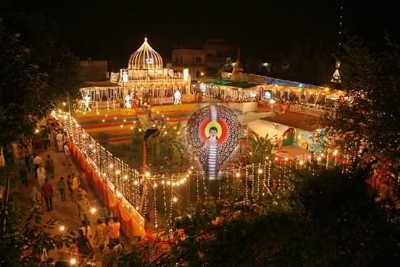
The Sodal Mandir’s main is known as Baba Sodal and is worshipped by many. According to the legend, Baba Sodal accompanied his mother to the river bank even when told to stay home. Furious, the mother cursed her child and told him to drown himself. Baba Sodal asked his mother to repeat her orders, and when she did, he jumped into the water never to appear again. It is said that the boy transformed himself into a holy snake and bid adieu to the mortal world. A temple was built where this incident took place which is now called the Baba Sodal Temple. Devotees take a dip in the holy water reservoir beside the temple where Baba Sodal had jumped and thereservoir is now called called Baba Sodal da Sarovar. Every year on Anant Chodas, also known as Anant Chaturdashi a fair is held at Sodal Temple where pilgrims cutting across lines of religion and caste attend to enjoy the festivities and collect the blessings of Baba Sodal.
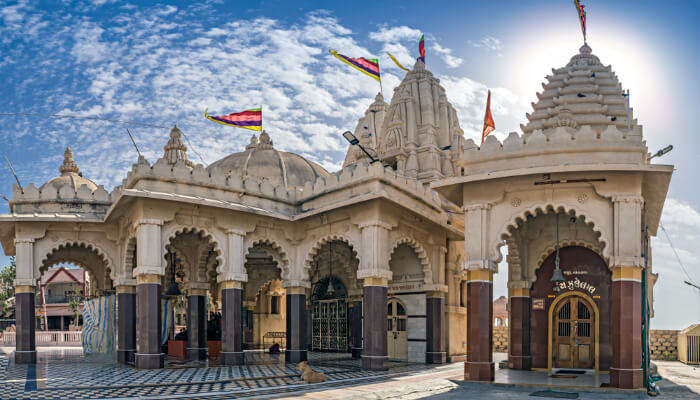
The Shiva Temple in Jalandhar was built by the Nawab of Sultanpur Lodhi and is located inside the Gur Mandi near Masjid Imam Nasar. The locals believe that the Nawab was attracted to a newly married Hindu girl but she, being a devotee of Lord Shiva, was saved by a serpent before he could deploy his devious plan to abduct her. Astonished by the sudden appearance of this serpent out of nowhere, the Nawab begged the girl for forgiveness and built this temple. The shrine has an unusual architectural design where its gate has been constructed in the style of a mosque while the remaining temple complex is in the Hindu style of architecture.
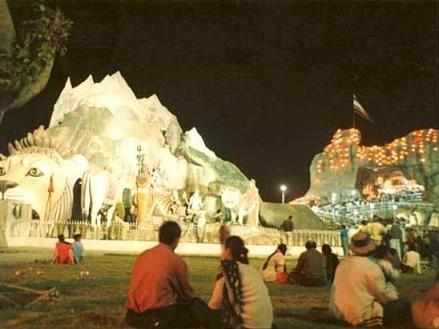
The Tulsi Mandir is an ancient temple which is dedicated to Vrinda, the wife of the demon Jalandhara and is located in Kot Kishan Chand. There is a tank on the side of the shrine that is believed to have served as the bathing place of the demon Jalandhara. Close by, within walking distance is the temple of Gupha which is dedicated to Goddess Annapurna, the Goddess of Plenty.
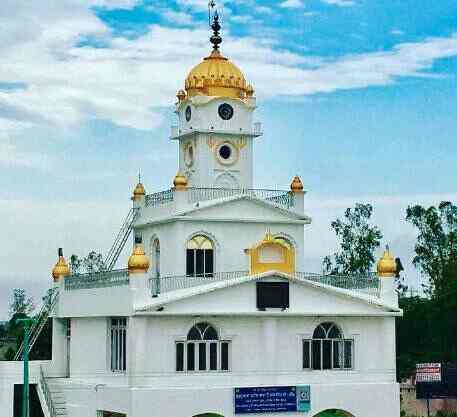
The Gurdwara Talhan Shaeeb Ji is the key gurudwara of the village of Talhan which is about 12 km east of the main Jalandhar city. This gurudwara is dedicated to Baba Nihal Singh and devotees flock here from all parts of the country because they believe that visiting this Gurudwara will increases their chances of moving overseas to study or work. Which is why, you will see offerings made here which are often in the form of plastic aeroplanes. This Gurudwara is famous for its annual Shaheedi Jor Mela or fair which is held in the memory of Shaheed Baba Nihal Singh.
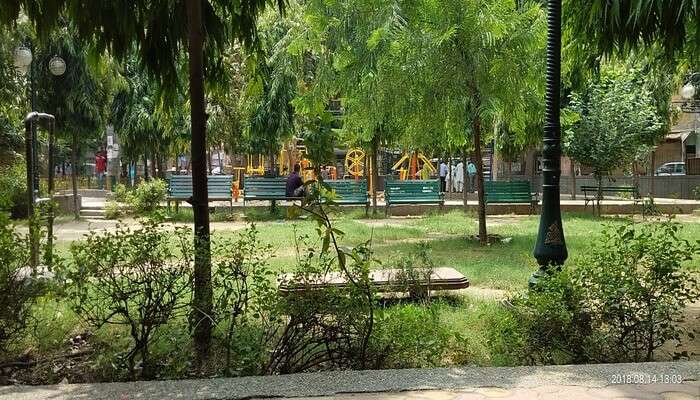
Formerly known as Company Bagh, the Nehru Garden is one of the oldest parks in Jalandhar. The park was recently renovated with a musical fountain, fancy electric lights, an entrance via three gates located at different areas of the garden, children’s fountain and a play arena with slides and swings. The oldest clock tower of the city still stands as an attraction point of the park. A memoir for Mahatma Gandhi has been staged in the form of a white coloured statue and there is also a library documenting India’s history of her struggle for freedom. The garden’s lush green area decorated with trees and fragrant flowers welcomes locals and tourists alike to spend some time in their busy days.
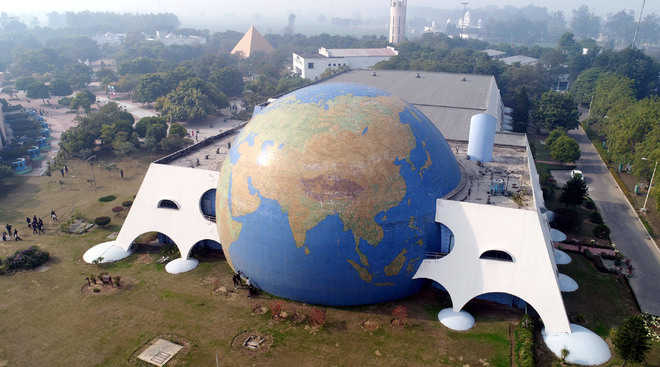
Science City, otherwise known as Pushpa Gujral Science City is a haven for science enthusiasts. Located at a distance of 15 km from Jalandhar, it is spread across an area of 72 acres. It uses concepts from physical, applied, natural and social sciences, engineering, technology, agriculture, health sciences, energy, industries, human evolution, environment, ecosystems, Jurassic parks as well as other as other intriguing aspects of space, IT, nuclear science, robotics and biotechnology. There is a theatre, a digital planetarium as well as a climate change theatre which are used to educate people about science. If you are a science enthusiast, the Science City is a must see destination while in Jalandhar. The Science City is open from 9 am to 6 pm, though tickets must be brought before 5 pm. Children below the age of 3 enter free, while adults and children pay according to the various packages you can purchase to view specific exhibits in the centre. If you plan to bring in a professional video camera, be prepared to pay INR 100 extra while that for a digital camera, it is INR 50.

The Jang-e-Azadi memorial is located at Kartarpur, on the Amritsar-Jalandhar Highway about 25 km northwest of Jalandar. A new memorial, it is spread over 25 acres of land and is a memorial for all the Punjabis who sacrificed their lives during the fight for Indian independence. The memorial also has detailed exhibits which showcases the Punjabi culture and has separate galleries for various themes as well as a tower called Shaheed-e-Minar which is 45 metres high. All the galleries in the memorial have massive domes which are shaped to look like flowers. Within the galleries, there are models which depict various scenarios from history which include historical details. Inside this memorial, the use of mobile phones is prohibited and photography is not allowed. The memorial is open from 10 am to 6 pm from Monday to Saturday and from 7 am to 7 pm on Sundays. Entry fees are INR 50 for adults and INR 30 for children.
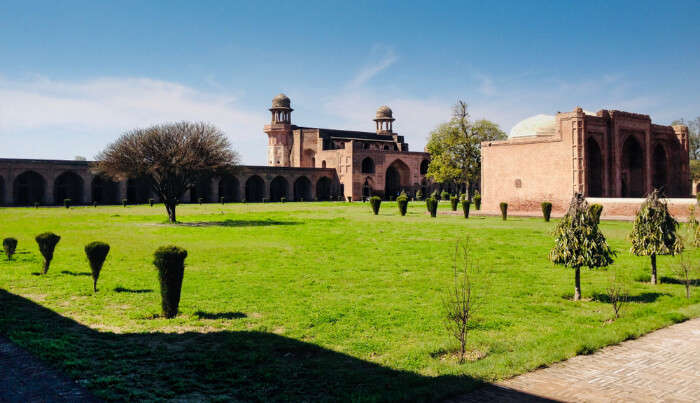
Kapurthala
Known as the city of Palaces and Gardens, Kapurthala was the capital of the Kapurthala State, ruled by the Ahluwalia Dynasty, a princely state in British India. The secular and aesthetic mix of the city with its prominent buildings based on French and Indo-Saracenic architecture speak of its princely past. According to the 2011 Census, Kapurthala is the least populated city in India.
The history of Kapurthala is the history of the Ahluwalia Dynasty. The Ahluwalia Dynasty was founded by Baba Jassa Singh Sahib. The Ahluwalia dynasty takes its appellation from the village of Ahlu near Lahore. The ascendancy of the Ahluwalia Misal, continued uninterrupted until the period when the Misals were consolidated into the Sikh Kingdom under Maharaja Ranjit Singh. Sardar Fateh Singh, the then ruler of Kapurthala co-signed the Treaty of Amritsar in 1806, and entered into a treaty with the East India Company, to halt the increasing Maratha influence. The fortunes of Kapurthala State, that once extended from Jagraon to the Beas, fluctuated during the two Anglo Sikh Wars.

Once the residence of the erstwhile Maharajah of Kapurthala state, Maharajah Jagatjit Singh, the Jagatjit Palace is the home of the Sainik School which trains boys for the National Defence Academy. The palace building’s architecture is based on the Palace of Versailles and Fontainebleau and is spread over a total area of 200 acres. It was designed by the French architect M. Marcel and built by a local builder Allah Ditta. It was built in the renaissance style with a sunken park in the front, known as Baija. Its Durbar Hall or Diwan-E-Khas is one of the finest in India, and the Plaster of Paris figures and painted ceilings represent the finest elements of French and Italian art and architecture. The construction of this palace started in 1900 and ended in 1908.
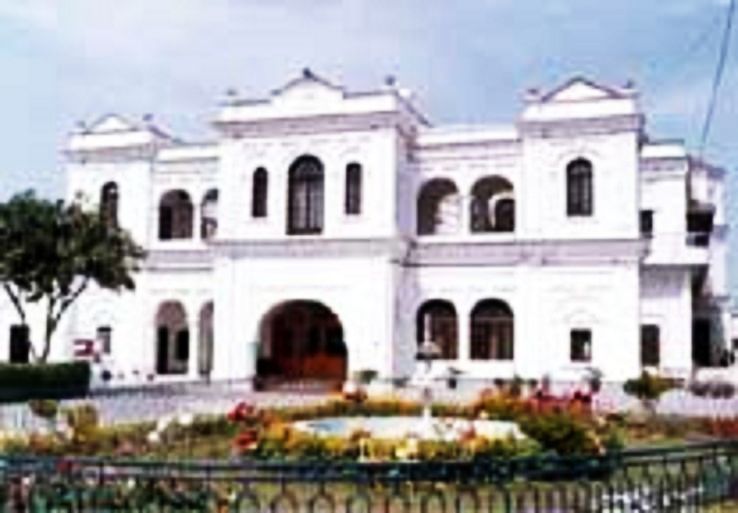
Built in 1962 by Kanwar Bikram Singh, in the Indo-French style architecture, the Elysee Palace is now the MGN school, but is still worth a visit for its sheer architectural beauty.
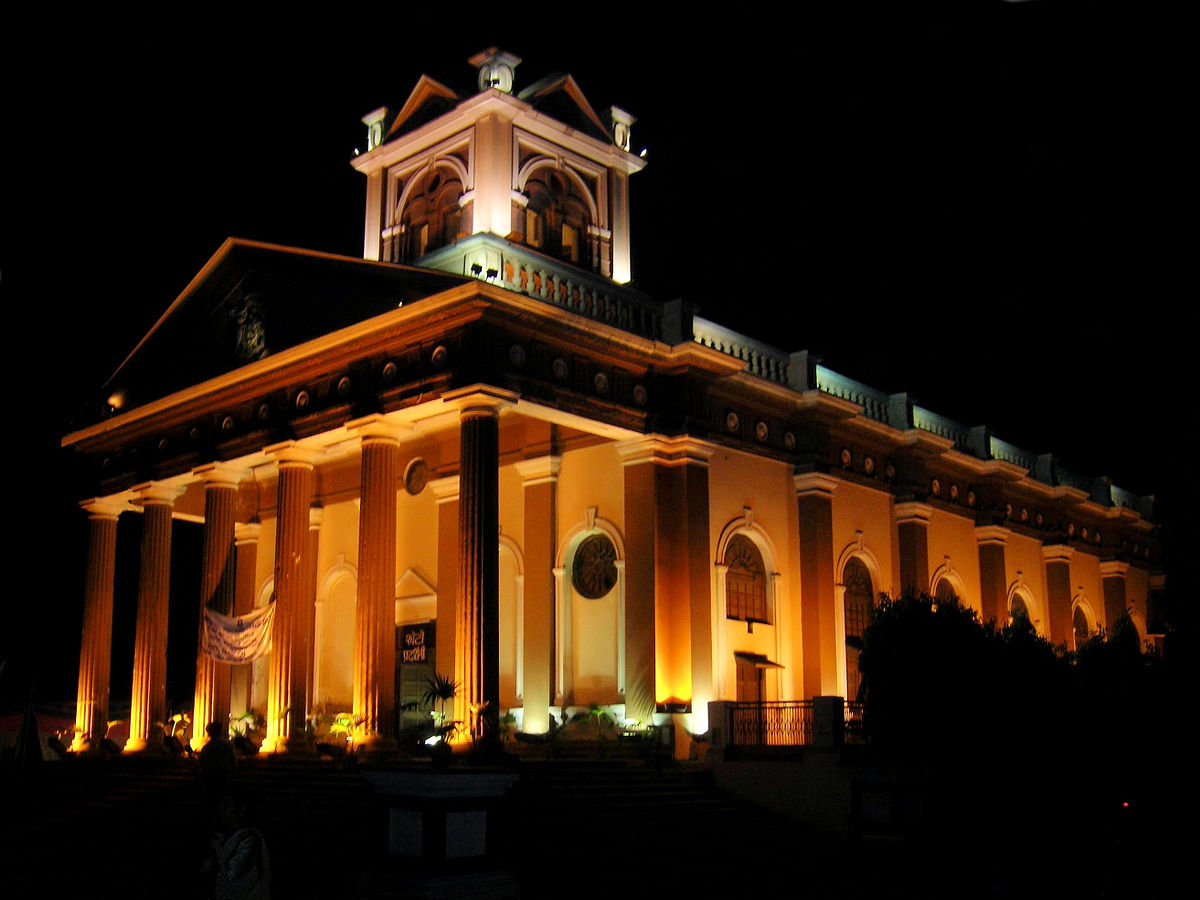
The Jagatjit Club is an elegant building situated in the heart of the city based on the Greek Roman style of architecture. Its design loosely resembles the Parthenon on the Acropolis of Athens and features the Coat of Arms of the erstwhile ruling family of Kapurthala with their royal motto “Pro Rege et Patria” which translates to “For King and Country”. The building has been used for a variety of purposes since it was constructed, it was used as a church in the early nineteenth century, as a cinema hall in the 1940s and now houses a local club which includes a well built badminton court, a card room and a dining hall.

The Shalimar Gardens are situated in roughly the centre of the city and provide an escape from the hustle-bustle of the city for locals and tourists alike. The Shahi Samadhs or the Royal Cenotaphs in the Shalimar Gardens emphasise the traditions of its ruling dynasty. Marble obelisks inside the red sandstone chambers, are memorials to the former rulers and their families. Nearby, a grand structure built in 1880 and built on a marble plinth, houses the Samadhs of Maharajas Kharak Singh, Jagatjit Singh and Paramjit Singh.

An example of the secular history of Kapurthala is the Moorish Mosque, a replica of the Grand Mosque of Marakesh, Morocco, which was built by the French architect, M Manteaux. Its construction was commissioned by the last ruler of Kapurthala, Maharajah Jagatjit Singh and took 13 years to complete between 1917 and 1930. It was then consecrated in the presence of the late Nawab of Bhawalpur. The Mosque’s inner dome contains decorations by the artists of the Mayo School of Art, Lahore. The Mosque is a National Monument under the Archaeological Survey of India. Its wooden model rests at the entrance of the Lahore Museum.

The large and imposing red sandstone building which is now painted white of the State Gurudwara was consecrated in 1915 under Revail Singh. Built in the Indo-Saracenic style, it has vast expanses of marble flooring which make it very cool to the feet. Located in the center of the city on the Sultanpur road, it was recently renovated. There is a big park behind the Gurudwara building.

The Gurdwara Ber Sahib is situated at Sultanpur Lodhi, which is one of the four sub-divisions of Kapurthala. This historic site is of great importance to Sikhism as it is said to be the very place where the first Sikh Guru, Guru Nanak, spent 14 years or more precisely, 14 years, 9 months and 13 days of his life . The place derives its name from a Ber or Zizyphus Jujuba tree said to be planted by Guru Nanak himself and under which he first uttered the Mool Mantra or the “Sacred Word or Revelation” of Sikhism.
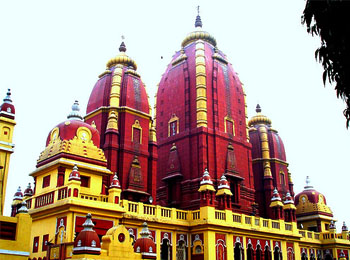
The Panch Mandir or Five Temples is a place of reverence for all faiths. The temple complex is home to five small temples. Built during the reign of Sardar Fateh Singh, an extraordinary feature of this temple is that from the entry door, one can view all the five idols and pay obeisance to all. There is a temple, Mandir Shivala Dewan Banna Mal Gautam in Nawanshahr in Punjab which is replica of the Panch Mandir in Kapurthala.
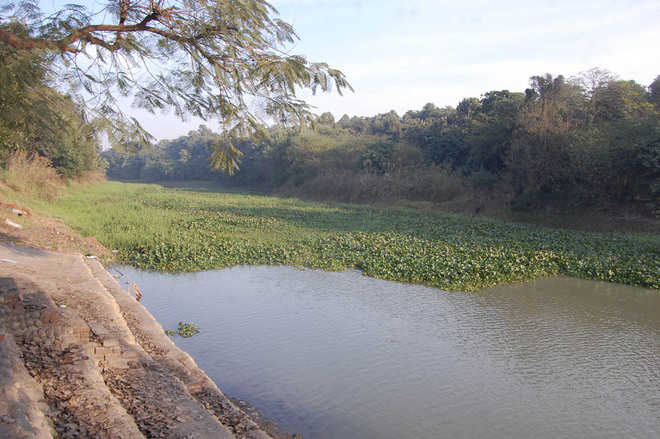
The Kanjli Wetlands, on the western Bein rivulet at the outskirts of the city, has been included in under the Ramsar Convention. It is a common site for bird watching and boating. An enormous project is currently being undertaken here to develop it into a destination for bird watching replete with modern-day facilities. Sadly the Kanjli Wetlands have been in a state of neglect lately with little attention being given by the authorities to the condition of flora and fauna and its surrounding infrastructure.

The Harike Wetland also known as “Hari-ke-Pattan”, with the Harike Lake in the deeper part of it, is the largest wetland in northern India. The wetland and the lake were formed by constructing the headworks across the Sutlej river in 1953. The headworks is located downstream of the confluence of the Beas and Sutlej rivers just south of Harike village. The rich biodiversity of the wetland which plays a vital role in maintaining the precious hydrological balance in the catchment with its vast concentration of migratory fauna of waterfowls including a number of globally threatened species has been responsible for the recognition accorded to this wetland in 1990, by the Ramsar Convention, as one of the Ramasar sites in India, for conservation, development and preservation of the ecosystem. This man-made, riverine, lacustrine wetland spreads into the three districts of Tarn Taran Sahib, Ferozepur and Kapurthala in Punjab and covers an area of 4,100 hectares. This wetland is at a location of about 35 km southwest of Kapurthala.


/buddhas-first-sermon-56a0c4795f9b58eba4b3a55d.jpg)



 Memories and Such