Thirukkalvanur Temple, Kanchipuram, Tamil Nadu
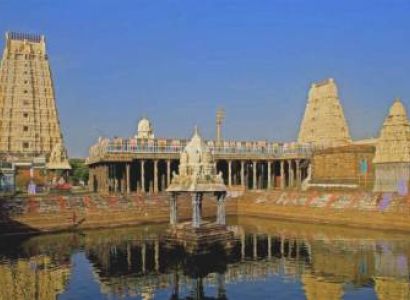
In Kanchipuram, where temples often sit inside other temples, and sacred stories overlap without fuss, Thirukkalvanur has a particularly unusual place. This Divya Desam is located within the Kamakshi Amman Temple complex in Kanchipuram, which already sets it apart from many other Vishnu shrines. The presiding deity here is generally identified as Aadhi Varaha Perumal, and the goddess is Anjilaivalli Thayar. The temple is small, almost hidden when compared to the larger sacred space around it, but that hidden quality suits its name. The word kalvan in Tamil means thief, and in this case, the meaning is not harsh or criminal. It refers to the divine thief, the one who quietly steals the heart of the devotee. That idea gives the temple its emotional tone. It is not a place of spectacle. It is a place of quiet recognition.
The central legend linked to Thirukkalvanur is simple but memorable. According to temple tradition, Goddess Parvati once referred to Vishnu here as Kalva, the thief. The story is usually understood in a devotional sense. Vishnu is the one who steals hearts, enters quietly, and takes away pride, restlessness and false certainty without making a dramatic show of it. In another layer of interpretation, the name reflects the playful intimacy often found in Tamil bhakti poetry, where the divine is not always approached with distance and formality but sometimes with familiarity, affection and teasing. That emotional nearness matters. It means that the relationship between devotee and deity is not cold or rigid. It is alive, personal and capable of tenderness.
The form of the deity deepens this feeling. Aadhi Varaha Perumal is worshipped here in a standing posture, and the Varaha association gives the shrine another layer of meaning. Varaha, the boar incarnation of Vishnu, is the one who lifted the earth out of danger and restored what had sunk into darkness. That image of rescue blends naturally with the gentler identity of Kalvan, the one who steals into the heart. Put together, the temple suggests that divine grace often works quietly. It does not always arrive with thunder. Sometimes it enters unnoticed and lifts what had become heavy, buried or forgotten. That is very much the mood of this shrine.
Historically, Thirukkalvanur belongs to the old sacred geography of Kanchipuram, a city shaped by Pallava, Chola and later Vijayanagara patronage. Over time, temples here grew in layers rather than in isolation. Shrines were built within larger complexes, and traditions lived side by side more naturally than later categories often suggest. Thirukkalvanur’s location within the Kamakshi Amman Temple reflects this older temple culture, where the presence of Vishnu within a Shakta setting did not seem strange but entirely possible. The shrine’s continued place in the Divya Desam tradition rests not on size or monumental architecture but on its recognition in the Alvar tradition and on the continuity of worship that kept it alive across generations.
Architecturally, Thirukkalvanur is modest to the point of almost being overlooked. It does not announce itself the way a large gopuram does. Instead, it sits within the larger Kamakshi complex as a smaller, quieter sacred presence. That actually strengthens the identity of the place. A hidden shrine suits a deity called Kalvan. Devotees often describe it as a place that must be sought rather than simply seen. The deity faces west and appears in a standing posture, while the associated theertham is known as Nithya Pushkarini and the vimanam is traditionally called Vamana Vimanam. These details matter because they anchor the shrine within the established language of Divya Desam worship, even though the physical space is small.
The experience of visiting Thirukkalvanur is shaped by that sense of discovery. Pilgrims entering the Kamakshi Amman Temple are often first absorbed by the scale and energy of the larger complex. To then find this smaller Vishnu shrine inside it creates a different rhythm. The mind shifts. The pace becomes slower. There is something intimate about standing before a deity who is not placed at the centre of public attention and yet carries the full weight of sacred presence. The shrine does not try to dominate its surroundings. It simply remains there, steady and inward. That is perhaps why the temple leaves a quiet impression rather than a dramatic one.
Ritual life here follows the ongoing rhythm of the larger temple complex. Because the shrine is located within Kamakshi Amman Temple, worship unfolds within a shared sacred environment. This also gives Thirukkalvanur a distinct character among the Kanchipuram Divya Desams. It is one of the two Divya Desams in Kanchipuram, located inside temples primarily associated with another tradition, the other being Nilathingal Thundam. That fact alone says something important about Kanchipuram. The city’s sacred map was never as narrow as people sometimes imagine. Devotion flowed through shared spaces, and shrines like Thirukkalvanur preserve that older memory.
Culturally, the temple carries the flavour of Tamil bhakti at its most intimate. The idea of the divine as thief appears often in devotional literature. It does not suggest wrongdoing but rather irresistible grace. The Lord steals the mind away from distraction. He steals the heart away from attachment. He steals the ego away from its own certainty. In this sense, Thirukkalvanur is not merely about one local legend. It reflects a much larger religious imagination in which God is not only ruler, protector or teacher, but also the beloved presence who enters quietly and changes a person from within.
This temple also says something about scale. Not every Divya Desam needs towering walls or vast courtyards to leave a mark. Some are remembered because of the mood they hold. Thirukkalvanur belongs to that kind of sacred place. It is smaller, more inward and easy to miss if one is rushing. But if one pauses, its meaning becomes clearer. The hidden shrine within a larger temple, the Lord called the thief, the Varaha form associated with rescue, and the atmosphere of stillness all work together. The result is a temple that feels less like public declaration and more like a private conversation.
In modern times, Thirukkalvanur continues to draw devotees who follow the Divya Desam circuit through Kanchipuram. Many come specifically looking for it because of its unusual location inside Kamakshi Amman Temple. Others discover it during a broader visit and are struck by the way the shrine holds its own within a much larger complex. Its physical modesty has not erased its devotional importance. If anything, it has made the temple’s identity more memorable. It remains one of those sacred places that teaches by tone rather than argument.
Thirukkalvanur ultimately represents the quiet, inward movement of grace. Aadhi Varaha Perumal as Kalvan, is not the Lord of dramatic conquest but the Lord who enters without noise and takes hold of the heart. In the wider Divya Desam journey, this temple adds something subtle but essential. It reminds us that not all transformation arrives with visible force. Sometimes it comes gently, almost unnoticed, like a divine theft. And by the time you realise what has happened, the heart has already been claimed.
Thiruppavalavannam Temple, Kanchipuram, Tamil Nadu
In Kanchipuram, where one temple often leads quietly into another, and each shrine seems to hold a different mood of the divine, Thiruppavalavannam stands out because of its colour. The presiding deity here is Pavalavannar Perumal, with Pavalavalli Thayar as the goddess. The name itself gives the temple its character. Pavalam means coral, and the Lord here is worshipped in a coral-red form. In a sacred town where Vishnu is seen as light, rain cloud, messenger, teacher and protector, this temple presents him through colour and the idea that the divine appears differently in different ages and for different needs. That makes Thiruppavalavannam quietly distinctive. It is not only about the form of the deity but about what that form suggests.
The mythology of the temple is tied to the belief that Vishnu appeared in different colours across the yugas. In Satya Yuga, when truth and order were said to be strong, he appeared in white. In the Treta Yuga, he was seen in a coral-red form. In Dvapara Yuga, he appeared in an emerald or green hue, and in Kali Yuga, he is often associated with a dark cloud-like colour. Thiruppavalavannam preserves the memory of that coral form. The symbolism is simple but layered. Colour here is not decorative. It reflects mood, era and the state of the world. The coral-red tone suggests warmth, life, energy and a certain immediacy. It is gentler than fire but more vivid than stillness. The temple, therefore, becomes a place where devotees encounter Vishnu in a form that feels alive, alert and present.
There is also a local legend connected with sage Bhrigu. According to tradition, Bhrigu once wished to test the patience and greatness of the Trimurti. When he approached Vishnu and behaved with disrespect, Vishnu did not react with anger. Instead, he responded with calmness and compassion. Ashamed of his own conduct, the sage was asked to continue his penance at Kanchipuram, where Vishnu later appeared before him in the coral-hued form of Pavalavannar. This story gives the temple another emotional layer. It is not just about colour, but about the grace that follows correction. The sage arrives in ego and leaves with humility. The Lord does not humiliate him. He simply reveals himself. That tone matters. It makes this temple feel less like a place of judgment and more like a place of inward softening.
Historically, Thiruppavalavannam belongs to the long religious life of Kanchipuram and carries clear traces of Chola and later Vijayanagara patronage. The temple is generally believed to have been built or expanded under the Cholas, and inscriptions on its walls date to the reigns of rulers such as Kulothunga Chola I and Rajadhiraja Chola. These records point to an active temple culture supported through endowments, ritual practice and continued upkeep. Later rulers added to that continuity rather than replacing it. Like many temples in Kanchipuram, Thiruppavalavannam was not frozen in one era. It grew through care, additions and repeated acts of preservation. That layered history gives the temple a steady dignity. It feels lived in rather than merely remembered.
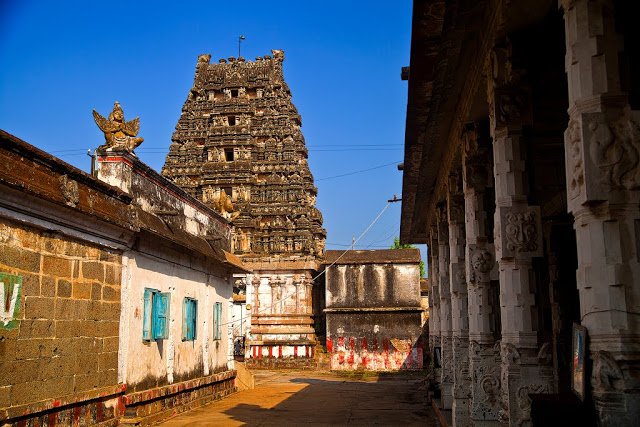
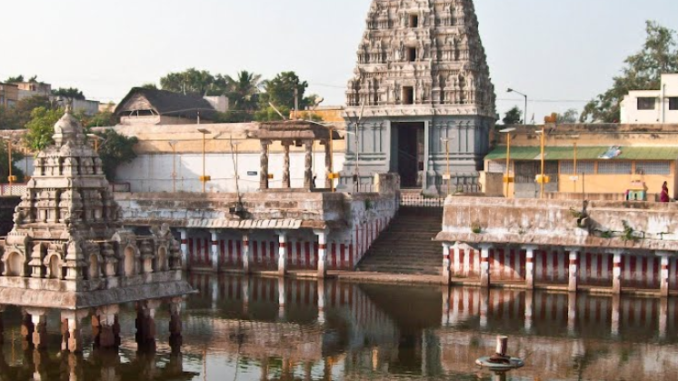
Architecturally, the temple reflects the classic grammar of South Indian temple design while remaining manageable in scale. A granite enclosure surrounds the shrine, and the Rajagopuram rises above the entrance with enough presence to mark the temple clearly without overwhelming the neighbourhood around it. Inside, the sanctum houses Pavalavannar in a standing posture, facing west, which already gives the shrine a slightly different orientation from many other Vishnu temples. The roof above the sanctum is known as the Vedasara Vimanam, and the temple tank is called Chakra Theertham. There are also shrines for the Alvars and other Vaishnavite figures within the complex, which helps situate the temple firmly within the larger Divya Desam tradition. The pillars and halls carry images linked to Vishnu’s stories, but the focus remains where it should be—on the coral-hued Lord in the sanctum.
What makes the architecture work is not ornament for its own sake but proportion. The temple feels balanced. The path inward is clear, the sanctum remains the emotional center, and the atmosphere supports attention rather than distraction. Pavalavalli Thayar’s shrine adds warmth to the temple’s tone. Her presence softens the visual intensity of the coral imagery and makes the space feel complete. As with many Kanchipuram temples, there is a sense that the deity and the goddess must be understood together. One brings radiance, the other reassurance.
The daily ritual life of the temple follows the Vaishnavite tradition, with six daily pujas said to be observed throughout the day. Worship unfolds in an ordered rhythm, and the temple becomes especially active during annual festivals, of which the Brahmotsavam in the Tamil month of Vaikasi is considered one of the most important. These observances keep the temple rooted in living practice rather than only literary memory. Devotees continue to come not just because the temple is old or celebrated in the Prabandham, but because it remains part of an active spiritual routine. That continuity matters more than grand claims. It is what keeps a sacred place alive.
The pilgrimage experience at Thiruppavalavannam feels very Kanchipuram in the best sense. The temple is woven into the town rather than set apart from it. You approach it through ordinary streets, and then, quite suddenly, the coral association begins to shape the way you see the shrine. Even before one thinks deeply about symbolism, the temple leaves an impression of warmth. It is not loud, and it is not severe. It feels approachable. For pilgrims moving through the Kanchipuram Divya Desam circuit, Thiruppavalavannam adds a different note after temples associated with cosmic strides, philosophical clarity or fierce protection. Here, the emphasis shifts toward tone and presence. The temple does not ask you to think only in terms of event or miracle. It asks you to notice the mood.
Culturally, the temple is also linked in popular memory with Thiruppachai Vannar, another Vishnu shrine in Kanchipuram associated with the green form of the Lord. Together, the two temples are often understood as paired reminders of Vishnu’s many colours across the yugas and moods of devotion. That pairing enriches Thiruppavalavannam’s place in Kanchipuram’s sacred map. It is not an isolated temple but part of a larger theological imagination in which colour, form and emotion all matter. The Alvars recognised this, and their hymns ensured that the temple remained within the living current of Tamil Vaishnavite devotion.
In modern times, the temple continues under the administration of the Hindu Religious and Charitable Endowments framework in Tamil Nadu, while still retaining the devotional atmosphere that gives it meaning. Pilgrims following the Divya Desam circuit continue to visit, and the temple remains an active stop rather than a forgotten one. Its inscriptions, ritual calendar and sustained worship all point to continuity rather than nostalgia.
Thiruppavalavannam ultimately represents the grace of divine presence as something vivid, changing and deeply responsive. Pavalavannar Perumal is not simply the Lord in one more temple form. He is the reminder that the divine can appear in different colours because human life itself moves through different moods, ages and needs. Sometimes grace comes like cool rain, sometimes like clear light, and sometimes, as here, like coral—warm, bright and unmistakably alive. In the larger Divya Desam journey, this temple adds a beautiful and subtle truth. The divine does not remain fixed in one shade. It meets the world as the world needs to see it.