2022 Week 38 Update

According to entrepreneur, author, and business coach, Brad Sugars, words can inspire, thoughts can provoke, but only action truly brings us closer to our dreams. What this means is that while we can read inspirational quotes and messages and even think of doing good, unless we get up and take action, all the thoughts and words in the world are useless.

BB is enjoying his project work and we hope he can do his best this semester. GG is enjoying her break and is also busy with her CCA activities. She is also busy working on her university applications and I hope that she gets admission to the course of her choice at the university she wants to go to.

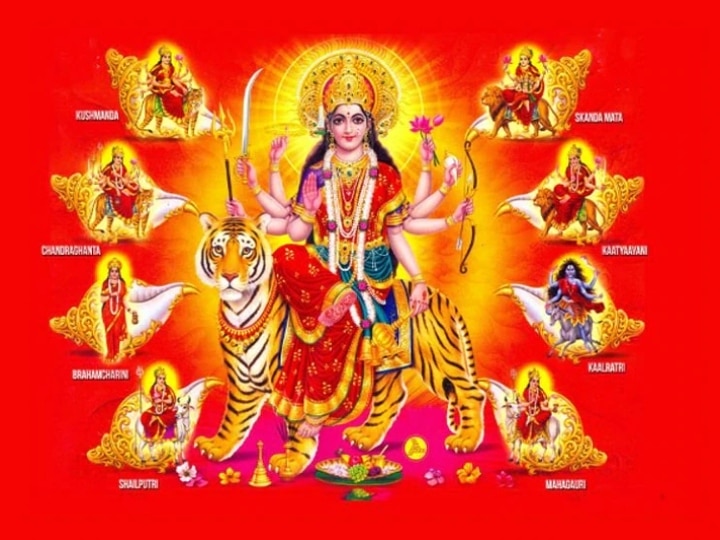
The festival of Navaratri starts tomorrow and for the next 10 days, we will spend time in prayer and contemplation of the female power. May the feminine energy bring you the blessings, luck and joy you deserve.

In My Hands Today…

The Truth about Leadership: The No-Fads, Heart-Of-The-Matter Facts You Need to Know – James M. Kouzes and Barry Z. Posner

In these turbulent times, when the very foundations of organizations and societies are shaken, leaders need to move beyond pessimistic predictions, trendy fads, and simplistic solutions. They need to turn to what’s real and what’s proven. In their engaging, personal, and bold new book, Kouzes and Posner reveal ten time-tested truths that show what every leader must know, the questions they must be prepared to answer, and the real-world issues they will likely face.

Based on thirty years of research, more than one million responses to Kouzes and Posner’s leadership assessment, and the questions people most want leaders to answer Explores the fundamental, enduring truths of leadership that hold constant regardless of context or circumstance-leaders make a difference, credibility, values, trust, leading by example, heart, and more Shows emerging leaders what they need to know to be effective; fans of The Leadership Challenge will find a dynamic new look at the real challenges leaders face today Drawing from cases spanning three generations of leaders from around the world, this is a book leaders can use to do their real and necessary work-bringing about the essential changes that will renew organizations and communities.

Poem: A Life Without Colours

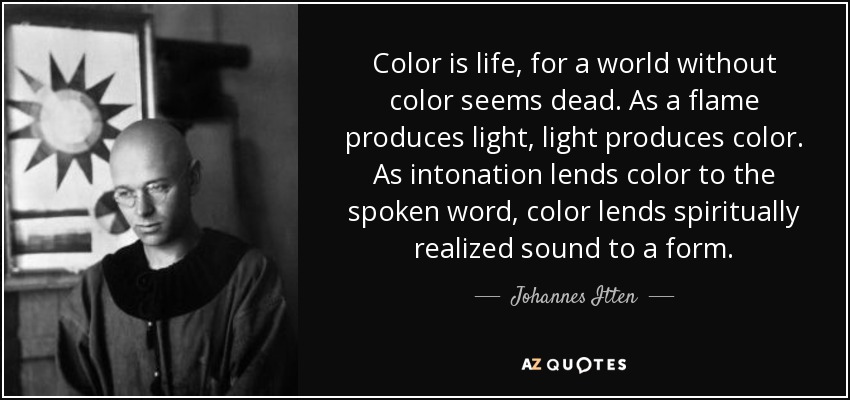
Colours play a huge role in our lives as, without colours, our world and life will be bleak and dingy. It has been scientifically proven that specific colours improve our mood and alter our emotions. But what if, one day, all colour disappeared from our world? This poem tries to understand how our lives would be in that situation.

A Life Without Colours

What would life be without colour?
A life that is bleak and grim
A life that is gloomy and dull
One in which the lights seem to be dim

The world as we know will be dull and dingy
Instead of the green of the grass and the blue of the sky
Instead of the bright colours of flowers and the sparkling depths of the sea
We would live in a world devoid of any hue as much as we may cry or sigh

Our eyes would never know the beauty on this planet
That which mother nature has endowed our world
The landscapes that are filled with flowers that sashay and strut
We would not be known as the blue planet, green and blue together swirled

Our lives will also mirror the lack of colour, becoming dull and blue
Butterflies will not be the bright jewels, a flower will be equal to a weed
Life will be monotonous, and so will our health which will be sad and true
We will plod through our life, waiting for it to end, like a wound that continues to bleed

I can’t imagine a life like this, in shades of black and white
Where the best colour I can hope for is a shade in between
This better be a nightmare I quickly awaken from tonight
And see the beauty around me in technicolour, the landscape and the scene

In My Hands Today…

Wall Disease: The Psychological Toll of Living Up Against a Border – Jessica Wapner

We build border walls to keep danger out. But do we understand the danger posed by walls themselves?

East Germans were the first to give the crisis a name: Mauerkrankheit, or “wall disease.” The afflicted—everyday citizens living on both sides of the Berlin wall—displayed some combination of depression, anxiety, excitability, suicidal ideation, and paranoia. The Berlin Wall is no more, but today there are at least seventy policed borders like it. What are they doing to our minds?

Jessica Wapner investigates, following a trail of psychological harm around the world. In Brownsville, Texas, the hotly contested US-Mexico border wall instils more feelings of fear than of safety. And in eastern Europe, Georgian grandfather pine for his homeland—cut off from his daughters, his baker, and his bank by the arbitrary path of a razor-wire fence built-in 2013. Even in borderlands riven by conflict, the same walls that once offered relief become enduring reminders of trauma and helplessness.

Our brains, Wapner writes, devote “border cells” to where we can and cannot go safely—so, a wall that goes up in our town also goes up in our minds. Weaving together interviews with those living up against walls and expert testimonies from geographers, scientists, psychologists, and other specialists, she explores the growing epidemic of wall disease—and illuminates how neither those “outside” nor “inside” are immune.

Memories: Grandmother Tales 4 – The Travel Edition

I guess I get my love for travel from my paternal grandmother, my ammama. She used to take off as the urge struck her and has travelled the length and breadth of the country. There are three such stories which I remember even today, two in which I star in and one which I remember.

When my sister was born, I was about less than a year and a half and because my mother could not handle a newborn and a toddler, my grandparents took off to New Delhi with me. Her daughter lived there with her husband, who worked in the Indian Air Force and they must have lived in airforce quarters. This would a when India’s then Prime Minister, Mrs Indira Gandhi imposed a state of emergency in the country. I was barely eighteen months at that time, so don’t have many memories of that period, but I remember the name Indira Gandhi used to be used to evoke fear, especially among children. So when I refused to do something, say eat my food, or drink my milk, I would be threatened by Mrs Gandhi. It’s a wonder that I didn’t develop any irrational fear of the government and especially Mrs Gandhi. But kudos to my grandmother, who at that age, (she must have been in her late forties or early fifties) took a toddler with her and looked after her for a few months. We returned to Bombay about three months or so later and by this time, my mum and sister were back home from my maternal grandmother’s house where she had gone for her delivery.

The next story is also from my childhood. I must have been around 7 or 8 and we were travelling by train to our ancestral village in the Tirunelveli district in the Tamil heartland. We were travelling with my father’s cousin for his wedding. My grandparents were also travelling with us but in a different compartment. After we reached Chennai, my parents, uncle and we children were supposed to take an overnight train to reach the district headquarters of Tirunelveli and my grandparents were to take the overnight train to the same destination. My sister and I threw a tantrum at the station and insisted we travel with my grandparents and not our parents. They had to give in, my grandparents giving in to us was a huge reason, and so we took the train. We were ticketless and had nothing with us, which was with our parents. I remember my grandfather talking to the ticket checker to buy tickets in the train and scrambling to find space for us to sleep in. They found space and we managed to get to Tirunelveli in one piece.

The last story does not have either my sister or me in a starring role. Around the time I was around 6, after my grandfather retired, my grandparents decided to go on an all-India pilgrimage. I don’t remember the specifics after all these years, but I do know it was led by a tour leader and was aimed at mostly senior citizens. They would take the train and maybe also travel by road and visit many of the important places of worship. The tour also included a trip to Kathmandu in Nepal to visit the Pashupatinath temple and other places of worship in that city. I do know they visited the temples of Badrinath and Kedarnath and from the north went all the way down south to Kanyakumari. I remember them making a stop in Mumbai during the trip and we went to the station to meet them. I have a memory of my uncle taking me with him to the station and then because I was so upset of meeting my ammama and then getting separated from her, he took me out and we came home quite late, after eating ice creams and chocolates. I remember this was during our summer holidays and because we reached home so late, I overslept the next day and was still asleep when my friends came to call me to play in the morning. From Kathmandu, my grandparents got me and my sister a beautiful chain with a butterfly pendant which I treasured for many years.

I hope you enjoyed this edition of my grandmother’s tales. If you want to read more about my memories of my ammama, here’s part 1, part 2, part 3 and one about my maternal grandmother.