Travel Bucket List: India – Consolidated List of all States

As I started planning my travel, I started relying on my research for where to go and found it slightly ungainly to search through all the material I have to reach a specific destination. So here’s a consolidated list of all Indian states, in alphabetical order with the cities and towns next to each part which makes it easier to get to the place you are interested in.
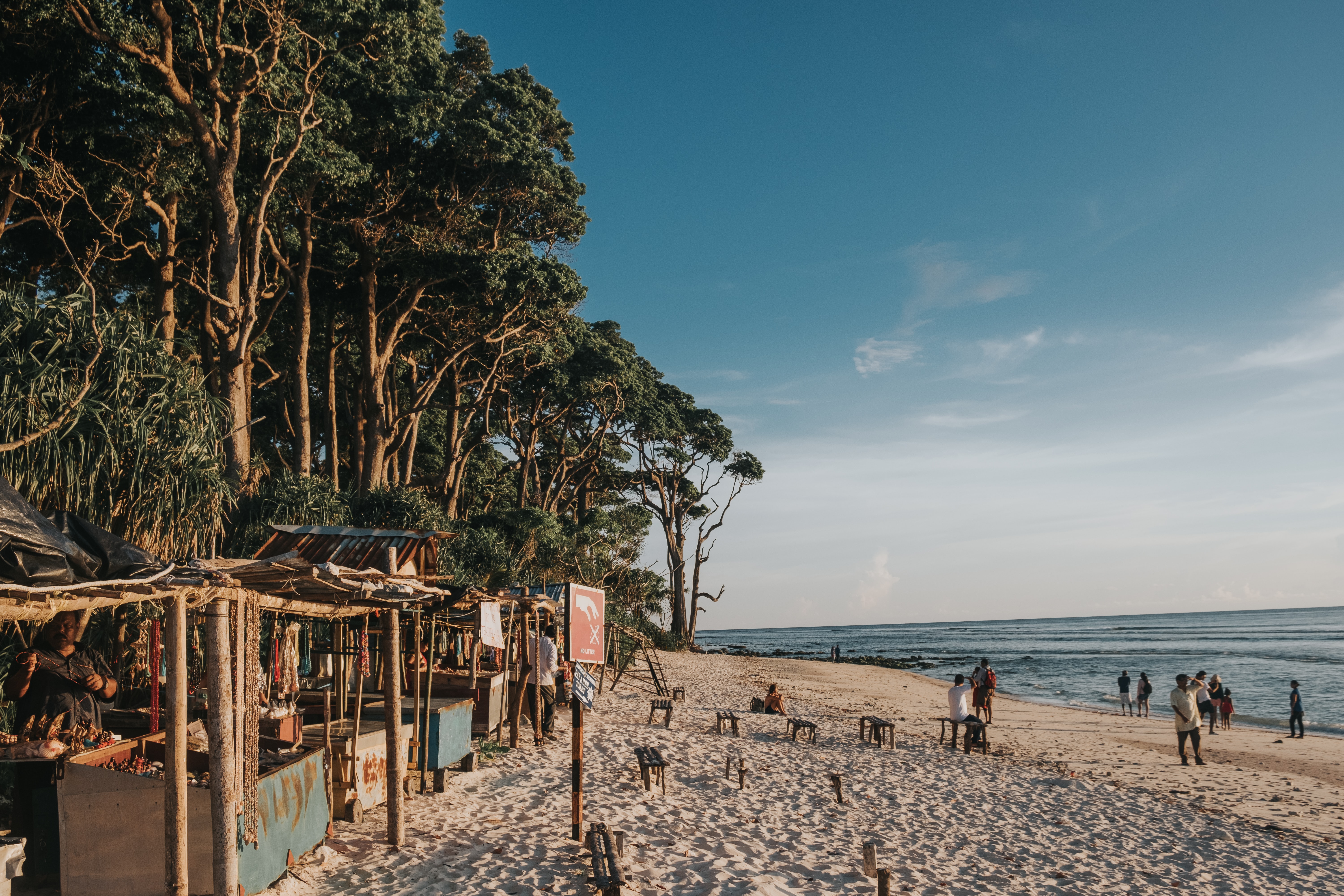
Photo by Ravigopal Kesari on Unsplash

Andaman and Nicobar Islands
Part 1 – Introduction and Overview
Part 2 – Port Blair
Part 3 – Corbyn’s Cove Beach, Wandoor Beach, Viper Island, Ross Island, North Bay Island, Red Skin Island, Middle Andaman Island, Long Island, Baratang Island, Parrot Island, North Passage Island, Guitar Island
Part 4 – Aves Island, North Andaman Island, Diglipur, Stewart Island, Ross & Smith Island, Jolly Buoy Island, Havelock Island
Part 5 – Neil Island, South Andaman Island, Rutland Island, Little Andaman Island, Cinque Island, Barren Island, Narcondom Island, Kathchal Island, Campell Bay & Indira Point
Part 6 – Mahatma Gandhi Marine National Park, Chidiya Tapu, The Chidiya Tapu Biological Park, Mount Harriet National Park, Saddle Peak National Park, Campbell Bay National Park, Galathea National Park, Middle Button Island National Park, North Button Island National Park, South Button Island National Park

Photo by Gowrisha CV on Unsplash

Andhra Pradesh
Part 1: Introduction and Overview, Vishakhapatnam
Part 2: Araku Valley, Vizianagaram, Annavaram, Samalkot, Kakinada, Rajahmundry
Part 3: Amaravathi, Vijayawada, Machilipatnam
Part 4: Guntur, Chirala, Nagarjunakonda, Srisailam, Cumbum, Nellore
Part 5: Kurnool, Mantralayam, Gandikota, Tadipatri, Anantapur, Puttaparthi
Part 6: Lepakshi, Horsley Hills, Chittoor, Srikalahasthi, Tirupati

Photo by Mayur More on Unsplash

Arunachal Pradesh
Part 1: Introduction and Overview, Itanagar, Bhalukpong
Part 2: Bomdila, Tawang
Part 3: Ziro, Yinkiong, Mechuka, Roing, Tirap
Part 4: Khonsa, Changlang, Miao, Anini, Pasighat, Aalo, Daporijo, Anjaw, Tezu
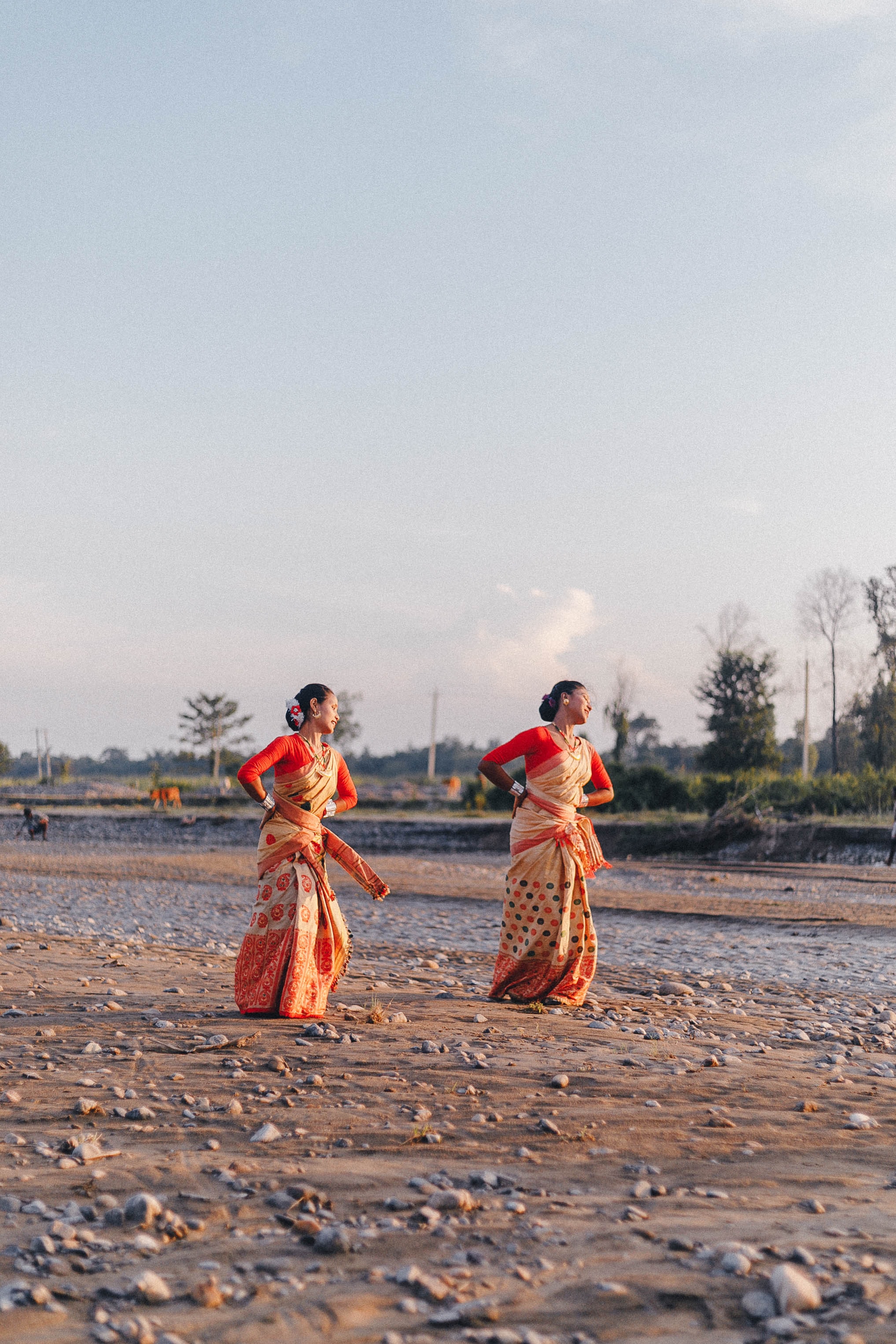
Photo by Nilotpal Kalita on Unsplash

Assam
Part 1: Introduction and Overview, Guwahati, Dispur
Part 2: Kokrajhar, Bongaigaon, Goalpura, Barpeta, Nalbari, Hajo, Sualkuchi
Part 3: Darrang, Mayong and Morigaon, Nagaon, Tezpur, Jorhat
Part 4: Sivasagar, Majuli, Dhemaji, Dibrugarh, Tinsukia, Digboi
Part 5: Sadiya, Haflong, Jatinga, Diphu, Karimganj, Hailakandi, Silchar
Part 6: Raimona National Park, Manas National Park, Orang National Park, Kaziranga National Park, Nameri National Park, Dibru Saikhowa National Park, Dihing Patkai National Park

Photo by ARTO SURAJ on Unsplash

Bihar
Part 1: Introduction and Overview
Part 2: Patna
Part 3: Hajipur, Nalanda
Part 4: Rajgir, Sasaram, Kaimur
Part 5: Bodh Gaya, Vaishali
Part 6: Muzzafarpur, Sitamarhi, Madhubani, Lauriya Nandangarh, Bhagalpur, Valmiki National Park Tiger Reserve and Wildlife Sanctuary
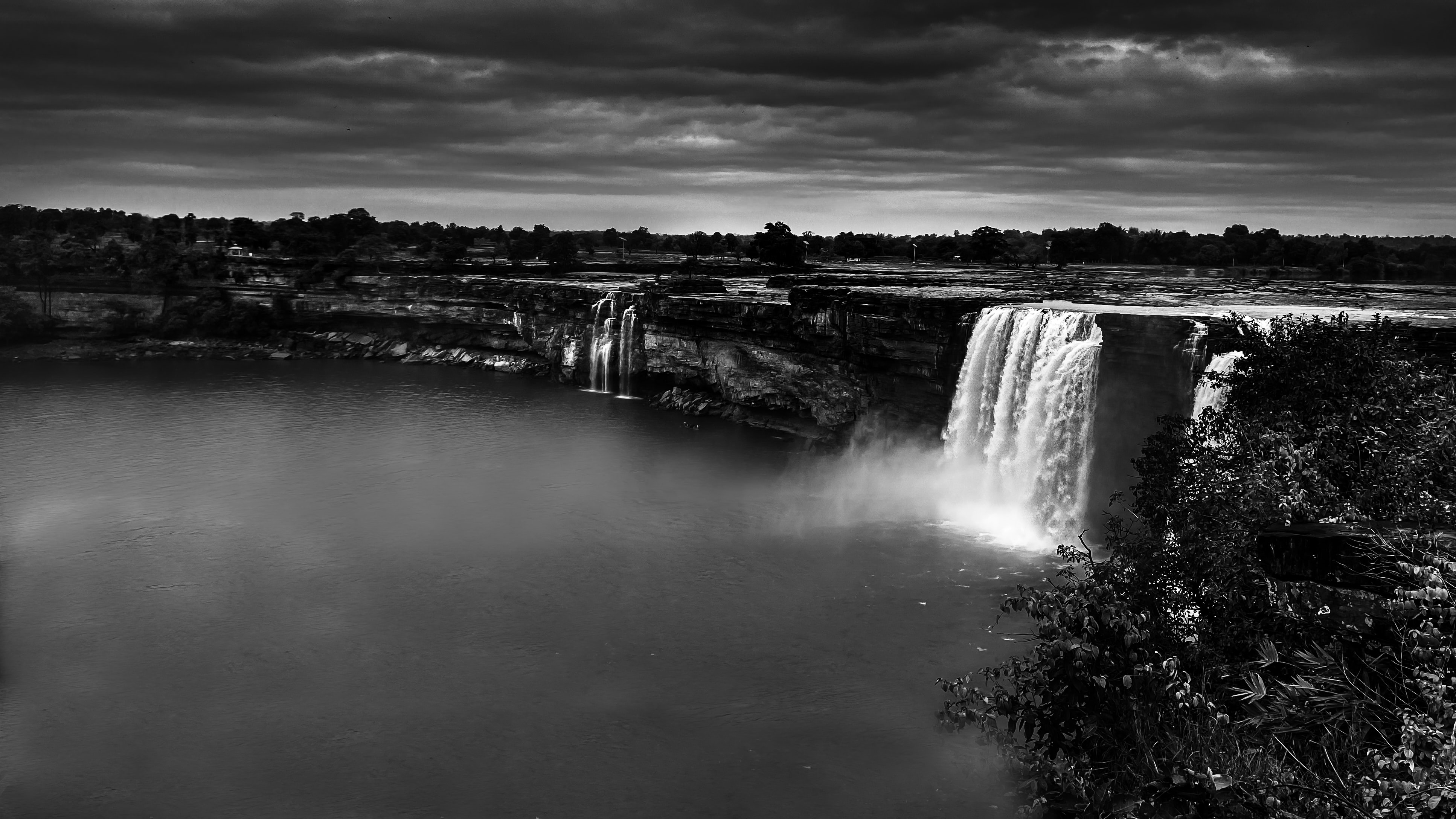
Photo by Ayiman Mohanty on Unsplash

Chhattisgarh
Part 1: Introduction and Overview, Raipur, Champaran
Part 2: Bhilai, Durg, Rajnandgaon, Chirmiri, Madku Dweep, Bhoramdeo Temple, Guru Ghasidas National Park
Part 3: Achanakmar Tiger Reserve, Bilaspur, Raigarh, Korba, Ambikapur, Barnawapara Wildlife Sanctuary, Mainpat, Malhar
Part 4: Mahasamund, Sirpur, Rajim, Jagdalpur, Dhamtari, Dhamtari, Dantewada, Kanger Ghati National Park

Dadra and Nagar Haveli and Daman and Diu
Part 1: Introduction and Overview, Daman
Part 2: Diu
Part 3: Dadra and Nagar Haveli

Delhi
Part 1: Introduction and Overview, India Gate, Red Fort, Qutub Minar, Jantar Mantar, Rajghat
Part 2: Iron Pillar, National War Memorial, Rajpath, Rashtrapati Bhavan, Agrasen Ki Baoli, Ghalib Ki Haveli, Alai Darwaza/Minar, Bhool Bhulaiya ka Mahal, Purana Qila,
Part 3: Tughlaqabad Fort. Siri Fort, Feroza Kotla Fort, Swaminarayan Akshardham Temple, ISKON Mandir, Birla Temple, Chhatrapur Temple, Kalkaji Temple, Kali Bari Temple, Yogmaya Temple, Sri Digambar Jain Lal Mandir, Lotus Temple
Part 4: Jama Masjid, Quwwat-ul-Islam Mosque, Fatehpuri Masjid, Jamali Kamali Mosque and Tomb, Nizamuddin Dargah, Humayun’s Tomb, Safdarjung’s Tomb, Isa Khan’s Tomb, Hijron ka Khanqah, Nicholson Cemetery
Part 5: Gurudwara Bangla Sahib, Gurudwara Sis Ganj Sahib, Rakab Ganj Gurdwara, Sunder Nursery, Lodhi Gardens, Garden of Five Senses, National Rose Garden, Mehrauli Archaeological Park, Pradhanmantri Sangrahalaya, National Museum, Nehru Memorial Museum and Library, Rashtrapati Bhavan Museum, Indian War Memorial Museum, National Handicrafts Museum
Part 6: Indira Gandhi Memorial Museum, Sanskriti Museums, Charkha Museum, Sulabh International Museum of Toilets, Shankar’s International Dolls Museum, Museum of Archaeology, National Railway Museum, Museo Camera, National Gallery of Modern Art, Kiran Nadar Museum of Art, Museum of Illusions, National Zoological Park, National Bal Bhavan, Connaught Place, Chandni Chowk, Dilli Haat, Sarojini Market, Lajpat Nagar, Majnu ka Tila, Pragati Maidan

Photo by Sarang Pande on Unsplash

Goa
Part 1: Introduction and Overview
Part 2: North Goa, Vagator Beach, Anjuna Beach, Calangute Beach, Sinquerim Beach, Candolim Beach, Arambol Beach, Mandrem Beach, Morjim Beach, Miramar Beach, Siridao Beach, Bogdeshwara Temple, Mangeshi Temple, Mahalaxmi Temple, Fort Aguada, Chapora Fort, Reis Magos Fort, Basilica of Bom Jesus, Church of Our Lady of Immaculate Conception, Chapel of St. Catherine, Church of Mae De Deus, Goa State Museum, Houses of Goa Museum, Museum of Christian Art, Casino Palms, Chorao Island, Harvalem Waterfalls
Part 3: South Goa, Butterfly Beach, Betalbatim Beach, Agonda Beach, Mobor Beach, Hollant Beach, Palolem Beach, Cansaulim Beach, Colva Beach, Talpona Beach, Kakolem Beach, Benaulim Beach, Our Lady of Remedios Church, Saviour of the World Church, St. Alex Church, Shantadurga Temple, Tambdi Surla Mahadev Temple, Chandreshwar Bhoothnath Temple, Naval Aviation Museum, Goa Chitra Museum, Big Foot Museum, The Grande Island, Pequeno Island, Bhagwan Mahaveer Wildlife Sanctuary, Netravali Wildlife Sanctuary, Cotigao Wildlife Sanctuary, Dudhsagar Falls, Bamanbudo Waterfalls, Netravali Bubbling Lake, Cabo de Rama Fort, Chandor
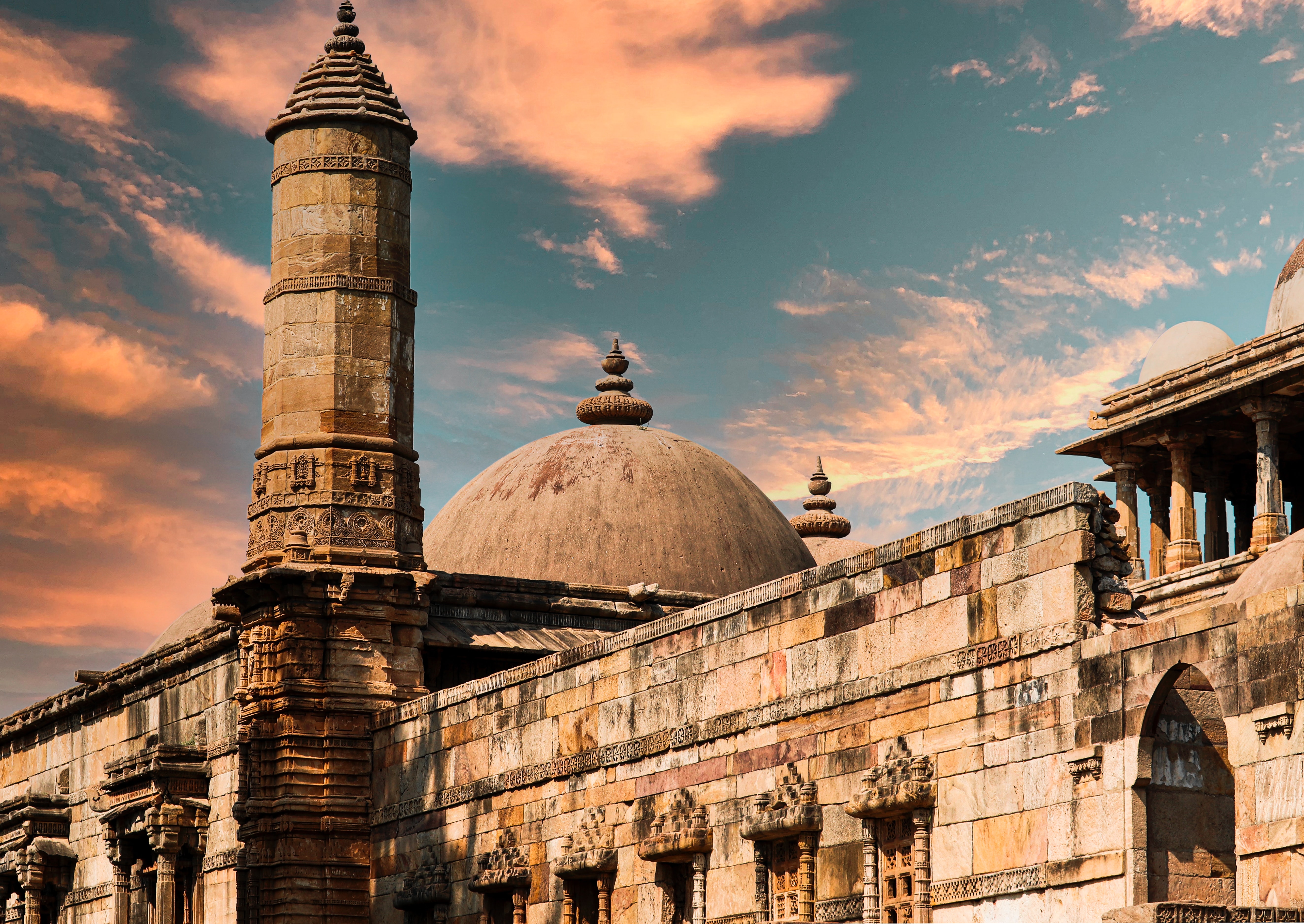
Photo by Parth Kateliya on Unsplash

Gujarat
Part 1: Introduction and Overview
Part 2: Surat, Vapi, Udvada, Valsad, Bilimora, Navsari, Bharuch, Saputara
Part 3: Ahmedabad, Lothal, Vadodara, Anand
Part 4: Gandhinagar, Patan, Mehsana, Palanpur
Part 5: Rajkot, Jamnagar, Dwarka, Porbandar, Junagadh, Bhavnagar, Palitana,
Part 6: Kutch, Bhuj, Mandvi, Rann of Kutch, Anjar
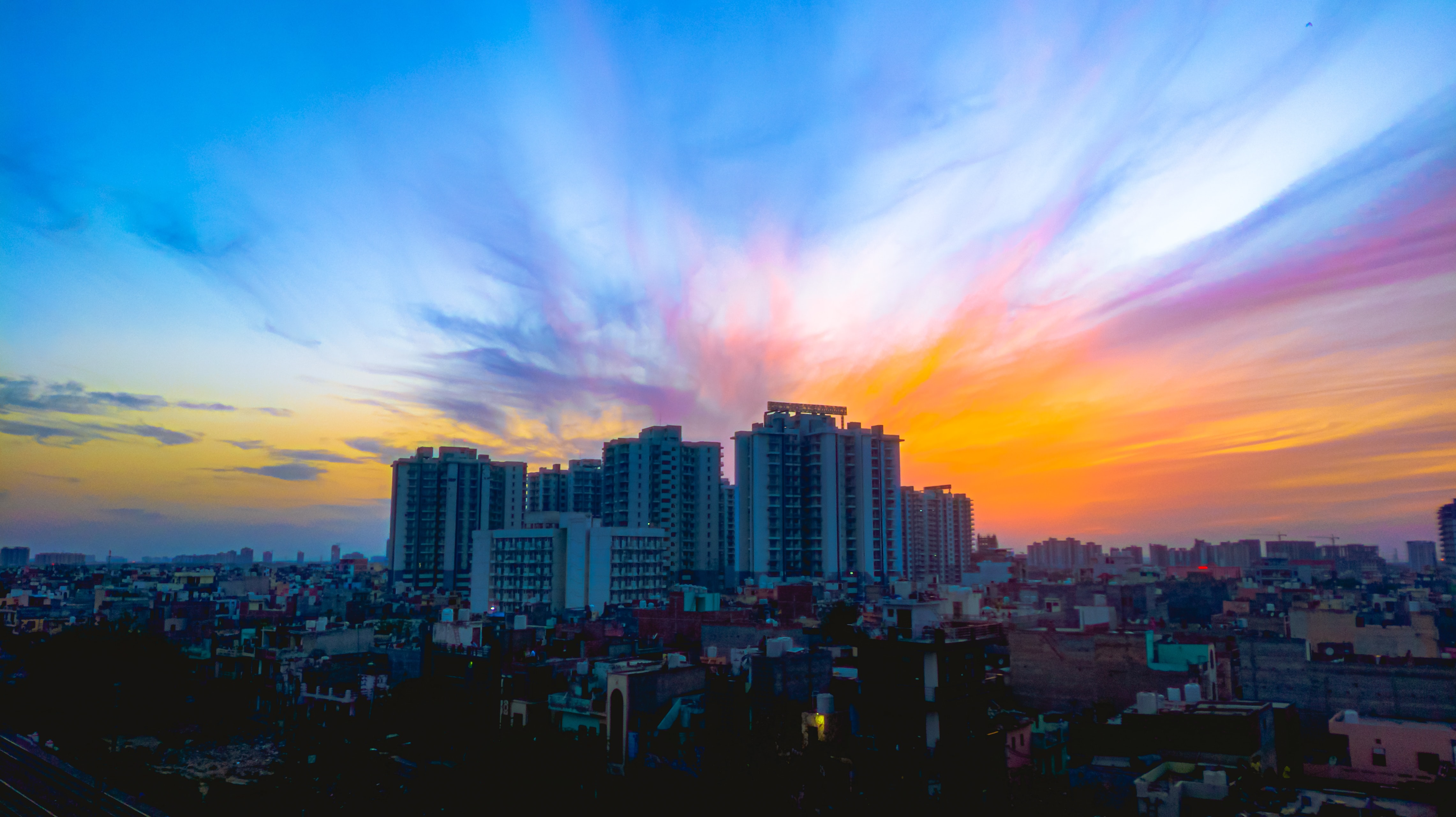
Photo by Sooraj Dev on Unsplash

Haryana
Part 1: Introduction and Overview, Gurugram, Manesar, Sohna
Part 2: Faridabad, Nuh, Murthal, Rohtak, Meham
Part 3: Hisar, Panipat, Karnal
Part 4: Kurukshetra, Ambala
Part 5: Panchkula, Morni Hills, Narnaul
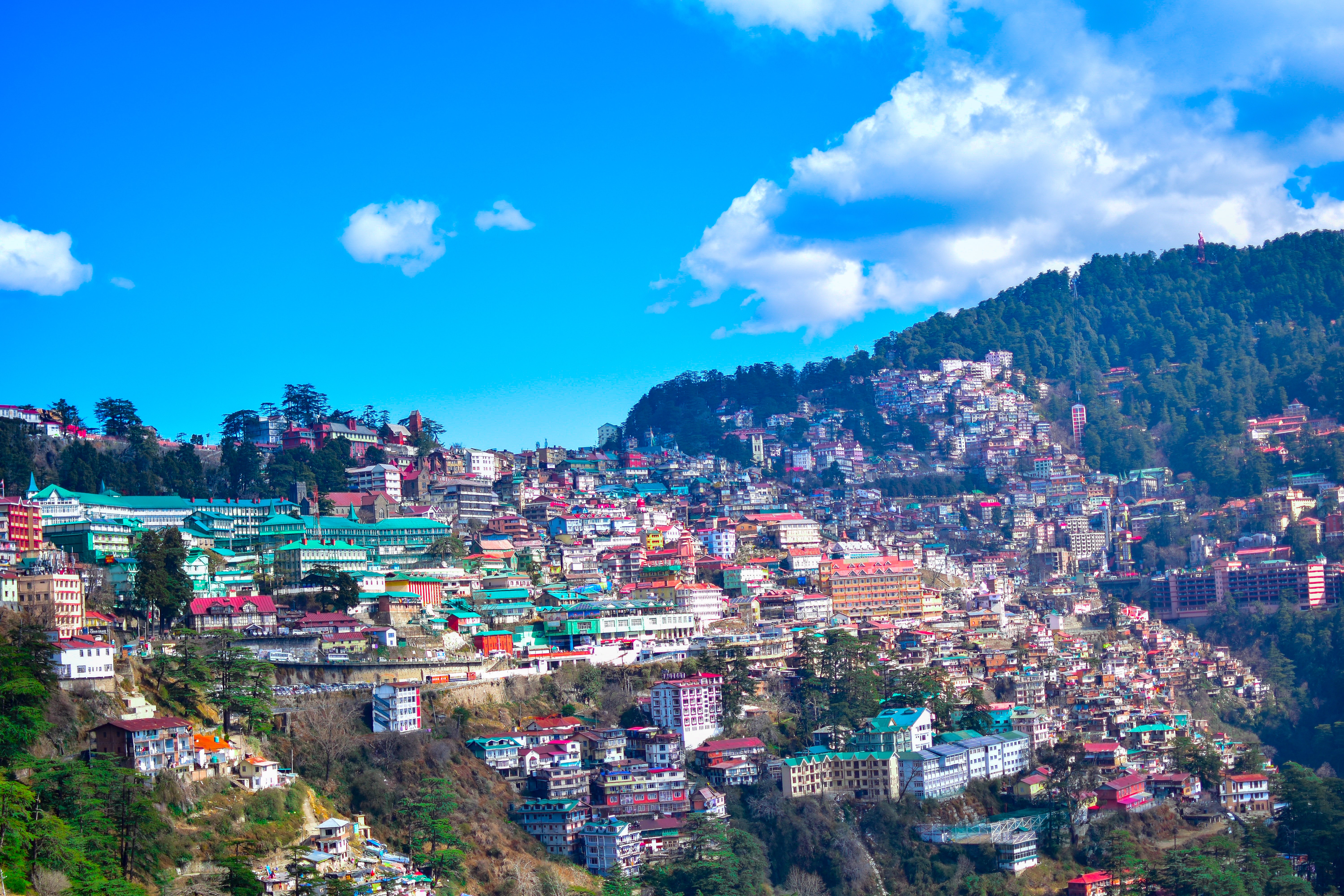
Photo by Naman Pandey on Unsplash

Himachal Pradesh
Part 1: Introduction and Overview, Shimla, Kufri, Fagu, Theog, Hatkoti Valley, Chanshal Valley
Part 2: Chail, Solan, Barog, Nahan, Sirmour, Paonta Sahib, Shoghi, Kasauli, Arki, Nalagarh, Dadasiba, Bilaspur, Dalhousie,
Part 3: Kangra, Khajjiar, Bharmour, Chamba, Tattapani, Jalori Pass, Jibhi, Mandi
Part 4: Trithan Valley, Bhuntar, Sainj Valley, Barot, Bir Billing, Palampur, Kasol, Nagar, Manikaran Sahib, Tosh, Parvati Valley
Part 5: Kullu, Manali, Dharamsala, McLeodganj
Part 6: Keylong, Pin Valley National Park, Spiti Valley, Narkanda, Mashroba, Kinnaur, Sarahan, Sangla Valley, Kalpa, Pangi Valley, Nako
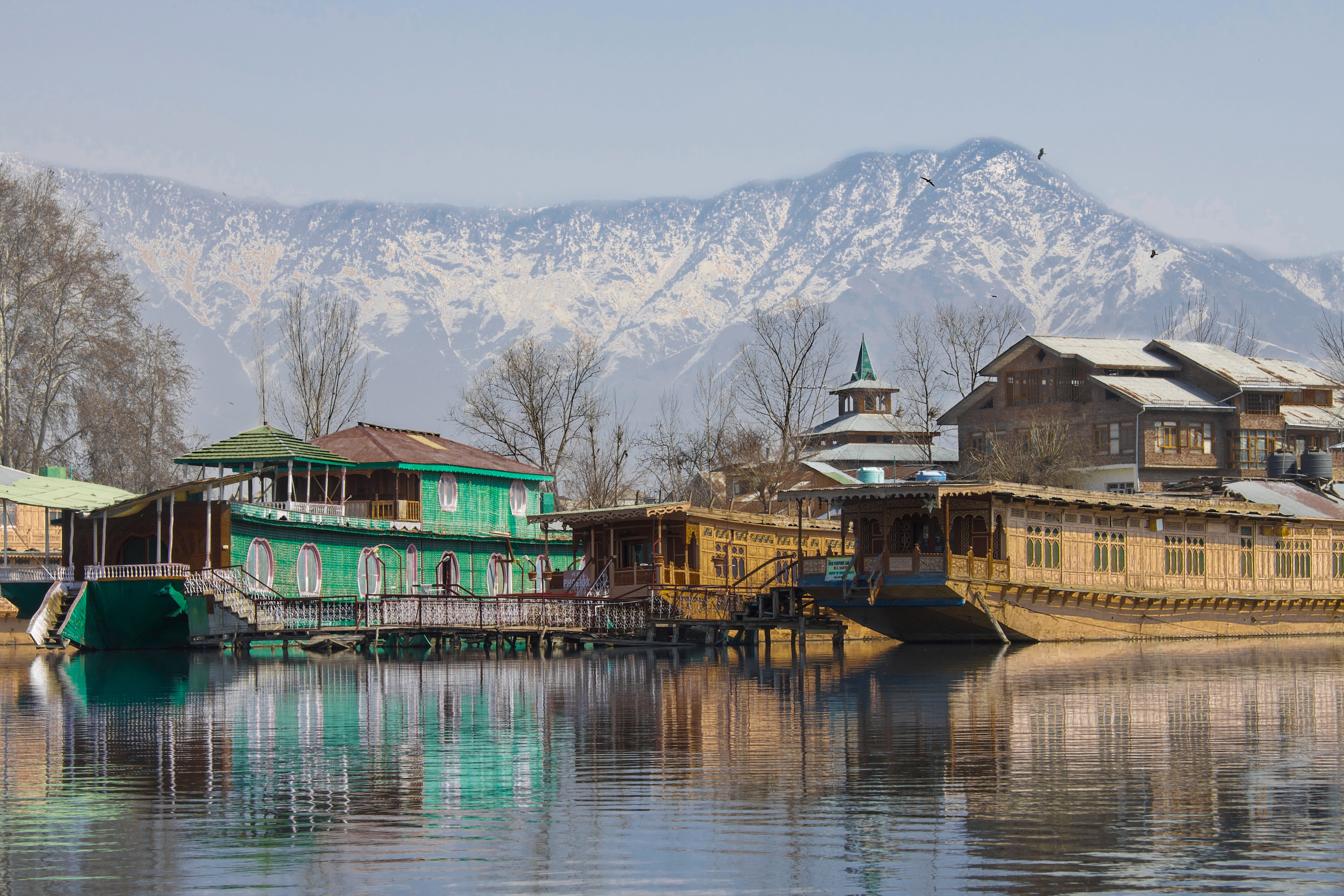
Jammu & Kashmir and Ladakh
Part 1: Introduction and Overview, Kashmir, Srinagar, Gulmarg, Sonmarg, Pahalgam, Amarnath, Pulwama, Kupwara, Poonch, Anantnag, Baramulla, Dachigam National Park
Part 2: Jammu, Patnitop, Rajouri, Udhampur, Kathua, Katra, Vaishno Devi, Kishtwar
Part 3: Ladakh, Leh, Leh Palace, Thiksey Gompa, Pangong Lake, Magnetic Hill, Nubra Valley and Khardung La Pass, Kargil, Drass, Hemis High Altitude Wildlife Sanctuary, Lamayuru, Lake Tso Moriri

Photo by Aryan Singh on Unsplash

Jharkhand
Part 1: Introduction and Overview, Ranchi
Part 2: Hazaribagh, Bokaro Steel City
Part 3: Jamshedpur, Neterhat
Part 4: Dhanbad, Shikarji, Deoghar, Dumka

Karnataka
Part 1: Introduction and Overview
Part 2: Bengaluru
Part 3: Mysuru, Mangalore, Belgaum
Part 4: Hubli-Dharwad, Gulbarga, Bidar, Badami, Bijapur, Hassan, Shimoga, Hampi, Sharavathi Valley Wildlife Sanctuary, Bhadra Wildlife Sanctuary, Brahmagiri Wildlife Sanctuary, Nagarhole National Park, Bandipur National Park, Ranganathittu Bird Sanctuary, Jog Falls, Shivanasamudra Falls, Kodasalli Backwater
Part 5: Coorg, Chikmagalur, Sakleshpur, Kudremukh, Kemmanagundi, Kotagiri, Masinagudi, Devarayanadurga, Karwar, Devbagh, Kumta, Netrani Island, Murudeshwar, Maravanthe, St. Mary’s Island, Udipi
Part 6: Udipi, Kollur, Sringeri, Dharmasthala, Horanadu, Talakadu, Belur, Shravanbelagola, Gokarna, Murudeshwar, Koodli, Srirangapatna, Pattadakal, Aihole, Kalasa
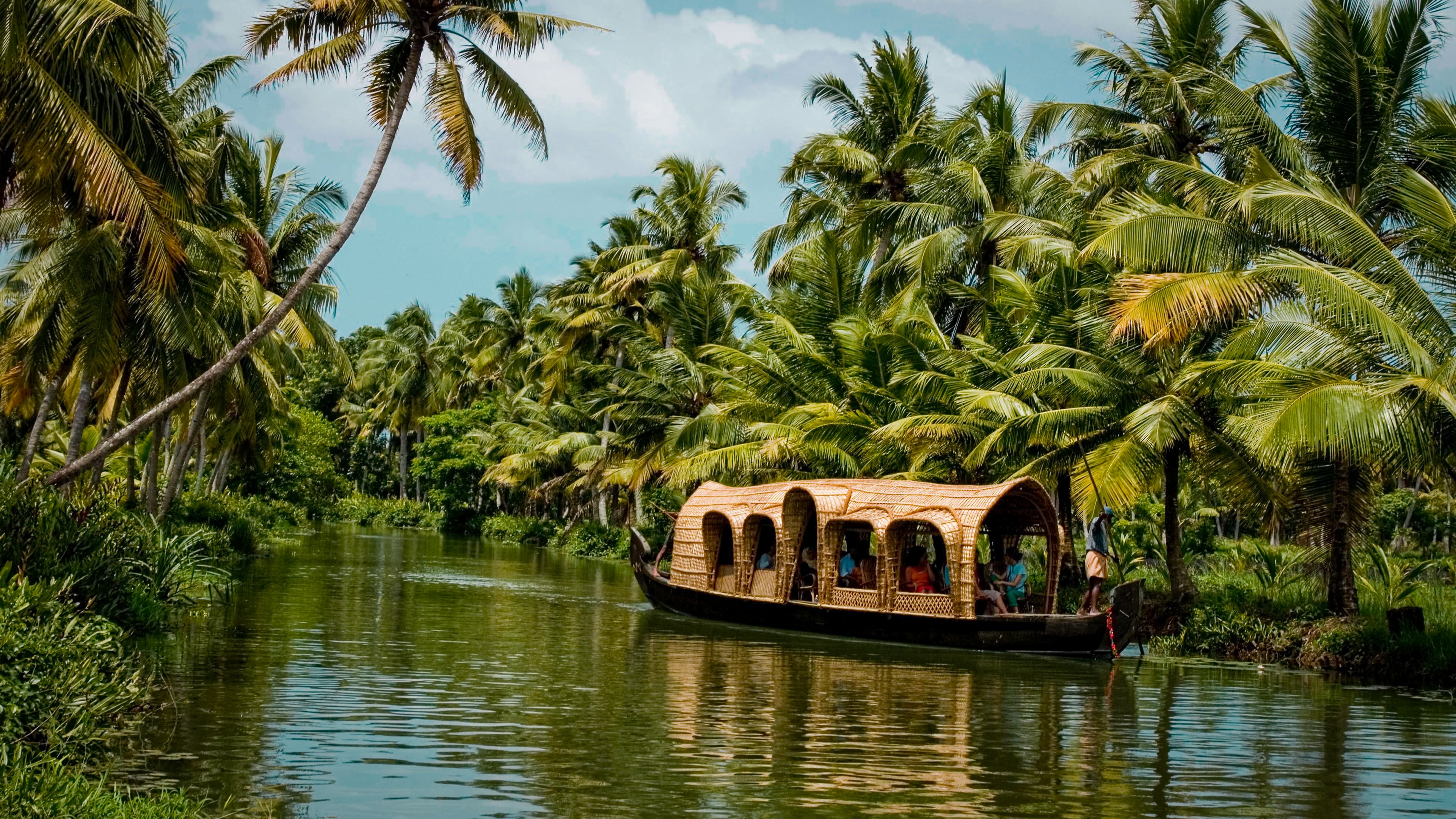
Kerala
Part 1: Introduction and Overview
Part 2: Kasaragod, Kannur, Kozhikode
Part 3: Wayanad, Mallapuram, Palakkad
Part 4: Thrissur, Ernakulam, Alappuzha
Part 5: Kottayam, Idukki, Patanamthitta
Part 6: Kollam, Tiruvanathapuram

Photo by Sachin Benny on Unsplash

Lakshadweep Islands
Part 1: Introduction and Overview
Part 2: Aminidivi, Cora Divh, Sesostris Bank, Bassas de Pedro, Cherbaniani Reef, North Islet, Byramgore Reef, Chetlat Island, Bitra Par, Kilthan Island, Kadmat Island, Kadmat Beach, Elikalpeni Bank, Perumal Par, Amini Island
Part 3: Laccadive, Amindivi, Agatti Island, Bangaram, Pakshipitti, Andrott Island, Kavaratti, Kalpeni, Suheli Par
Part 4: Minicoy, Maliku Atoll, Investigator Bank, Viringili

Madhya Pradesh
Part 1: Introduction and Overview
Part 2: Bhopal
Part 3: Indore, Ujjain, Alampur
Part 4: Maheshwar, Omkareshwar, Mandu, Burhanpur
Part 5: Chanderi, Shivpuri, Orchha, Khajurao
Part 6: Gwalior, Jabalpur, Bhedaghat, Panchmarhi, Amarkantak, Bandhavgarh National Park, Kanha National Park, Pench National Park

Photo by Raj Rana on Unsplash

Maharashtra
Part 1: Introduction and Overview, Mumbai
Part 2: Pune
Part 3: Matheran, Lonavala, Khandala, Rajmachi, Lavasa, Kamshet, Mahabaleshwar, Panchgani, Kaas Plateau, Maval, Bhandardara, Chikhaldara, Bhimashankar
Part 4: Amravati, Aurangabad, Ajanta and Ellora Caves, Lonar, Chiplun, Kolhapur, Nagpur, Nanded, Nashik, Triambakeshwar, Shirdi, Shani Shinganapur, Raigad, Ratnagiri, Satara
Part 5: Dahanu, Alibaug, Kashid, Diveagar, Harihareshwar, Murud, Karade, Ganpatipule, Tarkarli, Vengurla, Tadoba National Park, Bhamragarh Wildlife Sanctuary, Chandoli National Park, Gugumal National Park, Navegaon National Park, Malvan Marine Sanctuary, Rehekuri Blackbuck Sanctuary
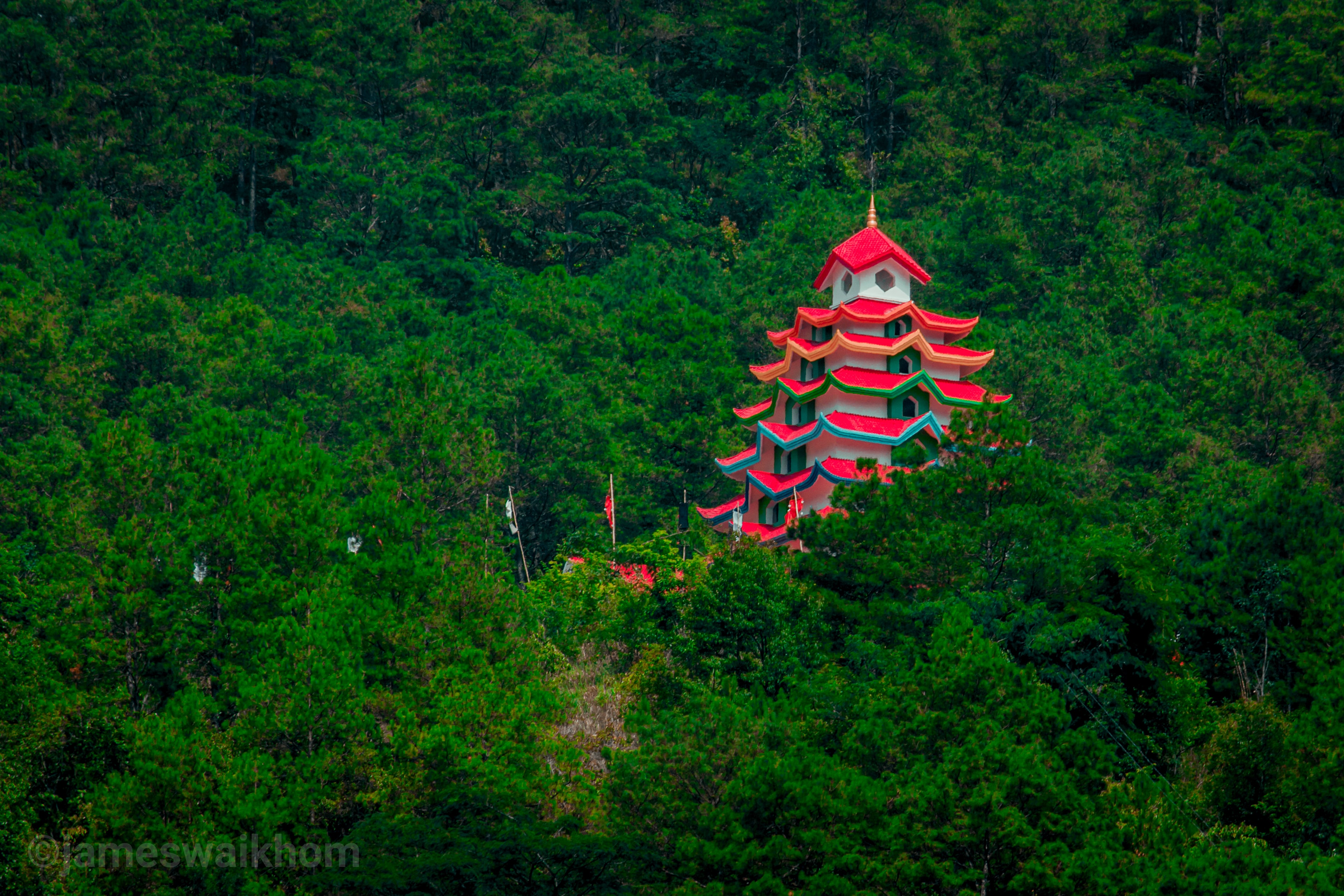
Photo by WAIKHOM JAMES on Unsplash

Manipur
Part 1: Introduction and Overview, Imphal
Part 2: Moirang, Tamenglong, Thoubal
Part 3: Chandel, Tengnoupal, Moreh, Kaina, Ukhrul, Mount Koubru, Baruni Hill, Thangjing Hill, Sadu Chiru Waterfall
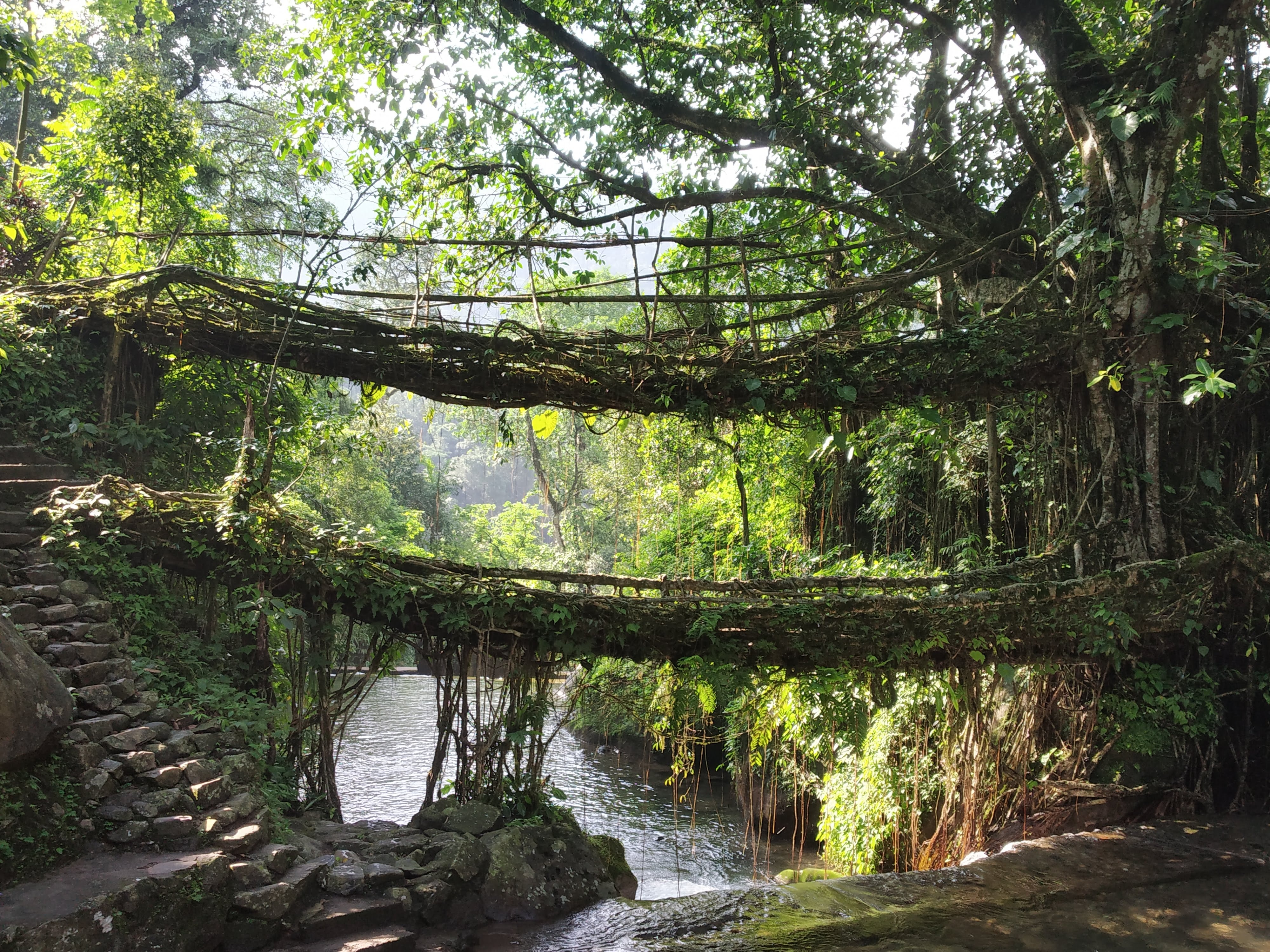
Photo by Utkarsh B on Unsplash

Meghalaya
Part 1: Introduction and Overview
Part 2: Shillong
Part 3: Mawphlang, Cherrapunji, Nongpoh, Mawsynram
Part 4: Jowai, Mawlynnong, Dawki, Balpakram National Park, Williamnagar, Baghmara, Tura
Part 5: Khasi Hills, Jaintia Hills, Garo Hills

Photo by Vanlaldin puia on Unsplash

Mizoram
Part 1: Introduction and Overview, Aizwal, Falkawn Village
Part 2: Reiek, Hmuifang, Kolasib, Tamdil or Tam Lake, Mamit, Vantawng Falls, Serchhip
Part 3: Dampa Tiger Reserve, Lunglei, Champhai
Part 4: Murlen National Park, Phawngpui, Phawngpui National Park, Saiha,
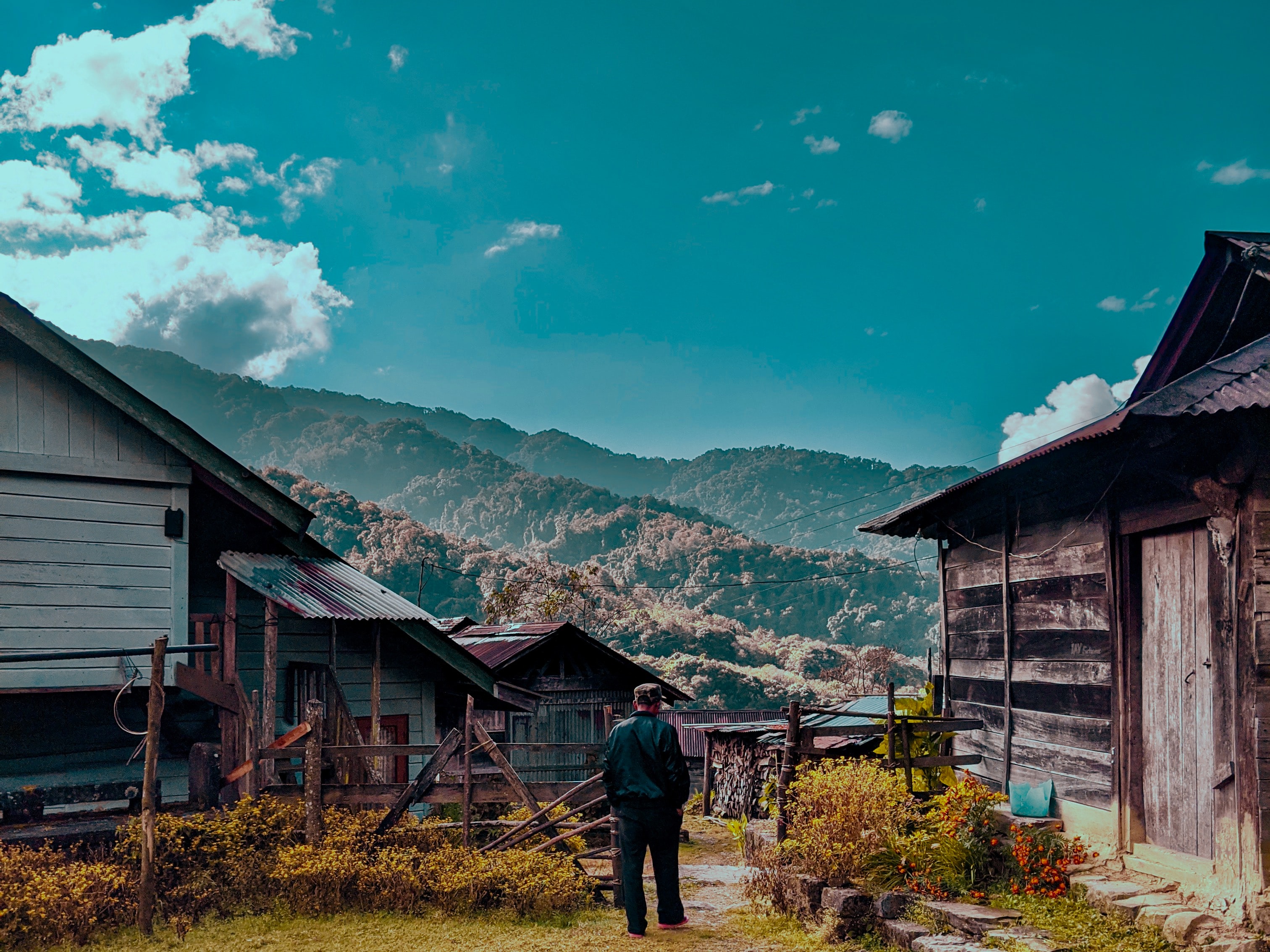
Photo by Suraj Jadhav on Unsplash

Nagaland
Part 1: Introduction and Overview, Dimapur
Part 2: Kohima
Part 3: Mokokchung, Tuensang, Phek, Mon, Pfutsero
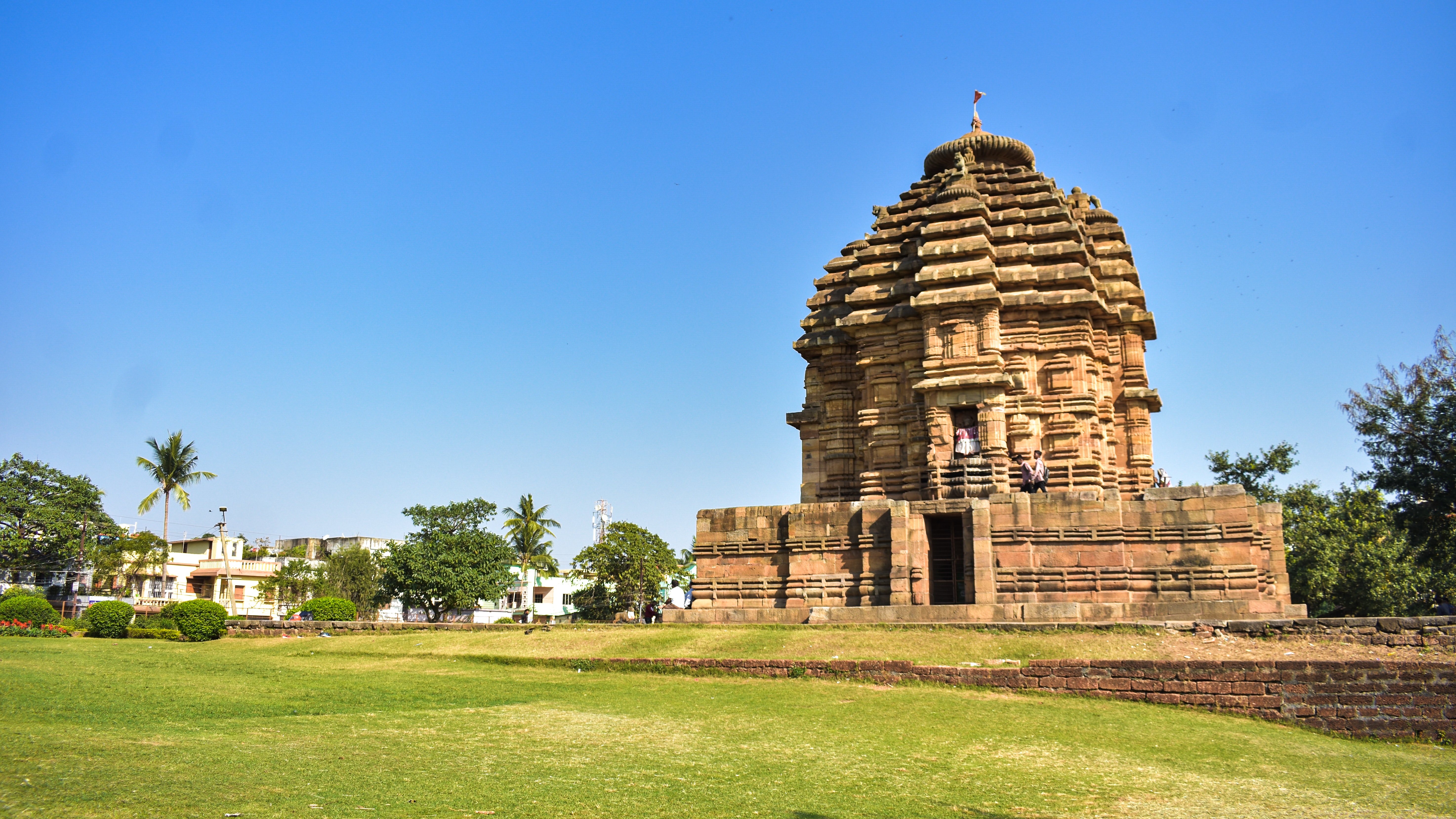
Photo by Ayiman Mohanty on Unsplash

Odisha
Part 1: Introduction and Overview, Bhubaneshwar, Dhauli
Part 2: Cuttack, Rayagada, Daringbadi, Berhampur, Jeypore
Part 3: Puri, Baripada, Sambalpur, Rourkela
Part 4: Konark, Paradeep, Gopalpur, Chandipur
Part 5: Lake Chilika, Tikarpada Wildlife Sanctuary, Satkosia Tiger Reserve, Bhitarkanika National Park & Wildlife Sanctuary, Simlipal National Park, Duduma Waterfalls, Chandaka Forest, Kotgarh Elephant Reserve, Karlapat Wildlife Sanctuary

Photo by nullvoid on Unsplash

Puducherry
Part 1: Introduction and Overview, Puducherry
Part 2: Karaikal, Mahé, Yanam
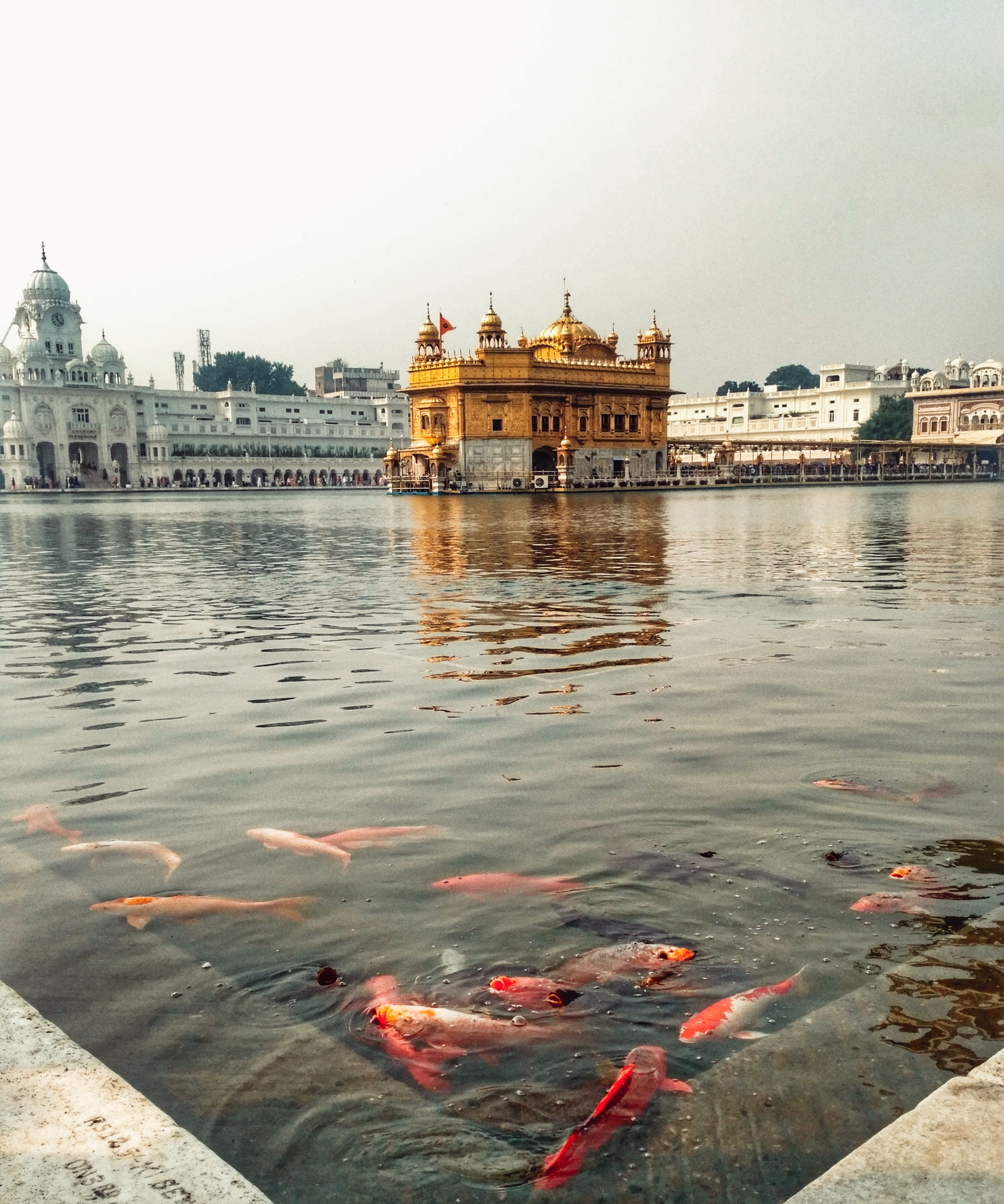
Photo by Prerna Sharma on Unsplash

Punjab
Part 1: Introduction and Overview
Part 2: Chandigarh, Sirhind
Part 3: Rupnagar, Patiala
Part 4: Ludhiana, Bhatinda
Part 5: Jalandhar, Kapurthala
Part 6: Pathankot, Amritsar

Rajasthan
Part 1: Introduction and Overview, Jaipur, Udaipur
Part 2: Jodhpur, Jaisalmer, Sawai Madhopur, Pushkar

Photo by Apurba Nag on Unsplash

Sikkim
Part 1: Introduction and Overview
Part 2: Gangtok
Part 3: Tinkitam Rayong, Namchi, Barsey Rhododendron Sanctuary, Kabi Longstok, Tendong Hill, Aritar, Zuluk, Pangolakha Wildlife Sanctuary, Pelling, Yuksom, Ravangla
Part 4: Maenam Wildlife Sanctuary, Geyzing, Yangtey, Borong, Mangan, Chopta Valley, Lachung, Lachen, Yumthang Valley, Thangu Valley, Gurudongmar Lake, Cholamu Lake, Shingba Rhododendron Sanctuary, Khangchendzonga National Park, Fambong Lho Wildlife Sanctuary, Goecha La

Tamil Nadu
Part 1: Introduction and Overview, Chennai
Part 2: Coimbatore, Tiruchirappalli, Tiruppur, Tirunelveli
Part 3: Ooty, Kodaikanal, Yercaud, Coonoor, Yelagiri, Bellikkal
Part 4: Kanchipuram, Tiruvannamalai, Chidambaram, Vaitheeshwaran Kovil,
Part 5: Kumbakonam, Thanjavur, Swamimalai, Rameshwaram, Madurai
Part 6: Mahabalipuram, Kanyakumari, Mudumalai Wildlife Sanctuary, Hogenakkal Falls, Kutralam Falls

Photo by Aman Upadhyay on Unsplash

Telangana
Part 1: Introduction and Overview, Hyderabad Part 1
Part 2: Hyderabad Part 2
Part 3: Secunderabad
Part 4: Warangal, Nizamabad
Part 5: Khammam, Karimnagar, Adilabad, Mahbubnagar, Medak
Part 6: Nalgonda, Bhadrachalam, Koti Linga, Somasila, Vemulawada

Photo by Sourav Debnath on Unsplash

Tripura
Part 1: Introduction and Overview
Part 2: Agartala
Part 3: Kailashahar, Unakoti, Udaipur, Ambassa, Pilak Archaeological Sites, Chabimura, Mahamuni Pagoda, Manubankul, Buddhist Stupa, Boxanagar
Part 4: Baramura Eco Park, Kalapania Nature Park, Tepania Eco Park, Khumulwang Eco Park, Jampui Hills, Dumboor Lake, Dhalai, Rudrasagar Lake, Sepahijala Wildlife Sanctuary & Clouded Leopard National Park, Trishna Wildlife Sanctuary, Rajbari National Park, Rowa Wildlife Sanctuary, Gomati Wildlife Sanctuary

Uttar Pradesh
Part 1: Introduction and Overview, Noida, Loni, Ghaziabad, Meerut, Muzzafarnagar
Part 2: Hastinapur, Vrindavan, Mathura
Part 3: Fatehpur Sikri, Agra, Garhmukteshwar
Part 4: Aligarh, Firozabad, Jhansi, Piilbhit, Bithoor, Naimisharanya
Part 5: Kanpur, Lucknow
Part 6: Ayodhya, Sravasti, Prayagraj
Part 7: Chitrakoot, Vindhyachal, Varanasi, Sarnath, Kushinagar

Photo by Akshay syal on Unsplash

Uttarakhand
Part 1: Introduction and Overview, Dehradun
Part 2: Mussoorie, Dhanaulti
Part 3: Auli, Joshimath, Chopta, Tungnath, Ukhimath, Lansdowne, Nainital
Part 4: Sattal, Bhimtal, Naukuchiatal, Kausani, Ranikhet, Almora, Binsar, Jalna, Kasar Devi, Jageshwar, Champawat, Munsiyari, Pithorgarh
Part 5: Bageshwar, Chamoli, Mana, Badrinath, Pandukeshwar, Hemkund Sahib, Kedarnath, Gomukh, Madhyamaheshwar, Gangotri, Gauri Kund, Yamunotri
Part 6: Rudranath, Guptakashi, Nandprayag, Rudraprayag, Devprayag, Rishikesh, Haridwar, Roopkund Lake, Nelong Valley, Gangotri National Park, Kedarnath Wild Life Sanctuary, Valley of Flowers, Nanda Devi National Park, Govind Pashu Vihar Wildlife Sanctuary, Rajaji National Park, Jim Corbett National Park
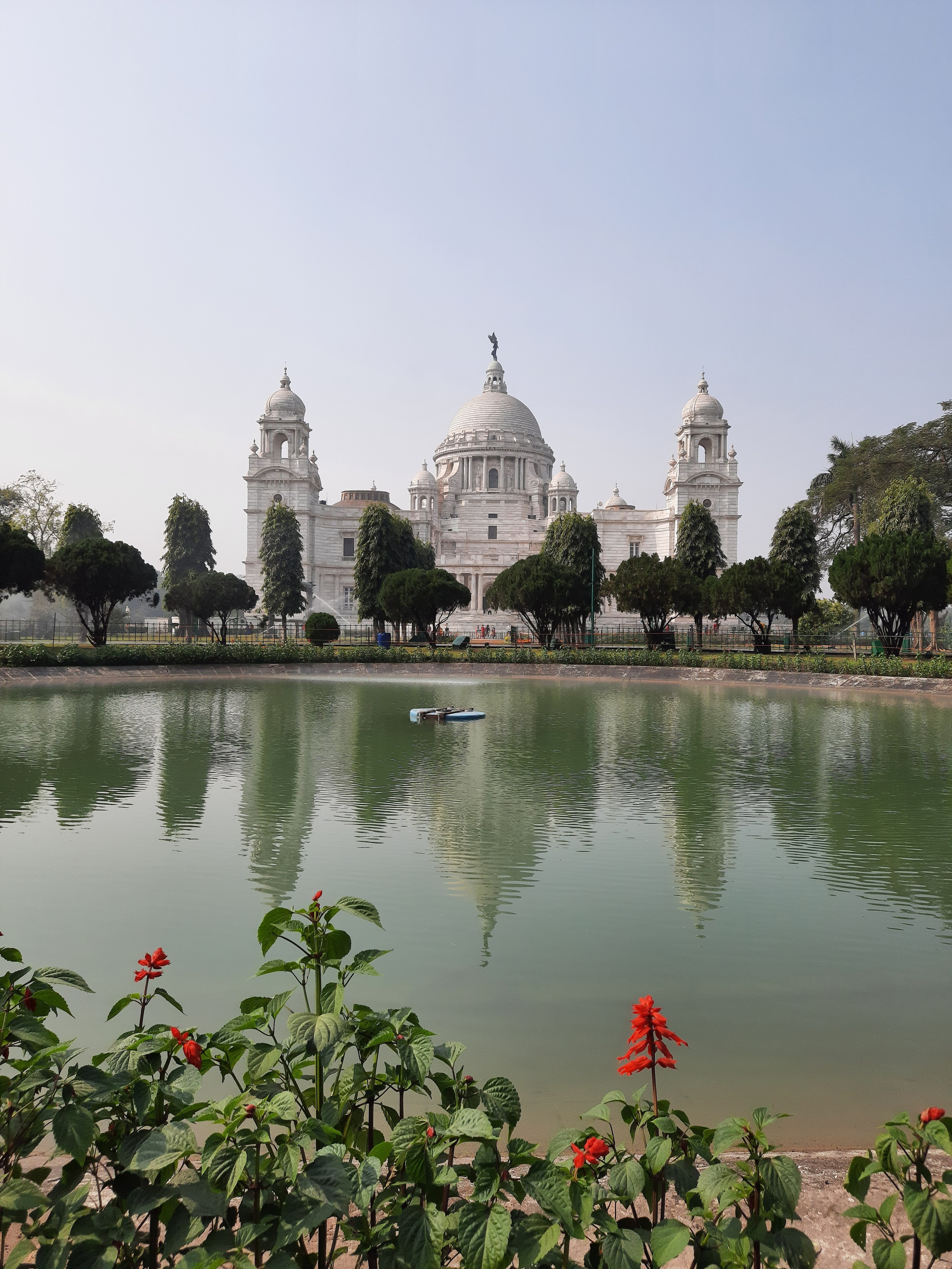
Photo by Nitish Narayan on Unsplash

West Bengal
Part 1: Introduction and Overview, Kolkata
Part 2: Howrah, Barrackpore, Chandan Nagar, Chinsurah, Bardhaman, Haldia, Midnapore
Part 3: Shantiniketan, Durgapur, Jhargram, Asansol, Murshidabad, Mukutmanipur, Malda, Siliguri, Jalpaiguri, Cooch Behar, Bagdogra
Part 4: Kurseong, Mirik, Darjeeling, Tinchuley, Dooars, Kalimpong
Part 5: Rishyap, Lava and Lolegaon, Buxa Tiger Reserve, Rajabhatkawa, Jaldapara National Park, Jaldhaka, Chapramari Wildlife Sanctuary, Gorumara National Park, Neora Valley National Park, Lataguri, Purulia, Sonajhuri Forest, Deulti, Sundarbans, Mayapur, Nabadwipa, Bakreswar
Part 6: Bankura, Bishnupur, Jayrambati, Kamarpukur, Tarapith, Falta, Raichak, Taki, Piyali Island, Machranga Dwip, Kakdwip, Mousuni Island, Bakkhali, Junput, Mandarmani, Tajpur, Shankarpur

Travel Bucket List: India – Puducherry Part 2

In this second and last part, we will visit the other French colonies which make up the Union Territory of Puducherry.

Karaikal

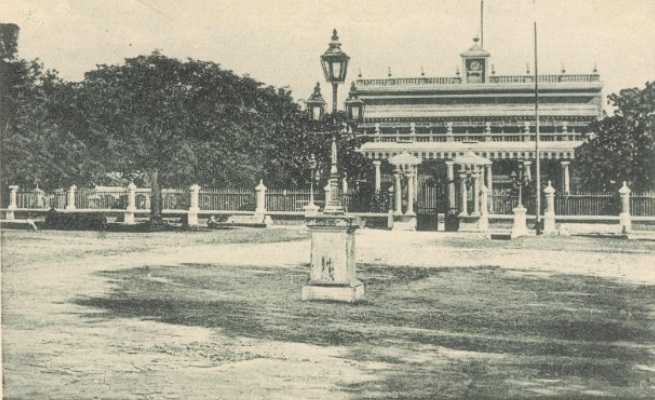
Karaikal is also an enclave of Tamil Nadu and occupies an area of 160 sq km. A small coastal enclave, Karaikal is bound on three sides by districts of Tamil Nadu and the Bay of Bengal on the east.It is about 132 km south of Puducherry. Karaikal became a French Colony in 1674 who controlled the enclave, with occasional interruption from the British and Dutch, until 1954, when it was incorporated into the Republic of India, along with Chandernagore, Mahé, Yanaon, and Pondichéry. Forming a part of the fertile Cauvery delta, the region is completely covered by the distributaries of Cauvery and the group of rocks known as Cuddalore formations met with in the area contiguous to Karaikal region in Nagappattinam district.

The origin of the word Karaikal is uncertain with the British probably meaning it means a fish pass. But both the words, Karai and Kal have multiple meanings, of which the more acceptable ones are lime mix and canal respectively and it has been suggested that the name may mean a canal built of lime mix, however, no trace of such a canal is evident.

Before 1739, Karaikal was under the regime and control of Raja Pratap Singh of Tanjore. In 1738, the French negotiated with Sahuji of Thanjavur for possession of Karaikal, the fortress of Karakalcheri and five village for 40,000 chakras and took possession of Karaikal town, the fort of Karakalcheri and eight dependent villages on 14 February 1739. By a treaty signed on 12 January 1750 Pratap Singh ceded to the French 81 villages around Karaikal and cancelled the annual rent payable for the villages. This was all the territory the French possessed around Thanjavur when they surrendered to the British in 1761. The territory then passed twice to British control before it was finally handed over to the French in 1816/1817 under the Treaty of Paris of 1814.
In 1947, after the rest of India became independent, the French territories also started their struggle until 31 October when the French flag was lowered with due military honours and the de facto transfer of power took place on 1 November 1954 followed by de jure transfer on 16 August 1962.

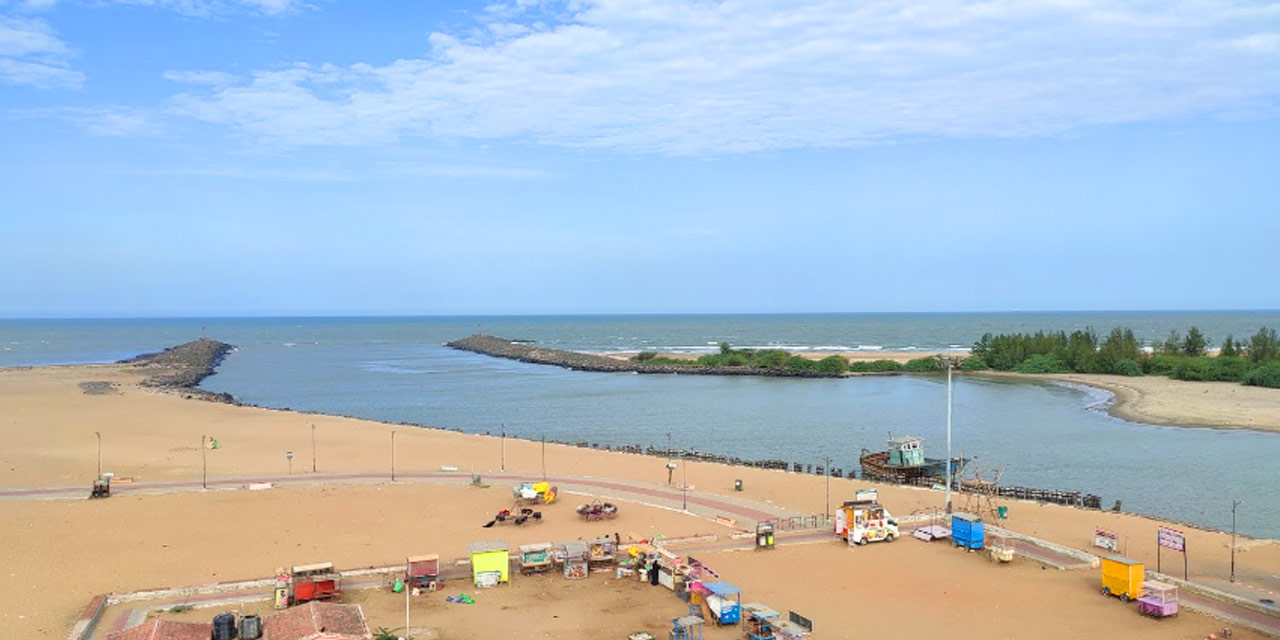
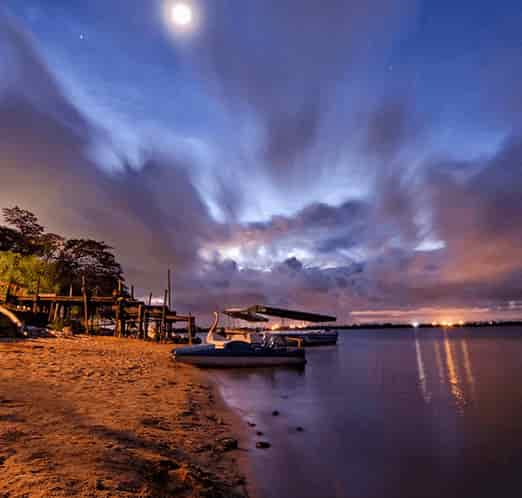
The breathtaking views from Karaikal Beach is what makes it so popular. It is a natural beach that lies on the Bay of Bengal and is an excellent spot for a dip and for evening walks. An ideal place to witness the sunset, there is a rocky path here to walk on, fishing boats to watch and plenty of opportunities for nature photography. The beach is perfect for water activities like swimming, canoeing and kayaking with the boat club allowing visitors to rent motor boats, peddle boats and rowing boats. There is a lighthouse on the premises that attracts large crowds with several fountains adding to the area’s appeal. There is also a children’s park and a tennis court close by. A walk or drive from the Arasalar Bridge provides an opportunity to admire the water, the hills around and the mangroves near the backwaters.

Source

Mahé

Mahé is an enclave of Kerala and the smallest district by size and the sixth least populous district of India. It is bound on three sides by districts of Kerala and the Arabian Sea on the west and geographically is part of North Malabar. Also known as Mayyazhi, Mahé is situated at the mouth of the Mahé River.

The name Mahé derives from Mayyazhi, the name given to the local river and region in the Malayalam. It was also called variously from the early 1720s as Mayé, Mahé and Mahié until the early 19th century when Mahé became the how the town was spelt.  Before the arrival of the European trading companies, this area was part of the Kolathu Nadu which comprised of Thulunadu, Chirakkal and Kadathanadu. The French East India Company constructed a fort on the site of Mahé in 1724, because of an accord between André Mollandin and Raja Vazhunnavar of Vatakara three years earlier. In 1741, the French retook the town after a short period of occupation by the Marathas. In 1761 the British captured Mahé, and the settlement was handed over to the Rajah of Kadathanadu. The British restored Mahé to the French as a part of the 1763 Treaty of Paris and in 1779, the French lost Mahé in the Anglo-French war. In 1783, the British agreed to restore to the French their settlements in India, and Mahé was handed over to the French in 1785 and captured it in 1793 and then restored it back to the French in 1816 as part of the 1814 Treaty of Paris. After Indian independence, it continued to be French-ruled until 13 June 1954, when a long anti-colonial struggle culminated in it joining the Indian Union as a district of Puducherry Union Territory.

The Sri Puthalam Bhagavathy Temple is an ancient historic temple dedicated to Goddess Bhagavathi. The temple’s legend is based on events that occurred during the conflict between the French and Indian armies. The historic St Theresa Church was constructed in 1757 as a part of the Mahe Mission. Mooppenkunnu is a hillock and a popular picnic spot with pavements to walk on, benches to rest and a restroom facility. The hillock contains the historic Lighthouse and is a famous sunset view point.

Source

The walkway on the banks of Mahé river is a major tourist attraction which surrounds the landscape and has park benches to relax and enjoy the beauty of the river. Azhimukham is the estuary of the Mahe river and the Arabian Sea. There is a small park named Tagore Park here and the reconstruction of a 2-km walkway along the bank of river from the estuary towards Mahe Bridge.

Located close to Kannur, Mahe Beach is a quiet and clean beach, part of Kerala’s northern coast. Lined with tall palm trees, the beach is a must-visit during the early hours of the morning to witness the gorgeous sunrise. Ideal not just for swimming, but also for beach sports, the view of the sunrises and sunsets are absolutely spectacular. There are several fishermen villages around the beach because of which there are always numerous colourful boats around. Dharmadam Island is ideal for watching the sunrise or sunset which can be reached by a short boat ride.

Yanam

An enclave of Andhra Pradesh, Yanam is one of the four districts of the Union Territory of Puducherry in India and occupies an area of 20 sq km. It is located south of Kakinada port on the north bank of the Godavari River, slightly inland and is surrounded by the East Godavari district of Andhra Pradesh. Yanam is covered with coconut trees and is located over the banks of the Gauthami Godavari River, one of the main branches of the river Godavari when it enters the Bay of Bengal after flowing about 12 km through Yanam.  Indigo wells or Neelikundilu are still found in the west of Yanam.

Yanam or Yanaon as it was called during the French colonial times, is located in the East Godavari district in Andhra Pradesh with a population of 35,000, most of whom speak Telugu. A French colony for nearly 200 years, it possesses a blend of French and Telugu culture, and is nicknamed Frelugu. During French rule, the Tuesday market, the Marché du mardi or Mangalavaram Santa was popular among residents of the the Madras Presidency, who used to visit Yanam to buy foreign and smuggled goods during Yanam People’s Festival held annually in January. After the implementation of the Child Marriage Restraint Act, 1929 in British India, people often travelled to Yanam to conduct child marriages, which remained legal under the French administration.

Yanaon was a Dutch colony prior to French takeover in the 1720s and the Dutch built a fort, used to store their currency, which was minted at nearby Neelapalli. The location of the fort is today referred to by locals as the Saali Kota or Saalivandru, meaning shawl-hut, since after the Dutch moved out, the building was taken over by cloth weavers. The region was presented to the by the king of Vizianagaram as a token of gratitude for their help in his fight against the rulers of Bobbili. Yanaon was the third French colony established in India, though it was officially confirmed as one only by 1751. It went to the British after the Anglo-French war of 1758 which was won by the British and was restored again to the French in 1785. During 1793 and 1816 it was under British control and after the Napoleonic wars, by the Treaty of Paris of 1814, Yanam along with the factory at Machilipatnam was finally returned to the French on 26 September 1816. From then it was continuously under French control until its transfer to India in 1954.

The Lord Sri Rajarajeswara Temple on the bank of Atreya Godavari, which is also known as the Corangi river. The temple was built by the Chalukya kings of Rajamahendravaram or Rajahmundry in the 15th century with sculptures of that period present in the temple. The main festivals in the temple are the Kalyanotsavam and the Rathostavam which have been performed for centuries with devotees singing slogans and bhajans. The Kalyanotsavam festival celebrated in January/February is when Lord Srī Rajarajeswara becomes a groom and has a procession on the streets of the town with chariots each day. The Kalyaṇam, Rathotsavam and Trisulatirtham are the important events of the festival with the Vahana Samprokshaṇa or the ritual cleansing of the chariot done by priests every day for each of the chariots used for the procession.

The Venkanna Babu Temple is a temple dedicated to Lord Vishnu known as Venkanna Babu, Chaldikudu Venkanna and Meesala Venkanna. The speciality of the temple is that the Lord’s idol has a big moustache like that of Lord Sathyanarayana Swamy of Annavaram. The temple was built by the Chalukya kings of Rajamahendravaram or Rajahmundry in the 15th century. This temple used to perform child marriages and when the Child Marriage Act was passed in British India, people from nearby areas used to come here to conduct such marriages as the French allowed such practices.

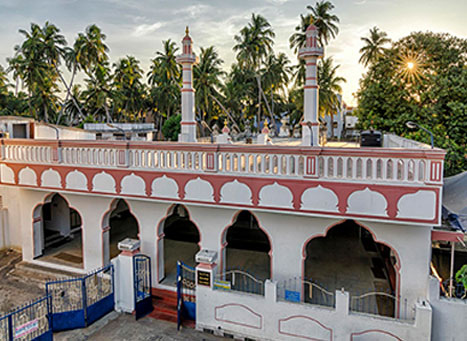
The site for the Grand Mosque was donated by the French Government in 1848 and a small mosque was constructed there and in 1956, it was remodelled. It was demolished in 1978 and a new mosque constructed and in 1999–2000, the mosque was expanded to become the Grand Mosque. Around 200 persons can pray in this mosque at a time.

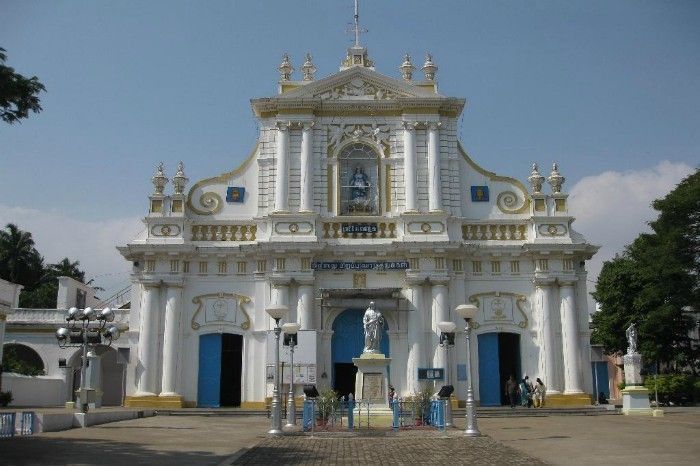
The French Catholic are linked with the Catholic Church in Yanam, the St. Ann’s Catholic Church. Built in the European style, in 1846 by French missionaries, all furniture and decoration articles were imported from France. The church holds a Catholic Festival in March

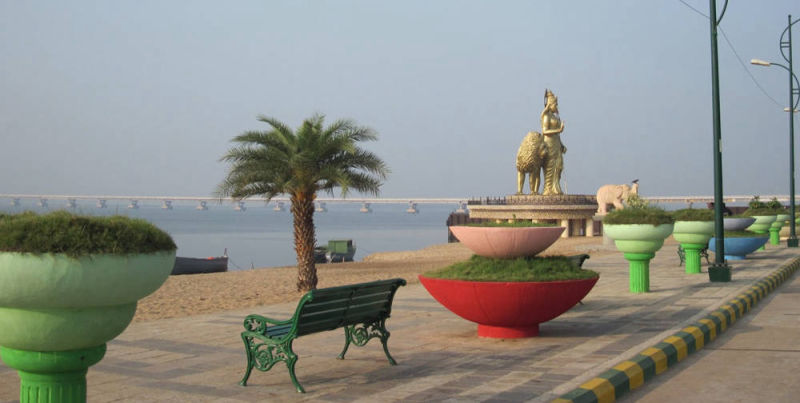
Yanam Beach is the best getaway to spend quiet time away from the crowds. Also known as the Rajiv Gandhi Beach, one can take boat rides at the beach as well as walks along the Ferry Road. There are many packages available including a ride over the Godavari River, cruises to a few islands, visiting the Sangam where the river meets the sea or a ride to the mangrove forest on the Gowthami Godavari River. There are also houseboat services that begin from Rajiv Gandhi Arch Road near the Shiva Linga. The Yanam Ferry Road inaugurated in 2000 is a walking trail along the beach with elephant statues guarding the Shiva Linga from the entrance to the pathway. The Nagoor Meera Sahib Mandir on the Ferry Road is built as a ship.

The Palais de Justice or the French courthouse and St. Ann’s Catholic Church are around 1 km away from the beach. The Court building is situated in an ancient white monument building of French architecture and has two floors, the ground floor is the court and the first floor is the residential quarters of the judge and was renovated in 1967. The Sivalayam on the banks of the Corangi River is 3 km away from the beach and is a religious hub. The Fete de Pondicherry is a three-day cultural event conducted by the government of Puducherry.

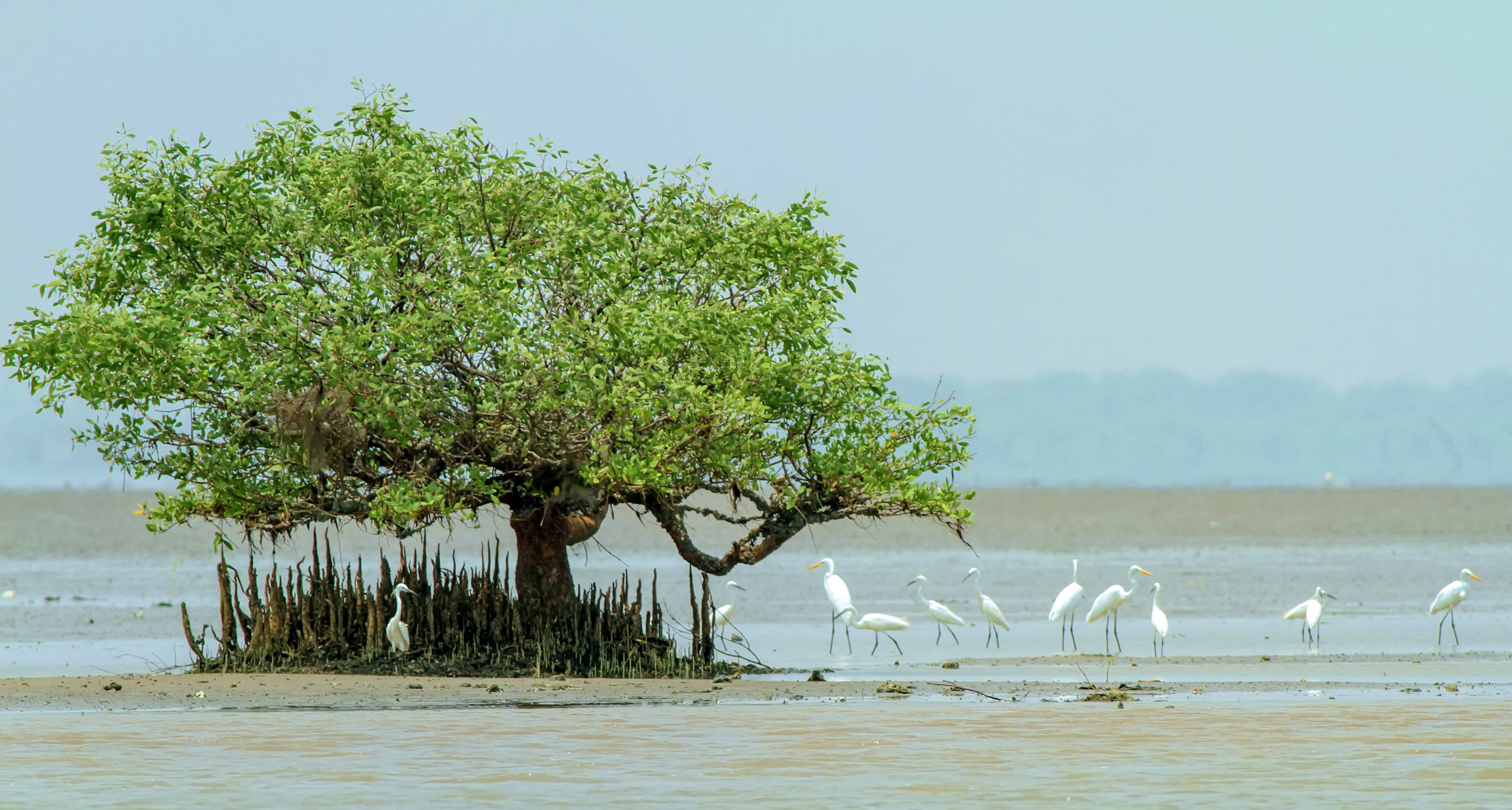
The Coringa Wildlife Sanctuary is 21 km away from Yanam Beach and is a great spot for bird lovers. The sanctuary shelters more than 120 bird species and endangered species, such as the long-billed vulture and the white-backed vulture are found here.

This short, but interesting series on the Union Territory of Puducherry was quite illunimating to me as I hope it was for you. I learnt a lot about the former French colonies of India, especially Karaikal, Mahe and Yanam, which I barely knew about previously.

Travel Bucket List: India – Puducherry Part 1

Also known as the Riviera of the East, the Union Territory of Puducherry, formerly known as Pondicherry is one of the seven Union Territories in India formed out of four territories of former French India, namely Pondichéry or Pondicherry named Puducherry today, Karikal or Karaikal, Mahé and Yanaon or Yanam, excluding Chandannagar. It is named after the largest district, Puducherry. Historically known as Pondicherry or Paṇṭicceri, the territory changed its official name to Puducherry on 20 September 2006. The Union Territory lies in the southern part of the Indian Peninsula with the areas of the Puducherry and Karaikal districts bound by the state of Tamil Nadu, while the Yanam and Mahé districts are enclosed by the states of Andhra Pradesh and Kerala, respectively. Puducherry is the third most densely populated among the states and union territories.

The earliest recorded history of Puducherry can be traced to the second century. The Periplus of the Erythraean Sea mentions a marketplace named Poduke, which seems to suggest a location about 3 km from modern Puducherry, possibly the location of Arikamedu which is today part of Ariyankuppam. According to archaeologists, Roman pottery was found at Arikamedu which was a trading station to which goods of Roman manufacture were imported between the third or second century BC to the eighth century AD.

In 1674, the municipality of Pondicherry became a French colony of the French colonial empire. Together with Chandernagor which was already French since 1673, Mahé which was French since 1721, Yanam which was in French possession since 1731, Karaikal, in French possession since 1739 and Masulipatam which belonged to the French since 1760, it formed the French colony of French India, under a single French governor in Pondicherry, although French rule over one or more of these enclaves was repeatedly interrupted by British occupations. The territories of French India were completely transferred to the Republic of India de facto on 1 November 1954, and de jure on 16 August 1962, when French India ceased to exist, becoming the present Indian constituent union territory of Pondicherry, combining four coastal enclaves, with the exception of Chandannagar, which merged with the state of West Bengal in 1954.

Puducherry and Karaikal have the largest areas and population. Some of Puducherry’s regions are themselves amalgamations of non-contiguous enclaves, called pockets in India. The Puducherry region is made of 11 such pockets, some of which are very small and entirely surrounded by the territory of Tamil Nadu. The Mahé region is made up of three pockets and this unusual geography is a legacy of the colonial period with Puducherry retaining the borders of former French India. All four regions of Puducherry are located in the coastal region with five rivers in the Puducherry district, seven in the Karaikal district, two in the Mahé district and one in the Yanam district draining into the sea, but none of them originates within the territory.

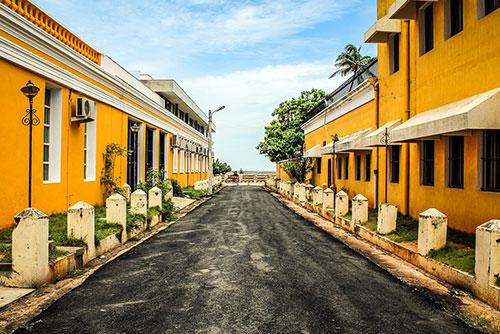
The streets of the French Quarter of Pondicherry, also known as White Town, are dotted with charming mustard-yellow colonial structures with bougainvillaea laden walls. These are interspersed with cosy cafes and chic boutiques that offer delectable French cuisine and beverages. Simply strolling down these streets, can give the traveller an insight into the fairytale charm of Pondicherry.

Puducherry
The Puducherry district is an enclave of Tamil Nadu with Puducherry city the capital and the most-populous city of the Union Territory. The city is on the southeast coast of India and is surrounded by the state of Tamil Nadu, with which it shares most of its culture, heritage and language

The history of Puducherry is recorded only after the arrival of the Dutch, Portuguese, British and French traders. By contrast, nearby places such as Arikamedu, Ariyankuppam, Kakayanthoppe, Villianur and Bahour, which were colonised by the French East India Company over a period of time and later became the union territory of Pondicherry, have recorded histories that predate the colonial period.

The area was part of the Pallava Kingdom of Kanchipuram in the 4th century and the Cholas of Thanjavur held it from the 10th to the 13th centuries until it was replaced by the Pandya Kingdom in the 13th century. The Vijayanagar Empire took control of almost all of the south of India in the 14th century and maintained control until 1638 when they were supplanted by the Sultan of Bijapur. In 1674 the French East India Company set up a trading centre at Pondicherry and this outpost eventually became the chief French settlement in India. Five trading posts were established along the south Indian coast between 1668 and 1674 and the city was separated by a canal into the French Quarter and the Indian Quarter. In 1693, during the Nine Years’ War, Pondicherry was captured by the Dutch and at the Peace of Ryswick it was agreed by all parties to return conquered territories and in 1699 Pondicherry was handed back to the French. In 1761, the British captured Pondicherry from the French, but it was returned under the Treaty of Paris in 1763 at the end of the Seven Years’ War. The British took control of the area again in 1793 at the Siege of Pondicherry amid the Wars of the French Revolution, and returned it to France in 1814. In 1954, resolutions were passed in Pondicherry and Karaikal for immediate merger with India which took place on 1 November 1954 and was established as the Union Territory of Pondicherry. The treaty effecting the de jure transfer was signed in 1956, but got ratified by the French National Assembly only on 16 August 1962.

A tourist destination today, Puducherry has many colonial buildings, churches, temples and statues which, combined with the town planning and French style avenues in the old part of town, still preserve much of the colonial ambiance.

Source

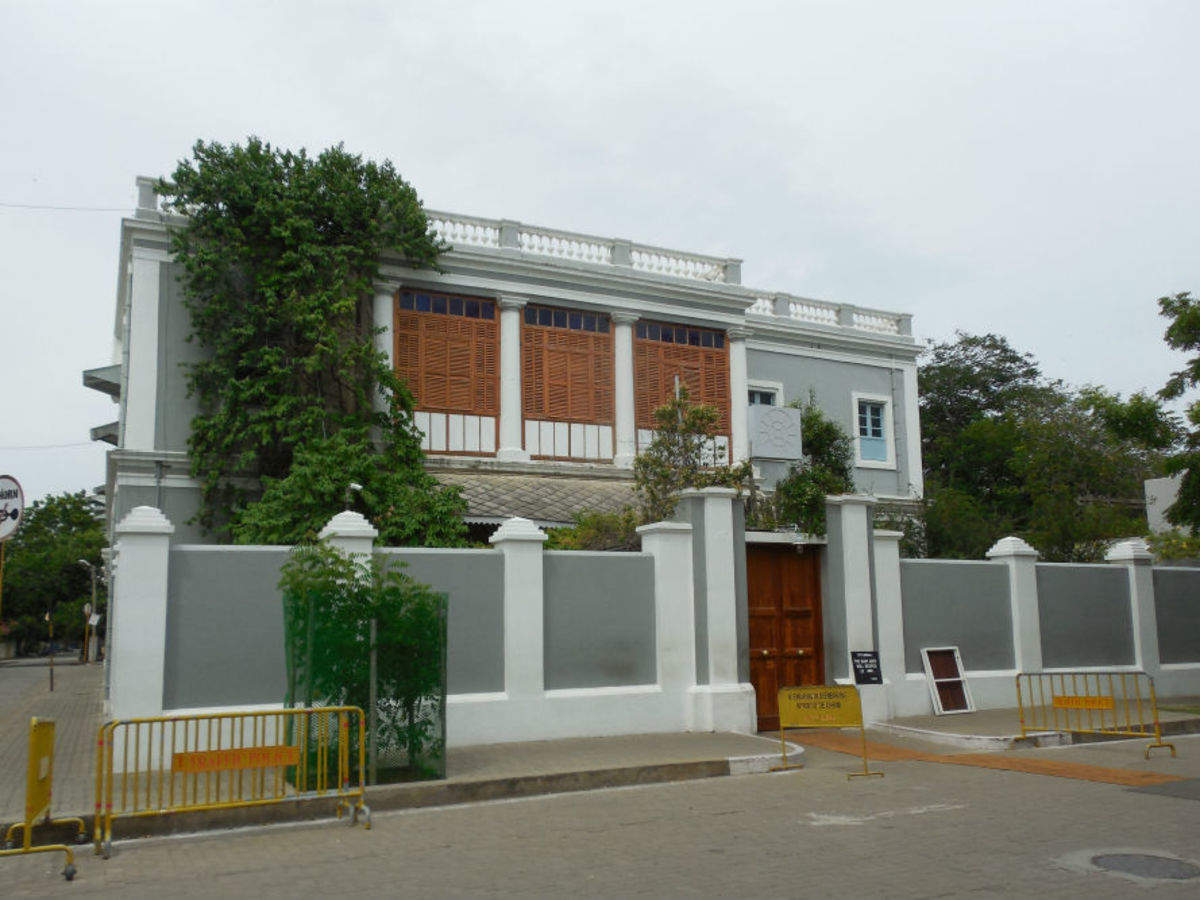
The Sri Aurobindo Ashram is one of the most important ashrams in India, founded by the renowned spiritual philosopher Sri Aurobindo Ghosh. Auroville or the City of Dawn is an experimental township located 8 km north-west of Puducherry in the area known as White Town. The ashram was set up to help people attain moksha and inner peace. Some of the facilities at the Ashram includes the library and the main building which can be accessed only after receiving a gate pass from the Bureau Central or guest houses of the Ashram. In addition to this, the ashram also has a spiritual centre which consists of four houses which were inhabited by the Mother and Sri Aurobindo for different intervals of time. There exists a samadhi as well in the courtyard under the frangipani tree where the bodies of Mother and Sri Aurobindo were buried. The ashram is open between 4:30 am and 11 pm while visitors can enter the ashram from 8 am to 12 noon and then between 2 to 4 pm.

Auroville founded in 1968 by Mirra Alfassa, a disciple of Sri Aurobindo and fondly known as the Mother of the Sri Aurobindo Society. The best way to experience Auroville is to actually just sit in one of the cafes and talk to residents. Conceived as the Universal Town, Auroville is an experimental township where people from all over the world and cultures come and live together in peace with people from more than 195 countries, including India here. Aurovilleans as they call themselves live together on the principles of peace, harmony, sustainable living and ‘divine consciousness which was the philosophy of the Mother.

Previously known as Palais du Government, the Raj Niwas is an 18th century building presently serving as the residence of the Lieutenant Governor of Puducherry. Not open to the general public, there is an old court featuring the Legislative Assembly situated within the building’s premises. But the prime attraction at Raj Niwas are the monolithic pillars which were brought from the Gingee Fort after it was captured in 1751. A few more pillars from the Gingee Fort also surround the Gandhi Mandapam on Promenade Beach. There is a water monument lying amid the well-maintained garden.

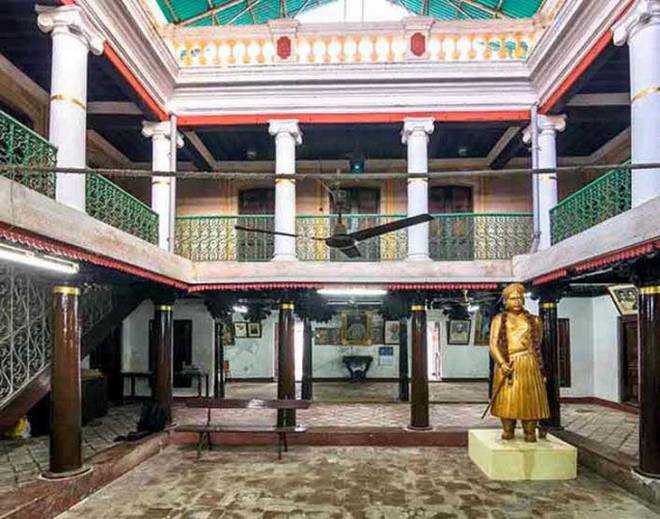
Located on the Ranga Pillai Street, opposite the Grand Bazaar, Ananda Ranga Pillai Mansion is an ancient heritage building, built in 1735 and named after the courtier Ananda Ranga Pillai of the French Governor, Joseph Francois Dupleix. Also known as the Native Quarters, the privately occupied mansion is among the handful buildings known to have survived the British invasion and boasts of a marvellous architecture which is a striking amalgamation of the Indian and Gothic styles. Today, only the ground floor is accessible to tourists which is constructed in traditional Tamil style with ab elaborate courtyard and carved wooden pillars in the Chettinad style. The spacious courtyard also houses a magnificent statue of Ananda Ranga Pillai. Built in European style pattern with an open terrace and native French patterns, the first floor is personal and not open for tourists. The house is currently occupied by the descendants of Ananda Pillai and if one is lucky, they can meet one of them and get a detailed tour. The mansion is open from 10 am to 6 pm and does not have any entrance fees.

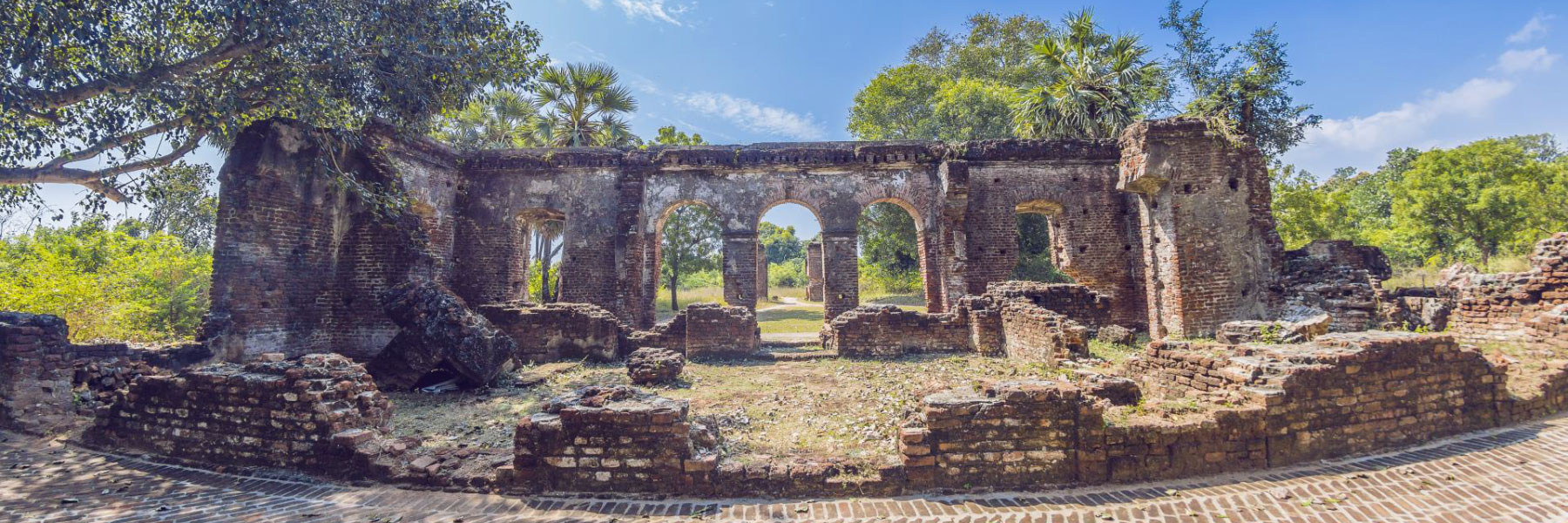
Arikamedu is an ancient Roman trading centre which means eroding mount and the glass bead manufacturing factory of Arikamedu is called the mother of all bead centres in the world. The first dig in Arikamedu took place in the 1940s, and since then excavations are continuously being carried out. Currently, the town does not have much to it other than the two perpendicular walls which were laid open and the French Jesuit Mission House which was constructed in the 18th century. The site also comprises of numerous amphorae having the mark of the Roman schools including VIBII, Camuri and IITA present there where one can see the final few columns, bricks and mortars of the structure in ruins. Imports in the port town include wines contained in amphora jars, cups and plates made up of red roman clay pots, olive oil, and ceramic products.

The French War Memorial is a stylish structure dedicated to soldiers who lost their lives in the First World War. There is an annual commemoration ceremony held here on July 14 when the monument is beautifully illuminated.

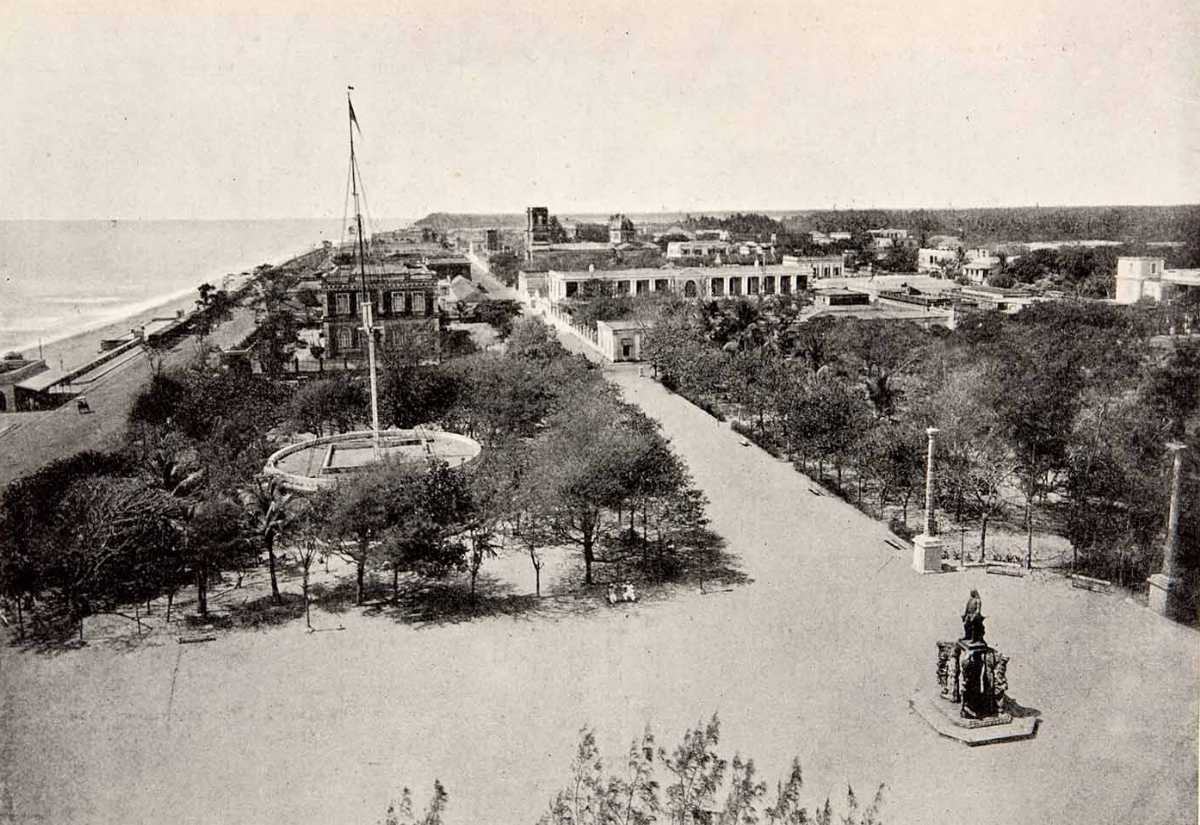
The Statue of Dupleix was commissioned in 1870 to honour Francois Dupleix who governed Pondicherry until 1754. The 3-meter-high statue located at the Place du Republique is built over amazing granite columns and overlooks a lovely children’s park lying at the southern end of the Goubert Avenue.

At the centre of the Bharathi Park stands the Aayi Mandapam, a pearly white edifice built during the reign of Napolean III, Emperor of France. The monument was built in the honour of the female courtesan Ayi who tore down her own house to build a water reservoir for the city. The pavilion is constructed in a Greco-Roman architectural style and is set amidst beautiful well-maintained lawns, gorgeous fountains and blooming flowers, dotted with quaint little benches. The pavilion is open from 8 am to 8 pm daily.

The four-meter-high statue of Mahatma Gandhi is surrounded by eight granite pillars, which were supposedly brought from Gingee, a fort 70 km from Puducherry. The statue is placed in the middle of a garden and attracts tourists in large number.

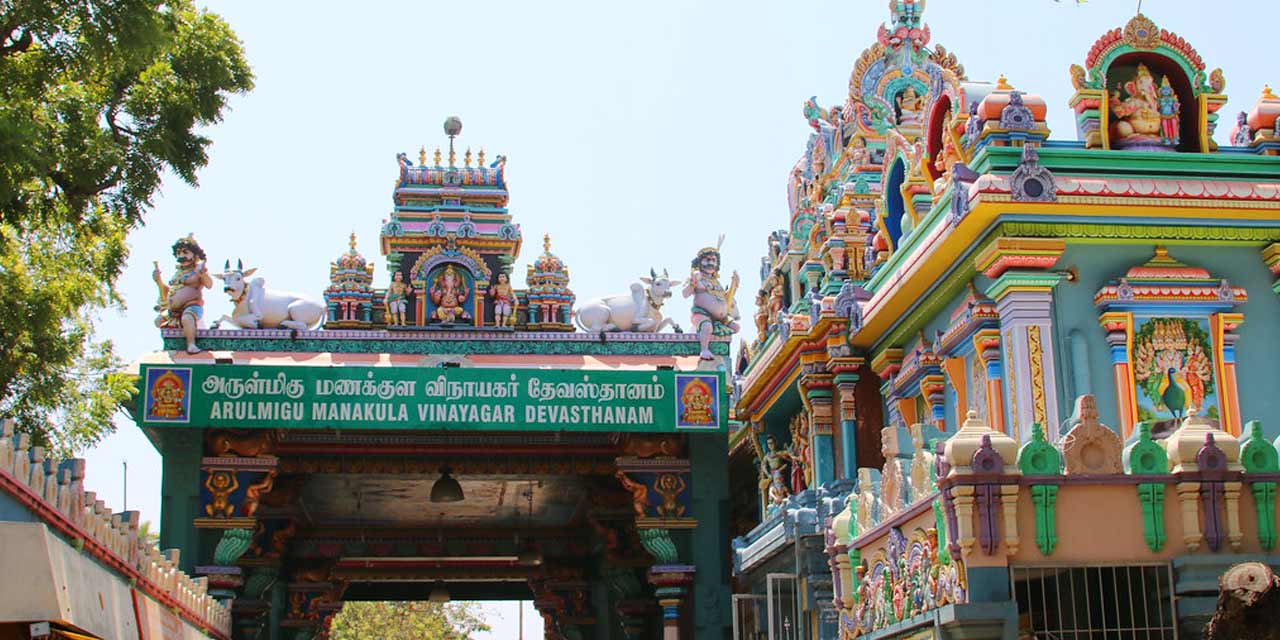
Arulmigu Manakula Vinayagar Devasthanam on Manakula Vinayagar Street is an ancient temple dedicated to Lord Ganesha called Vellakkaran Pillai. The temple is said to be over 500 years old and in existence before the French settled down in the city. The temple attracts a large number of devotees especially on the 18th day of the Brahmotsavam festival and on Ganesh Chaturthi. According to a local legend, a Frenchman made several attempts tried to remove the Ganesha idol from the temple, but each time the idol was removed, it reappeared on its own. After witnessing this, the Frenchman became an ardent devotee. The temple is open from 5:45 am to 12:30 pm and then again between 4 to 9:30 pm.

The Sengazhuneer Amman Temple at Veerampattinam village is one of the oldest temples in the Union Territory, about 7 km away from the city centre. The car festival conducted in mid-August is famous in Puducherry and other neighbouring states. The festival takes place on the fifth Friday of the start of the Tamil month of Aadi which approximates to mid-June to mid-July. The temple car festival is the only one where the head of the state pulls the temple car and this tradition follows from the days of the French rule.

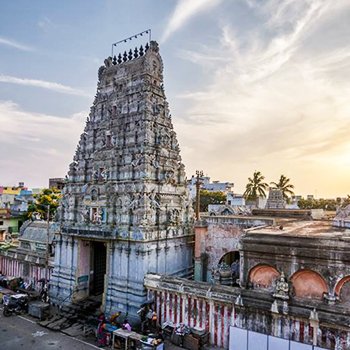
The Thirukaameeswarar Temple is an ancient temple located in Villianur about 10 km from Puducherry. This temple is renowned as a Periya Koil or a Big Temple and is dedicated to Lord Shiva and Goddess Kokilambigai and as well as other deities in the temple. Locals put the age at more than 1000 years old and is thought to have been built by one of the Chola kings and the temple has a huge pond in the premises. The Ther Thiruvizha or the chariot procession is celebrated with a 15-meter-high chariot pulled by devotees through the streets of the town.

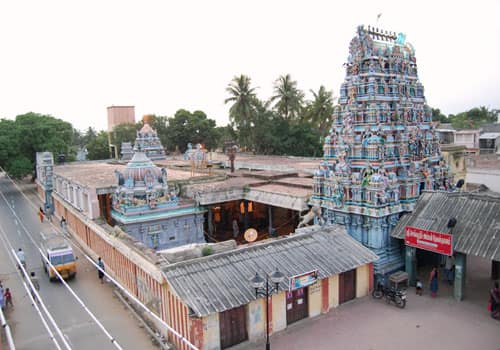
The Varadaraja Perumal Temple is another ancient temple dating back to 600 AD. Built in the typical Dravidian style, complete with brightly coloured gopurams or towers and sculpted pillars, the temple is dedicated to Lord Vishnu. Legend has it, that the temple was originally built for the idols of Lord Rama, Goddess Sita, Lord Lakshman and Lord Hanuman which were brought to the present site by fishermen, from the sea. The main deity here is Varadaraja Perumal or Lord Vishnu and right behind that is a separate shrine for Narashima, an avatar of Lord Vishnu.

The Kanniga Parameswari Temple is dedicated to the Goddess Shakti and has a blend of both Tamil and French architecture. With its arched walls, ionic columns, stained glass windows and even some angel decorations, it is reminiscent of a French building. However, the inner ceiling supported by the more traditional granite pillars and the sanctum sanctoram, which has a typical Tamil design, highlights the more traditional Tamil features.

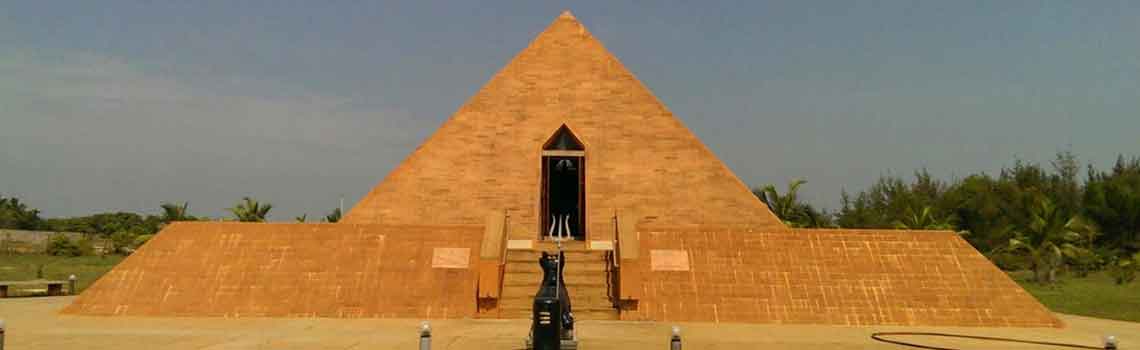
The Sri Karneshwar Nataraja Temple is an unusual and yet beautiful temple. Constructed in a pyramid shape, the temple is built to resemble the great pyramids of Egypt and is dedicated to Lord Shiva. Originally built in 2000, the temple was destroyed by the tsunami of 2004 and the new pyramid temple that was built was bigger and better. The presiding deity, Lord Shiva, is housed in a central chamber under the pointed dome with the centre axis so that the third eye is exactly at a distance of one-third from the base of the temple and the structure pointed northwards to generate maximum energy. The entrance of the shrine faces south because Lord Shiva is also called Dakshinamoorht or teacher of the south.

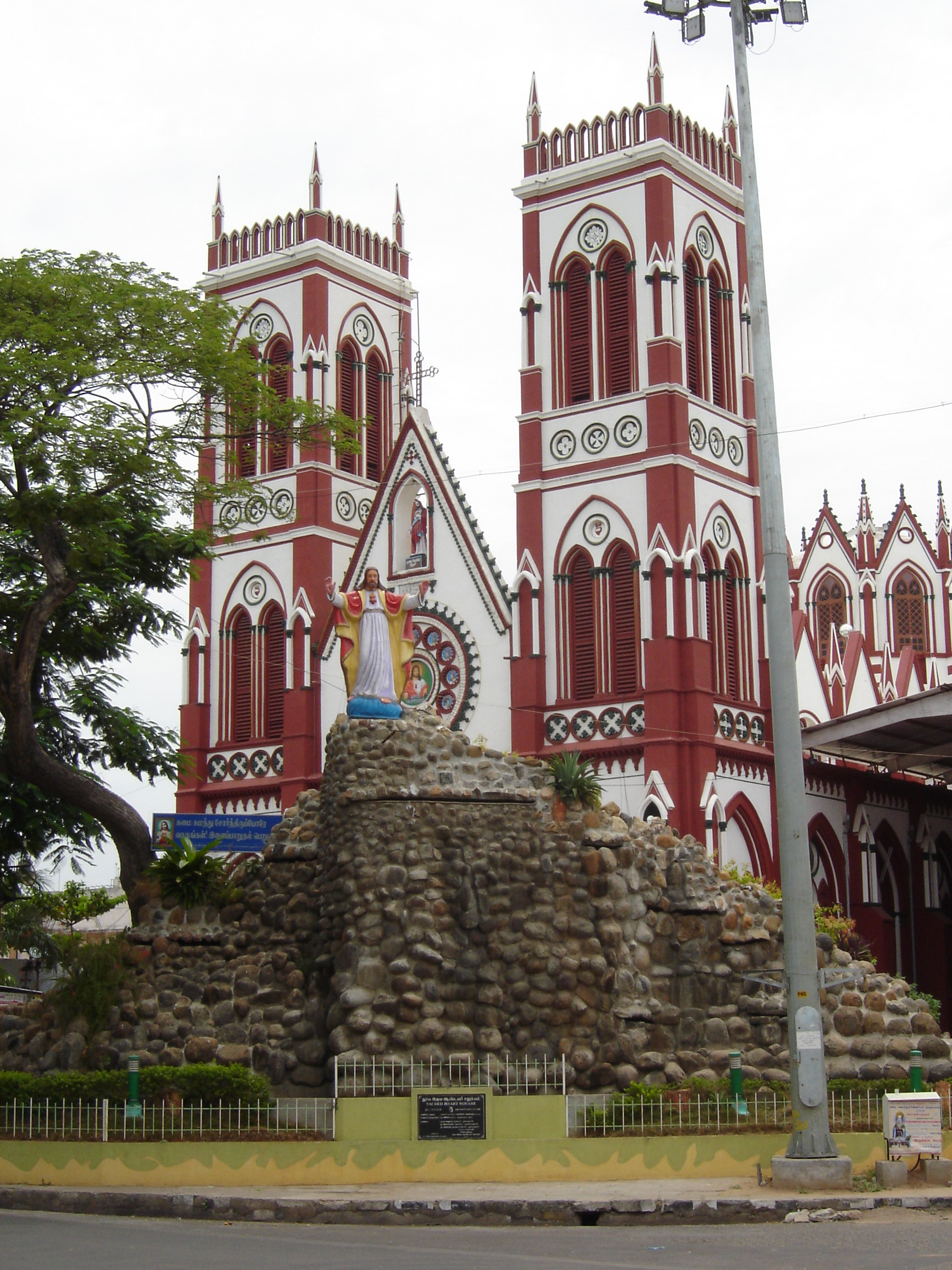
The Basilica of the Sacred Heart of Jesus, situated on the south boulevard contains rare stained glass panels depicting events from the life of Christ. Erected by French missionaries in 1908, the church was given the status of a Basilica in 2011. The church has words from the Bible engraved in the entrance in Latin along with the images of Jesus and Mother Mary on the door of the entrance. The Basilica is 50 meters in length with a width of 48 meters and a height of 18 meters with beautiful glass windows along with two spires and a big exterior and terracotta craft encircled glass windows. The huge interiors are held together by 24 columns and inside there are 28 glass paintings of Catholic saints and statue of the Madonna on the right side of the altar draped in a blue sari. The Basilica is open from 7 am to 6:30 pm from Mondays to Saturdays and from 8 am to 6:30 pm on Sundays.

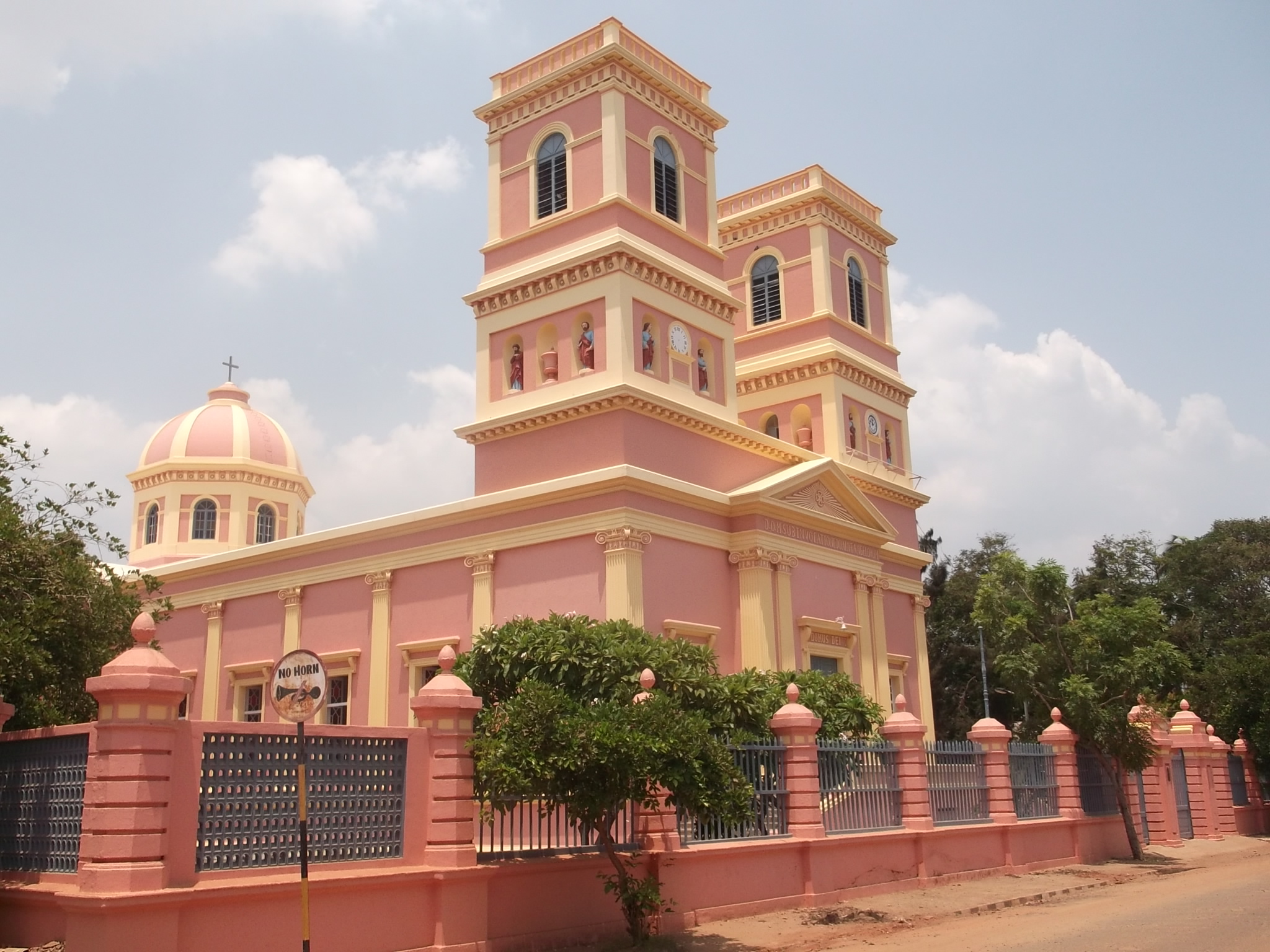
The Eglise de Notre Dame des Anges or The Church of Our Lady of Angels is notable for its masonry, which uses the finest of limestone mixed with white of the egg, making for a texture identical to that of white marble. It is modelled on the Basilica at Lourdes, in southern France and the imposing façade presents paired Doric columns below and ionic above. In front of the church is a statue of Our Lady with the infant Jesus in her arms. The interior of the church consists of eight barrel vaults and a central dome pierced with eight circular openings. First built in 1692, the church took it’s current shape in 1791.

The Meeran Mosque is the oldest mosque in Puducherry and was built over 350 years back in the old Gothic Islamic architecture style. It was built by the Arcot nawab with four lofty pillars below its dome. There is a bronze Kallasas in the top of the minaret’s facade minaret and graves of Meeran, the person who built this mosque and that of Suubhi Errai Perrar Mullah. The Kuthbha or Preaching Mosque was the first mosque in Puducherry and is said that during the 17th century, as the mosque was in the white area, the French ordered it and the Islamic neighbourhood shifted to the southern end of the town. The mosque has the daarga of Moulla Saiubum and is mostly frequented by Tamil speaking Muslims. Next to Kuthba Mosque is Muhamadia Mosque which is older and frequented by Urdu speaking Muslims. The Maulah Sahib Dargha is in between the two mosques.

The Puducherry Botanical Garden’s gate leading to the garden is reminiscent of French architecture and stands out from its immediate surroundings because it is in the middle of the old Tamil town. The Botanical Gardens were laid out in 1826 in the ornate French style, with pruned trees, flower beds and gravel lined paths and fountains. The French introduced many exotic plants from all over the world. The Aquarium houses a diverse collection of aquatic organisms as well as fish flora. One can also see the different methods of fishing adopted in the coastal areas being showcased here. The gardens also have a musical fountain which is active over the weekends, with two shows in the evening.

The Ousteri Wetland and National Park lies in both Tamil Nadu and Pondicherry, about 10 km from Puducherry and covers an area of about 4 sq km with a wide range of aquatic species and is mainly a bird sanctuary. The vegetation ranges from small herbs to trees, which supports migratory avifauna as well as native birds during the summer and winter months. Visitors can also avail the house boat facilities available in the national park.

The Government Park or Bharati Park is in the green centre of the town in the old colonial town with the Aayi Mandapam at the centre of the park. The significance of this park is derived from the fact that it is surrounded by some of the most important government buildings like the Lt. Governor’s Palace, the Legislative Assembly, Government Hospital, Ashram Dining Room, the Cercle de Pondichéry private club, and the old Hotel Qualite. The park has some very gorgeous water fountains, flower beds and is dotted with quaint little granite benches. There is also a children’s play area, a tiny artificial pond and a traffic park with massive statues of the famous people. The park is open daily from 8 am to 8 pm.

The Puducherry Science Centre & Planetarium is also known as the Puducherry Science Park and was designed, developed and set up by the National Council of Science Museums. The Science Demonstration Corner has provisions to conduct live demonstrations and experiments while the children’s corner is where children can enjoy simple experiments with a variety of puzzles and science kits.

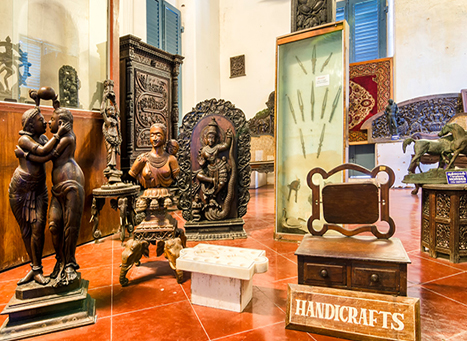
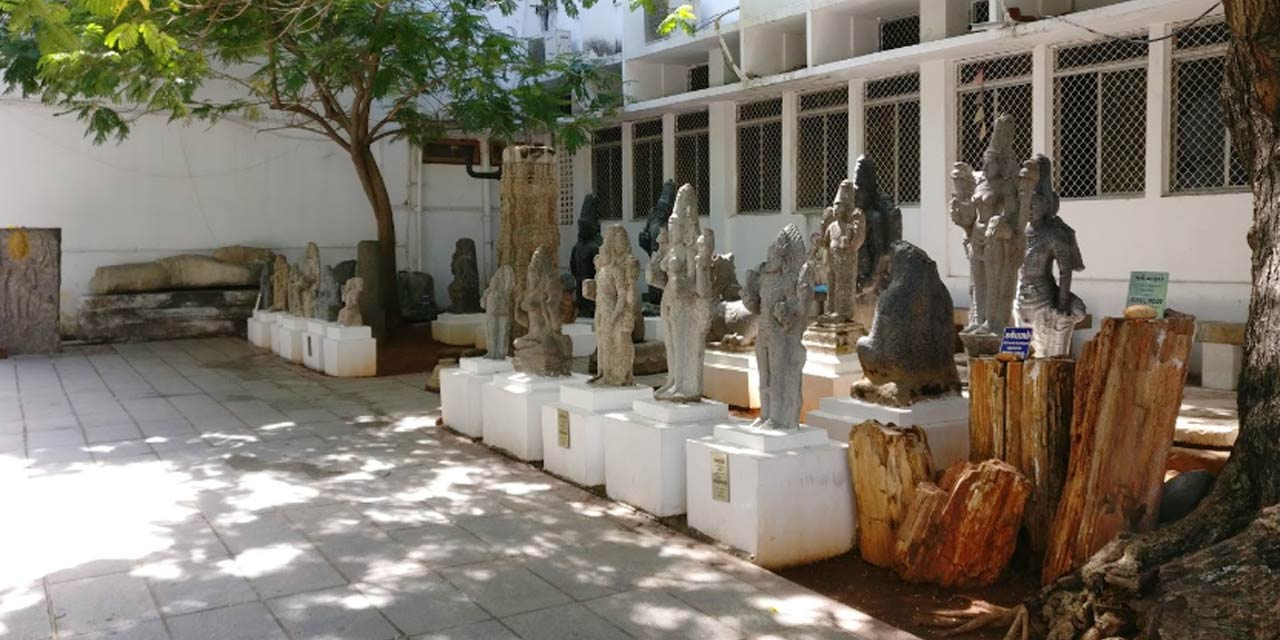
Located in the Bharathi Park, the Pondicherry Museum houses a fantastic collection of sculptures and remains of the archaeological findings from the Arikamedu Roman settlement. The museum also has a collection of rare bronzes and stone sculptures from the Pallava and Chola dynasties as well as a wide variety of temple lamps, handicrafts and art.

The Pudhuvai Museum is a non-governmental museum operated by a non-profit organisation. Adjacent to the Botanical Gardens, the museum is run with the help of the National Heritage Trust. The map gallery, houses thousands of maps and is named after Indian cartographer Nine Singh Rawat with 100 maps on display currently.

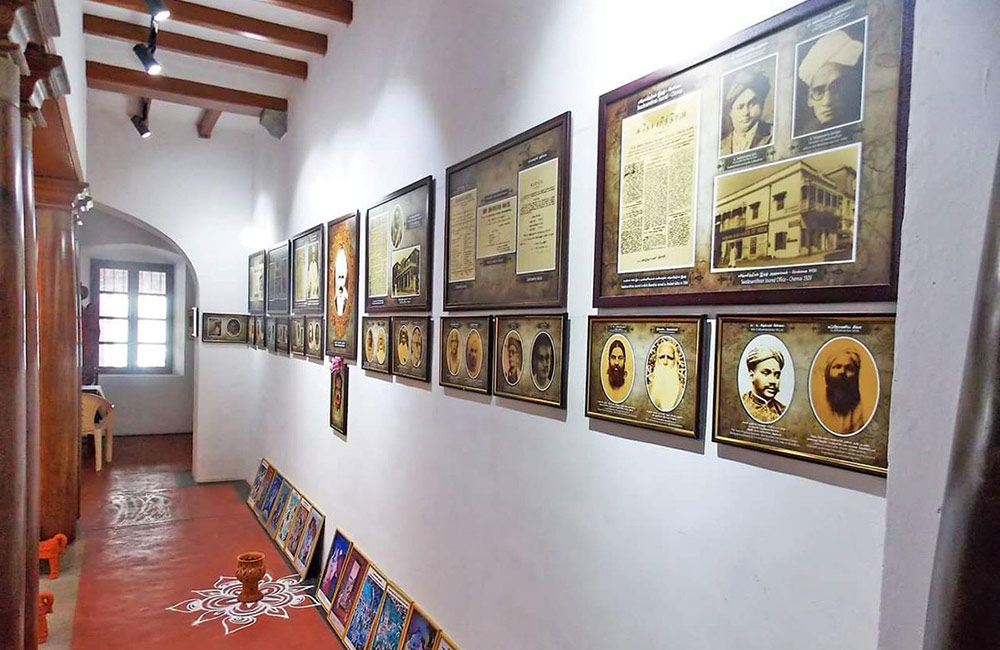
The Bharathidasan Museum, is the former house of the Pondicherry-born poet and playwright – Bharathidasan who lived between 1891 and 1960. Bharthidasan, whose name means a disciple of Bharathi was a poet whose poems compare with Bharathi’s in literary achievement and poetic fervour. He also wrote scripts for films on issues such as the Dravidian culture and the rights of women.

Subramanya Bharathi who lived between 1882 and 1921 and commonly known as Bharathiyar, was a Tamil poet-patriot who arrived in Pondicherry in 1908, a fugitive from British India. The French colony brought out the best in Bharathi and some of his finest patriotic and romantic compositions were written here. Bharathi’s home also known as the Bharathi Museum and is almost a place of pilgrimage today for the Tamil people.

The Jawahar Toy Museum is located next to the old lighthouse and is open on all days except Mondays. With a collection of over 120 dolls, each dressed in costumes from the various Indian states, the museum also has a display of a little fairyland with a tiny Lord Ganesha watching over everything and everyone. The Children’s Museum is located next to the Botanical Gardens and has collections of snail shells from the Pondicherry region.

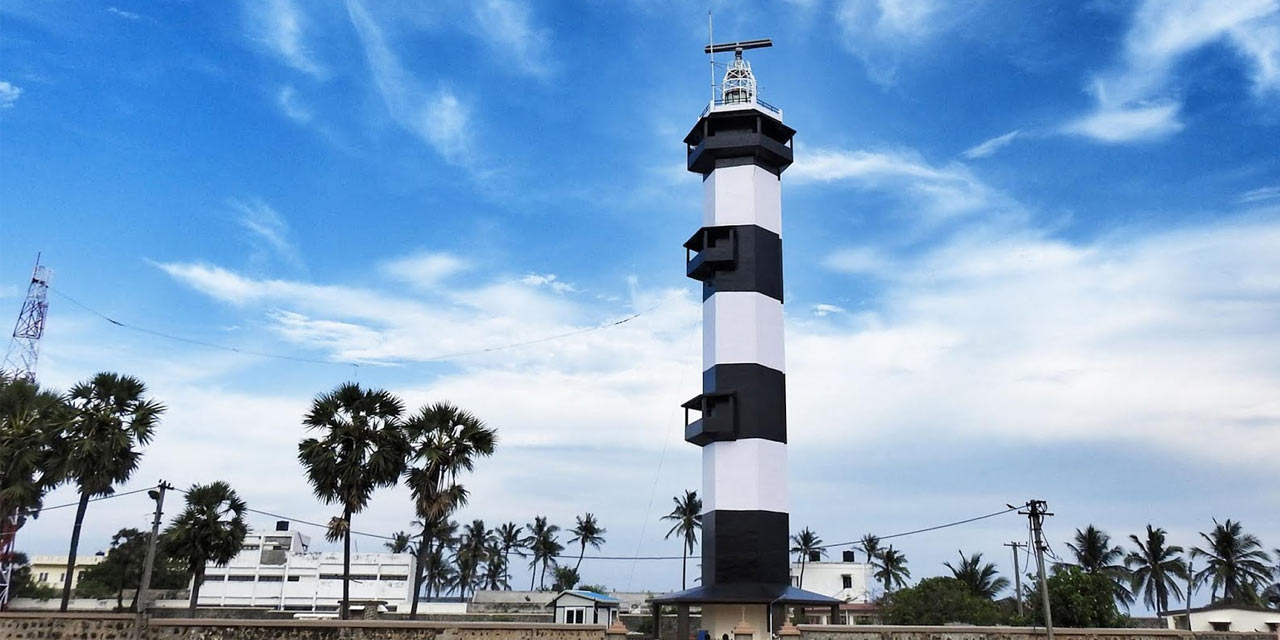
Puducherry has two lighthouses, an old one and a new one with the former closed to the public today, but the latter, the Pondicherry Lighthouse is famous for the amazing views it offers visitors. During the 19th century, the only landmark for sailors arriving in Pondicherry was the Red Hills, about three km towards the west of the town and so the French planned a lighthouse here to provide a reference point to them. The old lighthouse was erected in 1836 but closed to the public in 1979 and the new lighthouse was opened the same year. The base of the new lighthouse isn’t a simple rectangular one but a two-storied circular construction.

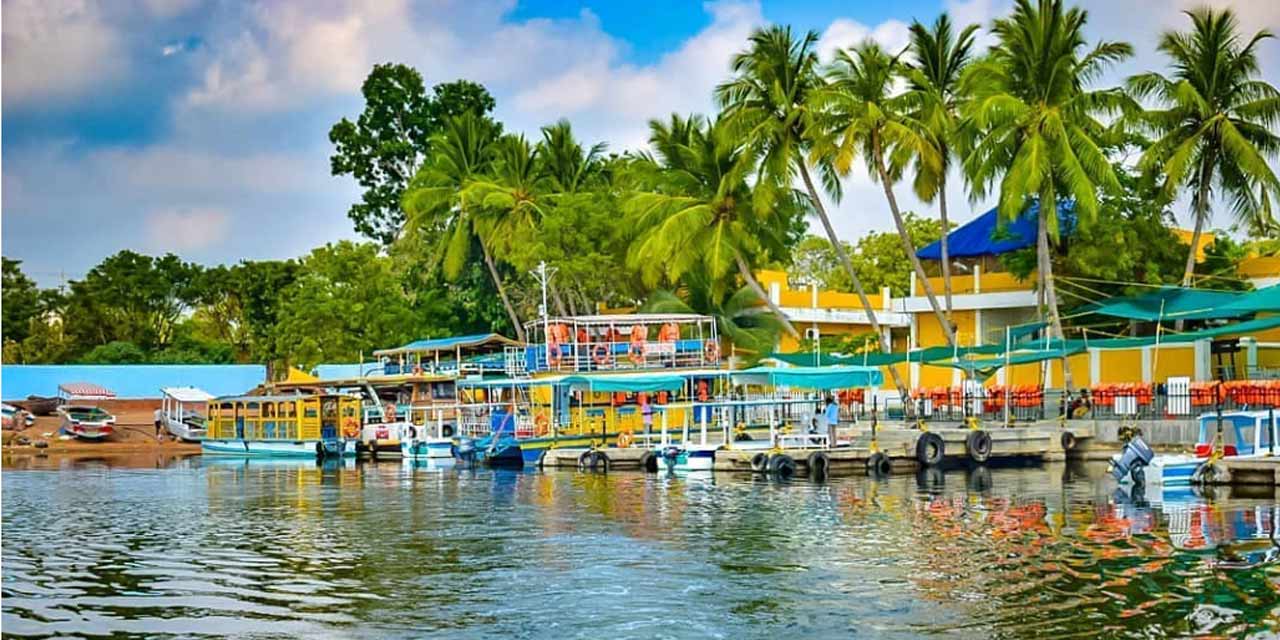
Chunambar is a quaint little hamlet around 8 km from Puducherry and is famous for its Paradise Beach which is situated near the mouth of the backwaters with pristine sand and crystallized waters. Also known as Plage Paradiso, the Paradise Beach is located in Chunnambar and is slightly out of the way with a 30-minute ferry across the breakwaters the way to get there. The backwaters are green with thick mangrove forests. Short cruises are also organised here which gives beautiful views and one can spot dolphins in the water. The water alongside Chunambar is a natural stream and is not very deep and there is a small shelter provided which can keep bags and offers some food and water with changing rooms provided as well.

One of the things that does justice to Puducherry’s French roots is its beautiful Seaside Promenade. Well maintained, clean and beautiful, one can actually feel the foam spray on their faces there.

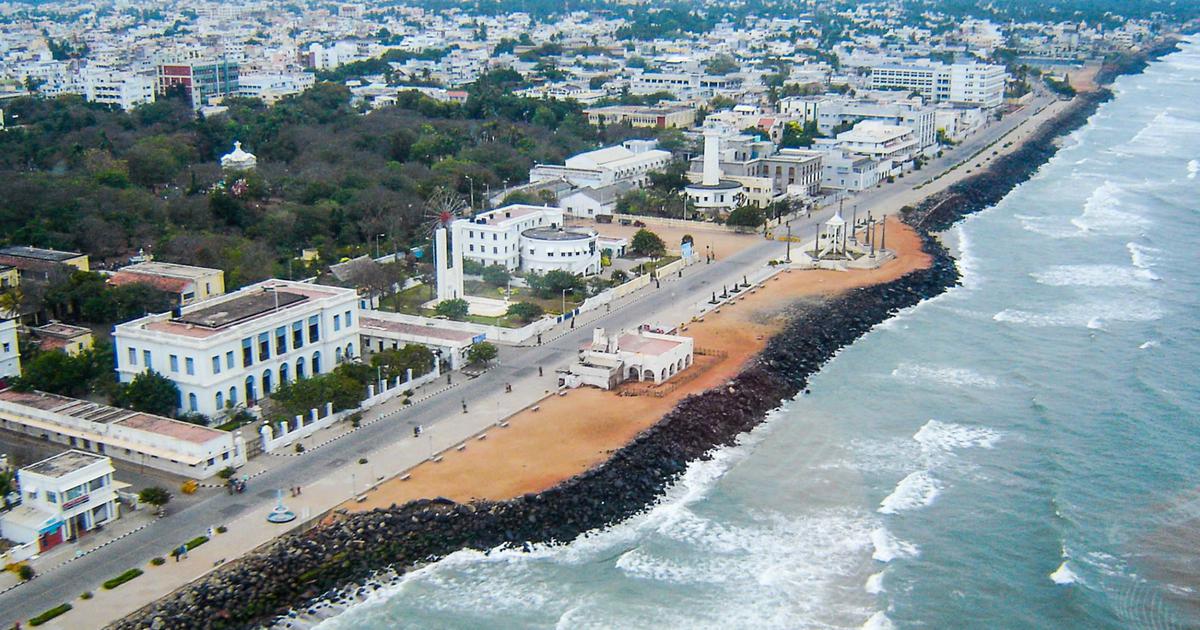
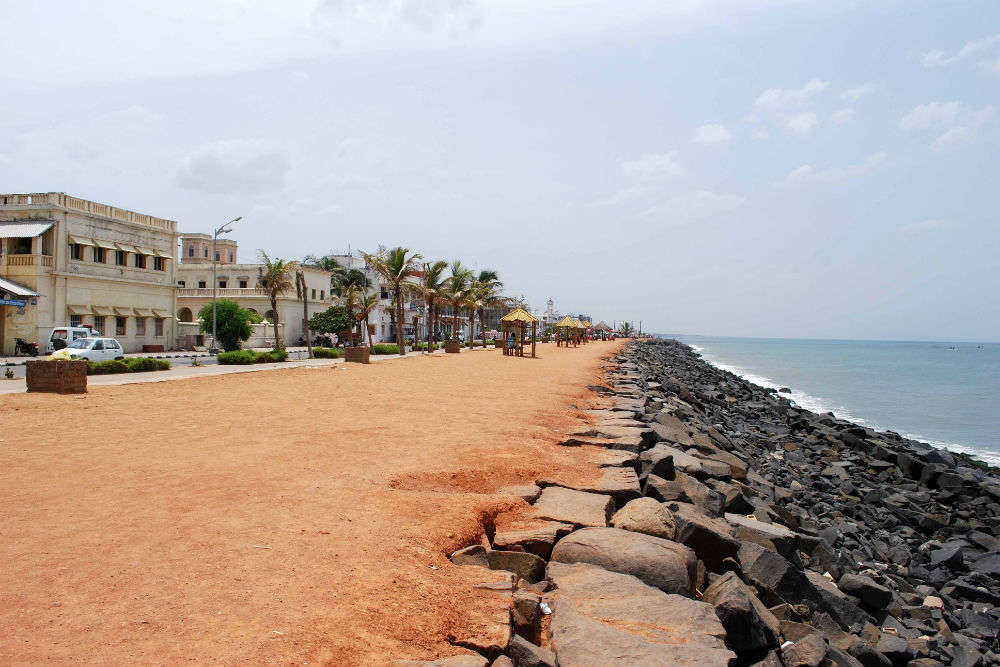
The Promenade Beach is a famous stretch of beachfront that extends for 1.2 km from the War Memorial to the Dupleix Park. The beach is often crowded especially during the evenings and is usually characterised by ocean sprays, waterscape and waves of chatters. There are many significant landmarks nearby, namely the War Memorial, the statue of Joan of Arc, the heritage Town Hall, old lighthouse, the statue of Mahatma Gandhi, the remains of the old pier, Dupleix Statue and the old Customs House. The beach can be easily distinguished from other beaches due to the presence of a long wall of rocks along its shore to prevent the erosion and subsiding shoreline.

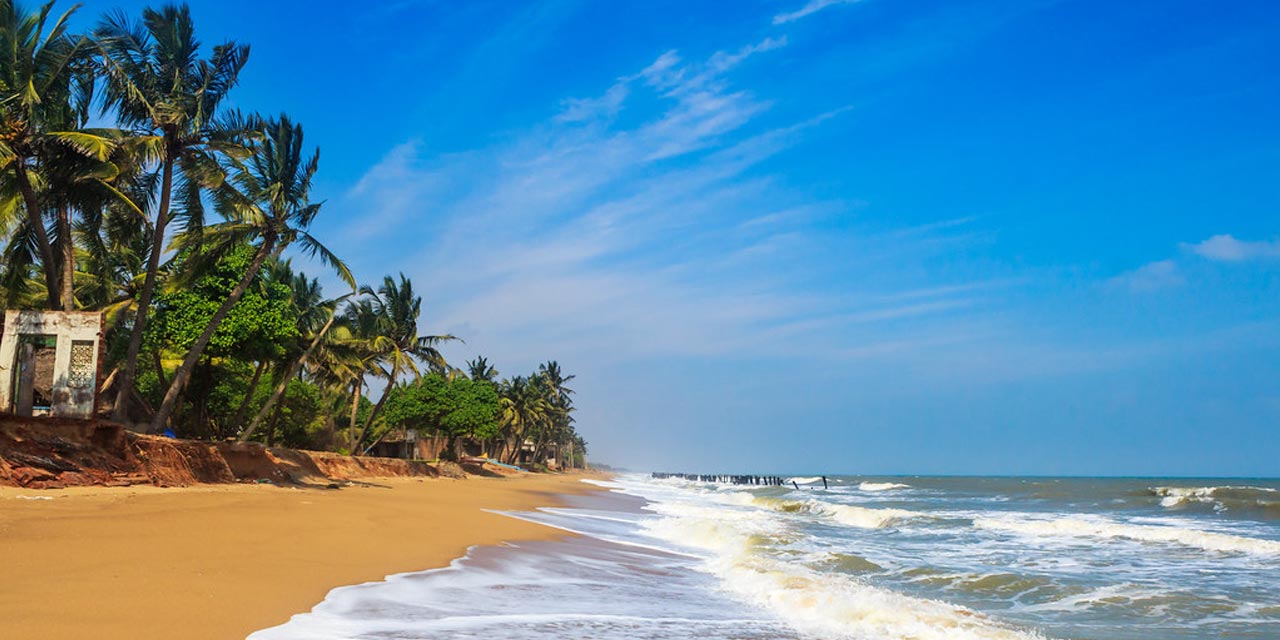
Located 10 kms, on the outskirts on Puducherry in Kottakuppam, Serenity Beach gets its name from the Spa-Resort-Inn located at the spot with the same name. Originally, the beach was called Thanthirayan Kuppam Beach or Kottakuppam Beach. The beach is isolated and little known and popular among fishermen. A few surfing schools located in the vicinity, offer coaching for the same.

Auroville Beach, also known as the Auro Beach is part of the Auroville Ashram and is situated about 10 km from the city. A very popular beach, Auro Beach attracts a lot of tourists and locals. The beach closes at every day 6:30 pm.

Located on the outskirts of Puducherry in the largest coastal village of Veerampattinam, Veerampattinam Beach has an extensive coastline and is little known with minimal tourists and boasts of golden sand. The most popular festival celebrated at the beach is the temple car festival.

In the next part, which is the last part, we will explore the other French colonies which constitute the Puducherry Union Territory.