Festivals of India: Madhvacharya Jayanti

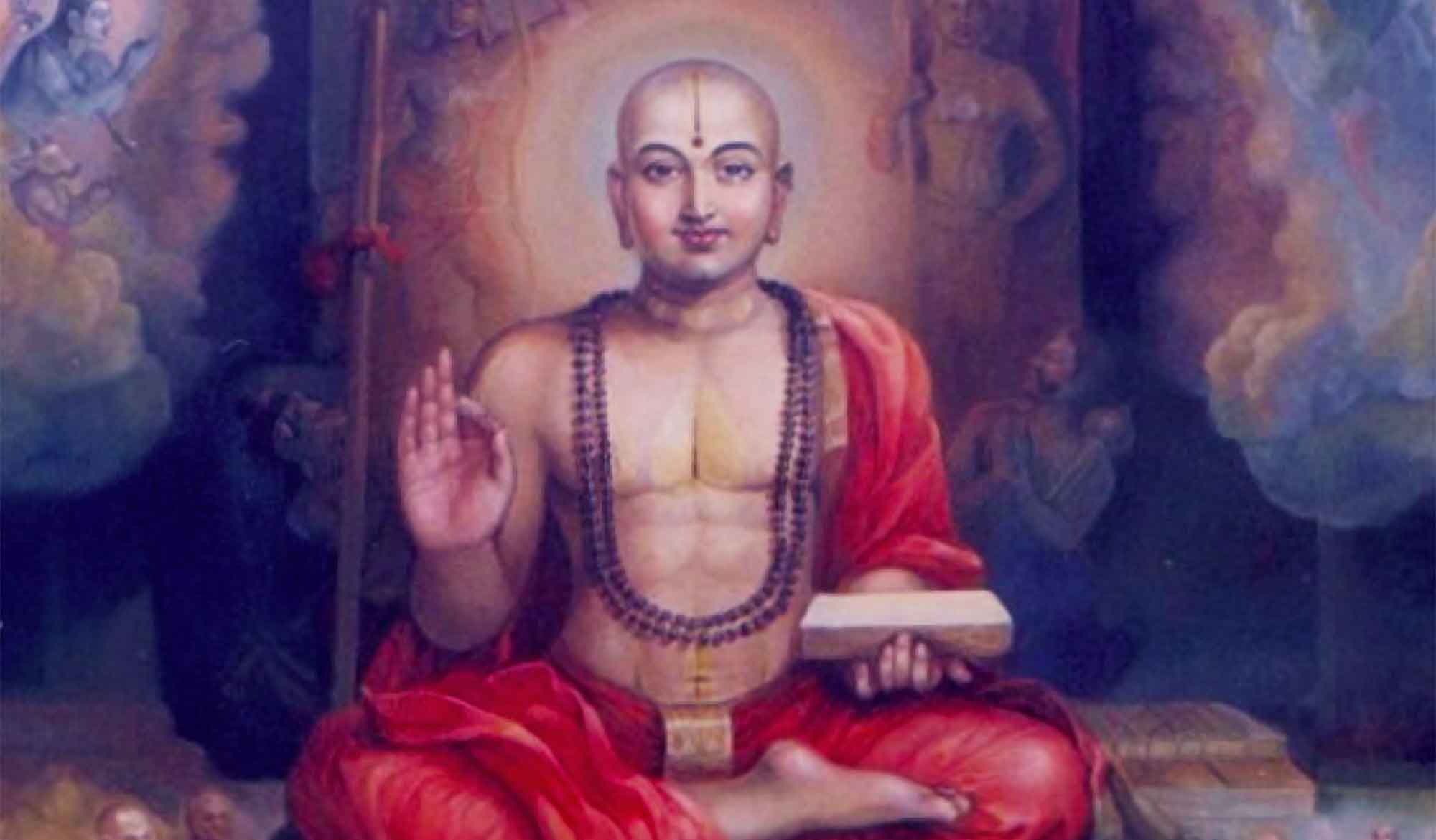
Commemorating the birth anniversary of Sri Madhvacharya, one of India’s most influential philosophers and theologians, Madhvacharya Jayanti typically falls in September or October according to the Gregorian calendar, marks the birth of a man who profoundly impacted Hindu philosophy and continues to inspire millions of followers worldwide.

Sri Madhvacharya, also known simply as Madhva, was born in 1238 in Pajaka, a small village near Udupi in the present-day state of Karnataka. He is renowned as the founder of the Dvaita or dualism school of Vedanta philosophy, which he called Tattvavada, meaning “arguments from a realist viewpoint”. 

Madhvacharya’s life was marked by extraordinary events from the very beginning. According to hagiographies, his birth was accompanied by divine signs and miracles. His parents, Madhyageha Bhatta and Vedavati had long yearned for a child and considered his birth a blessing from Lord Vishnu. Even as a young boy, Madhvacharya displayed remarkable intelligence and spiritual inclination. At the tender age of five, he received spiritual initiation, and by twelve, he had already accepted sannyasa, the most renounced order of spiritual life. This early renunciation set the stage for his lifelong dedication to spiritual pursuits and philosophical inquiry.

Madhvacharya’s contributions to Indian philosophy and theology are vast and enduring. His accomplishments can be broadly categorized into philosophical, literary, and social reforms.
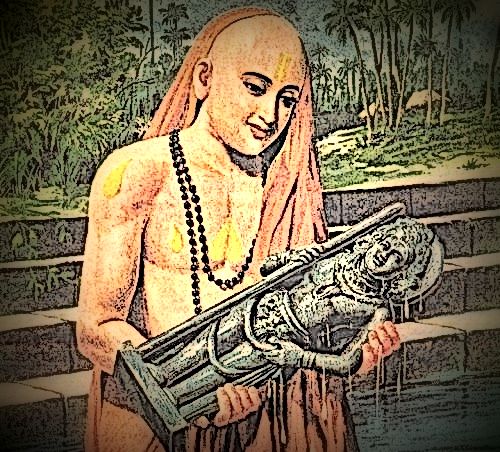
Madhvacharya’s most significant contribution was the formulation and propagation of the Dvaita or dualism school of Vedanta. This philosophy stands in contrast to the Advaita or non-dualism philosophy of Adi Shankara and the Vishishtadvaita or qualified non-dualism of Ramanuja. The Dvaita philosophy asserts that there are fundamental differences between the individual soul or jiva, matter or prakriti, and God or Ishvara.

Madhvacharya propounded the concept of five-fold differences or pancha bheda. The pancha bheda is was the difference between God and the individual soul; the difference between God and matter; the difference between individual souls; the difference between soul and matter; and the difference between various forms of matter.

Madhvacharya identified Vishnu as the Supreme Being, equating Him with Brahman as described in the Upanishads. Unlike some other Indian philosophical schools that viewed the world as an illusion, Madhvacharya asserted that the world is real and not merely an illusion or maya. Controversially, Madhvacharya proposed that some souls are eternally destined for hell, a concept not commonly found in Hindu philosophy.

Madhvacharya was a prolific writer, authoring numerous works that expounded his philosophy and interpreted sacred texts. His literary output is impressive, with thirty-seven works attributed to him. Some of his most important works include commentaries on the thirteen principal Upanishads, offering his unique interpretations of these ancient texts. His commentary on the Brahma Sutras, the foundational text of Vedanta philosophy, is considered one of his most important works. Madhvacharya’s commentary on the Bhagavad Gita provides insights into his understanding of karma yoga and bhakti yoga and the Mahabharata Tatparya Nirnaya presents his interpretation of the Mahabharata, emphasising its spiritual and philosophical aspects. The Bhagavata Tatparya Nirnaya is a commentary on the Bhagavata Purana, this work elucidates Madhvacharya’s views on devotion to Vishnu while the Anu-Vyakhyana, considered his masterpiece, is a supplement to his commentary on the Brahma Sutras.

Madhvacharya was not just a philosopher but also a social reformer. He challenged prevailing social norms and worked towards making spiritual knowledge accessible to all. Madhvacharya declared that the path to salvation was open to all, regardless of caste or birth. This was a revolutionary idea in medieval India, where spiritual knowledge was often restricted to upper castes. He established the Ashta Mathas or Eight Monasteries in Udupi, which became centres of learning and spiritual practice. Madhvacharya emphasized bhakti or devotion as a means of spiritual realisation, making spirituality more accessible to the common people.

The life of Madhvacharya is replete with stories of miraculous events and divine interventions. While these stories may be viewed as hagiographical embellishments, they form an integral part of the tradition and reflect the reverence in which Madhvacharya is held by his followers.

According to tradition, Madhvacharya’s birth was not ordinary. It is said that his parents had been childless for many years and prayed fervently to Lord Ananteshwara, a form of Lord Vishnu for a son. Their prayers were answered, and Madhvacharya was born as an incarnation of Vayu, the wind god.
Several miraculous events are associated with Madhvacharya’s childhood. It is said that Madhvacharya’s father had accumulated many debts. To help repay these, young Madhva miraculously converted tamarind seeds into gold coins. Near Madhvacharya’s house lived a demon named Maniman in the form of a snake. The young Madhva is said to have killed this demon with the big toe of his left foot. Stories tell of Madhvacharya’s ability to appear instantly before his mother whenever she felt anxious, jumping from wherever he was playing. As a child, Madhvacharya is said to have consumed 4,000 bananas and thirty large pots of milk in one sitting, demonstrating his divine nature.

Madhvacharya is believed by his followers to be the third incarnation of Vayu, the wind god. According to this belief, the first incarnation was Lord Hanuman, the devoted servant of Lord Rama, the second was Bhima, one of the Pandava brothers in the Mahabharata while Madhvacharya was the third and final incarnation. This belief in Madhvacharya’s divine origin adds to his authority as a spiritual leader and philosopher in the eyes of his followers.

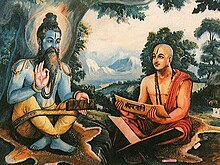
One of the most significant mythological stories associated with Madhvacharya is his supposed encounter with Vyasa, the legendary author of the Vedas and Puranas. According to tradition, Madhvacharya travelled to Badrikashrama in the Himalayas, where he met Vyasa in person. This meeting is said to have lasted for several days, during which Vyasa imparted advanced spiritual knowledge to Madhvacharya and confirmed the correctness of his philosophy.

Madhvacharya Jayanti is celebrated with great devotion and enthusiasm, particularly in South India where his influence is strongest. The festival typically falls on the Vijaya Dashami day in the month of Ashwin, typically between September and October according to the Gregorian calendar.

Madhvacharya Jayanti serves multiple purposes. It’s a day to remember and honour the life and teachings of Madhvacharya. For followers of the Dvaita philosophy, it’s a time for spiritual introspection and renewal of their commitment to Madhvacharya’s teachings. The festival provides an occasion to educate people, especially the younger generation, about Madhvacharya’s philosophy and contributions to Indian thought. It brings together the community of Madhvacharya’s followers, strengthening their bonds and shared spiritual heritage.

The celebration of Madhvacharya Jayanti involves various rituals and activities. Temples dedicated to Madhvacharya or those belonging to the Dvaita tradition conduct special pujas or worship ceremonies on this day. Devotees often engage in the recitation of Madhvacharya’s works or texts that he commented upon, such as the Bhagavad Gita. Scholars and spiritual leaders give discourses on Madhvacharya’s philosophy and its relevance in contemporary times. Many communities organise cultural programs featuring devotional music and dance performances. Following Madhvacharya’s teachings on social reform, many followers engage in charitable activities on this day. Some devotees observe a fast on this day as a form of spiritual discipline and many try to visit Udupi, the centre of Madhvacharya’s activities, or other places associated with his life.

Madhvacharya’s influence extends far beyond his immediate followers. His ideas have had a lasting impact on Indian philosophy and spirituality. Madhvacharya’s philosophy significantly influenced later Vaishnava thinkers. The founder of Gaudiya Vaishnavism, Chaitanya Mahaprabhu, and his followers thoroughly studied Madhvacharya’s works before developing their philosophy. The prominent Gaudiya Vaishnava theologian, Jiva Goswami, drew heavily from Madhvacharya’s writings in composing his works. 

Madhvacharya’s emphasis on devotion or bhakti as a means of spiritual realisation contributed to the broader Bhakti movement in India. His teachings helped make devotional practices more accessible to common people, regardless of their caste or social status. Madhvacharya established a strong tradition of disciplic succession. Notable scholars in this lineage include Jayatirtha, Vyasatirtha, and Raghavendra Tirtha, who further developed and propagated Dvaita philosophy.
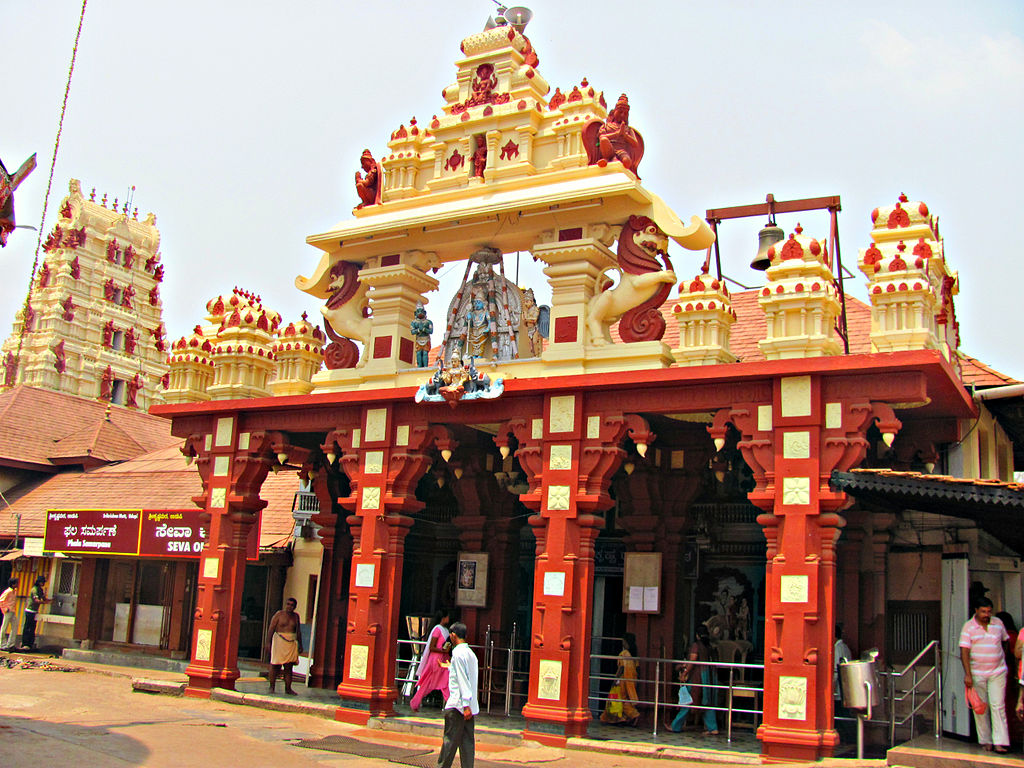
The eight mathas or monasteries established by Madhvacharya in Udupi continue to be important centres of learning and spiritual practice. The most famous among these is the Udupi Krishna Matha, known for its unique tradition of Krishna worship. 

Madhvacharya identified Vishnu as the Supreme Being, possessing infinite auspicious qualities. He taught that God is independent and self-existent; the world is dependent on God for its existence and functioning; God is the efficient and material cause of the universe; and divine grace is essential for salvation.

Regarding the individual soul or jiva, Madhvacharya taught that souls are eternal and innumerable, each soul is unique and maintains its individuality even after liberation, the soul is inherently dependent on God, and knowledge of one’s true nature as a servant of God is crucial for spiritual progress.

Unlike some Indian philosophical schools that view the world as an illusion, Madhvacharya asserted that the world is real, not illusory, the diversity we see in the world is real and not merely an appearance, and the world is subject to God’s control and exists for His pleasure.

Madhvacharya outlined a clear path to spiritual liberation. These are Knowledge or Jnana which is understanding the nature of God, soul, and the world; devotion or Bhakti which means cultivating loving devotion to Lord Vishnu; detachment or Vairagya by which one develops dispassion towards worldly pleasures, and divine grace because ultimately, liberation depends on God’s grace.

A unique aspect of Madhvacharya’s philosophy is the concept of gradation among souls. He proposed that souls are categorised based on their inherent qualities and potential for liberation and some souls are destined for eternal liberation, some for eternal bondage, and others which will oscillate between the two states. This concept of gradation and eternal damnation for some souls has been one of the more controversial aspects of Madhvacharya’s philosophy.

While Madhvacharya lived and taught in the 13th century, his ideas continue to be relevant in the modern world. His emphasis on the reality of difference resonates with modern ideas of pluralism and diversity. The concept of each soul being unique underscores the importance of individual worth and potential. Madhvacharya’s emphasis on righteous living and devotion provides a framework for ethical behavior in daily life. His approach to critically examining existing philosophies encourages intellectual inquiry and debate. The view of the world as real and valuable can foster a sense of responsibility towards the environment. 

Like any philosophical system, Madhvacharya’s Dvaita has faced challenges and criticisms. The idea that some souls are eternally condemned has been difficult for many to accept. Critics argue that Madhvacharya’s conception of God is too anthropomorphic. Some scholars have questioned Madhvacharya’s interpretations of Vedic texts, arguing that they are sometimes forced to fit his philosophical framework. Critics have pointed out perceived logical inconsistencies in some aspects of Dvaita philosophy. Despite these challenges, Madhvacharya’s philosophy continues to thrive and evolve, with modern scholars offering new interpretations and defences of his ideas.

While Madhvacharya Jayanti is primarily celebrated in India, particularly in the southern states, it has gained recognition globally due to the spread of Hinduism and the growing interest in Indian philosophy. The epicentre of Madhvacharya Jayanti celebrations is Udupi, Karnataka, where Madhvacharya established his primary matha. The Krishna Temple here becomes a focal point of festivities. Throughout Karnataka, especially in coastal regions, temples and mathas organise special pujas, discourses, and cultural programs. Tamil Nadu, Andhra Pradesh, and Kerala also see significant celebrations, particularly in areas with a strong Madhva following. While celebrations are less prominent in North India, some Vaishnava communities do observe the day with devotional activities.

Madhvacharya Jayanti is more than just a birthday celebration; it’s a testament to the enduring impact of a philosopher who lived over 700 years ago. Madhvacharya’s life, teachings, and legacy continue to inspire millions, offering a unique perspective on the nature of reality, the divine, and the human condition. His emphasis on the reality of difference, the supremacy of Vishnu, and the path of devotion has left an indelible mark on Hindu philosophy and practice. The annual celebration of Madhvacharya Jayanti serves as a reminder of his contributions and an opportunity for spiritual renewal for his followers.

We’re reminded of the rich philosophical traditions of India and their continued relevance in our modern world. Whether one agrees with all aspects of his philosophy or not, there’s no denying the profound impact Madhvacharya has had on Indian thought and spirituality. 
Festivals of India: Agni Keli

In Spain, giant effigies are set alight. In China, molten iron is sprayed on city walls. And in Scotland, a replica Viking ship is lit by a thousand torches. All over the world – and despite the obvious dangers – fire means festivities. But in South India, there’s a fire festival that might just be the wildest of the lot.

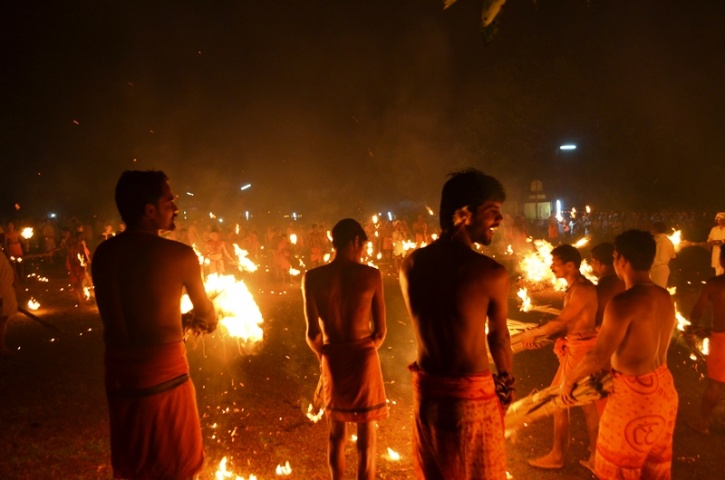
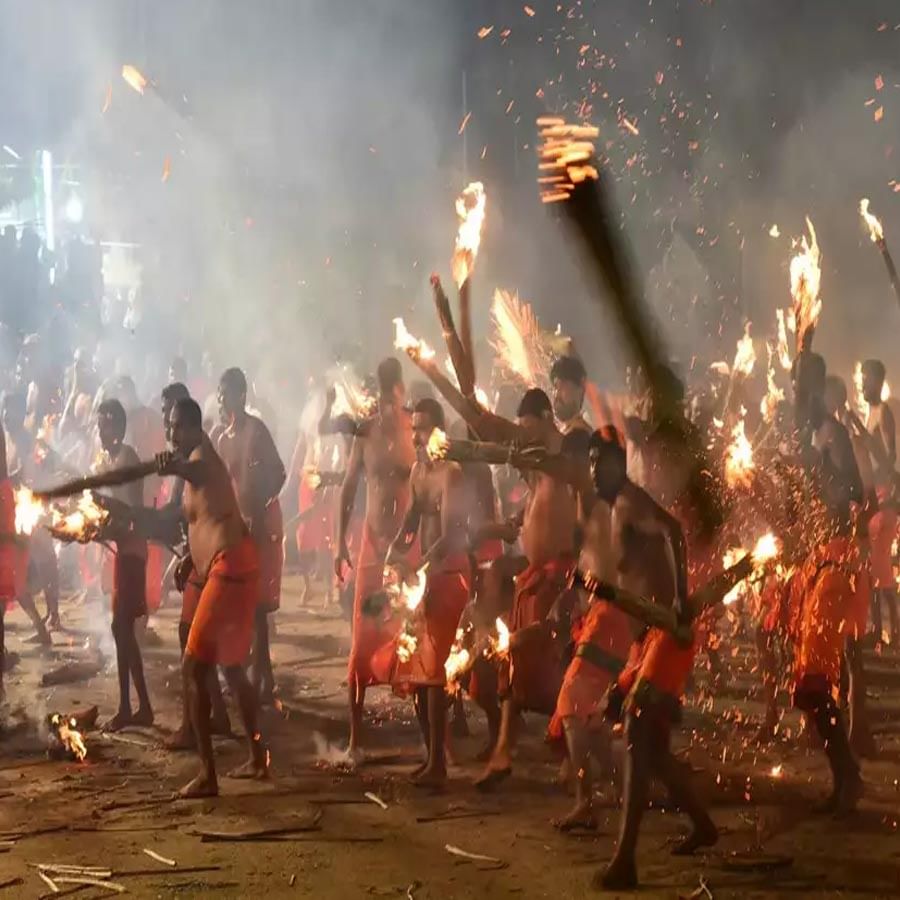
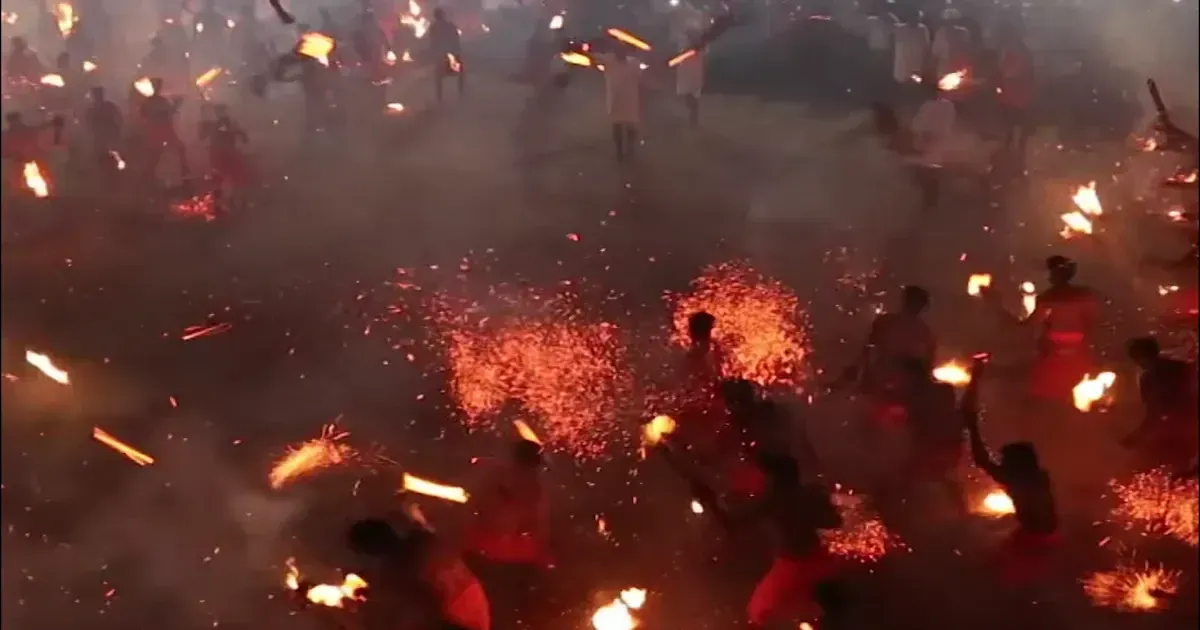
Agni Keli, also known as Agni Khela, is an eight-day-long event held every April in Mangalore, Karnataka. It features an all-out fire brawl, in which participants fling flaming branches straight at each other. Imagine a genuine battle – branches flying through the night sky, sparks falling around the participants, who pick up more branches and throw again. The neat line of men breaks up into chaos, creating a mesmerising spectacle.

It takes part as part of the grand festival of Thoothedhara at the Kateel Durga Parameswari Temple. This temple, also known as Kateelu, lies in Dakshin Kannada on an islet formed naturally in the middle of the sacred Nandini River. The surroundings are adorned with lush greenery and panoramic views, creating a serene and spiritual atmosphere. The temple is dedicated to Goddess Durga Parameswari, who manifests as a Udbhava Moorthi or a naturally formed deity. The goddess is also known as Bhramare, which translates to a big, furious bee. Kateel is considered one of the holiest Hindu temple towns in India.

Agni Keli is a fire-throwing festival in honour of Goddess Durga, the Hindu goddess of war. She is often pictured riding a lion or tiger, bearing weapons in her many arms as she fights demons. Followers believe that Durga is appeased by wild and adventurous rituals like Agni Keli. She is also honoured during the Durga Puja festivities, which take place across South Asia in September and October.

The Agni Keli festival runs over eight days every April. The fire-throwing itself takes place by the Kateel Durga Parameswari Temple, just outside Mangalore. During Agni Keli, participants are divided into two groups, facing each other. They engage in an all-out fire brawl, throwing burning palm fronds at each other from a distance. This fiery exchange symbolises devotion, courage, and the triumph of good over evil.

Agni Keli brings together devotees from various backgrounds. Regardless of caste, creed, or social status, participants engage in this fiery battle with fervour. The shared experience fosters unity and a sense of community. Participants believe that engaging in Agni Keli cleanses them of impurities and negative energies. Agni Keli is a spiritual journey through flames, akin to a baptism by fire, with the fire symbolising purification and renewal.

Agni Keli requires courage and trust in the divine. Participants surrender to the flames, knowing that they are part of a sacred tradition, with their devotion to Goddess Durga fueling their determination. Despite the risks, Agni Keli continues to thrive, preserving its cultural heritage and ancient traditions. The festival ignites the flames of tradition, reminding us of our roots and shared humanity.

Despite the risks, Agni Keli continues to thrive. It reminds us of our ancient roots, our connection to the divine, and the power of collective rituals. In a rapidly changing world, festivals like Agni Keli preserve cultural heritage and ignite the flames of tradition. Agni Keli is not just a fire festival; it is a testament to human resilience, faith, and the enduring spirit of celebration. As the flames dance, they carry the echoes of centuries, reminding us that sometimes, the wildest celebrations are the ones that warm our souls.

Festivals of India: Mysuru Dasara

Karnataka’s state festival or Nadahabba, the Dasara festival in Mysore is a 10-day festival, starting with the nine nights of Navaratri and the last day being Vijayadashami or Dasara. The festival is observed on the tenth day in the Hindu calendar month of Ashvina, which typically falls in the Gregorian months of September and October. The 10-day extravaganza marks the triumph of good over evil and pays homage to the goddess Chamundeshwari, the presiding deity of Mysuru.

Dasara, Navratri and Vijayadashami was the day in Hindu mythology when Goddess Chamundeshwari or Goddess Durga killed the demon Mahishasura, whose slaying by the Goddess gave the city its name of Mysuru. The Mysuru tradition celebrates the warriors and the state fighting for the good during this festival, ritually worshipping and displaying the state sword, weapons, elephants, and horses along with the Hindu Devi goddess in her warrior form, predominantly as well as the Vishnu avatar of Lord Rama. The origins of the Dasara festival can be traced back to ancient Hindu mythology, specifically the great epic, Ramayana. It is believed that Lord Rama, the seventh avatar of Lord Vishnu, worshipped the goddess Durga before embarking on his journey to rescue his wife, Sita, from the demon king Ravana. In commemoration of the divine blessings bestowed upon him, Lord Rama emerged victorious on the day of Vijayadashami, the tenth day of the festival. The ceremonies and a major procession are traditionally presided by the king of Mysuru.

The Dasara festivities began with the Vijayanagar kings as early as the 14th or 15th century and played a historical role in the 14th-century Vijayanagara Empire, where it was called Mahanavami and the festivities are shown in the relief artwork of the outer wall of the Hazara Rama temple of Hampi. The Italian traveller Niccolò de’ Conti described the festival’s intensity and importance as a grandeur religious and martial event with royal support. The event revered Durga as the warrior goddess or Chamundeshwari and hosted athletic competitions, singing and dancing, fireworks, a pageantry military parade and charitable giving to the public.

After the fall of the Vijayanagar to the Deccan Sultanates, these Hindu celebrations came to an end under Muslim rulers. The Wodeyars of Mysore formed a kingdom in Southern parts of the Vijayanagara Empire and continued the Mahanavami or Dasara festival celebration, a tradition started initially by Raja Wodeyar I in mid-September 1610 at Srirangapatna. The city of Mysuru has a long tradition of celebrating the Dasara festival with grandeur and pomp. The Dasara festival in Mysuru completed its 409th anniversary in 2019. Over the centuries, the Dasara festival evolved and assimilated various regional customs and traditions, ultimately becoming an essential part of Mysuru’s cultural identity. The festival showcases the city’s rich heritage and its reverence for its ruling family, the Wadiyars, who have played a pivotal role in preserving and promoting the festival’s grandeur.

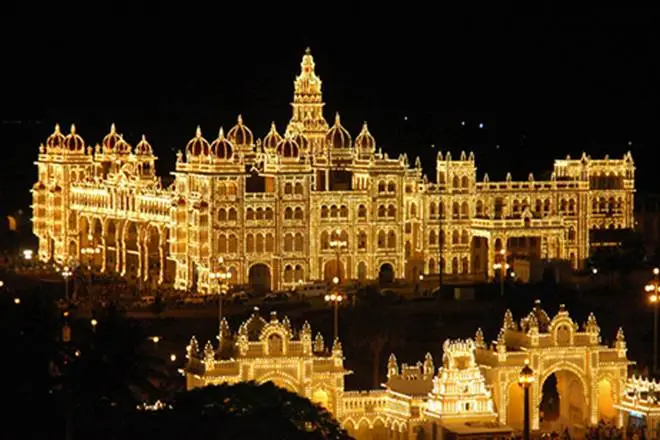
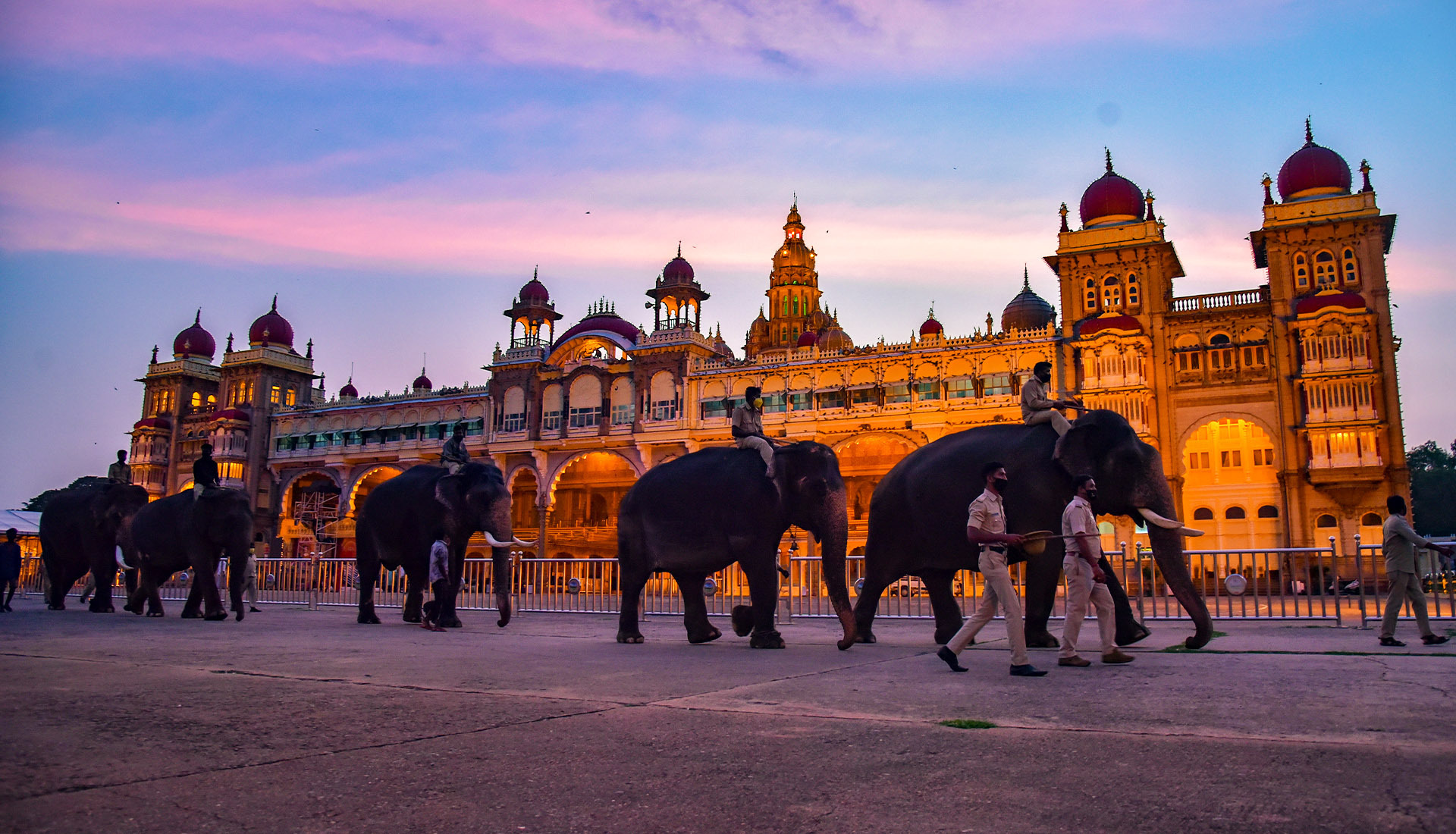
The festival is the jewel in the city’s crown and the entire city springs into action. Adorned with colourful lights and decorations, the iconic Mysuru Palace, a masterpiece of Indo-Saracenic architecture, takes centre stage as it is beautifully illuminated with nearly 100,000 light bulbs from 7 to 10 pm on all days of the festival, presenting a breathtaking sight. The Nadahabba is inaugurated with great fanfare at the Mysuru Palace by the current scion of the royal family. Dressed in traditional regal attire, the Wadiyars carry the golden idol of the goddess Chamundeshwari in a magnificent procession, accompanied by traditional music, dance, and the beats of ceremonial drums. The spirit of the festival is infectious as locals and visitors alike gather to witness this majestic spectacle. The intricate floral rangoli, known as Rangoli Patha, adorn the palace grounds, and the aromatic fragrance of flowers fills the air, adding to the festive ambience. Various cultural and religious programs highlighting the dance, music and culture of the State of Karnataka are performed in front of the illuminated Palace.

The heart of Dasara lies in the nine nights of Navaratri, a time to celebrate the various forms of the divine goddess. Mysuru becomes a cultural haven during this period, with vibrant performances of classical music, dance, and folk arts taking place at various venues across the city.

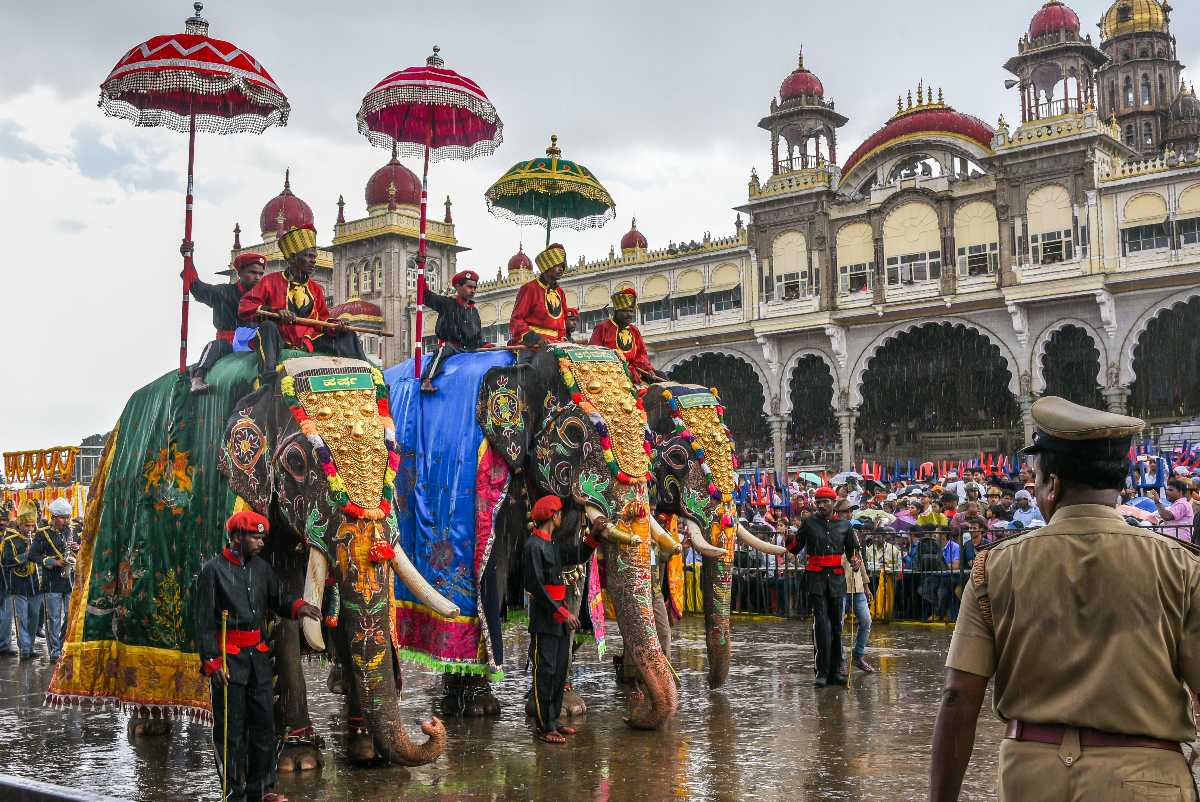
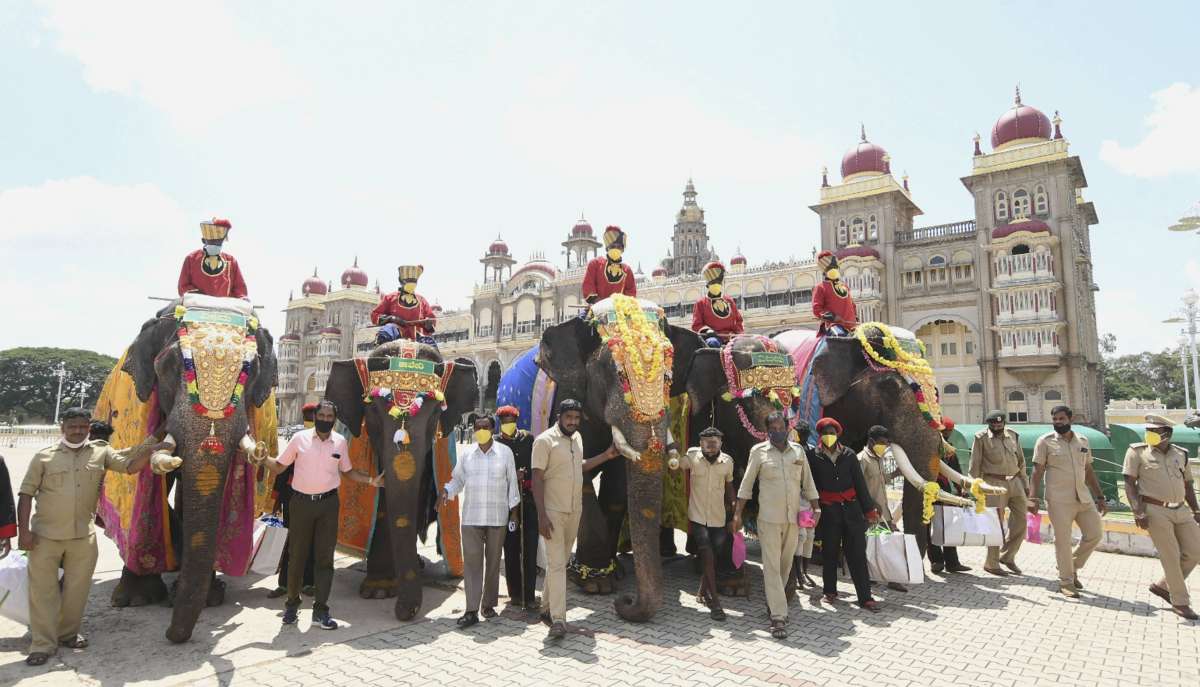
The grand finale of the Dasara festival is the Vijayadashami procession, a regal pageantry that captivates all. The streets of Mysuru come alive with an unending sea of spectators, eagerly awaiting the arrival of the adorned elephant carrying the idol of goddess Chamundeshwari. The traditional Dasara procession, locally known as Jumboo Savari is held on the streets of Mysuru. The main attraction of this procession is the idol of the Goddess Chamundeshwari which is placed on a golden mantapa, made out of 750 kg of gold on the top of a decorated elephant. This idol is worshipped by the royal couple and other invitees before it is taken around in the procession. Colourful tableaux, dance groups, music bands, decorated elephants, horses and camels form a part of the procession which starts from the Mysore Palace and culminates at a place called Bannimantap where the Banni tree or Prosopis spicigera is worshipped.

According to a legend from the Mahabharata, the banni tree was used by the Pandavas to hide their weapons during their one-year period of Agnatavasa where they had to live incognito. Before undertaking any warfare, the kings traditionally worshipped this tree to help them emerge victorious in war. The Dasara festivities would culminate on the night of Vijayadashami with an event held on the grounds at Bannimantap called Panjina Kavayatthu or the torch-light parade.

The procession features beautifully decorated tableaux showcasing the city’s rich history and mythological stories. Folk dancers, performers, and cultural troupes from across the state add a vibrant touch to the procession, reiterating Karnataka’s diverse cultural heritage. The procession culminates with a breathtaking display of traditional music and fireworks, illuminating the night sky and leaving spectators in awe. After the Jamboo Savari, a torchlight parade takes place in the evening at the Bannimantap Parade Grounds.

The famous Mysuru Dasara Exhibition, held in the exhibition grounds opposite the Mysore Palace is a major highlight, where a carnival-like atmosphere enthrals visitors with thrilling rides, games, and mouthwatering street food. Local artisans and craftsmen showcase their talents in the exhibition, adding a touch of traditional artistry to the festivities. The exhibition was started by the Maharaja of Mysore, Chamaraja Wodeyar X in 1880 with the sole aim of introducing timely developments to the people of Mysore. The task of holding the exhibition is now entrusted to the Karnataka Exhibition Authority or KEA. This exhibition starts during Dasara and goes on till December. A play area containing attractions like a Ferris wheel is also present to provide entertainment and various Governmental agencies set up stalls to signify the achievements and projects that they have undertaken.

The Dasara Sports Meet, reminiscent of the days of the Maharajas, draws enthusiastic participants and spectators alike. The traditional sport of Kusti or wrestling and other indigenous games and races bring back the nostalgic charm of a bygone era and attract wrestlers from all around India. On all the 10 days of Dasara, various music and dance concerts are held in auditoriums around Mysore city. Musicians and dance groups from all over India are invited to perform on this occasion.

The Dasara procession has faced increasing pressure from activists and campaigners to end its controversial use of elephants. Procession elephants, as well as their handlers known as mahouts, have died from several shocking incidents over the years. In 2018, leaked footage from the elephants’ training ground showed an elephant swaying in distress. International press labelled the video heartbreaking and reported on how the elephants must undergo two months of rigorous training to perform in the procession.

Dasara in Mysuru is not just a festival; it is a testament to the city’s deep-rooted heritage and the enduring spirit of its people. It is festivals like this, that help us to cherish and preserve our cultural legacies for generations to come.

Travel Bucket List: India – Consolidated List of all States

As I started planning my travel, I started relying on my research for where to go and found it slightly ungainly to search through all the material I have to reach a specific destination. So here’s a consolidated list of all Indian states, in alphabetical order with the cities and towns next to each part which makes it easier to get to the place you are interested in.

Photo by Ravigopal Kesari on Unsplash

Andaman and Nicobar Islands
Part 1 – Introduction and Overview
Part 2 – Port Blair
Part 3 – Corbyn’s Cove Beach, Wandoor Beach, Viper Island, Ross Island, North Bay Island, Red Skin Island, Middle Andaman Island, Long Island, Baratang Island, Parrot Island, North Passage Island, Guitar Island
Part 4 – Aves Island, North Andaman Island, Diglipur, Stewart Island, Ross & Smith Island, Jolly Buoy Island, Havelock Island
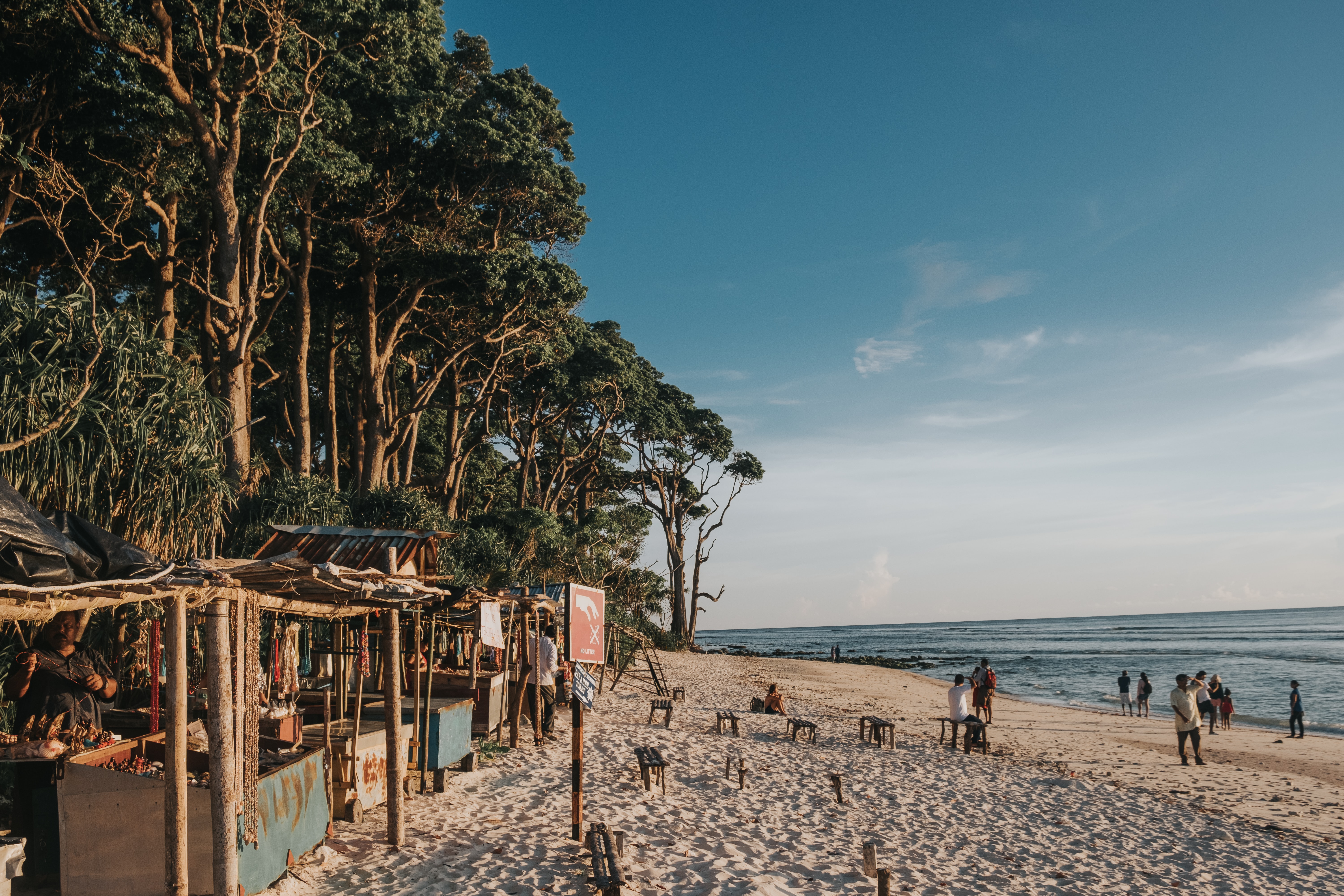
Part 5 – Neil Island, South Andaman Island, Rutland Island, Little Andaman Island, Cinque Island, Barren Island, Narcondom Island, Kathchal Island, Campell Bay & Indira Point
Part 6 – Mahatma Gandhi Marine National Park, Chidiya Tapu, The Chidiya Tapu Biological Park, Mount Harriet National Park, Saddle Peak National Park, Campbell Bay National Park, Galathea National Park, Middle Button Island National Park, North Button Island National Park, South Button Island National Park

Photo by Gowrisha CV on Unsplash

Andhra Pradesh
Part 1: Introduction and Overview, Vishakhapatnam
Part 2: Araku Valley, Vizianagaram, Annavaram, Samalkot, Kakinada, Rajahmundry
Part 3: Amaravathi, Vijayawada, Machilipatnam
Part 4: Guntur, Chirala, Nagarjunakonda, Srisailam, Cumbum, Nellore
Part 5: Kurnool, Mantralayam, Gandikota, Tadipatri, Anantapur, Puttaparthi
Part 6: Lepakshi, Horsley Hills, Chittoor, Srikalahasthi, Tirupati

Photo by Mayur More on Unsplash

Arunachal Pradesh
Part 1: Introduction and Overview, Itanagar, Bhalukpong
Part 2: Bomdila, Tawang
Part 3: Ziro, Yinkiong, Mechuka, Roing, Tirap
Part 4: Khonsa, Changlang, Miao, Anini, Pasighat, Aalo, Daporijo, Anjaw, Tezu

Photo by Nilotpal Kalita on Unsplash

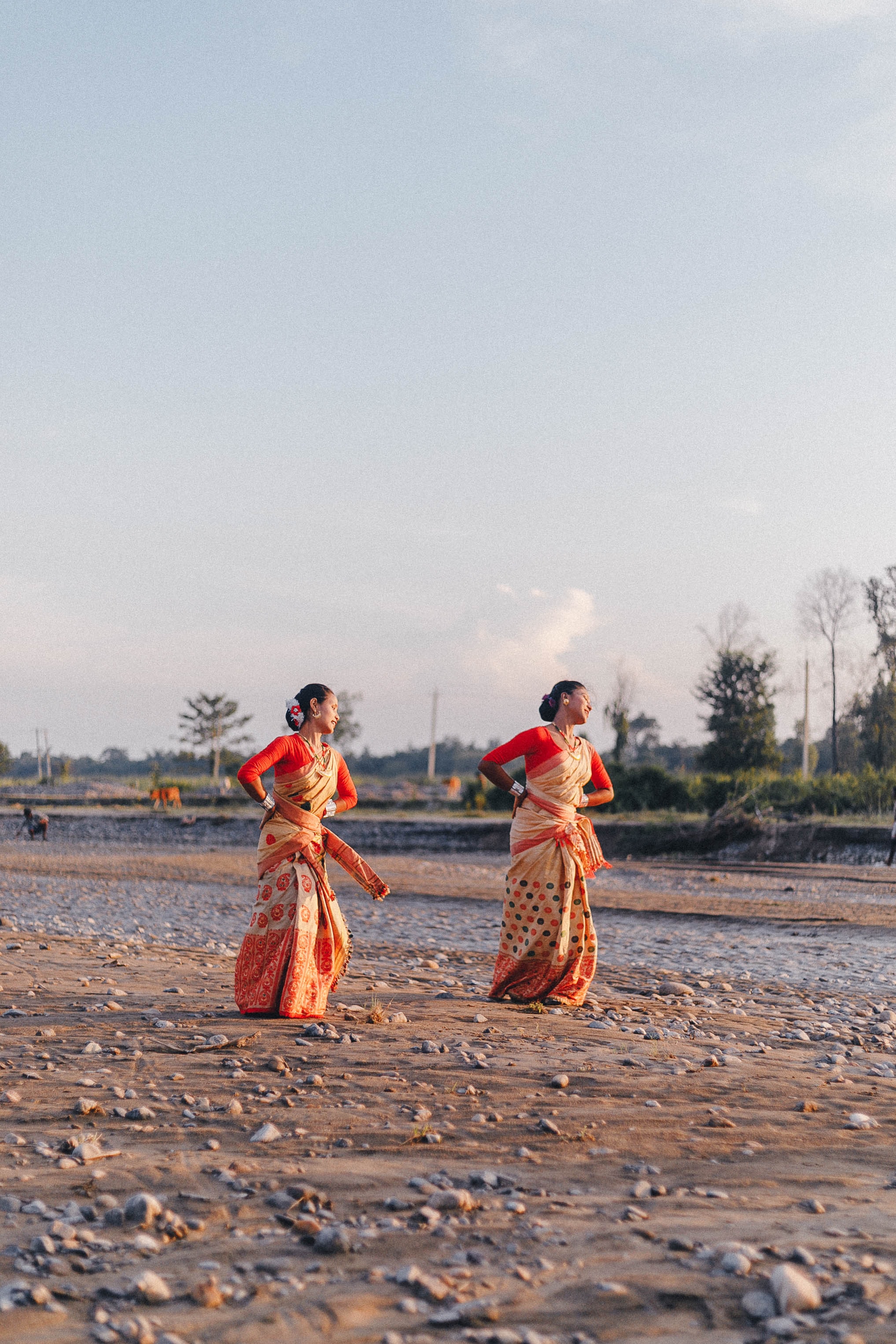
Assam
Part 1: Introduction and Overview, Guwahati, Dispur
Part 2: Kokrajhar, Bongaigaon, Goalpura, Barpeta, Nalbari, Hajo, Sualkuchi
Part 3: Darrang, Mayong and Morigaon, Nagaon, Tezpur, Jorhat
Part 4: Sivasagar, Majuli, Dhemaji, Dibrugarh, Tinsukia, Digboi
Part 5: Sadiya, Haflong, Jatinga, Diphu, Karimganj, Hailakandi, Silchar
Part 6: Raimona National Park, Manas National Park, Orang National Park, Kaziranga National Park, Nameri National Park, Dibru Saikhowa National Park, Dihing Patkai National Park

Photo by ARTO SURAJ on Unsplash

Bihar
Part 1: Introduction and Overview
Part 2: Patna
Part 3: Hajipur, Nalanda
Part 4: Rajgir, Sasaram, Kaimur
Part 5: Bodh Gaya, Vaishali
Part 6: Muzzafarpur, Sitamarhi, Madhubani, Lauriya Nandangarh, Bhagalpur, Valmiki National Park Tiger Reserve and Wildlife Sanctuary

Photo by Ayiman Mohanty on Unsplash

Chhattisgarh
Part 1: Introduction and Overview, Raipur, Champaran
Part 2: Bhilai, Durg, Rajnandgaon, Chirmiri, Madku Dweep, Bhoramdeo Temple, Guru Ghasidas National Park
Part 3: Achanakmar Tiger Reserve, Bilaspur, Raigarh, Korba, Ambikapur, Barnawapara Wildlife Sanctuary, Mainpat, Malhar
Part 4: Mahasamund, Sirpur, Rajim, Jagdalpur, Dhamtari, Dhamtari, Dantewada, Kanger Ghati National Park

Dadra and Nagar Haveli and Daman and Diu
Part 1: Introduction and Overview, Daman
Part 2: Diu
Part 3: Dadra and Nagar Haveli

Delhi
Part 1: Introduction and Overview, India Gate, Red Fort, Qutub Minar, Jantar Mantar, Rajghat
Part 2: Iron Pillar, National War Memorial, Rajpath, Rashtrapati Bhavan, Agrasen Ki Baoli, Ghalib Ki Haveli, Alai Darwaza/Minar, Bhool Bhulaiya ka Mahal, Purana Qila,
Part 3: Tughlaqabad Fort. Siri Fort, Feroza Kotla Fort, Swaminarayan Akshardham Temple, ISKON Mandir, Birla Temple, Chhatrapur Temple, Kalkaji Temple, Kali Bari Temple, Yogmaya Temple, Sri Digambar Jain Lal Mandir, Lotus Temple
Part 4: Jama Masjid, Quwwat-ul-Islam Mosque, Fatehpuri Masjid, Jamali Kamali Mosque and Tomb, Nizamuddin Dargah, Humayun’s Tomb, Safdarjung’s Tomb, Isa Khan’s Tomb, Hijron ka Khanqah, Nicholson Cemetery
Part 5: Gurudwara Bangla Sahib, Gurudwara Sis Ganj Sahib, Rakab Ganj Gurdwara, Sunder Nursery, Lodhi Gardens, Garden of Five Senses, National Rose Garden, Mehrauli Archaeological Park, Pradhanmantri Sangrahalaya, National Museum, Nehru Memorial Museum and Library, Rashtrapati Bhavan Museum, Indian War Memorial Museum, National Handicrafts Museum
Part 6: Indira Gandhi Memorial Museum, Sanskriti Museums, Charkha Museum, Sulabh International Museum of Toilets, Shankar’s International Dolls Museum, Museum of Archaeology, National Railway Museum, Museo Camera, National Gallery of Modern Art, Kiran Nadar Museum of Art, Museum of Illusions, National Zoological Park, National Bal Bhavan, Connaught Place, Chandni Chowk, Dilli Haat, Sarojini Market, Lajpat Nagar, Majnu ka Tila, Pragati Maidan

Photo by Sarang Pande on Unsplash

Goa
Part 1: Introduction and Overview
Part 2: North Goa, Vagator Beach, Anjuna Beach, Calangute Beach, Sinquerim Beach, Candolim Beach, Arambol Beach, Mandrem Beach, Morjim Beach, Miramar Beach, Siridao Beach, Bogdeshwara Temple, Mangeshi Temple, Mahalaxmi Temple, Fort Aguada, Chapora Fort, Reis Magos Fort, Basilica of Bom Jesus, Church of Our Lady of Immaculate Conception, Chapel of St. Catherine, Church of Mae De Deus, Goa State Museum, Houses of Goa Museum, Museum of Christian Art, Casino Palms, Chorao Island, Harvalem Waterfalls
Part 3: South Goa, Butterfly Beach, Betalbatim Beach, Agonda Beach, Mobor Beach, Hollant Beach, Palolem Beach, Cansaulim Beach, Colva Beach, Talpona Beach, Kakolem Beach, Benaulim Beach, Our Lady of Remedios Church, Saviour of the World Church, St. Alex Church, Shantadurga Temple, Tambdi Surla Mahadev Temple, Chandreshwar Bhoothnath Temple, Naval Aviation Museum, Goa Chitra Museum, Big Foot Museum, The Grande Island, Pequeno Island, Bhagwan Mahaveer Wildlife Sanctuary, Netravali Wildlife Sanctuary, Cotigao Wildlife Sanctuary, Dudhsagar Falls, Bamanbudo Waterfalls, Netravali Bubbling Lake, Cabo de Rama Fort, Chandor

Photo by Parth Kateliya on Unsplash

Gujarat
Part 1: Introduction and Overview
Part 2: Surat, Vapi, Udvada, Valsad, Bilimora, Navsari, Bharuch, Saputara
Part 3: Ahmedabad, Lothal, Vadodara, Anand
Part 4: Gandhinagar, Patan, Mehsana, Palanpur
Part 5: Rajkot, Jamnagar, Dwarka, Porbandar, Junagadh, Bhavnagar, Palitana,
Part 6: Kutch, Bhuj, Mandvi, Rann of Kutch, Anjar

Photo by Sooraj Dev on Unsplash

Haryana
Part 1: Introduction and Overview, Gurugram, Manesar, Sohna
Part 2: Faridabad, Nuh, Murthal, Rohtak, Meham
Part 3: Hisar, Panipat, Karnal
Part 4: Kurukshetra, Ambala
Part 5: Panchkula, Morni Hills, Narnaul

Photo by Naman Pandey on Unsplash

Himachal Pradesh
Part 1: Introduction and Overview, Shimla, Kufri, Fagu, Theog, Hatkoti Valley, Chanshal Valley
Part 2: Chail, Solan, Barog, Nahan, Sirmour, Paonta Sahib, Shoghi, Kasauli, Arki, Nalagarh, Dadasiba, Bilaspur, Dalhousie,
Part 3: Kangra, Khajjiar, Bharmour, Chamba, Tattapani, Jalori Pass, Jibhi, Mandi
Part 4: Trithan Valley, Bhuntar, Sainj Valley, Barot, Bir Billing, Palampur, Kasol, Nagar, Manikaran Sahib, Tosh, Parvati Valley
Part 5: Kullu, Manali, Dharamsala, McLeodganj
Part 6: Keylong, Pin Valley National Park, Spiti Valley, Narkanda, Mashroba, Kinnaur, Sarahan, Sangla Valley, Kalpa, Pangi Valley, Nako

Jammu & Kashmir and Ladakh
Part 1: Introduction and Overview, Kashmir, Srinagar, Gulmarg, Sonmarg, Pahalgam, Amarnath, Pulwama, Kupwara, Poonch, Anantnag, Baramulla, Dachigam National Park
Part 2: Jammu, Patnitop, Rajouri, Udhampur, Kathua, Katra, Vaishno Devi, Kishtwar
Part 3: Ladakh, Leh, Leh Palace, Thiksey Gompa, Pangong Lake, Magnetic Hill, Nubra Valley and Khardung La Pass, Kargil, Drass, Hemis High Altitude Wildlife Sanctuary, Lamayuru, Lake Tso Moriri

Photo by Aryan Singh on Unsplash

Jharkhand
Part 1: Introduction and Overview, Ranchi
Part 2: Hazaribagh, Bokaro Steel City
Part 3: Jamshedpur, Neterhat
Part 4: Dhanbad, Shikarji, Deoghar, Dumka

Karnataka
Part 1: Introduction and Overview
Part 2: Bengaluru
Part 3: Mysuru, Mangalore, Belgaum
Part 4: Hubli-Dharwad, Gulbarga, Bidar, Badami, Bijapur, Hassan, Shimoga, Hampi, Sharavathi Valley Wildlife Sanctuary, Bhadra Wildlife Sanctuary, Brahmagiri Wildlife Sanctuary, Nagarhole National Park, Bandipur National Park, Ranganathittu Bird Sanctuary, Jog Falls, Shivanasamudra Falls, Kodasalli Backwater
Part 5: Coorg, Chikmagalur, Sakleshpur, Kudremukh, Kemmanagundi, Kotagiri, Masinagudi, Devarayanadurga, Karwar, Devbagh, Kumta, Netrani Island, Murudeshwar, Maravanthe, St. Mary’s Island, Udipi
Part 6: Udipi, Kollur, Sringeri, Dharmasthala, Horanadu, Talakadu, Belur, Shravanbelagola, Gokarna, Murudeshwar, Koodli, Srirangapatna, Pattadakal, Aihole, Kalasa

Kerala
Part 1: Introduction and Overview
Part 2: Kasaragod, Kannur, Kozhikode
Part 3: Wayanad, Mallapuram, Palakkad
Part 4: Thrissur, Ernakulam, Alappuzha
Part 5: Kottayam, Idukki, Patanamthitta
Part 6: Kollam, Tiruvanathapuram

Photo by Sachin Benny on Unsplash

Lakshadweep Islands
Part 1: Introduction and Overview
Part 2: Aminidivi, Cora Divh, Sesostris Bank, Bassas de Pedro, Cherbaniani Reef, North Islet, Byramgore Reef, Chetlat Island, Bitra Par, Kilthan Island, Kadmat Island, Kadmat Beach, Elikalpeni Bank, Perumal Par, Amini Island
Part 3: Laccadive, Amindivi, Agatti Island, Bangaram, Pakshipitti, Andrott Island, Kavaratti, Kalpeni, Suheli Par
Part 4: Minicoy, Maliku Atoll, Investigator Bank, Viringili

Madhya Pradesh
Part 1: Introduction and Overview
Part 2: Bhopal
Part 3: Indore, Ujjain, Alampur
Part 4: Maheshwar, Omkareshwar, Mandu, Burhanpur
Part 5: Chanderi, Shivpuri, Orchha, Khajurao
Part 6: Gwalior, Jabalpur, Bhedaghat, Panchmarhi, Amarkantak, Bandhavgarh National Park, Kanha National Park, Pench National Park

Photo by Raj Rana on Unsplash

Maharashtra
Part 1: Introduction and Overview, Mumbai
Part 2: Pune
Part 3: Matheran, Lonavala, Khandala, Rajmachi, Lavasa, Kamshet, Mahabaleshwar, Panchgani, Kaas Plateau, Maval, Bhandardara, Chikhaldara, Bhimashankar
Part 4: Amravati, Aurangabad, Ajanta and Ellora Caves, Lonar, Chiplun, Kolhapur, Nagpur, Nanded, Nashik, Triambakeshwar, Shirdi, Shani Shinganapur, Raigad, Ratnagiri, Satara
Part 5: Dahanu, Alibaug, Kashid, Diveagar, Harihareshwar, Murud, Karade, Ganpatipule, Tarkarli, Vengurla, Tadoba National Park, Bhamragarh Wildlife Sanctuary, Chandoli National Park, Gugumal National Park, Navegaon National Park, Malvan Marine Sanctuary, Rehekuri Blackbuck Sanctuary

Photo by WAIKHOM JAMES on Unsplash

Manipur
Part 1: Introduction and Overview, Imphal
Part 2: Moirang, Tamenglong, Thoubal
Part 3: Chandel, Tengnoupal, Moreh, Kaina, Ukhrul, Mount Koubru, Baruni Hill, Thangjing Hill, Sadu Chiru Waterfall

Photo by Utkarsh B on Unsplash

Meghalaya
Part 1: Introduction and Overview
Part 2: Shillong
Part 3: Mawphlang, Cherrapunji, Nongpoh, Mawsynram
Part 4: Jowai, Mawlynnong, Dawki, Balpakram National Park, Williamnagar, Baghmara, Tura
Part 5: Khasi Hills, Jaintia Hills, Garo Hills

Photo by Vanlaldin puia on Unsplash

Mizoram
Part 1: Introduction and Overview, Aizwal, Falkawn Village
Part 2: Reiek, Hmuifang, Kolasib, Tamdil or Tam Lake, Mamit, Vantawng Falls, Serchhip
Part 3: Dampa Tiger Reserve, Lunglei, Champhai
Part 4: Murlen National Park, Phawngpui, Phawngpui National Park, Saiha,

Photo by Suraj Jadhav on Unsplash

Nagaland
Part 1: Introduction and Overview, Dimapur
Part 2: Kohima
Part 3: Mokokchung, Tuensang, Phek, Mon, Pfutsero

Photo by Ayiman Mohanty on Unsplash

Odisha
Part 1: Introduction and Overview, Bhubaneshwar, Dhauli
Part 2: Cuttack, Rayagada, Daringbadi, Berhampur, Jeypore
Part 3: Puri, Baripada, Sambalpur, Rourkela
Part 4: Konark, Paradeep, Gopalpur, Chandipur
Part 5: Lake Chilika, Tikarpada Wildlife Sanctuary, Satkosia Tiger Reserve, Bhitarkanika National Park & Wildlife Sanctuary, Simlipal National Park, Duduma Waterfalls, Chandaka Forest, Kotgarh Elephant Reserve, Karlapat Wildlife Sanctuary

Photo by nullvoid on Unsplash

Puducherry
Part 1: Introduction and Overview, Puducherry
Part 2: Karaikal, Mahé, Yanam

Photo by Prerna Sharma on Unsplash

Punjab
Part 1: Introduction and Overview
Part 2: Chandigarh, Sirhind
Part 3: Rupnagar, Patiala
Part 4: Ludhiana, Bhatinda
Part 5: Jalandhar, Kapurthala
Part 6: Pathankot, Amritsar

Rajasthan
Part 1: Introduction and Overview, Jaipur, Udaipur
Part 2: Jodhpur, Jaisalmer, Sawai Madhopur, Pushkar

Photo by Apurba Nag on Unsplash

Sikkim
Part 1: Introduction and Overview
Part 2: Gangtok
Part 3: Tinkitam Rayong, Namchi, Barsey Rhododendron Sanctuary, Kabi Longstok, Tendong Hill, Aritar, Zuluk, Pangolakha Wildlife Sanctuary, Pelling, Yuksom, Ravangla
Part 4: Maenam Wildlife Sanctuary, Geyzing, Yangtey, Borong, Mangan, Chopta Valley, Lachung, Lachen, Yumthang Valley, Thangu Valley, Gurudongmar Lake, Cholamu Lake, Shingba Rhododendron Sanctuary, Khangchendzonga National Park, Fambong Lho Wildlife Sanctuary, Goecha La

Tamil Nadu
Part 1: Introduction and Overview, Chennai
Part 2: Coimbatore, Tiruchirappalli, Tiruppur, Tirunelveli
Part 3: Ooty, Kodaikanal, Yercaud, Coonoor, Yelagiri, Bellikkal
Part 4: Kanchipuram, Tiruvannamalai, Chidambaram, Vaitheeshwaran Kovil,
Part 5: Kumbakonam, Thanjavur, Swamimalai, Rameshwaram, Madurai
Part 6: Mahabalipuram, Kanyakumari, Mudumalai Wildlife Sanctuary, Hogenakkal Falls, Kutralam Falls

Photo by Aman Upadhyay on Unsplash

Telangana
Part 1: Introduction and Overview, Hyderabad Part 1
Part 2: Hyderabad Part 2
Part 3: Secunderabad
Part 4: Warangal, Nizamabad
Part 5: Khammam, Karimnagar, Adilabad, Mahbubnagar, Medak
Part 6: Nalgonda, Bhadrachalam, Koti Linga, Somasila, Vemulawada

Photo by Sourav Debnath on Unsplash

Tripura
Part 1: Introduction and Overview
Part 2: Agartala
Part 3: Kailashahar, Unakoti, Udaipur, Ambassa, Pilak Archaeological Sites, Chabimura, Mahamuni Pagoda, Manubankul, Buddhist Stupa, Boxanagar
Part 4: Baramura Eco Park, Kalapania Nature Park, Tepania Eco Park, Khumulwang Eco Park, Jampui Hills, Dumboor Lake, Dhalai, Rudrasagar Lake, Sepahijala Wildlife Sanctuary & Clouded Leopard National Park, Trishna Wildlife Sanctuary, Rajbari National Park, Rowa Wildlife Sanctuary, Gomati Wildlife Sanctuary

Uttar Pradesh
Part 1: Introduction and Overview, Noida, Loni, Ghaziabad, Meerut, Muzzafarnagar
Part 2: Hastinapur, Vrindavan, Mathura
Part 3: Fatehpur Sikri, Agra, Garhmukteshwar
Part 4: Aligarh, Firozabad, Jhansi, Piilbhit, Bithoor, Naimisharanya
Part 5: Kanpur, Lucknow
Part 6: Ayodhya, Sravasti, Prayagraj
Part 7: Chitrakoot, Vindhyachal, Varanasi, Sarnath, Kushinagar

Photo by Akshay syal on Unsplash

Uttarakhand
Part 1: Introduction and Overview, Dehradun
Part 2: Mussoorie, Dhanaulti
Part 3: Auli, Joshimath, Chopta, Tungnath, Ukhimath, Lansdowne, Nainital
Part 4: Sattal, Bhimtal, Naukuchiatal, Kausani, Ranikhet, Almora, Binsar, Jalna, Kasar Devi, Jageshwar, Champawat, Munsiyari, Pithorgarh
Part 5: Bageshwar, Chamoli, Mana, Badrinath, Pandukeshwar, Hemkund Sahib, Kedarnath, Gomukh, Madhyamaheshwar, Gangotri, Gauri Kund, Yamunotri
Part 6: Rudranath, Guptakashi, Nandprayag, Rudraprayag, Devprayag, Rishikesh, Haridwar, Roopkund Lake, Nelong Valley, Gangotri National Park, Kedarnath Wild Life Sanctuary, Valley of Flowers, Nanda Devi National Park, Govind Pashu Vihar Wildlife Sanctuary, Rajaji National Park, Jim Corbett National Park

Photo by Nitish Narayan on Unsplash

West Bengal
Part 1: Introduction and Overview, Kolkata
Part 2: Howrah, Barrackpore, Chandan Nagar, Chinsurah, Bardhaman, Haldia, Midnapore
Part 3: Shantiniketan, Durgapur, Jhargram, Asansol, Murshidabad, Mukutmanipur, Malda, Siliguri, Jalpaiguri, Cooch Behar, Bagdogra
Part 4: Kurseong, Mirik, Darjeeling, Tinchuley, Dooars, Kalimpong
Part 5: Rishyap, Lava and Lolegaon, Buxa Tiger Reserve, Rajabhatkawa, Jaldapara National Park, Jaldhaka, Chapramari Wildlife Sanctuary, Gorumara National Park, Neora Valley National Park, Lataguri, Purulia, Sonajhuri Forest, Deulti, Sundarbans, Mayapur, Nabadwipa, Bakreswar
Part 6: Bankura, Bishnupur, Jayrambati, Kamarpukur, Tarapith, Falta, Raichak, Taki, Piyali Island, Machranga Dwip, Kakdwip, Mousuni Island, Bakkhali, Junput, Mandarmani, Tajpur, Shankarpur

Fabrics and Sarees of India Part 2

In this part, we continue to check out more fabrics and sarees across India.

Karnataka

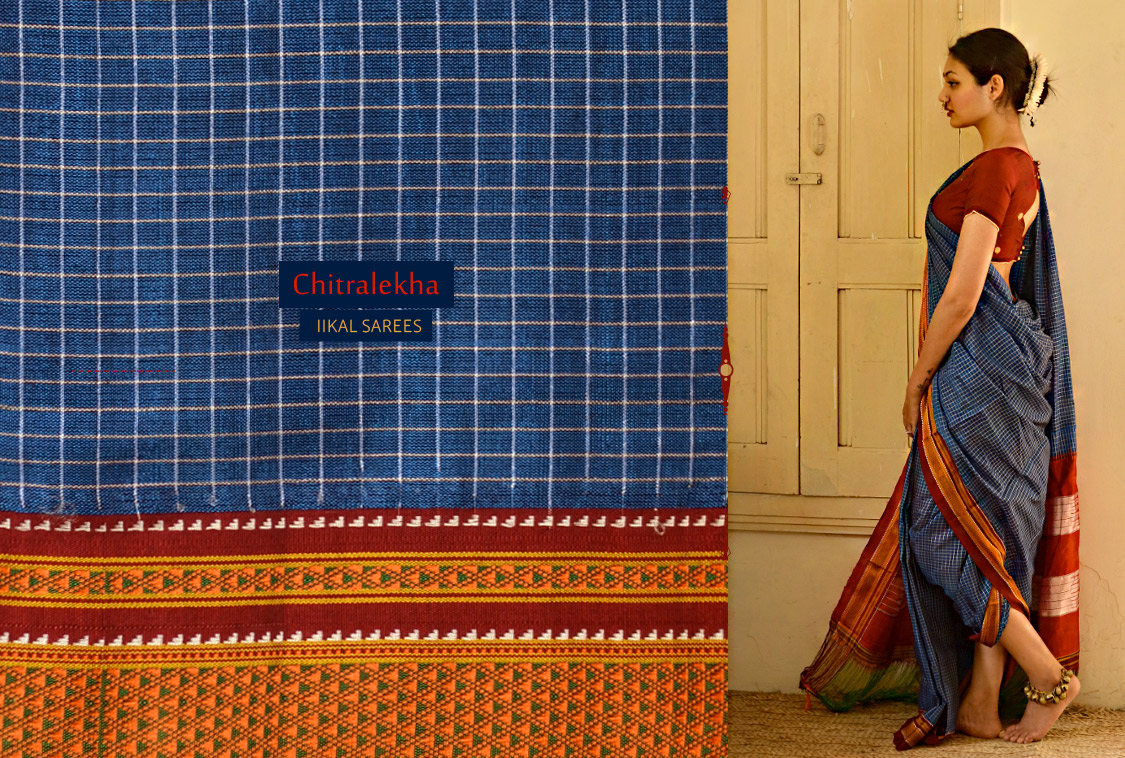
Ilkal Sarees: Known because it is produced in the town of Ilkal, an ancient weaving centre since the 8th century, the uniqueness of the Ilkal saree is in the joining of the body warp with the pallu warp with a series of loops locally called the tope teni technique. The border colour is very dominating and is usually red or maroon. The distinctive feature of the Ilkal saree is the use of a form of embroidery called Kasuti. The designs used in Kasuti reflect traditional patterns like palanquins, elephants, and lotuses which are embroidered onto the saree. The main body design is usually made up of squares and rectangles. The Ilkal saris are woven using cotton warp on the body and art silk warp for the border and pallu portion. In some cases instead of art silk, pure silk is also used. The Tope Teni seragu has been regarded as a state symbol and was greatly respected during festival occasions. The sarees that are made for bridal wear are made of a particular colour called Giri Kumukum which is associated with the sindoor worn by the wives of the priests in this region. The weaving of the Ilkal saree is a household enterprise involving the participation of female members. One Ilkal saree takes about seven days to weave and are produced on pit looms.

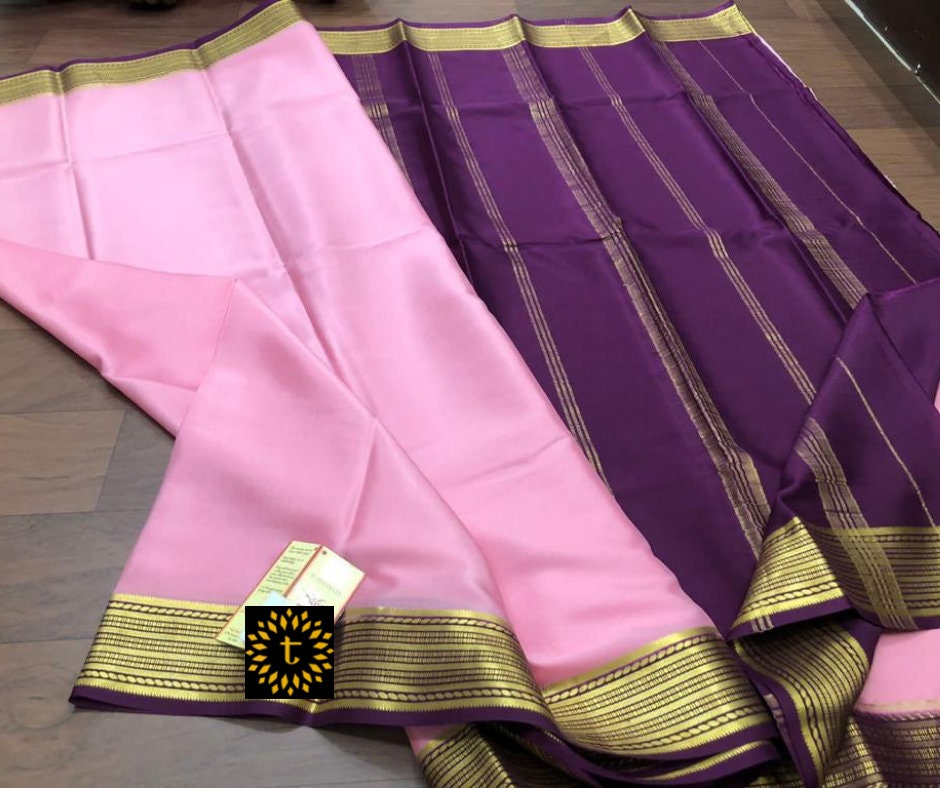
Mysore Silk: One of Karnataka’s most famous exports, the Mysore silk is synonymous with the city of Mysuru and the silk factory was founded in 1912 by Sri Nalvadi Krishnaraja Wodeyar, the Maharaja of Mysore. Initially, the silk fabrics were manufactured & supplied to meet the requirements of the royal family and ornamental fabrics to their armed forces. After Indian independence, the Mysore State Sericulture Dept took control of the silk weaving factory. The saree zari contains 65% pure silver and 0.65% of gold, which is also the most distinct feature of the saree, along with the use of genuine silk that gives it a natural sheen and rich texture. Karnataka produces almost 45% of the country’s mulberry silk. Mysore silk has also received geographical identification. Mysore Silks are also one of the most expensive silk sarees in India and this has led to the production of duplicate Mysore silk saree production and sales. To avoid these issues, KSIC has implemented a unique ID, hologram-based design, and unique identification barcodes woven on each saree produced.

Kerala

Kasavu Saree: Symbolic of Kerala’s tradition and culture, the traditional Kasavu saree was made by hand from cotton yarn with borders made of golden threads. Believed to have originated in the Buddhist era, the white and gold sarees are unique due to their natural hues, texture and gold border which adds to their elegance. No occasion in Kerala feels complete without the Kasavu saree. The term kasavu refers to the zari or gold thread used in the border of the saree and the name comes from a material used in the weaving and production of these sarees. The origin of the kasavu saree can be traced back to when women would wear a two-piece cloth called settu mundu, more popularly known as the mundum neriyathum. The mundum neriyathum rose in popularity during the Buddhist era, and its design has been inspired by the Greco-Roman attire, Palmyrene, a long piece of unstitched cloth with a coloured border.

The identity of the saree comes from the geographical cluster they are associated with. The Indian government has identified three clusters in Kerala – Balaramapuram, Chendamangalam and Kuthampully – that have been given a Geographical Indication or GI tag and all three clusters produce kasavu sarees. A plain saree with a simple border takes roughly around three to five days. Ones with motifs and heavier work take longer than that. The sarees are priced depending on the time taken on their production, along with the gold used in the zari or kasavu.

Madhya Pradesh

Chanderi: Emerging between the 2nd and 7th centuries, Chanderi sarees are produced from three types of fabrics – pure silk, cotton and silk cotton and are synonymous with the town of Chanderi which is on the boundary of Malwa and Bundelkhand. In the 11th century, the trade locations between Malwa, Medwa, central India and south Gujarat increased the region’s importance. Around 1350, Koshti weavers from Jhansi migrated to Chanderi and settled there and the textile business of Chanderi reached its peak during the Mughal period. Traditional coin, floral art, peacocks and modern geometric designs are woven into different Chanderi patterns. The saris are among the finest in India and are known for their gold and silver brocade or zari, fine silk, and opulent embroidery.

Maheshwari: Originating from the town of Maheshwar, the Maheshwari saree is made of silk and cotton in a variety of designs woven using brocade and zari. Dating to the 18th century, the sarees were initially made of pure silk, but over time, cotton also came to be used. An interesting story behind the origin of these sarees is that a famous queen had once ordered a large number of artisans and craftsmen from Surat and Malwa to design a unique saree of 9 yards, later termed the Maheshwari saree. These cloth pieces were used as special gifts for the royal guests of the palace. A unique feature of the Maheshwari saree is that each has a specific name of its own, which indicates its distinctness. The sarees may be plain at the centre and have neatly designed borders, or they may have different variations of stripes and checks. The sarees fall under 5 broad categories namely Chandratara, Chandrakala, Beli, Baingani Chandrakala and Parbi. The Baingani Chandrakala and Chandrakala are plain ones, while the Beli, Chandratara, and Parbi come with stripes or checks.

Maharashtra

Karvati: Hailing from the Vidarbha region, Karvati silks are made from Tussar with a grainy, textural feel. What is unique about the silk used in Karvati saris is that it is exclusive to this specific region that is rich in high-quality silk cocoons, straight from the wild. The tribes hailing from this area assume the responsibility of protecting the silk cocoons until they are ready to be harvested. The Tussar is unlike any other silk; it has a unique shade of deep yellow-brown.

The word karvat is a Marathi term that refers to a saw-tooth pattern. Karvati is the name lent to the style of the border rather than the fabric itself. What is different about the saree is the technique and the mixed usage of yarn. The border is woven out of mercerized cotton yarns with traditional temple motifs of various sizes, using an extra warp while the rest of the sari is woven using pure, hand-reeled Tussar silk which provides a texture that has irregular stubs all over. The saree is woven using a three-shuttle, tapestry style of weaving with a pit loom mounted with a wooden lattice dobby in the Nagpur style on the top of the loom. This means that it uses three different styles of weaving at the same time.

Paithani: Dating to the Satvahana Dynasty that ruled between the second century BC and the second century AD, Paithani sarees are fine silk handloom sarees get their name from the town in which they originated, Paithan in Aurangabad. Available in both six and nine yards, the most interesting part about the Paithani handloom is that both sides of the saree look the same, including the border and the pallu. This feature is the telltale sign of a handloom Paithani. As Paithani sarees are woven from naturally dyed threads, they can usually be found only in basic colours. Each saree usually has two dominating colours, one on the saree and the other on the border and pallu. The Paithani is characterised by borders of an oblique square design, and a pallu with a peacock design. Among other varieties, single-coloured and kaleidoscope-coloured designs are also popular. The kaleidoscopic effect is achieved by using one colour for weaving lengthwise and another for weaving width-wise.

The Paithani is a sari made of silk and zari with a plain weave, with weft figuring designs according to the principles of the tapestry. Traditionally, Paithanis had coloured, cotton muslin fields that often contained considerable supplementary zari patterning. However, in the 19th century, silk fields were also woven. Due to its proximity to the Ajanta caves, the influence of Buddhist paintings can be seen in the woven Paithani motifs. These sarees are made of silk in which there is no extra weft forming figures. Weaving could take between 18 and 24 months, depending upon the complexity of the design. In the days of Peshwas, the borders and the pallu were made of pure gold mixed with copper to give it strength spun into a fine wire called the zari. In recent times, zari is made of silver, coated with gold plating. In the border woven with a zari, ground-coloured silk patterns are added as supplementary weft inlay against the zari usually in the form of a flower or a creeping vine.

Odisha

Bomkai: Also known as the Sonepuri Saree, the Bomkai Saree is a handloom saree from the Bomkai village and has a GI tag. Usually made of cotton, these sarees are also made of silk for special occasions. During the time of Ramai Dev the then ruler of Patna, it was introduced in Sonepur. The borders and pallus are usually designed with fishes as it is believed to be a sign of success and affluence. The sari is normally dyed in red, black and white.

Khandua: A traditional bandha or ikat saree, Khandua is also known as Maniabandi or Kataki and is worn during weddings with a special type of fabric worn by Lord Jagannath which contain texts of the Geeta Govinda on them. The word Khandua in Odia translates to the cloth worn in the lower half of the body. Traditionally Kentuli Khandua is offered to Jagannath as lower cloth. The weaver communities of Maniabandha and Nuapatana of Cuttack traditionally wove this kind of fabric and during the rule of the Gajapatis, the sarees were made and transported to the Jagannath Temple. Nilakantha Deva, the King of Badakhemundi was offered khandua sari made of one piece of khandua silk called caukandika. Khandua is traditionally red or orange in colour with the red colour prepared naturally from the sal tree. The design motif has an auspicious elephant that represents Buddha surrounded by a trailing vine with peacocks in it, a large many-petaled flower, an animal  unique to Orissa known as Nabagunjara. The elephant in Khandua ikat from Nuapatana usually varies from elephant motives in ikat from the Sambalpuri saree as well as the ikat from other parts of Orissa. The Khandua has plain borders contrary to borders with motifs in the case of the other ikats from the state.

Pasapali: Also known as the Saktapar, the Pasapali saree is a bandha or Ikat handloom sari woven mainly in the Bargarh district. The name Pasapali is derived from pasa or gambling games using a chess board and these sarees have intricate check patterns of contrasting colours resembling the chess boards which gives it its name.

Sambalpuri: A traditional handwoven ikat where the warp and the weft are tie-dyed before weaving, the Sambalpuri saree is known for its incorporation of traditional motifs, all of which have deep symbolism in red, black and white that represent Odia culture. The high point of these sarees is the traditional craftsmanship of the Bandhakala, or the tie-dye art reflected in their intricate weaves, also known as Sambalpuri Ikkat. In this technique, the threads are first tie-dyed and later woven into a fabric, with the entire process taking many weeks. These sarees also have a Geographical Indication or GI tag associated with them. Traditionally, craftsmen created the ikats with images of flora or fauna or with geometrical patterns, but recently the ikats depict portraits and landscapes are also being designed. The unique feature of this form of designing is that the designs are reflected almost identically on both sides of the fabric. Once the fabric is dyed it can never be bleached into another colour. It is believed that this art migrated to western Odisha along with the Bhulia community who fled north India in 1192 after the fall of the Chouhan empire at the hands of the Mughals.

Punjab

Phulkari: Punjab’s folk embroidery, Phulkari which means floral work also includes motifs and geometrical shapes. In Punjabi, Phul means flower and Akari means the shape and so Phulkari means the shape and the direction of flowers which symbolise life. The main characteristics of Phulkari embroidery are the use of darn stitch on the wrong side of coarse cotton cloth with coloured silken thread. The traditional varieties of Phulkaris are large items of cloth and include Chope, Tilpatr, Neelak and Bagh. Sometimes, the Bagh is given separate categorisation of its own as on other varieties of a Phulkari, parts of the cloth are visible, whereas, in a Bagh, the embroidery covers the entire garment so that the base cloth is not visible. Today, in contemporary designs, the simple and sparsely embroidered dupattas and shawls made for everyday use, are referred to as phulkari, while clothing items that cover the entire body, made for special and ceremonial occasions such as weddings are called baghs or large gardens. The Phulkari continues to be an integral part of Punjabi weddings to the present day.

In the past, as soon as a girl was born, mothers and grandmothers would start embroidering Baghs and Phulkaris, which were to be given away at the time of her marriage. Depending on the status of the family, the parents would give a dowry of 11 to 101 Baghs and Phulkaris which were also passed from one generation to the next as heirlooms. The hallmark of Phulkari is making innumerable patterns by using long and short darn stitches. There were no pattern books and embroidery was worked entirely from the reverse of the fabric and the designs were not traced. Techniques and patterns were not documented but transmitted from word of mouth and each regional group was identified with the style of embroidery or design. The most favoured colour was red and its shades. Animals and birds represented success, beauty, pride, and goodwill and different fruits symbolised wealth, prosperity, and fertility. Wheat and barley stalks with ears were also common motifs. Silk and mulmul or soft cotton muslin fabrics were used because of their purity and longevity and it was believed that the virtue and character of a woman gave shape to the Phulkari.
There are different theories about the origin of Phulkari. One such belief is that this embroidery was prevalent in different parts of the country as far back as the 7th century, but survived only in Punjab. Motifs similar to the ones found in Phulkari are also found in Kashida of Bihar and some of the embroideries of Rajasthan. Another thought is that this style of embroidery came from Iran where it was called Gulkari, also meaning floral work.

Rajasthan

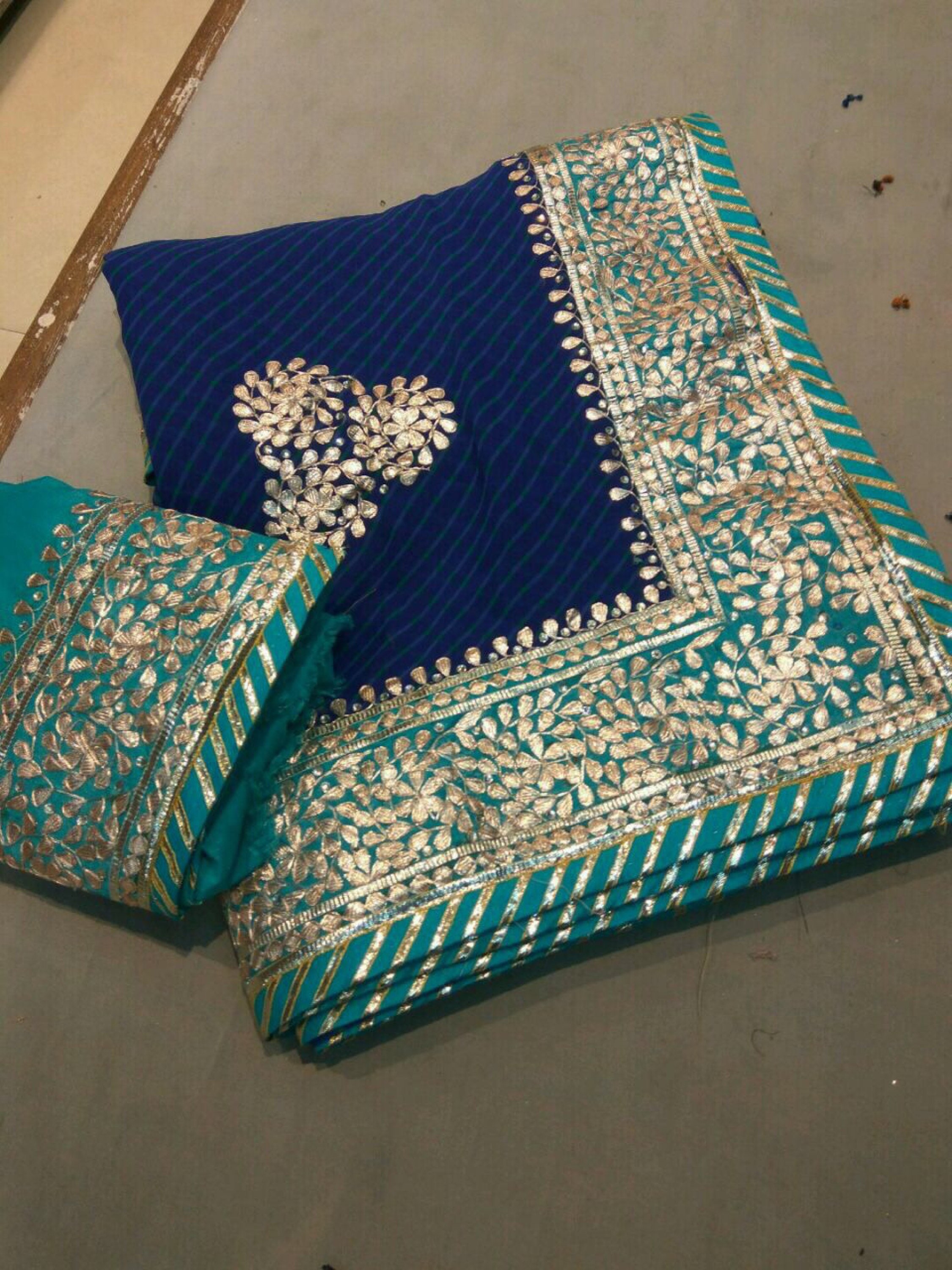
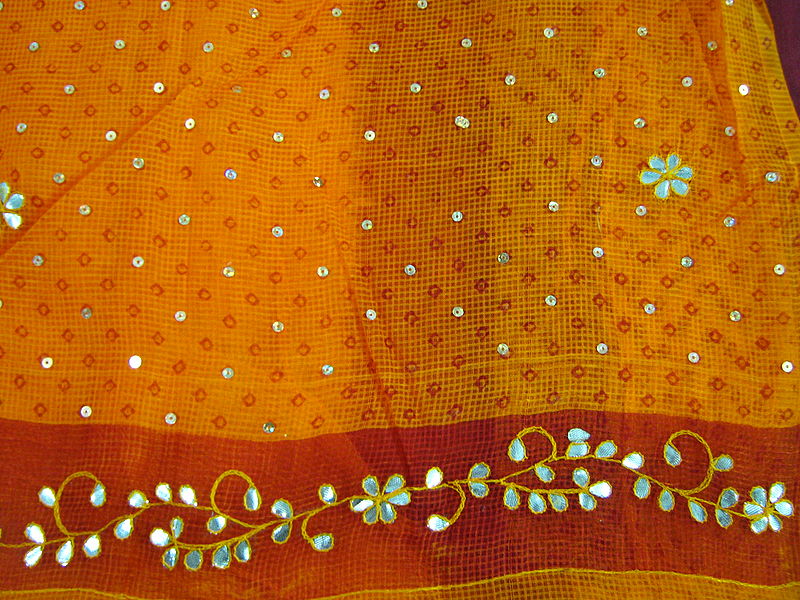
Gota Patti: Gota patti or gota work is a type of Indian embroidery that originated in  Rajasthan. Small pieces of zari ribbon are applied onto the fabric with the edges sewn down to create elaborate patterns. Gota embroidery is used extensively in South Asian weddings and formal clothes. Originally real gold and silver metals were used to embroider, but these were eventually replaced by copper coated with silver as it would become very expensive and today, even more, inexpensive options are available.

Kota Doriya: A handloom fabric, Kota Doriya is woven on a traditional pit loom in such a way that it produces square checks pattern on the fabric. The delicately wrought checks are locally known as khats. Onion juice and rice paste are smeared onto the yarn making it so strong that no additional finishing is needed. Kota Doriya sarees are made of pure cotton and silk and have square-like patterns known as khats on them. The chequered weave of a Kota sari is very popular with a very fine weave and weighs very little.

It is said that Jhala Zalim Singh of Kotah brought weavers from Mysore, in the mid-17th century, as they wove a characteristic small squared lightweight cotton fabric that looked like graph paper and was suitable for turbans. Since the weavers had come from Mysore, the fabric produced was called Kota Masuriya and was woven on narrow 8-inch looms to make the traditional paags or turbans and later on, broader looms were used for gossamer-light saris. Silk was added to the cotton in a 20:80 ratio approximately to give the sari strength. Nowadays hand woven silk Kota Doriya saris have also become popular. At first, the design known as a buti was small and regular but larger designs are now made according to fashion and taste. A very ornate saree can take one month to make and is an heirloom piece to be treasured. A genuine Kota Doriya sari will contain the GI mark woven in one corner indicating that it has been hand woven using real silver and gold thread.

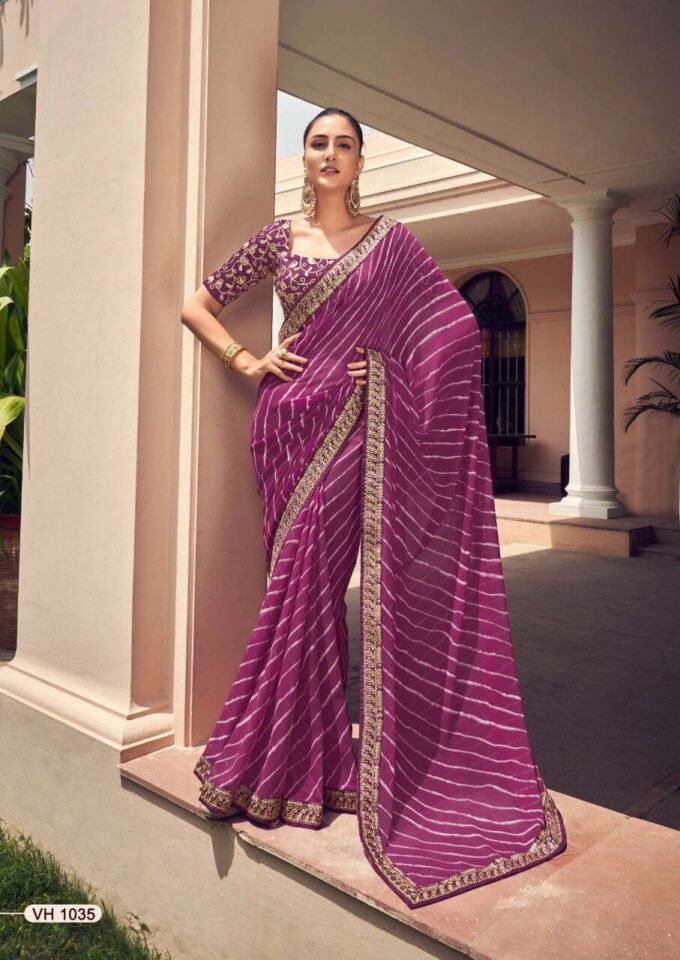
Leheriya: Leheriya is a traditional style of tie and dye practised in Rajasthan which is bright in colour, with a distinctive pattern. The word Leheriya comes from the word leher, meaning wave and the tie-dye technique results in diagonal stripes, which look like waves on the fabric. To create diagonal stripes, the craftsmen use a special method of resist-dyeing, where the material, is rolled up diagonally length-wise and then tied tightly at intervals before the actual dyeing process begins. Delicate, light fabrics such as thin cotton voile, fine silk and chiffon are preferred, as they allow the colour to penetrate through the rolled cloth. The fabric is wrapped around a wooden pole, usually while it is still wet or in a semi-dry state. The thread that ties up the fabric acts as a resist, yielding a pattern of diagonal stripes after dyeing. The thickness of the thread and the distance between the ties may be varied to obtain stripes of different widths.

An astounding variety of Leheriya fabrics are produced using this simple process. A panchranga or five-colour design is the most auspicious since the number five is considered special in Hindu scriptures. Another beautiful pattern is the satranga, flaunting the seven colours of the rainbow.

Tamil Nadu

Kanjeevaram: A silk saree which is worn on special occasions, the Kanjeevaram or Kanchipuram is made in the Kanchipuram region. This saree has also been recognised and given the Geographical Indication tag by the Indian government. The sarees are distinguished by their wide contrast borders with temple borders, checks, stripes and floral patterns as traditional designs. The patterns and designs in the Kancheepuram sarees are inspired by the images and scriptures in South Indian temples or natural features like leaves, birds and animals and have rich woven pallus showing the paintings of Raja Ravi Varma and the epics of Mahabharata and Ramayana. As of 2008, an estimated 5,000 families were involved in sari production with 25 silk and cotton yarn industries and 60 dyeing units in the region.

The saris are woven from pure mulberry silk thread, which along with the zari or gold thread comes from South India. To weave a Kanjeevaram saree. three shuttles are used. While the weaver works on the right side, his aide works on the left side shuttle. The border colour and design are usually quite different from the body. If the pallu has to be woven in a different shade, it is first separately woven and then delicately joined to the saree and the part where the body meets the pallu is often denoted by a zigzag line. In a genuine Kajeevaram silk saree, the body and the border are woven separately and then interlocked together. The joint is woven so strongly that even if the saree tears, the border will not detach and this differentiates the Kanjeevaram silk saree from the others. The sarees vary widely in price depending on the intricacy of work, colours, patterns, craftsmanship and materials used.

Koorainaadu: A traditional handloom weaving centre, Koorainadu sarees are by their checks and stripes pattern for which plain looms are used. It is made with pure silk and fine-twisted mercerized cotton yarn, in both warp and weft, in the ratio of 2:1, giving every Koorainadu saree a silk look. A peculiar characteristic of this saree is the formation of cotton checks by the interlacing of warp and weft during weaving which can be woven only by an experienced weaver. The sarees are hence stiffer and easier to hold the pleats which make them easier to wear. Koorainadu sarees are mostly worn by the womenfolk of the Hindu community green and yellow colours are used to make it auspicious and so it is often worn by married women wishing for long-lasting wedlock. The nine-yard Koorainadu saris are made with cotton or cotton and silk, in checks or striped patterns with a contrasting border in yellow. Saris with wide borders are called temple saris because they are offered to the deities in the temple.

Sungudi: Traditional cotton sarees from the Madurai area, Sungudi sarees are defined by the pattern of block prints and tie and dye designs. The origins of Sungudi can be traced back to the Sourashtrians who brought the art with them when they migrated to South India under the patronage of King Thirumalai Naicker in the 17th century. In Saurashtra, the word sungudi relates to the Sanskrit word sunnam meaning round, representing the circular dots that are printed on the fabric as a prominent and special motif.

The dots in the saris are said to be inspired by the cosmos which is why most Sungudi sarees remind one of a starry night. Tying the knots of the sari demands a great amount of precision from the craftsman. Ideally, a three-inch gap between the body and the zari border and also with the pallu lends a neat and symmetrical look to the crude dots. The designs are sometimes marked with a pencil on the fabric for ease in the process. The Sungudi art has seven basic designs that can be modified with different permutations and combinations to provide variety and highlight the creativity of the craftsman. The smaller the dot the better the expertise and this comes only with extensive practice and time. In the early days people used rudimentary methods like tying the knots with mustard or peppercorn seeds. Although this seems like a rural and unpolished method, its success lay in its simplicity. Authentic Sungudi is more than just tying knots. There is a lot of meticulousness that goes into producing a piece that looks effortless.  Once the knots are tied in the desired pattern, the sari is clamped which involves pleating, twisting, folding and wrapping it tightly before dyeing it for around two hours. Then the sari is subjected to two rounds of washing with cold water with an organic fixing agent followed by drying and ironing. The resultant fabric is a beautiful sheet like stars in the sky. In 2005 the art of Sungudi tie and dye got the GI recognition tag.

In the next part, the last one, we will do the last few states and also learn about some interesting saree drapes.