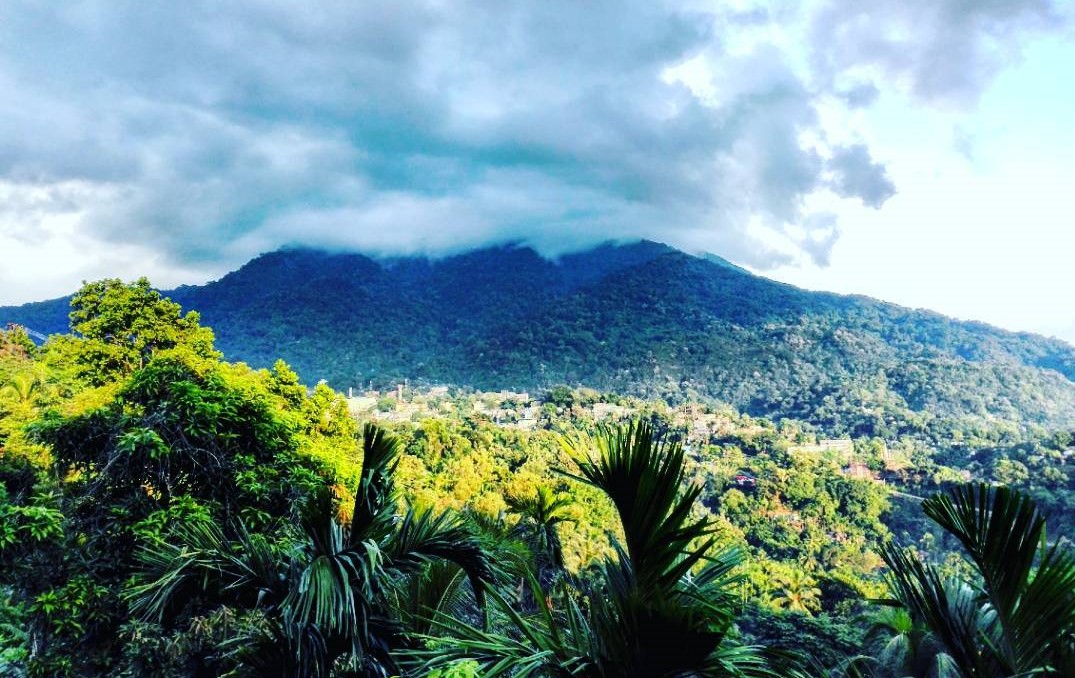
Festivals of India: Wangala

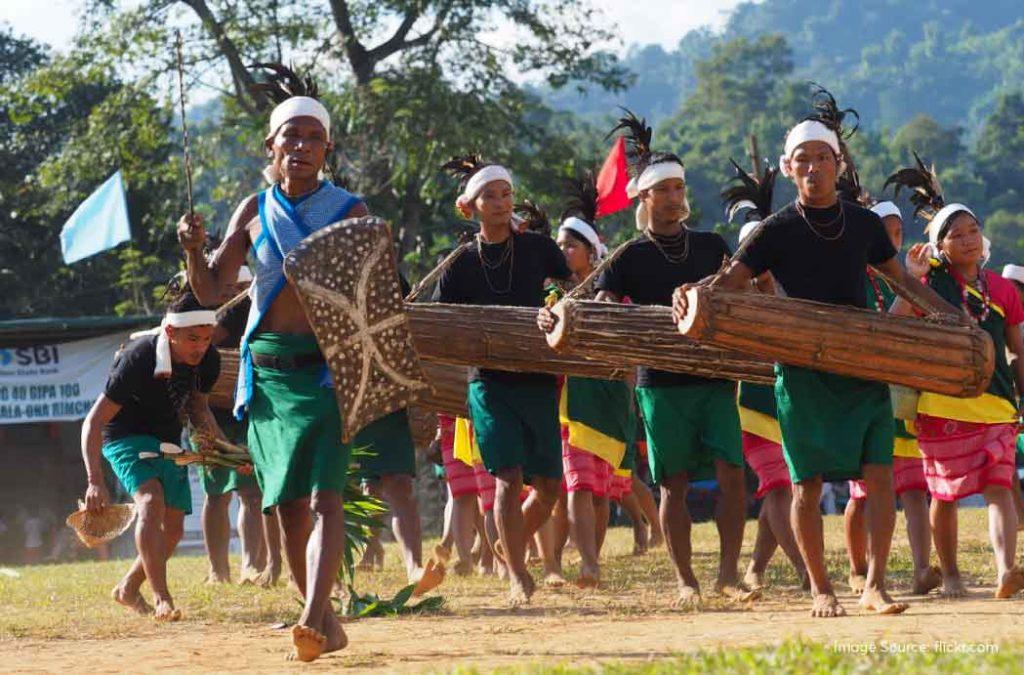
Also known as the Hundred Drums Festival, the Wangala festival is one of the most significant and colourful celebrations of the Garo tribe in Meghalaya. This post-harvest festival marks the end of the agricultural year. It is a thanksgiving ceremony for Misi Saljong, also known as Pattigipa Ra’rongipa or the Great Giver, the sun god of fertility. The Wangala festival is a vibrant display of Garo culture, traditions, and their deep connection to nature and agriculture.

The Wangala festival has its roots in the ancient agricultural practices and beliefs of the Garo people. The Garos, one of the major tribes of Meghalaya, are known for their matrilineal society and strong connection to the land. Agriculture has been the primary occupation of the Garos for centuries, and their festivals and rituals are closely tied to the agricultural cycle.

The exact origin of the Wangala festival is lost in the mists of time, but it is believed to have been celebrated for many generations. The festival’s name, “Wangala,” is derived from the Garo word “wanna,” which means celebration. It is a time when the community comes together to express gratitude for a bountiful harvest and to seek blessings for the coming year.

Historically, the Wangala festival was celebrated independently in every Garo village. Each village would have its dates and duration for the festival, which could last anywhere from a few days to a week. However, in recent times, efforts have been made to organise a centralised Wangala celebration to showcase Garo culture to a wider audience and preserve their traditions.
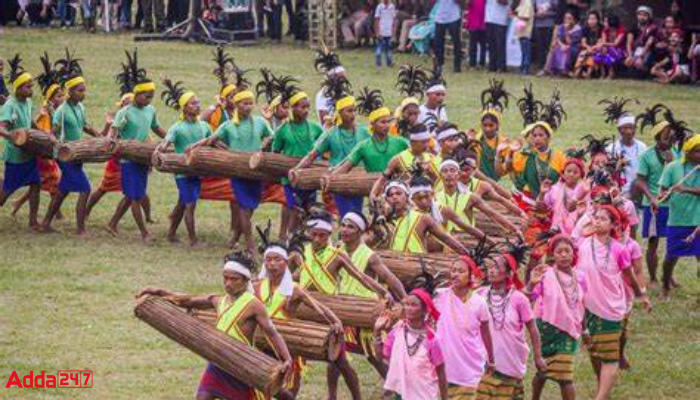
The Wangala festival is deeply rooted in Garo mythology and their traditional belief system. At the festival’s heart is the worship of Misi Saljong, the sun god, believed to be the provider of good harvests and prosperity. According to Garo mythology, Misi Saljong taught the Garo people the art of agriculture. He showed them how to clear the land, sow seeds, and harvest crops. The Garos believe that it is through Misi Saljong’s blessings that they receive abundant harvests. The Wangala festival is their way to express gratitude to this benevolent deity and to seek his continued favour. Another important mythological figure in the Wangala festival is Goera, the goddess of agriculture. Goera is believed to be the protector of crops and is often invoked alongside Misi Saljong during the festival rituals.

The Garos also believe in various nature spirits that inhabit the forests, rivers, and mountains. These spirits are thought to play a role in the success of their agricultural endeavors. During the Wangala festival, offerings are made to these spirits to appease them and ensure their cooperation in the coming agricultural year.

One of the myths associated with the Wangala festival tells of a time when the Garo people faced a severe drought. The crops were failing, and the community was on the brink of starvation. The village elders gathered to perform rituals and prayers to Misi Saljong. According to the legend, Misi Saljong appeared to them in a dream and instructed them to perform a dance with drums and to make offerings of rice beer. When the villagers followed these instructions, rain began to fall, and their crops were saved. This myth is said to be the origin of the drum dance that is now central to the Wangala celebrations.

The preparations for the Wangala festival begin well in advance of the actual celebration. As the harvest season nears its end, the village elders come together to decide on the dates for the festival. Traditionally, the festival is held in November, but the exact dates can vary depending on the completion of the harvest and other local factors. Once the dates are set, the entire community gets involved in the preparations. 
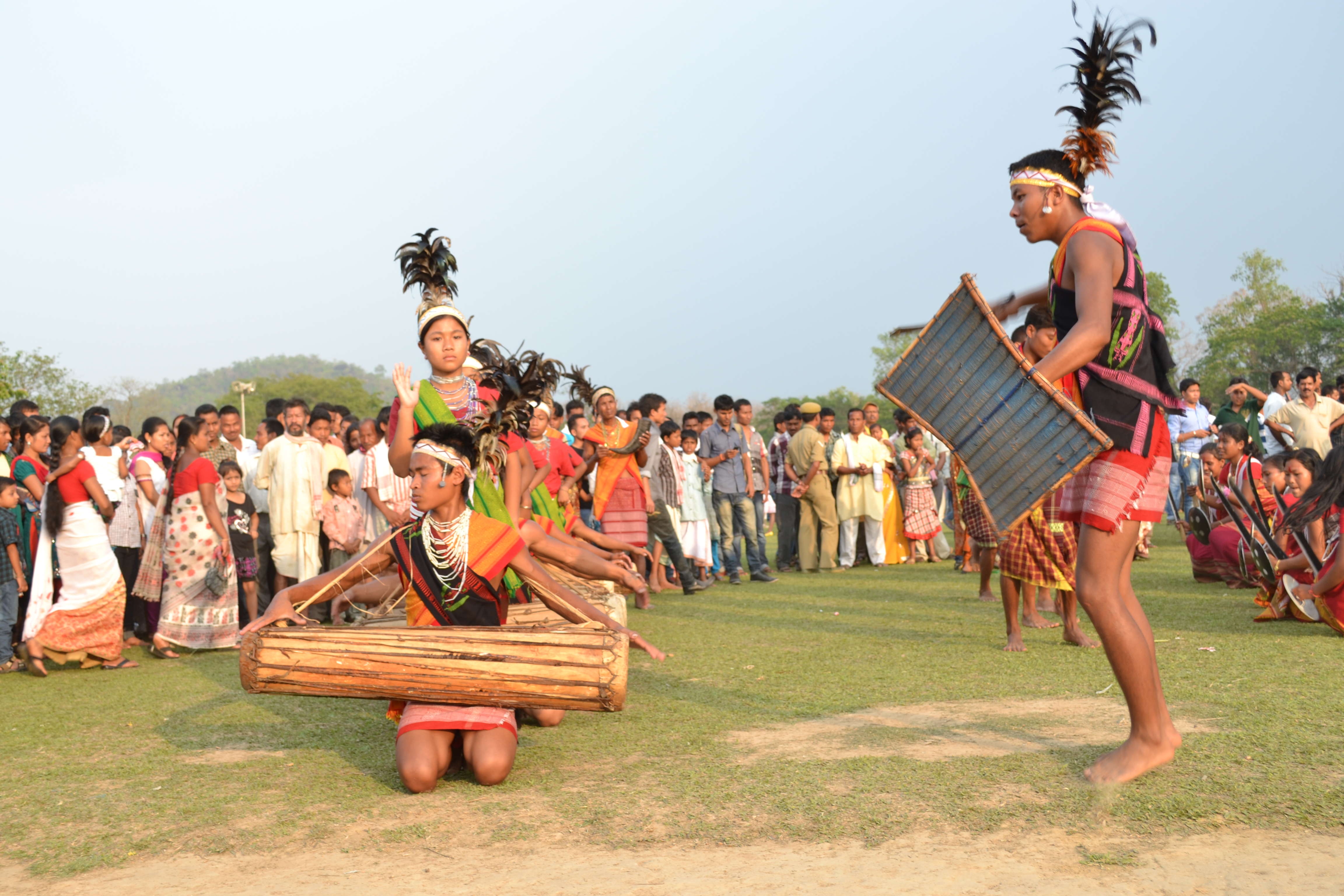
One of the most important preparations is the brewing of rice beer, known as “chu” in the Garo language. Rice beer plays a significant role in Garo rituals and celebrations. The brewing process begins several weeks before the festival to ensure that the beer is properly fermented by the time of the celebration. The Garos take great pride in their traditional clothing, and the Wangala festival is an occasion to showcase their finest attire. Women prepare colourful wraparound skirts called dakmanda and blouses kutchi. Men ready their traditional dhotis and vests. Special attention is given to the headdresses, often adorned with feathers and hornbill beaks.

The festival’s alternative name, “Hundred Drums Festival,” highlights the importance of drums in the celebration. Skilled craftsmen in the village work on repairing old drums and making new ones. The primary drum used in the Wangala festival is the “dama,” a long, cylindrical drum made from hollowed-out tree trunks and animal hide. The entire village undergoes a thorough cleaning in preparation for the festival. Houses are repaired and whitewashed. The central area where the main celebrations will take place is cleared and decorated with bamboo structures, flowers, and leaves.

A significant amount of time is spent preparing food for the festival. Large quantities of rice, meat, and vegetables are readied for the communal feasts that will take place during the celebration. In the weeks leading up to the festival, the community, especially the youth, practice the traditional dances and songs that will be performed during the Wangala. 

The Wangala festival typically lasts two to three days, although in some villages, it can extend up to a week. The celebration is a mix of solemn rituals and joyous festivities. The first day of the festival is known as Salgittal or Salgittoa, which means “thanksgiving.” This day is marked by several important rituals. The festival begins with the village priest, the “Kamal,” performing an invocation ceremony. The Kamal offers prayers to Misi Saljong and other nature spirits, seeking their blessings for the community. The first fruits of the harvest are offered to Misi Saljong. This typically includes newly harvested rice, vegetables, and fruits. The offering is made on a special altar set up for the occasion. In some villages, a ceremonial sacrifice of a rooster or a goat may be performed. This is done to appease the spirits and ensure their continued favour. The Nokma or village chief and other important members of the community are anointed with rice powder mixed with water. This symbolises purification and preparation for the festivities to come. A sacred fire is lit, which will be kept burning throughout the festival. This fire symbolises the presence of Misi Saljong among the people.
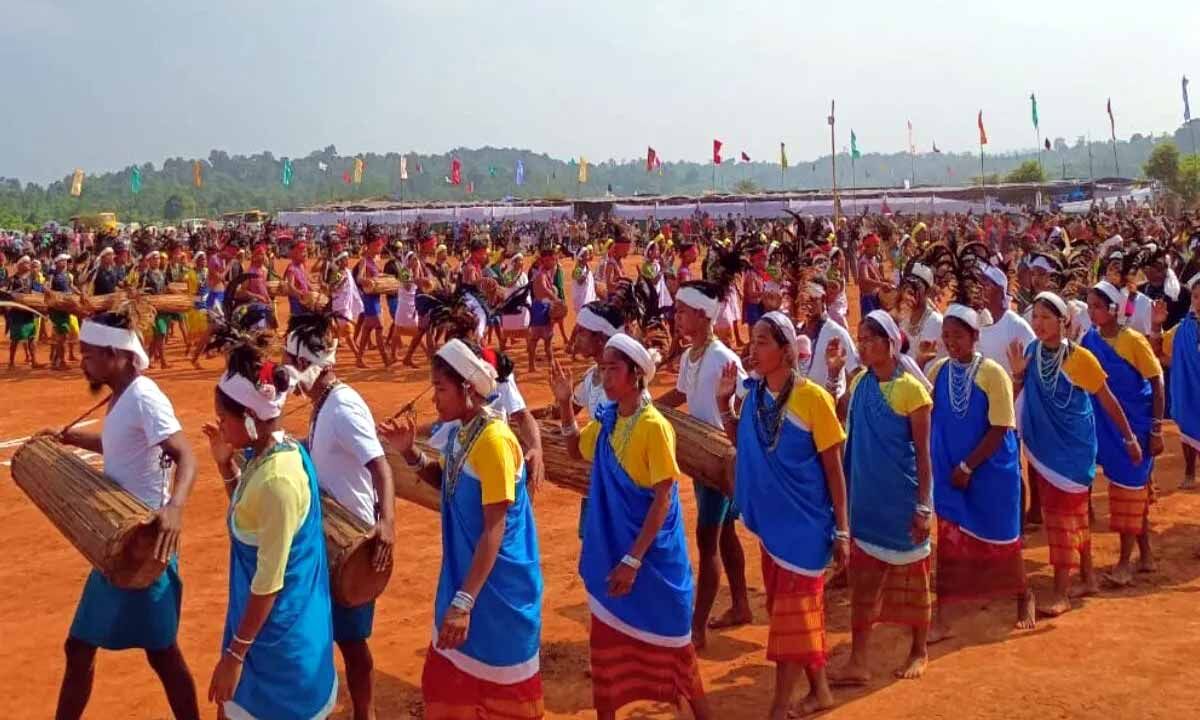
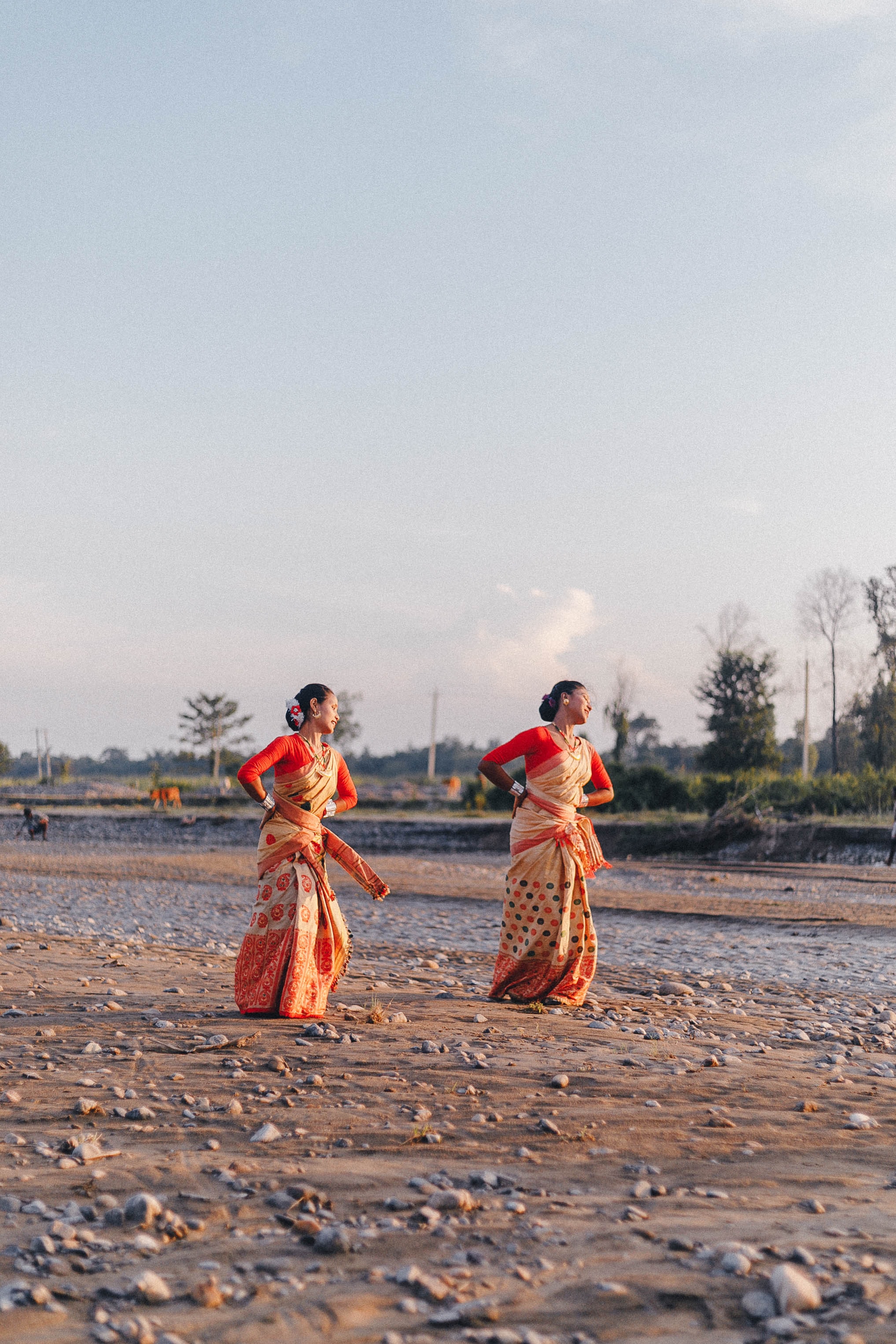
The second day, known as Kakkat or Kakket, is the main day of celebration. This is when the most iconic events of the Wangala festival take place. The day begins with the Rugala ceremony, where Nokma and his wife lead a procession to the central festival ground. They carry a basket of rice, which symbolises the community’s harvest. The highlight of the festival is the Wangala dance. Dancers, dressed in colourful traditional attire, form lines with men and women alternating. They dance to the rhythmic beat of drums, bamboo clappers, and gongs. The dance movements mimic various agricultural activities such as sowing, weeding, and harvesting. This is where the festival gets its alternative name. A hundred or more drums are played simultaneously, creating a thunderous and mesmerising rhythm. The sound of the drums is believed to reach Misi Saljong, carrying the community’s prayers and gratitude. A grand feast is held where the community comes together to share food and rice beer. This feast symbolises the abundance of the harvest and the spirit of community sharing. Various traditional games and sports are organised, including wrestling, tug-of-war, and archery competitions. 

The final day of the festival is typically reserved for concluding rituals. The Kamal leads the community in offering final thanksgiving prayers to Misi Saljong and other deities. The sacred fire lit on the first day is ceremonially extinguished, marking the end of the festival. The community elders bless the younger generation, wishing them prosperity and good fortune for the coming year. In some villages, there are rituals to bid farewell to the spirits and deities, thanking them for their presence during the festival.

Music and dance are integral to the Wangala festival. The most important musical instruments used during the celebration include the Dama, a long, cylindrical drum that gives the festival its “Hundred Drums” moniker; the Nagra, a smaller drum used to provide counterpoint rhythms; the Gong which is used to provide additional rhythmic elements; and Bamboo Clappers which provides a distinctive clacking sound that complements the drums. The Wangala dance is a complex performance that tells the story of the agricultural cycle. The dancers move in synchronised patterns, their movements representing different farming activities. Swaying movements represent the swaying of rice plants in the wind while stomping feet mimic the act of threshing rice and hand movements show the sowing of seeds and the harvesting of crops. The dance is performed in lines, with men and women alternating. As the dance progresses, the tempo of the music increases, and the movements become more energetic, culminating in a joyous celebration of the harvest.

Food plays a central role in the Wangala festival. The celebration is an opportunity for the community to come together and share in the abundance of the harvest. Some traditional dishes served during the festival include Wak Pura, a dish made from pork and bamboo shoots, Nakham Bitchi, a chicken curry cooked with special herbs, Pura which are various types of smoked meat, Minil Songa, a dish made from fish and local vegetables, and Pitha which are rice cakes often served as dessert. Rice, being the main crop, features prominently in all meals. It is often served with various meat and vegetable side dishes. The traditional rice beer, “chu,” is essential to the celebration. It is consumed during the feasts and used in various rituals as an offering to the deities.

The Wangala festival holds immense social and cultural significance for the Garo community. The festival brings the entire community together, strengthening social bonds and reinforcing a sense of shared identity. Through the rituals, dances, and music, the festival helps in preserving and passing down Garo cultural traditions to younger generations. The festival marks the end of the agricultural year and the beginning of a new cycle, helping to structure the community’s annual activities. Today, the festival has become a tourist attraction, bringing economic benefits to the region. The festival’s focus on nature worship and agricultural cycles helps maintain an awareness of environmental issues among the community.

While the Wangala festival remains an important part of Garo culture, it faces several challenges in the modern era. As more young Garos move to cities for education and employment, there’s a risk of losing touch with traditional practices. The spread of Christianity among the Garo community has led to changes in how the festival is perceived and celebrated. There are concerns that the increasing tourism around the festival might lead to its commercialisation, potentially diluting its cultural significance. Changes in agricultural practices and environmental conditions pose challenges to the traditional agricultural cycle that the festival celebrates. Despite these challenges, the Wangala festival has shown remarkable resilience and adaptability. 
In recent years, there have been concerted efforts to preserve and promote the festival. While individual villages still celebrate Wangala, there are now also centralised celebrations organized by cultural organizations and the state government. These larger events help in showcasing Garo culture to a wider audience. Efforts are being made to document the rituals, songs, and dances associated with the festival to ensure their preservation. Schools and colleges in the Garo Hills region often organise programs to educate students about the significance of Wangala and other traditional festivals. The festival is now promoted as a cultural tourism event, attracting visitors from across India and abroad. While this brings economic benefits, care is taken to maintain the festival’s authenticity. Some communities have adapted certain aspects of the festival to align with changing religious beliefs while still maintaining its core cultural significance.

The Wangala festival is more than just a harvest celebration; it is a vibrant expression of Garo culture, spirituality, and connection to the land. Through its colorful dances, rhythmic music, traditional attire, and communal feasts, Wangala offers a window into the rich cultural heritage of the Garo people.

As the festival continues to evolve in the face of modern challenges, it remains a testament to the resilience and adaptability of indigenous cultures. The Wangala festival serves as a reminder of the importance of preserving cultural traditions while also embracing change.
Festivals of India: Behdienkhlam

India is a land of diverse cultures, traditions, and festivals. Every region and state has their special festival and the Behdienkhlam festival holds a special place in the hearts of the people of Meghalaya, the Pnars. This vibrant festival showcases the rich cultural heritage of the region and serves as a testament to the spirit of unity and harmony.

The Behdienkhlam Festival or Chasing away the Demon of Cholera is celebrated annually in July after the sowing period and is the most important dance festival of the Jaintia tribes. This festival is also an invocation to God, seeking his blessings for a bumper harvest. Women however do not participate in the dancing, as they offer sacrificial food to the spirits of their forefathers. The festival held at Jowai is one of the most well-known recreational festivals in Meghalaya. Derived from the Khasi language, Behdienkhlam translates to driving away the plague. Historically, the festival was initiated as a means to ward off epidemics and promote good health and prosperity within the community. Over time, it has evolved into a celebration of unity, agricultural abundance, and the overall well-being of the Khasi people.

The Behdienkhlam festival takes place annually in July, after the sowing of paddy fields and before the harvest season. It spans several days, typically lasting for a week. The festival culminates on the fourth day with the most significant events and rituals.

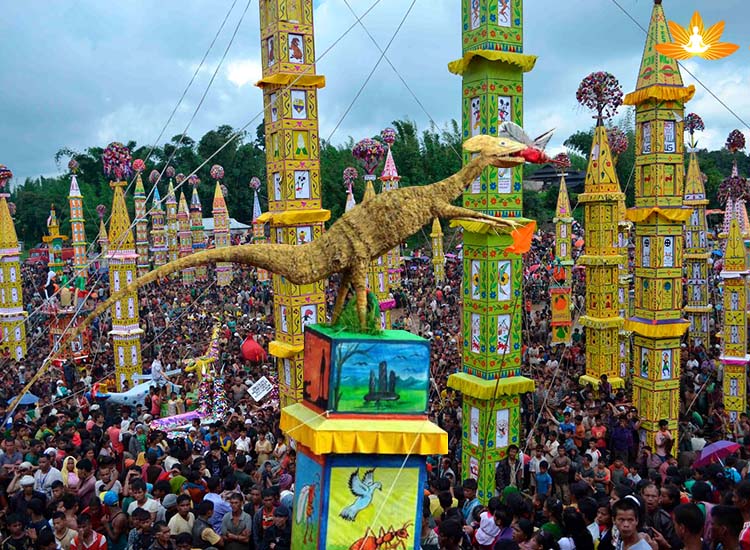
The preparation for the festival begins weeks in advance with the construction of raths or chariots. These elaborately decorated structures are carried by the villagers in a procession, symbolising the collective strength and unity of the community.

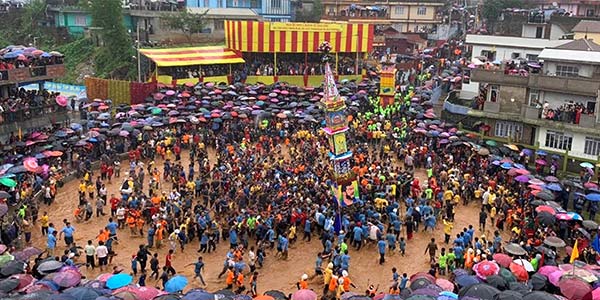
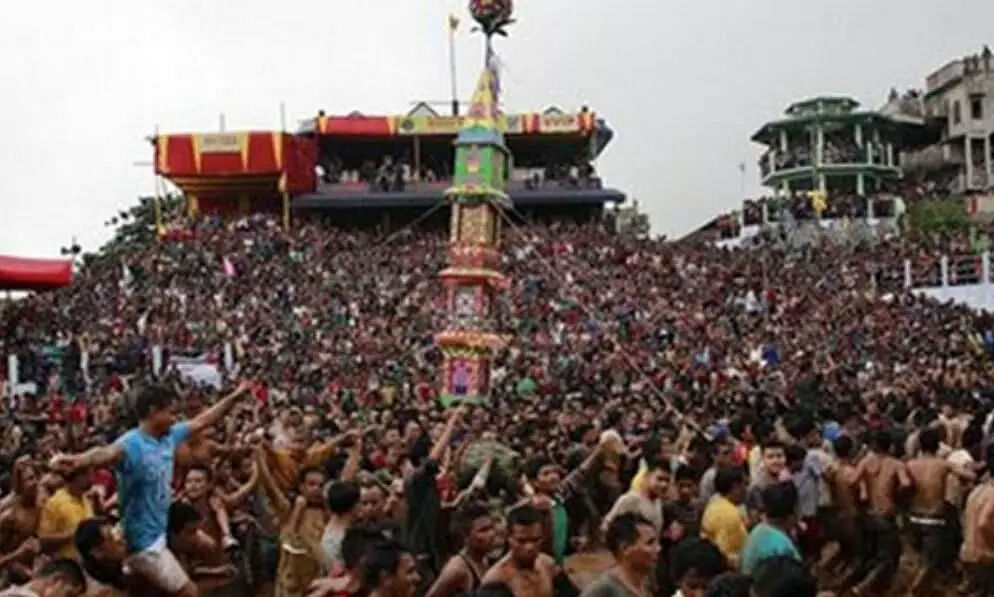
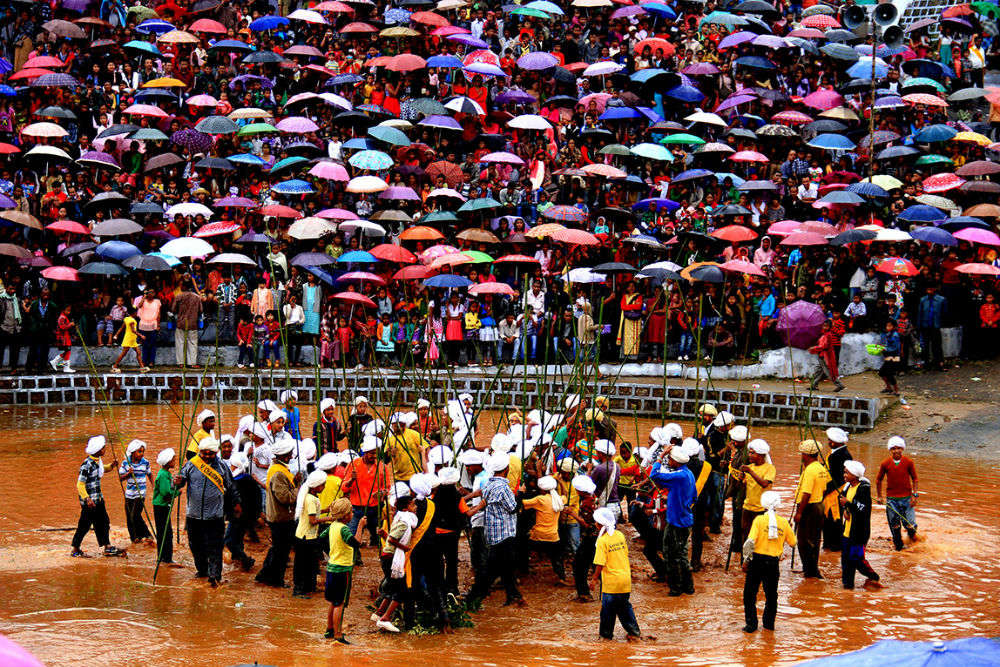
A series of religious rites are being performed by the Daloi or the chief with young men making a symbolic gesture of driving away the evil spirit, plague and disease by beating the roof of every house with bamboo poles. The Pomblang ceremony is a crucial aspect of the festival involving the sacrifice of goats and cocks to appease the deities and seek their blessings. The sacrificial animals are chosen based on specific criteria, and the rituals are performed by designated priests. One of the prominent highlights of the festival is the Nongkrem dance, performed by young men and women from the community. This captivating dance is a rhythmic display of synchronised movements accompanied by traditional musical instruments. It is believed to invoke blessings from the deities for a prosperous harvest season. Behdienkhlam is known for its unique sporting events that reflect the physical prowess and camaraderie of the participants. The most notable among these is the Dewanshah, a game that involves the throwing of a wooden ball and another popular sport is Khnong Lum, a race where participants carry large wooden posts on their shoulders. The climax of the celebration is the fight for a large undressed beam by two groups of people in opposition to each other. This leads to the heavy beam getting across a muddy ditch called Wah-eit-nar and a lot of horseplay enters into this part of the event when mud is smeared by the participants on each other.

On the last day, in the afternoon people would gather in a place called Aitnar and both young and old would dance to the tunes of the pipes and drums. The dancers are highly emotional when tall-decorated structures called rots and wooden post-called khnongs would be brought into the pool with rain expected on the last day of the festival. On the last day, people dressed up in their best attire converge in Mynthong to witness a game similar to football, called dad-lawakor. The game is played with a wooden ball between the Northerners and the Southerners with the side winning the match signifying that in the following year, there would be a bumper harvest in that particular region.

The Behdienkhlam festival is a community-driven celebration that fosters a sense of belonging and solidarity. It brings people together, transcending caste, creed, and social barriers. This collective engagement strengthens the social fabric and reinforces the cultural identity of the Khasi people. The festival plays a crucial role in preserving the indigenous cultural heritage of the Khasi community and serves as a platform for the transmission of traditional knowledge, rituals, and values to younger generations. The festival has also become a major tourist attraction, drawing visitors from across India and around the world. Despite its significance and popularity, the Behdienkhlam festival faces certain challenges in the modern era. Rapid urbanisation, changing lifestyles, and the influence of globalisation have impacted the traditional practices associated with the festival.

Travel Bucket List: India – Consolidated List of all States

As I started planning my travel, I started relying on my research for where to go and found it slightly ungainly to search through all the material I have to reach a specific destination. So here’s a consolidated list of all Indian states, in alphabetical order with the cities and towns next to each part which makes it easier to get to the place you are interested in.

Photo by Ravigopal Kesari on Unsplash

Andaman and Nicobar Islands
Part 1 – Introduction and Overview
Part 2 – Port Blair
Part 3 – Corbyn’s Cove Beach, Wandoor Beach, Viper Island, Ross Island, North Bay Island, Red Skin Island, Middle Andaman Island, Long Island, Baratang Island, Parrot Island, North Passage Island, Guitar Island
Part 4 – Aves Island, North Andaman Island, Diglipur, Stewart Island, Ross & Smith Island, Jolly Buoy Island, Havelock Island
Part 5 – Neil Island, South Andaman Island, Rutland Island, Little Andaman Island, Cinque Island, Barren Island, Narcondom Island, Kathchal Island, Campell Bay & Indira Point
Part 6 – Mahatma Gandhi Marine National Park, Chidiya Tapu, The Chidiya Tapu Biological Park, Mount Harriet National Park, Saddle Peak National Park, Campbell Bay National Park, Galathea National Park, Middle Button Island National Park, North Button Island National Park, South Button Island National Park

Photo by Gowrisha CV on Unsplash

Andhra Pradesh
Part 1: Introduction and Overview, Vishakhapatnam
Part 2: Araku Valley, Vizianagaram, Annavaram, Samalkot, Kakinada, Rajahmundry
Part 3: Amaravathi, Vijayawada, Machilipatnam
Part 4: Guntur, Chirala, Nagarjunakonda, Srisailam, Cumbum, Nellore
Part 5: Kurnool, Mantralayam, Gandikota, Tadipatri, Anantapur, Puttaparthi
Part 6: Lepakshi, Horsley Hills, Chittoor, Srikalahasthi, Tirupati

Photo by Mayur More on Unsplash

Arunachal Pradesh
Part 1: Introduction and Overview, Itanagar, Bhalukpong
Part 2: Bomdila, Tawang
Part 3: Ziro, Yinkiong, Mechuka, Roing, Tirap
Part 4: Khonsa, Changlang, Miao, Anini, Pasighat, Aalo, Daporijo, Anjaw, Tezu

Photo by Nilotpal Kalita on Unsplash

Assam
Part 1: Introduction and Overview, Guwahati, Dispur
Part 2: Kokrajhar, Bongaigaon, Goalpura, Barpeta, Nalbari, Hajo, Sualkuchi
Part 3: Darrang, Mayong and Morigaon, Nagaon, Tezpur, Jorhat
Part 4: Sivasagar, Majuli, Dhemaji, Dibrugarh, Tinsukia, Digboi
Part 5: Sadiya, Haflong, Jatinga, Diphu, Karimganj, Hailakandi, Silchar
Part 6: Raimona National Park, Manas National Park, Orang National Park, Kaziranga National Park, Nameri National Park, Dibru Saikhowa National Park, Dihing Patkai National Park

Photo by ARTO SURAJ on Unsplash

Bihar
Part 1: Introduction and Overview
Part 2: Patna
Part 3: Hajipur, Nalanda
Part 4: Rajgir, Sasaram, Kaimur
Part 5: Bodh Gaya, Vaishali
Part 6: Muzzafarpur, Sitamarhi, Madhubani, Lauriya Nandangarh, Bhagalpur, Valmiki National Park Tiger Reserve and Wildlife Sanctuary

Photo by Ayiman Mohanty on Unsplash

Chhattisgarh
Part 1: Introduction and Overview, Raipur, Champaran
Part 2: Bhilai, Durg, Rajnandgaon, Chirmiri, Madku Dweep, Bhoramdeo Temple, Guru Ghasidas National Park
Part 3: Achanakmar Tiger Reserve, Bilaspur, Raigarh, Korba, Ambikapur, Barnawapara Wildlife Sanctuary, Mainpat, Malhar
Part 4: Mahasamund, Sirpur, Rajim, Jagdalpur, Dhamtari, Dhamtari, Dantewada, Kanger Ghati National Park

Dadra and Nagar Haveli and Daman and Diu
Part 1: Introduction and Overview, Daman
Part 2: Diu
Part 3: Dadra and Nagar Haveli

Delhi
Part 1: Introduction and Overview, India Gate, Red Fort, Qutub Minar, Jantar Mantar, Rajghat
Part 2: Iron Pillar, National War Memorial, Rajpath, Rashtrapati Bhavan, Agrasen Ki Baoli, Ghalib Ki Haveli, Alai Darwaza/Minar, Bhool Bhulaiya ka Mahal, Purana Qila,
Part 3: Tughlaqabad Fort. Siri Fort, Feroza Kotla Fort, Swaminarayan Akshardham Temple, ISKON Mandir, Birla Temple, Chhatrapur Temple, Kalkaji Temple, Kali Bari Temple, Yogmaya Temple, Sri Digambar Jain Lal Mandir, Lotus Temple
Part 4: Jama Masjid, Quwwat-ul-Islam Mosque, Fatehpuri Masjid, Jamali Kamali Mosque and Tomb, Nizamuddin Dargah, Humayun’s Tomb, Safdarjung’s Tomb, Isa Khan’s Tomb, Hijron ka Khanqah, Nicholson Cemetery
Part 5: Gurudwara Bangla Sahib, Gurudwara Sis Ganj Sahib, Rakab Ganj Gurdwara, Sunder Nursery, Lodhi Gardens, Garden of Five Senses, National Rose Garden, Mehrauli Archaeological Park, Pradhanmantri Sangrahalaya, National Museum, Nehru Memorial Museum and Library, Rashtrapati Bhavan Museum, Indian War Memorial Museum, National Handicrafts Museum
Part 6: Indira Gandhi Memorial Museum, Sanskriti Museums, Charkha Museum, Sulabh International Museum of Toilets, Shankar’s International Dolls Museum, Museum of Archaeology, National Railway Museum, Museo Camera, National Gallery of Modern Art, Kiran Nadar Museum of Art, Museum of Illusions, National Zoological Park, National Bal Bhavan, Connaught Place, Chandni Chowk, Dilli Haat, Sarojini Market, Lajpat Nagar, Majnu ka Tila, Pragati Maidan

Photo by Sarang Pande on Unsplash

Goa
Part 1: Introduction and Overview
Part 2: North Goa, Vagator Beach, Anjuna Beach, Calangute Beach, Sinquerim Beach, Candolim Beach, Arambol Beach, Mandrem Beach, Morjim Beach, Miramar Beach, Siridao Beach, Bogdeshwara Temple, Mangeshi Temple, Mahalaxmi Temple, Fort Aguada, Chapora Fort, Reis Magos Fort, Basilica of Bom Jesus, Church of Our Lady of Immaculate Conception, Chapel of St. Catherine, Church of Mae De Deus, Goa State Museum, Houses of Goa Museum, Museum of Christian Art, Casino Palms, Chorao Island, Harvalem Waterfalls
Part 3: South Goa, Butterfly Beach, Betalbatim Beach, Agonda Beach, Mobor Beach, Hollant Beach, Palolem Beach, Cansaulim Beach, Colva Beach, Talpona Beach, Kakolem Beach, Benaulim Beach, Our Lady of Remedios Church, Saviour of the World Church, St. Alex Church, Shantadurga Temple, Tambdi Surla Mahadev Temple, Chandreshwar Bhoothnath Temple, Naval Aviation Museum, Goa Chitra Museum, Big Foot Museum, The Grande Island, Pequeno Island, Bhagwan Mahaveer Wildlife Sanctuary, Netravali Wildlife Sanctuary, Cotigao Wildlife Sanctuary, Dudhsagar Falls, Bamanbudo Waterfalls, Netravali Bubbling Lake, Cabo de Rama Fort, Chandor

Photo by Parth Kateliya on Unsplash

Gujarat
Part 1: Introduction and Overview
Part 2: Surat, Vapi, Udvada, Valsad, Bilimora, Navsari, Bharuch, Saputara
Part 3: Ahmedabad, Lothal, Vadodara, Anand
Part 4: Gandhinagar, Patan, Mehsana, Palanpur
Part 5: Rajkot, Jamnagar, Dwarka, Porbandar, Junagadh, Bhavnagar, Palitana,
Part 6: Kutch, Bhuj, Mandvi, Rann of Kutch, Anjar

Photo by Sooraj Dev on Unsplash

Haryana
Part 1: Introduction and Overview, Gurugram, Manesar, Sohna
Part 2: Faridabad, Nuh, Murthal, Rohtak, Meham
Part 3: Hisar, Panipat, Karnal
Part 4: Kurukshetra, Ambala
Part 5: Panchkula, Morni Hills, Narnaul

Photo by Naman Pandey on Unsplash

Himachal Pradesh
Part 1: Introduction and Overview, Shimla, Kufri, Fagu, Theog, Hatkoti Valley, Chanshal Valley
Part 2: Chail, Solan, Barog, Nahan, Sirmour, Paonta Sahib, Shoghi, Kasauli, Arki, Nalagarh, Dadasiba, Bilaspur, Dalhousie,
Part 3: Kangra, Khajjiar, Bharmour, Chamba, Tattapani, Jalori Pass, Jibhi, Mandi
Part 4: Trithan Valley, Bhuntar, Sainj Valley, Barot, Bir Billing, Palampur, Kasol, Nagar, Manikaran Sahib, Tosh, Parvati Valley
Part 5: Kullu, Manali, Dharamsala, McLeodganj
Part 6: Keylong, Pin Valley National Park, Spiti Valley, Narkanda, Mashroba, Kinnaur, Sarahan, Sangla Valley, Kalpa, Pangi Valley, Nako

Jammu & Kashmir and Ladakh
Part 1: Introduction and Overview, Kashmir, Srinagar, Gulmarg, Sonmarg, Pahalgam, Amarnath, Pulwama, Kupwara, Poonch, Anantnag, Baramulla, Dachigam National Park
Part 2: Jammu, Patnitop, Rajouri, Udhampur, Kathua, Katra, Vaishno Devi, Kishtwar
Part 3: Ladakh, Leh, Leh Palace, Thiksey Gompa, Pangong Lake, Magnetic Hill, Nubra Valley and Khardung La Pass, Kargil, Drass, Hemis High Altitude Wildlife Sanctuary, Lamayuru, Lake Tso Moriri

Photo by Aryan Singh on Unsplash

Jharkhand
Part 1: Introduction and Overview, Ranchi
Part 2: Hazaribagh, Bokaro Steel City
Part 3: Jamshedpur, Neterhat
Part 4: Dhanbad, Shikarji, Deoghar, Dumka

Karnataka
Part 1: Introduction and Overview
Part 2: Bengaluru
Part 3: Mysuru, Mangalore, Belgaum
Part 4: Hubli-Dharwad, Gulbarga, Bidar, Badami, Bijapur, Hassan, Shimoga, Hampi, Sharavathi Valley Wildlife Sanctuary, Bhadra Wildlife Sanctuary, Brahmagiri Wildlife Sanctuary, Nagarhole National Park, Bandipur National Park, Ranganathittu Bird Sanctuary, Jog Falls, Shivanasamudra Falls, Kodasalli Backwater
Part 5: Coorg, Chikmagalur, Sakleshpur, Kudremukh, Kemmanagundi, Kotagiri, Masinagudi, Devarayanadurga, Karwar, Devbagh, Kumta, Netrani Island, Murudeshwar, Maravanthe, St. Mary’s Island, Udipi
Part 6: Udipi, Kollur, Sringeri, Dharmasthala, Horanadu, Talakadu, Belur, Shravanbelagola, Gokarna, Murudeshwar, Koodli, Srirangapatna, Pattadakal, Aihole, Kalasa

Kerala
Part 1: Introduction and Overview
Part 2: Kasaragod, Kannur, Kozhikode
Part 3: Wayanad, Mallapuram, Palakkad
Part 4: Thrissur, Ernakulam, Alappuzha
Part 5: Kottayam, Idukki, Patanamthitta
Part 6: Kollam, Tiruvanathapuram

Photo by Sachin Benny on Unsplash

Lakshadweep Islands
Part 1: Introduction and Overview
Part 2: Aminidivi, Cora Divh, Sesostris Bank, Bassas de Pedro, Cherbaniani Reef, North Islet, Byramgore Reef, Chetlat Island, Bitra Par, Kilthan Island, Kadmat Island, Kadmat Beach, Elikalpeni Bank, Perumal Par, Amini Island
Part 3: Laccadive, Amindivi, Agatti Island, Bangaram, Pakshipitti, Andrott Island, Kavaratti, Kalpeni, Suheli Par
Part 4: Minicoy, Maliku Atoll, Investigator Bank, Viringili

Madhya Pradesh
Part 1: Introduction and Overview
Part 2: Bhopal
Part 3: Indore, Ujjain, Alampur
Part 4: Maheshwar, Omkareshwar, Mandu, Burhanpur
Part 5: Chanderi, Shivpuri, Orchha, Khajurao
Part 6: Gwalior, Jabalpur, Bhedaghat, Panchmarhi, Amarkantak, Bandhavgarh National Park, Kanha National Park, Pench National Park

Photo by Raj Rana on Unsplash

Maharashtra
Part 1: Introduction and Overview, Mumbai
Part 2: Pune
Part 3: Matheran, Lonavala, Khandala, Rajmachi, Lavasa, Kamshet, Mahabaleshwar, Panchgani, Kaas Plateau, Maval, Bhandardara, Chikhaldara, Bhimashankar
Part 4: Amravati, Aurangabad, Ajanta and Ellora Caves, Lonar, Chiplun, Kolhapur, Nagpur, Nanded, Nashik, Triambakeshwar, Shirdi, Shani Shinganapur, Raigad, Ratnagiri, Satara
Part 5: Dahanu, Alibaug, Kashid, Diveagar, Harihareshwar, Murud, Karade, Ganpatipule, Tarkarli, Vengurla, Tadoba National Park, Bhamragarh Wildlife Sanctuary, Chandoli National Park, Gugumal National Park, Navegaon National Park, Malvan Marine Sanctuary, Rehekuri Blackbuck Sanctuary

Photo by WAIKHOM JAMES on Unsplash

Manipur
Part 1: Introduction and Overview, Imphal
Part 2: Moirang, Tamenglong, Thoubal
Part 3: Chandel, Tengnoupal, Moreh, Kaina, Ukhrul, Mount Koubru, Baruni Hill, Thangjing Hill, Sadu Chiru Waterfall

Photo by Utkarsh B on Unsplash

Meghalaya
Part 1: Introduction and Overview
Part 2: Shillong
Part 3: Mawphlang, Cherrapunji, Nongpoh, Mawsynram
Part 4: Jowai, Mawlynnong, Dawki, Balpakram National Park, Williamnagar, Baghmara, Tura
Part 5: Khasi Hills, Jaintia Hills, Garo Hills

Photo by Vanlaldin puia on Unsplash

Mizoram
Part 1: Introduction and Overview, Aizwal, Falkawn Village
Part 2: Reiek, Hmuifang, Kolasib, Tamdil or Tam Lake, Mamit, Vantawng Falls, Serchhip
Part 3: Dampa Tiger Reserve, Lunglei, Champhai
Part 4: Murlen National Park, Phawngpui, Phawngpui National Park, Saiha,

Photo by Suraj Jadhav on Unsplash

Nagaland
Part 1: Introduction and Overview, Dimapur
Part 2: Kohima
Part 3: Mokokchung, Tuensang, Phek, Mon, Pfutsero

Photo by Ayiman Mohanty on Unsplash

Odisha
Part 1: Introduction and Overview, Bhubaneshwar, Dhauli
Part 2: Cuttack, Rayagada, Daringbadi, Berhampur, Jeypore
Part 3: Puri, Baripada, Sambalpur, Rourkela
Part 4: Konark, Paradeep, Gopalpur, Chandipur
Part 5: Lake Chilika, Tikarpada Wildlife Sanctuary, Satkosia Tiger Reserve, Bhitarkanika National Park & Wildlife Sanctuary, Simlipal National Park, Duduma Waterfalls, Chandaka Forest, Kotgarh Elephant Reserve, Karlapat Wildlife Sanctuary

Photo by nullvoid on Unsplash

Puducherry
Part 1: Introduction and Overview, Puducherry
Part 2: Karaikal, Mahé, Yanam

Photo by Prerna Sharma on Unsplash

Punjab
Part 1: Introduction and Overview
Part 2: Chandigarh, Sirhind
Part 3: Rupnagar, Patiala
Part 4: Ludhiana, Bhatinda
Part 5: Jalandhar, Kapurthala
Part 6: Pathankot, Amritsar

Rajasthan
Part 1: Introduction and Overview, Jaipur, Udaipur
Part 2: Jodhpur, Jaisalmer, Sawai Madhopur, Pushkar

Photo by Apurba Nag on Unsplash

Sikkim
Part 1: Introduction and Overview
Part 2: Gangtok
Part 3: Tinkitam Rayong, Namchi, Barsey Rhododendron Sanctuary, Kabi Longstok, Tendong Hill, Aritar, Zuluk, Pangolakha Wildlife Sanctuary, Pelling, Yuksom, Ravangla
Part 4: Maenam Wildlife Sanctuary, Geyzing, Yangtey, Borong, Mangan, Chopta Valley, Lachung, Lachen, Yumthang Valley, Thangu Valley, Gurudongmar Lake, Cholamu Lake, Shingba Rhododendron Sanctuary, Khangchendzonga National Park, Fambong Lho Wildlife Sanctuary, Goecha La

Tamil Nadu
Part 1: Introduction and Overview, Chennai
Part 2: Coimbatore, Tiruchirappalli, Tiruppur, Tirunelveli
Part 3: Ooty, Kodaikanal, Yercaud, Coonoor, Yelagiri, Bellikkal
Part 4: Kanchipuram, Tiruvannamalai, Chidambaram, Vaitheeshwaran Kovil,
Part 5: Kumbakonam, Thanjavur, Swamimalai, Rameshwaram, Madurai
Part 6: Mahabalipuram, Kanyakumari, Mudumalai Wildlife Sanctuary, Hogenakkal Falls, Kutralam Falls

Photo by Aman Upadhyay on Unsplash

Telangana
Part 1: Introduction and Overview, Hyderabad Part 1
Part 2: Hyderabad Part 2
Part 3: Secunderabad
Part 4: Warangal, Nizamabad
Part 5: Khammam, Karimnagar, Adilabad, Mahbubnagar, Medak
Part 6: Nalgonda, Bhadrachalam, Koti Linga, Somasila, Vemulawada

Photo by Sourav Debnath on Unsplash

Tripura
Part 1: Introduction and Overview
Part 2: Agartala
Part 3: Kailashahar, Unakoti, Udaipur, Ambassa, Pilak Archaeological Sites, Chabimura, Mahamuni Pagoda, Manubankul, Buddhist Stupa, Boxanagar
Part 4: Baramura Eco Park, Kalapania Nature Park, Tepania Eco Park, Khumulwang Eco Park, Jampui Hills, Dumboor Lake, Dhalai, Rudrasagar Lake, Sepahijala Wildlife Sanctuary & Clouded Leopard National Park, Trishna Wildlife Sanctuary, Rajbari National Park, Rowa Wildlife Sanctuary, Gomati Wildlife Sanctuary

Uttar Pradesh
Part 1: Introduction and Overview, Noida, Loni, Ghaziabad, Meerut, Muzzafarnagar
Part 2: Hastinapur, Vrindavan, Mathura
Part 3: Fatehpur Sikri, Agra, Garhmukteshwar
Part 4: Aligarh, Firozabad, Jhansi, Piilbhit, Bithoor, Naimisharanya
Part 5: Kanpur, Lucknow
Part 6: Ayodhya, Sravasti, Prayagraj
Part 7: Chitrakoot, Vindhyachal, Varanasi, Sarnath, Kushinagar

Photo by Akshay syal on Unsplash

Uttarakhand
Part 1: Introduction and Overview, Dehradun
Part 2: Mussoorie, Dhanaulti
Part 3: Auli, Joshimath, Chopta, Tungnath, Ukhimath, Lansdowne, Nainital
Part 4: Sattal, Bhimtal, Naukuchiatal, Kausani, Ranikhet, Almora, Binsar, Jalna, Kasar Devi, Jageshwar, Champawat, Munsiyari, Pithorgarh
Part 5: Bageshwar, Chamoli, Mana, Badrinath, Pandukeshwar, Hemkund Sahib, Kedarnath, Gomukh, Madhyamaheshwar, Gangotri, Gauri Kund, Yamunotri
Part 6: Rudranath, Guptakashi, Nandprayag, Rudraprayag, Devprayag, Rishikesh, Haridwar, Roopkund Lake, Nelong Valley, Gangotri National Park, Kedarnath Wild Life Sanctuary, Valley of Flowers, Nanda Devi National Park, Govind Pashu Vihar Wildlife Sanctuary, Rajaji National Park, Jim Corbett National Park

Photo by Nitish Narayan on Unsplash

West Bengal
Part 1: Introduction and Overview, Kolkata
Part 2: Howrah, Barrackpore, Chandan Nagar, Chinsurah, Bardhaman, Haldia, Midnapore
Part 3: Shantiniketan, Durgapur, Jhargram, Asansol, Murshidabad, Mukutmanipur, Malda, Siliguri, Jalpaiguri, Cooch Behar, Bagdogra
Part 4: Kurseong, Mirik, Darjeeling, Tinchuley, Dooars, Kalimpong
Part 5: Rishyap, Lava and Lolegaon, Buxa Tiger Reserve, Rajabhatkawa, Jaldapara National Park, Jaldhaka, Chapramari Wildlife Sanctuary, Gorumara National Park, Neora Valley National Park, Lataguri, Purulia, Sonajhuri Forest, Deulti, Sundarbans, Mayapur, Nabadwipa, Bakreswar
Part 6: Bankura, Bishnupur, Jayrambati, Kamarpukur, Tarapith, Falta, Raichak, Taki, Piyali Island, Machranga Dwip, Kakdwip, Mousuni Island, Bakkhali, Junput, Mandarmani, Tajpur, Shankarpur

Travel Bucket List: India – Meghalaya Part 5

Khasi Hills

Named after the Khasi tribe, the Khasi Hills are a low mountain formation on the Shillong Plateau part of the Garo-Khasi range and connect with the Purvanchal Range and larger Patkai Range, a series of hills found across the Indo-Myanmar border. The Khasi Hills is and further east. Khasi Hills, and the whole Garo-Khasi-Jaintia range, are in the Meghalaya subtropical forests ecoregion.

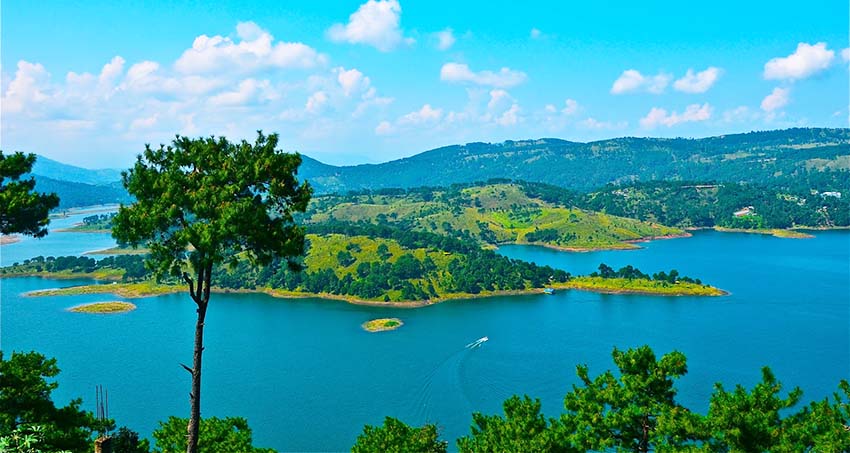
With deep lush valleys and conical peaks, these hills are famous for housing the Sohra or Cherrapunjee scarp, one of the regions with the highest annual rainfall in the world. The Nongkhum island, the second largest river island in Asia, is also located within this area. The dense forests mingling with tributaries that eventually drain out into the Brahmaputra, combined with the rich biodiversity of the region have earned the Khasi Hills the title of Scotland of the East.

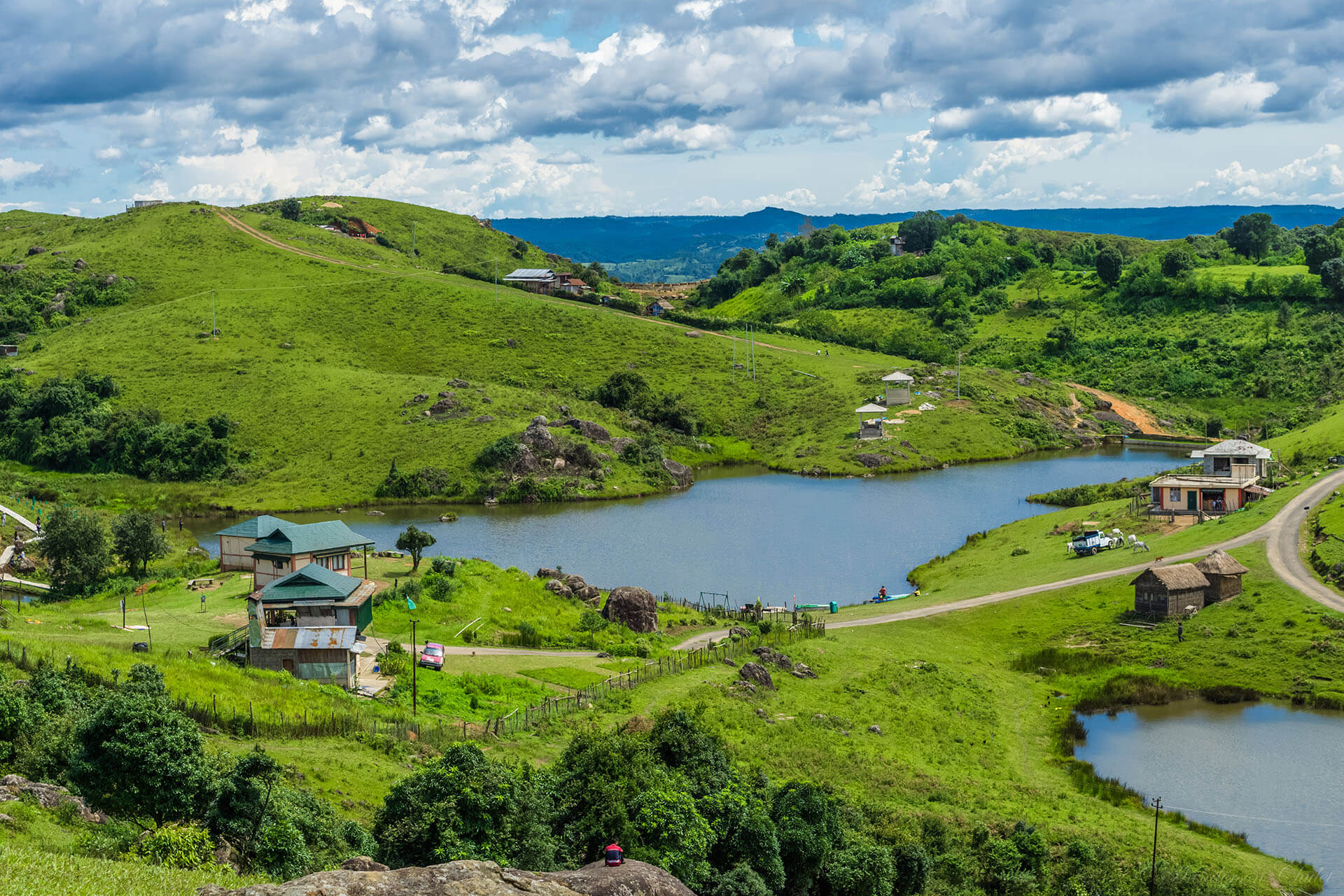
The Khasi Hills are a great convergence of lush forests, endless verdant grasslands, majestic hills surrounded by playful clouds, waterfalls, and rivers flowing through the creeks, and ancient monoliths filled with mystical caves. Complemented by the abundance of diverse wildlife seen throughout the area, the Khasi Hills region is world-famous for being a prime ecological hotspot.

The region is inhabited mainly by tribal Khasi dwellers, which are traditionally in various chieftainships, states known as the Khasi Hill States. One of its capitals, Sohra, is considered one of the wettest places in the world. The majority of Khasis are Presbyterians followed by Catholics and Anglicans. The highest peak is Lum Shyllong which is 1,968 meters or 6,457 ft high.

The best time to visit the Khasi Hills is from October until April. During this period one will be able to enjoy the natural beauty of the land with waterfalls brimming with life due to the recent monsoon rains, and the flora & fauna will be soothing to the soul. The winters can be chilly, so adequate coverage is required. Avoid going during monsoons, as they are marked by heavy showers, which may prove to be inconvenient.

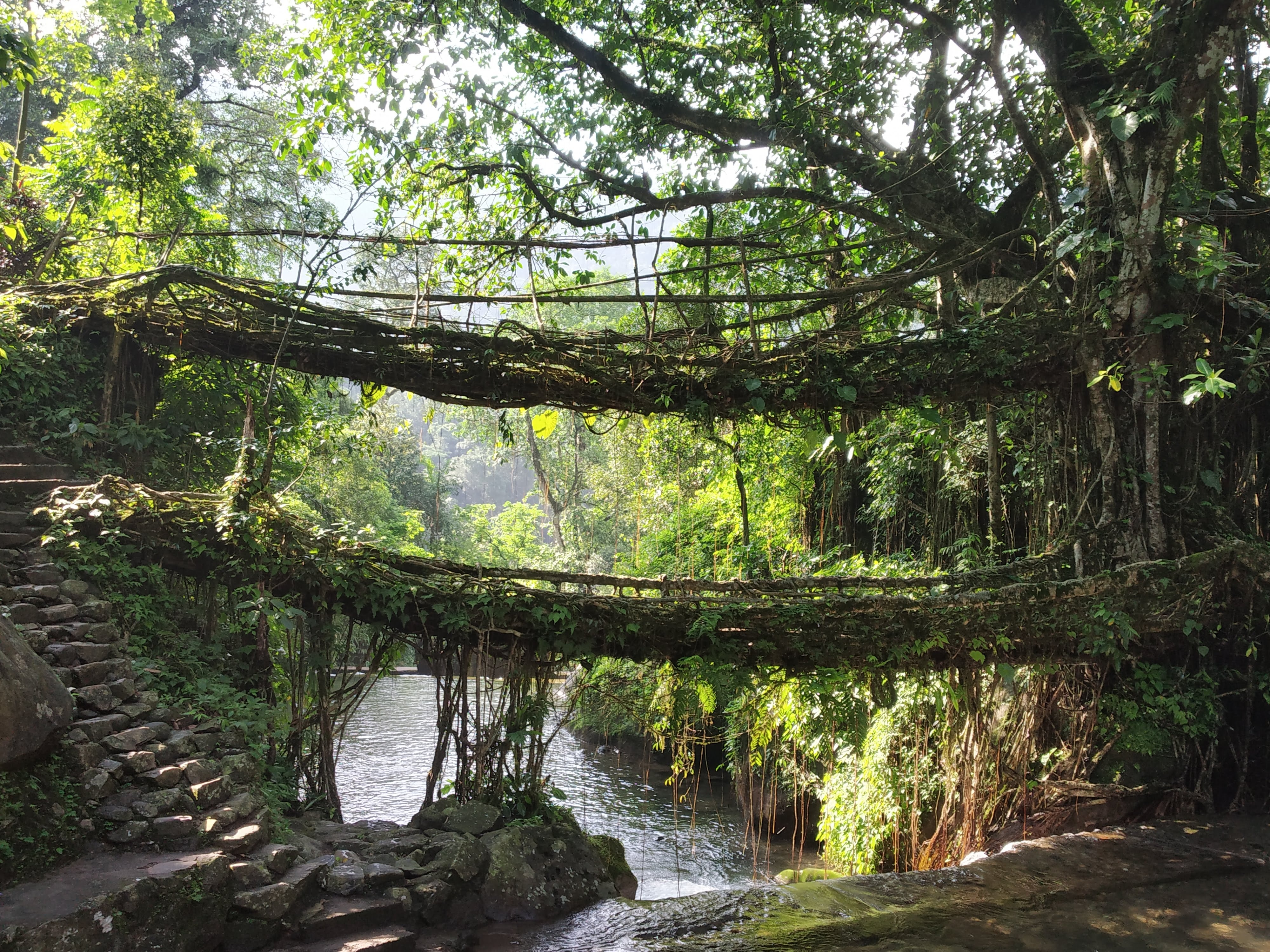
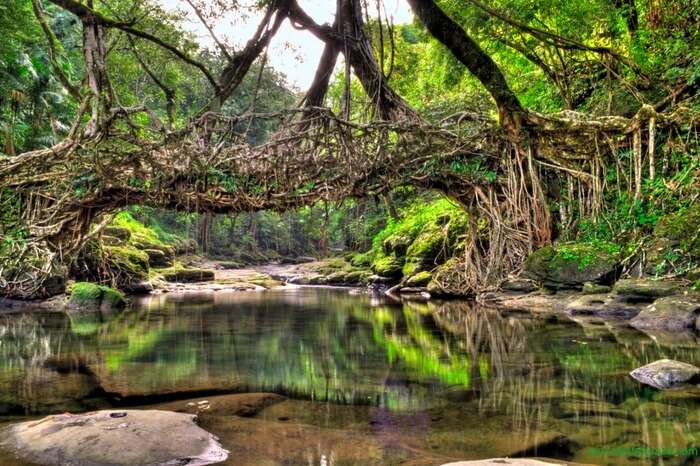
Places to Visit in East Khasi Hills include Asia’s cleanest village, Mawlynnong as well as Smit which can be reached through the winding roads offering an elegant view of the mountains. The village of Laitkynsew is famous for the 53 feet-long living root bridge which is over a hundred years old known as the Jingkieng Deingjri. The Khasi Hills are an adventurer’s fantasy come to life, with countless caves, peaks, and viewpoints spread across its entirety. Private treks are organised all across the Khasi hill range which is rich with the thriving greenery infused within the hills and accessorised by lakes and waterfalls.

With Meghalaya housing one of the largest cave networks in the world, the labyrinth of rock formations is a sight to behold, with years of mineral deposits from the tributaries of the Brahmaputra creating incredible stalagmites. The excess of impressive structures like monoliths and mighty hills offers tourists a chance to engage in the sport of rock-climbing with the giant monolith Kyllang Rock a favourite amongst rock-climbers and trekkers. The abundance of lakes offer tourists the rare opportunities to enjoy a nice relaxing picnic as well as boating services to immerse oneself in the tranquillity of the area. With its amazing ecological diversity, the region is home to numerous natural parks, where one can marvel at the lush greenery which has been so beautifully maintained by the locals.

Jaintia Hills

Located further east of the Khasi Hills, the Jaintia Hills used to be a part of the Jaintia Hills District. The district has been bifurcated into two separate districts, namely, East Jaintia Hills and West Jaintia Hills on 31 July 2012. Part of the former Jaintia Kingdom, the Jaintia Hills is a land of majestic hills filled with rich natural vegetation and mineral deposits. It is part of the Patkai hill range that extends across the Indo-Myanmar borders and is a relatively smaller hill district as compared to the Khasi and Garo Hills. The twelve Chiefs of the elaka or the tribal province of the Pnars, a Khasi Sub-tribe are styled Dolloi, and the land is called after them in Khasi: Ka Ri Khadar Dolloi or the Land of 12 Tribal Chiefs. The Jaintia hills comprise of two districts: the East Jaintia Hills and West Jaintia Hills. The only princely ruler of the area was the Raja of the Jaintia Kingdom whose winter capital, Jaintiapur is today in Bangladesh, while his summer residence shifted from Sutnga where the family started as Syiems to Nartiang and also has a palace in the commercial centre Borghat.

The best time to visit the Jaintia Hills is during the summer season, when it is mostly warm, with little or no rainfall. The hills receive heavy rainfall during the monsoons. The Jaintia Hills is home to one of the most beautiful waterfalls of India, the Krang Suri Falls. Set against the backdrop of the rugged rocks with the verdant creepers and trees, the unreal shade of blue taken on by the water inspires the artistic side of anyone who views it. The beautiful village of Nartiang is also situated in these fascinating Jaintia hills where one can find the remnants of the Summer Palace of the Jaintia King. The Nartiang Monoliths, a large collection of mighty stones set since the stone age may also be found here. Jowai, the administrative headquarters, is the most developed town in this region and is the only place connected to other towns outside the hills.  Krem Liat Prah is the longest cave, and Synrang Pamiang is the deepest cave, both which are located in the Jaintia Hills. Thadlaskein Lake is a man-made lake, popular among the locals as a picnic spot. The lake is considered to be holy by the people of Raid Mukhla who worship and offer sacrifices near the lake. A popular place among the locals, Khim Moo Sniang is significant for the pig-shaped rock that lies here and is worshipped by the Jaintia community. It is believed that the stone has the power to protect them. Syndai is famous for many caves and caverns in the limestone-borne area which were used as hiding spots during the war between Jaintia Hills and foreign intruders. Borghat village is situated close to the Bangladesh border and the temple there has a significant history because sacrifices were offered here and the temple was damaged during the 1987 earthquake. The Ruparsor Bathing Ghat was made for the recreational purposes of the Royal family. The ghat is made with granite and the water it gets is from the Ruparsor stream, which flows through a Ridge resembling the curved trunk of an elephant.

Garo Hills

Situated close to the Indo-Bangladesh Border, the Garo hills are part of the Patkai hill range, which extends across the Indo-Myanmar border. The hills get their name from the Garo tribe who inhabit the area. The Garo Hills, spanning 8000 sq meters, offers magnificent viewpoints, densely populated with subtropical forests and rare endemic species of animals and birds. The area has been divided into five districts. The Nokrek peak is the highest peak of this hill range, but the Arabella hills and the Tura peak also offer some breathtaking scenery. The Nokrek Biosphere Reserve, one of the most important national parks of international importance, is located in this nature-rich area. The hills are also decked with splendid waterfalls, enriching the ecological coherence of the place. It is one of the wettest places in the world and part of the Meghalaya subtropical forests ecoregion.

The Garo tribe are a culturally rich ethnic group, attaching tradition and significance to many parts of their natural surrounding. In doing so, they protect and respect their habitat, thereby preserving the immaculate allure of their surroundings. The tree of Boldak Matchu Karam, the rock of Naka Chikong, and the lake of Napak are all examples of these traditions, and the maintenance of the same attracts hordes of tourists all year round. Between September and December, the post-harvest festival of 100 Drums Wangala is celebrated with great pomp at the Asnang village, now becoming a multicultural attraction with neighbouring tribes participating in the festivities with great enthusiasm as well. The largest town in the hills is Tura, which is also the most developed area and home to all the important administrative buildings.

The society is matrilineal like the Khasis and the Jaintias. From birth to death, an individual belongs to the mother’s family, irrespective of sex, even after marriage. Marriage within the clan is completely prohibited and severely punishable for both the Khasis and the Garos. The institution of bachelors dormitories which are gradually disappearing is found in the Garo villages. In such dormitories, young people stay and live together till they are married. They receive various training like making various A’chik music instruments, wrestling or traditional sports, and the making of traditional bamboo baskets. This institution is similar to the ancient agoges of Sparta. Today the Khasis and Garos are mostly Christians but were nature worshipers previously.

The Garo Hills is known for its abundance of wildlife and attracts naturalists and photographers. Two mountain ranges, the Arabella range, and the Tura range pass through the Garo Hills, forming the great Balpakram valley in between. The headquarters town of Tura at an altitude of 657 m. The highest point in the Garo Hills is Nokrek Peak at an elevation of 1412 m.

The Garo Hills is a hub of ecological biodiversity. The Nokrek Biosphere Reserve was added to UNESCO’s official list of biosphere reserves in 2009 and is the home of the plant Citrus Indica, first discovered by researchers in this region. The Balphakram National Park is famous for its canopy-covered gorge and unique physical and biological formations and is an ecological hotspot. The Siju Caves is the third longest cave system in India, made of limestone deposits over centuries, by the Simsang river. One can find rare bat species here. A tributary of the Simsang River, the Rongbang Falls is flanked on either side by massive verdant hills of bamboo.
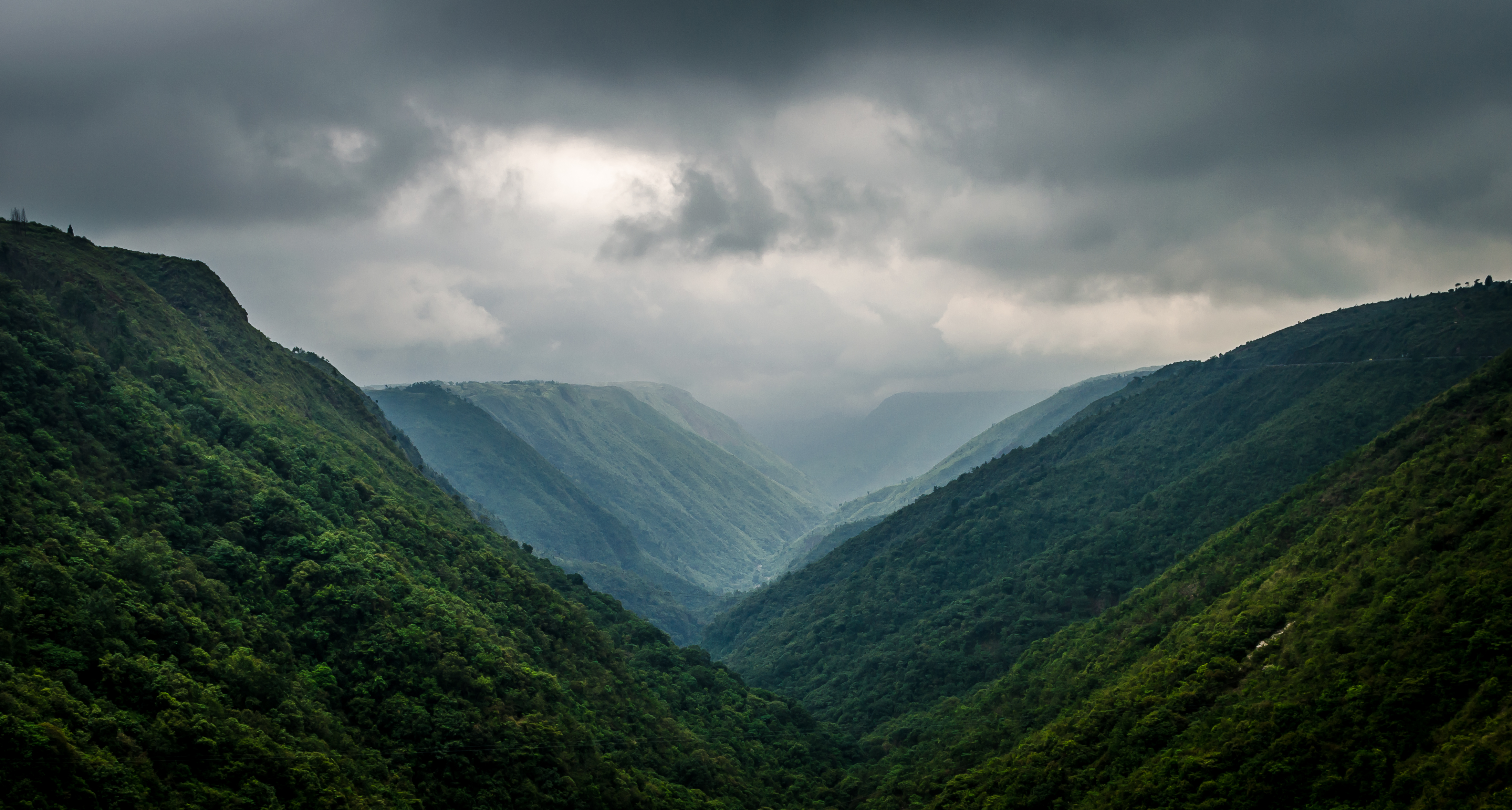
The Garo hills are a hotspot for natural biodiversity, evidenced by the large Nokrek Biosphere reserve and the neighbouring Balphakram National Park. The Selbalgre Hoolock Gibbon Reserve is a great spot to view the rare Hoolock Gibbon. There are several picturesque waterfalls around the hills as well. With limited road connectivity, one must trek through this scenic landscape to reach many villages past the outskirts of Tura. The Tura Peak and Arabella range offer magnificent views from the top, with the Tura peak being relatively easier to scale. Nongkhnum Island located in the West Khasi Hills district is the biggest river island in Meghalaya and the second biggest in Asia. The island is formed by the bifurcation of Kynshi River into the Phanliang River and the Namliang River. Adjacent to the sandy beach the Phanliang River forms a lake. The river then moves along and before reaching a deep gorge, forms a waterfall about 60 meters high called Shadthum Fall. Located near Sohra, the Kshaid Dain Thlen Falls are the falls where the mythical monster of Khasi legend was finally butchered. The axe marks made on the rocks where Thlen was butchered are still intact and visible. On the top of Diengiei, there is a huge hollow, shaped like a cup, believed to be the crater of an extinct pre-historic volcano. A scenic pool with wide, rocky sandbanks located on a stream alongside the Umroi-Bhoilymbong Road is known as Dwarksuid or Devil’s doorway. The highest point of the Garo Hills region of the State, Nokrek Peak stands 1412 m above sea level. The mother germoplasm of Citrus-indica has been discovered by scientific researchers within Nokrek Range which led to the establishment of the National CitrusGene Sanctuary-cum-Biosphere Reserve at Nokrek covering an area of 47 sq km. Imilchang Dare is a waterfall with a deep, wide pool at the bottom making it an exciting swimming pool, full of fish of varied sizes and colours.

After this series, I realise that Meghalaya has so much natural beauty and I am itching to explore this beautiful state soon. The state has so many unexplored places that one may feel like an explorer making a grand discovery. Hopefully, I get to explore this state soon.

Travel Bucket List: India – Meghalaya Part 4

Jowai

The headquarters of the West Jaintia Hills, Jowai is located about 65 km east of Shillong and about 50 km from the Indo-Bangladesh border and is home to the Pnar, a sub-tribe of the Khasi people and a matrilineal society. It is located on a plateau surrounded on three sides by the Myntdu river bordering Bangladesh to the south. Jowai is famous for its bucolic setting and breathtaking views, boasting of lakes, vast open valleys and waterfalls.

Festivals such as Behdeinkhlam, Chad Sukra and Laho Dance attract many tourists each year. Behdeinkhlam, a major festival of the Pnars, is a 4-day event that takes place during July. Behdienkhlam means to drive away evils and plague and is celebrated in all parts of the Jaintia Hills. Dancing takes place in the street to the accompaniment of drums and pipe playing. Although women do not participate in dancing, they have an important role to play at home by offering sacrificial food to the spirits of the ancestors. Each locality prepares a decorative tower-like pillar structure called a rath, carried by 30 to 40 people to a small lake at Aitnar for immersion. The festival culminates when the khnong or the sacred tree is brought to the centre of each locality. In the afternoon, Datlawakor, a form of soccer with a wooden ball, is played between two teams from the upper and lower valleys of the Myntdu River. Those in the team who wins are believed to be blessed with a good harvest. Other festivals include Laho Dance and Chad Sukra.

The Tryshi Falls are often compared to the Elephant falls of Shillong and is located about 8 km from the heart of Jowai. A bridge connects the waterfall’s surroundings with an expanse of green paddy fields. A breathtaking panoramic view of the Pynthor Nein is visible from the bridge. A trek to the bottom of the falls is amazing too. The Krang Suri Falls are located in Amlarem and have chiselled and gravelled footpaths and view points to enable visitors to better appreciate the beauty of the waterfall and its surroundings.

Located at Mukhla, about 20 km from Jowai, the Thadlaskein Lake is a beautiful lake with anthropological importance. A popular tourist spot, the lake is crystal clear and reflects the sky. Unharmed and untouched by man the lake has been turned into a popular picnic spot. A small hotel managed by Meghalaya Tourism is just across the road which offers clean and good service. The lake was constructed by Sajar Nangli, a follower of the former Jaintia King. Surrounded by Pitcher Plants, the Jarain Pitcher Plant Lake, spread over 50,000 sq m, has boat rides which allow one to navigate the plants and is a unique sight. A fountain shaped like a pitcher plant has been installed in the middle of the lake which sits amid gravelled footpaths, arch bridges, a pitcher plant garden and a greenhouse interpretation centre.

Famous for its sacred groves and the beautiful Pynthorwah Valley, the Lalong Park has become popular in recent times. A water eco-park with a view of the Pynthor Wah valley and the Myntdu river is also taking shape to change Lalong into a major tourism hub. 

An ancient and famous temple, the Durga temple which is more than five centuries old is located near the remnants of the Summer Palace. In ancient times, human heads were offered to the goddess at the temple as human sacrifice. During British colonial rule, this practice was abandoned. The oldest church in Jaintia Hills, the Jowai Presbyterian Church was built by the Welsh Presbyterian Mission in the latter part of the 19th century and is one of the few structures in town that retain British architectural influence.

Monoliths exist throughout the length and breadth of the Khasi and Jaintia Hills. However, the largest collection of monoliths are the Nartiang Monoliths. Here also lie the remnants of the Summer Palace with the archway of the site made using red bricks.

The Umlawan Caves are the subcontinent’s deepest and largest caves. These caves are interconnected with the Kot Sati and Umskor Caves and have many stalagmites and stalactites. The caves are 100 m deep and 21km long. Meaning the flower of gold, Syntu Ksair is located on the banks of the Myntdu River and is the centre of the freedom struggle led by Kiang Nanbagh. A memorial has also been set up here in honour of him. Also known as Madan Madiah or Uncle’s Ground, Syntu Ksiar is a valley well irrigated by the Myntdu River. Today, the ground has a monument of U Kiang Nangbah, a fighter of the Khasi people. The Stone Bridge is an old historic stone bridge used by the Jaintia Rajas to cross while travelling from their Summer Capital in Nartiang to their Winter Capital in Jaintiapur, now in Bangladesh. The structure was broken once when an elephant tried crossing it.

Source

Mawlynnong

A small village located close to the India-Bangladesh border in the East Khasi Hills about 75 km south of Shillong, Mawlynnong has been declared Asia’s Cleanest Village in 2003 by Discovery India. Also known as God’s own Garden, Mawlynnong is a community-based eco-tourism initiative where the entire community made collective efforts in making and maintaining the cleanliness of the village. Mawlynnong offers a picturesque natural beauty with lush green valleys, crystal clear water in the river, an abundance of flowering orchids hanging from the trees and extremely clean roads which makes this small village worth visiting. Mawlynnong also offers pleasant weather throughout the year and especially during monsoon.

Mawlynnong also follows the tradition of a matrilineal society and as per the tradition of the Kasi people, property and wealth are passed from the mother to the youngest of her daughters, who also keeps the mother’s surname. Mawlynnong is known for its cleanliness. The waste is collected in the dustbins made of bamboo, directed to a pit and then used as manure. A community initiative mandates that all residents should participate in cleaning up the village. Smoking and use of polythene are banned while rainwater harvesting is encouraged. The reputation as Asia’s cleanest village boosted local tourism and in 2017 it was reported that, according to the village headman, incomes had increased by 60 per cent due to the increase in eco-tourism.

Source

The Dawki River, which is known to be very clean and crystal clear is located about 35 km east of Mawlynnong. Between Mawlynnong and Dawki, one comes across the Bophill Falls. The water falls at a very incredible force to form a river in the Sylhet border area of Bangladesh, making the water appears milky white. Known as the Sky View or Sky Walk, this is a popular attraction at Mawlynnong which is made up of cane and bamboo that offers a complete view of the Indo-Bangladesh border along with the village. To get to this 85 feet tower, one will be charged INR 10 per person. There is another mid-size waterfall within the village which is considered an amazing picnic spot is known as the Mawlynnong Waterfall. The Riwai Village is located 2 km east and is well known for the beautiful trekking it has through rainforests. However, the most popular tourist destination in the village is the small living root bridge made up of the aerial roots of rubber fig trees.

Dawki

96 km southeast of Shillong, Dawki is a border town in the West Jaintia Hills and the gateway to Bangladesh. The town offers scenic views of some of the tallest mountain ranges in Meghalaya and the Bangladesh borderlands. The Dawki Integrated Check Post or the Dawki border crossing on Dawki-Tamabil is one of the few road border crossings between India and Bangladesh. It is used mainly for coal transportation to Bangladesh with some 500 trucks crossing the border every day during peak season.

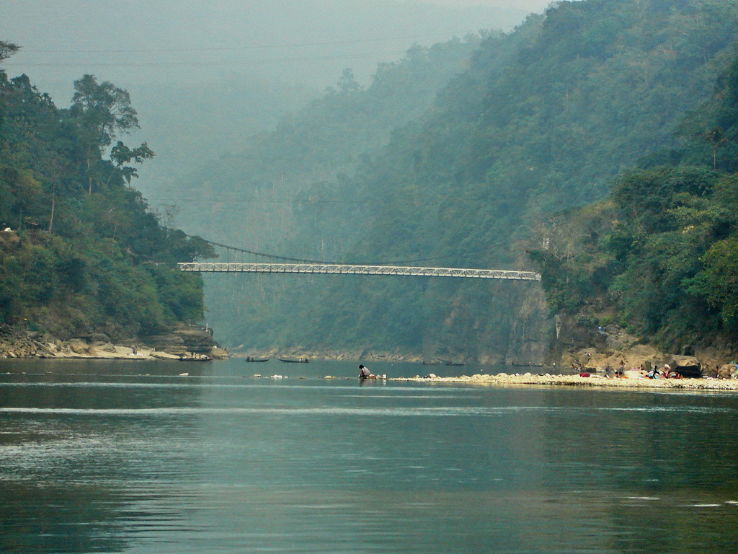
The Umngot River, also known as the Dawki River and Wah Umngot, is a river which flows through Dawki. The Umngot, a beautiful river with crystal clear waters is arguably one of India’s cleanest rivers and an important fishing spot for local fishermen. The river sits on the India-Bangladesh border, and a white portion of the river, caused by a rise in the current, marks the unofficial boundary between the two countries. A suspension bridge, the Dawki Bridge, hangs over the Umngot River that was constructed in 1932 and is a place of interest. Dawki is popular as a day trip from Shillong with many visitors coming here for the colourful annual boat race during spring on the Umngot River. Boating at the Umngot river is a must at Dawki. The water is so clean and clear that the boats seem to be floating on the river bed, a once-in-a-lifetime experience. The boating charges are around INR 600 for a 40-minute ride. Also known as Dawki Falls, the Umgrem Falls is another waterfall situated very close to the road that marks the border between India and Bangladesh and is highly popular among visitors.

In April 2021, the Meghalaya government decided to construct a dam on the river, because of an electricity shortage. The project was the proposed 210 MW Umngot Hydroelectric Project, which received loads of backlash and opposition from the local villagers, who feared that its construction would disrupt tourism and the project was eventually scrapped.

Balpakram National Park

Located at an altitude of about 910 m or 3,000 ft close to the international border with Bangladesh, the Balpakram National Park was inaugurated in December 1987 and is home to wide species of plants and animals. Located in the southern Garo Hills in Meghalaya, about 167 km from Tura, and about 195 km from Shillong, the park’s vegetation consists of subtropical, grassland, bamboo forest, tropical deciduous trees, and carnivorous plants like the pitcher plant and Drosera. In the southern part of the Garo Hills, species in the national park include the Indian elephant, chital deer, wild water buffalo, red panda, Bengal tiger, and marbled cat. The rivers and lakes in the wildlife reserve are home to various species of birds. A variety of very rare medicinal herbs, which are locally known as dikges, also grow abundantly in Balpakram. The Central government of India has nominated the Garo Hills Conservation Area (GHCA), straddling the South and West Garo Hills, for a World Heritage Site, which includes Balpakram National Park and this has been listed in the UNESCO World Heritage tentative list.

The word Balpakram means the land of perpetual winds, and the national park is blessed with charming grace and breathtaking scenes. The Balpakram National Park is home to many endangered and endemic species of plants and animals. The area is full of sprawling vegetation of deciduous and subtropical trees. The region is also famous for the pitcher plant and other plants of crucial medicinal value that eee commonly found here.

One can find a deep gorge in Balpakram, which is popularly compared to the Grand Canyon of the United States of America. The gorge is referred to as the land of the spirits since it is believed that the spirits of the dead live here temporarily before finally embarking on the journey towards their final abode. Numerous mysterious phenomenon takes place at the Balpakram National Park, for which modern science cannot give any reason, logic, or account. It is widely believed that the ghosts of the dead inhabit the gorge at the national park. There is also a thick schimawallichi tree in the national park, which has a depression on its trunk which seems to be the outcome of the constant tethering of animals and the work of harsh weather. Whenever a tree falls due to the strong winds, another tree situated close by gets affected with the same symptoms. One can also find a massive magnetic rock in the national park. This stone has a hollow space on its surface, which has a powerful magnetic force. Any animal or bird that wanders close to the rock is magnetically drawn towards the hallow, and they are never able to escape from there. Consequently, the animals die. Interestingly, this magnetic force does not affect humans. The steep rock cliffs that can be found in the canyon are supposed to be the natural habitats of the gonchos or evil spirits. These gonchos are believed to carry away people and lead them over steep precipices and inaccessible rock cliffs. They, however, do not cause any harm to their victims.

Source

The Balpakram National Park is also quite famous for its caves, which are complete with beautiful limestone formations of stalagmite and stalactite. The Siju-Dobkhakol Cave is situated on the bank of the Simsang River, just below the village of Siju, around 30 km to the north of Baghmara. This cave is 4772 m long and is renowned for being the third longest cave in India. It contains some of the most beautiful river passages that can be found all across the globe. The Tetengkol-Balwakol Cave, or the Cave of Dwarfs with inverted feet, is situated in Nengkhong village and is the second longest cave in India. Other prominent caves that can be found here include the Dobhakol Chibe Nala and Bok Bak Dobhakol.

The best time to come to Balpakram National Park is from late October to March when the weather is pleasant with little to no rainfall. One can enjoy watching animals during these months when they come to drink water in the rivers and lakes in the national park. There are no entry fees to the park which is open between 7 am to 6 pm daily. Balpakram National Park is a protected place, and prior permission has to be taken from the wildlife authorities before entering the area. One can easily obtain a permit to visit the National park from the DFO office in Baghmara free of cost.

Williamnagar

Formerly known as Simsanggre, Williamnagar is the headquarters of the East Garo Hills and is named after Captain Williamson A. Sangma, the founding Chief Minister of the State of Meghalaya. The township was planned around the erstwhile village of Simsanggre, on the vast plainlands along the banks of the Simsang River, in 1976 after the Garo Hills district of yesteryear was reorganised to carve out a new district called East Garo Hills District.

Where Williamnagar is located has historical importance as it was here that the Garos made their last major resistance to the British intrusion into Garo Hills in 1837. The legendary Garo leader Pa Togan Nengminja Sangma was felled by the British, in a skirmish, at Chisobibra, on the outskirts of Williamnagar, on 12 December 1837. Located about km west of the state capital, Shillong, Williamnagar is a very remote area known for its abundance of natural beauty, being flanked by the mountains and has a rich composition of both water and vegetation.

The Chamera Lake and the Simsang River are must-visit places while at Williamnagar because of their beauty. The conifers carpeting the banks and the clean air make this an unforgettable place. One should make sure they go for a boat ride and soak in the vast expanse of natural beauty. The breathtaking, magnificent and vibrant Domre Falls is a wonderful place to chill and let go of worries. Mrik Wari is close to the Simsang River famous for its rock formations. Some of the formations depict the shape of a baby elephant and its mother. According to legends, the elephants turned into stones after drinking the water from the river at daybreak. There are also several other formations in addition to the scenic view of the river and its beautiful surroundings. 120 km from Williamnagar, is Naka Chikong, a big rock with deep hollows, in the middle of the Ildek river in Badaka village. This big rock is mythologically believed to be swarming with fish, and there is a belief that if anyone inadvertently touches the big rock under whose hole the fish are, all the fish immediately disappear from the river. Home to many rare and protected birds along with other animals, the Siju Sanctuary is also known as Siju Bird Sanctuary. The Simsang Festival is a cultural event held in December which calls upon the best artists of the state with many smaller events taking place.

Baghmara

Located very close to the border with Bangladesh, Baghmara is the headquarters of the South Garo Hills district, about 286 km west of Shillong. The name Baghmara is derived from the fight that took place between Bong Lasker and a wild Bengal tiger where he killed the tiger by crushing its jaws. Therefore the name Baghmara where bagh means a tiger and mara means to kill or die. To honour Bong Lasker, a tomb was built in the heart of the town which was previously known as Barokar, which means 12 streams with baro meaning 12 and kar meaning a stream in Bengali.

Baghmara is not only rich in flora and fauna but also boasts many small lakes, rivers, and rolling hills. Flanked by the South Garo hills and fed by the Simsang river, this town is host to hordes of tourists every year. The Balphakram National Park lies around 66 km away and being a major trade hub with Bangladesh, Baghmara is known for its fish delicacies. The Someshwari River, also known as the Simsang in the Garo language, flows through the town. The famous Siju Cave is about 45 km away and to get to Siju one needs to go through Baghmara. The famous Balphakram National Park is 66 km away and one needs to pass through this town to get there. The town is home to the carnivorous pitcher plant and has the Pitcher plant sanctuary located at Dilsa Hill colony. The town viewpoint is also located on the same spot inside the tourist lodge with a breathtaking view of Baghmara. 4 km from the town of Baghmara lies the Baghmara Reserve Forest, inhabited by elephants, birds, and langurs. There is a provision for elephant rides in the reserve forest. The Baghmara Tyisam Fest is a 3-day fest that kicks off in December with lots of activities from drumming to beach football to fancy dress competitions.

Tura

One of the largest towns in Meghalaya, Tura is located in the foothills of the Tura range of the Garo Hills. Located about 311 west of Shillong, Tura was known as Dura before the Britishers came to the Garo Hills and the name was corrupted to Tura as Tura was easier to pronounce. The climate in Tura is moderate throughout the year and their God Duma is believed to reside in the hills. Filled with small rivulets and green valleys all around, the principal languages spoken in Tura are Garo and English. Tura is relatively deeply rooted in its native Garo roots and boasts of rich undisturbed biodiversity and natural attractions.

The main attraction of the town is the Nokrek National Park which is 12 km from the town where various animals such as the leopard, golden cat, wild buffalo, pheasant, and many more reside. The Nokrek National Park is located close to the National Citrus Gene Sanctuary-cum-Biosphere and this region comprises mainly deciduous and evergreen forests filled with different varieties of trees including the Tura peak which lends its name to the place, insectivorous plants, ferns, rare orchids, and medicinal varieties. In May 2009, Nokrek National Park was added by UNESCO to its list of Biosphere Reserves. The forests also have many fruit trees like plums, peaches, pears, and oranges as well as spices such as ginger, turmeric, and cinnamon. One may also visit the Rongbang Dar Falls, while a trip to this area, without visiting the Siju caves, would remain somewhat incomplete.

Source

Tura Peak, part of a reserve forest is an excellent destination for treks and sightseeing, as it allows panoramic views of the valley from the observatory accompanying it. About 7 km away from Tura, Pelga Falls is famous for angling and is also an excellent picnic spot. It is relatively free from crowds most of the time, making it ideal for those who want some quiet time. The best time to visit the falls is during the monsoon season when the flow is at its peak. Another popular tourist site, situated nearby, is the traditionally constructed Garo Bamboo Bridge, built over the Ganol River. The Rongbang Dar Waterfalls, also known as the Rongbang Dare, are located close to the Chinabat Village, about 39 km west of Tura. At a height of over 120 ft, this waterfall has fantastic visual appeal, especially during the monsoon season when the flow is large and speedy. Located close to the Siju Wildlife Sanctuary, Naphak Lake is a pristine location, excellent for bird watching and fishing. Many of the birds who reside or migrate to the Siju Wildlife Sanctuary can also be spotted here. It is located around 112 km from Tura and can easily be driven to. Tura Peak lies about 872m above sea level and there is a reserve forest at this mountain peak along with a tourist bungalow, a cinchona plantation, and an observatory. The massive yellow plains of Bangladesh welcome you at the peak which is an unforgettable sight. It is also possible to trek to the top of the peak.

The next part, which will be the last part in this series will showcase the various hill ranges that are a part of Meghalaya’s landscape