Festivals of India: Guru Nanak Jayanti

Also known as Gurpurab, Guru Nanak Jayanti is one of the most significant festivals in Sikhism, celebrating the birth anniversary of Guru Nanak Dev Ji, the first Sikh Guru and the founder of Sikhism. This auspicious occasion is observed with great reverence and enthusiasm by Sikhs around the world, as it marks the beginning of a spiritual journey that emphasises equality, compassion, and devotion to God. 

Guru Nanak Dev Ji was born on April 15, 1469, in the village of Talwandi, now known as Nankana Sahib, located in present-day Pakistan. He was born into a Hindu family to Mehta Kalu and Mata Tripta. From a young age, Nanak exhibited a deep spiritual inclination and a questioning mind. He often engaged in discussions about spirituality and the nature of God, which set him apart from his peers.

As a child, Nanak was known for his wisdom and compassion. He displayed a keen interest in religious matters and often questioned the rituals and practices of the time. His early experiences and observations of the social injustices around him laid the foundation for his later teachings.

At the age of 30, Guru Nanak experienced a profound spiritual awakening during a deep meditation by the river. It is said that he had a divine encounter with God, which transformed his life and led him to embrace a mission of spreading the message of oneness, love, and equality. After this experience, he began to travel extensively, sharing his teachings and engaging in dialogues with people of various faiths.

Guru Nanak’s travels took him to many regions, including India, Tibet, Sri Lanka, and the Middle East. He engaged with people from different backgrounds, promoting the idea of universal brotherhood and understanding. His teachings emphasised that there is only one God, and he rejected the rigid caste system and religious discrimination prevalent in society.

Guru Nanak’s teachings are encapsulated in the Guru Granth Sahib, the holy scripture of Sikhism, which contains hymns and verses that convey his spiritual insights. Some of the core principles of his teachings include the concept of “Ik Onkar,” meaning “There is one God.” He emphasised that God is formless and omnipresent, transcending all religions and beliefs. Guru Nanak Ji advocated for the equality of all individuals, regardless of caste, creed, or gender, and condemned social injustices and promoted the idea of treating everyone with respect and dignity. He also emphasised the importance of selfless service to humanity and believed that serving others is a way to serve God. Gur Nanak encouraged individuals to earn their livelihood through honest means and to share their wealth with those in need. He taught the significance of remembering God through prayer and meditation, which helps individuals connect with the divine and criticised blind rituals and superstitions, advocating for a direct and personal relationship with God.

Guru Nanak Ji spent the latter part of his life in Kartarpur, where he established a community that practiced his teachings. He appointed his disciple, Guru Angad Dev Ji, as his successor before passing away in 1539. His legacy continued through the subsequent Gurus, who further developed and spread the teachings of Sikhism. Guru Nanak’s teachings have left an indelible mark on the world, inspiring millions to embrace the values of love, compassion, and equality. His philosophy transcends religious boundaries and continues to resonate with people of all faiths.

Guru Nanak Jayanti is celebrated on the full moon day, Purnima, of the month of Kartik in the Hindu calendar, which typically falls in October or November in the Gregorian calendar. The festival commemorates the birth of Guru Nanak Dev Ji and serves as a reminder of his teachings and contributions to humanity. The celebration of Guru Nanak Jayanti has its roots in the Sikh tradition, where it is known as Gurpurab, meaning “the day of the Guru.” The festival is not only a religious observance but also a cultural celebration that brings together communities to honour the teachings of Guru Nanak.
The first recorded celebration of Guru Nanak Jayanti took place in the early 19th century when the Sikh community began to formalise the observance of Gurpurab. Over the years, the celebrations have evolved, incorporating various customs and traditions that reflect the rich cultural heritage of Sikhism. The significance of Guru Nanak Jayanti extends beyond the Sikh community; it serves as a reminder of the universal values of love, tolerance, and equality that Guru Nanak championed. The day is marked by prayers, hymns, community service, and festive gatherings, creating a sense of unity and belonging among people.

Several myths and stories are associated with Guru Nanak Dev Ji, illustrating his wisdom, compassion, and spiritual insights. One of the most famous stories recounts Guru Nanak’s miraculous experience at the river. During his early years, he often meditated by the river. One day, he disappeared for three days, leading his family and friends to believe he had drowned. When he finally returned, he explained that he had been in the presence of God. This event marked the beginning of his spiritual journey and his commitment to spreading the message of oneness. During his travels, Guru Nanak encountered a group of Hindu and Muslim pilgrims arguing over their respective religions. To resolve their dispute, he invited them to a meal, emphasising that the divine is present in all people, regardless of their faith. This story highlights Guru Nanak’s commitment to promoting interfaith dialogue and understanding. 

Guru Nanak’s concept of Langar or the community kitchen is rooted in his belief in equality and selfless service. One day, he was invited to a feast by a wealthy man who insisted on serving him lavishly. Instead of accepting the invitation, Guru Nanak chose to feed a group of hungry people instead. This act demonstrated his commitment to serving those in need and reinforced the idea that true wealth lies in sharing with others. Guru Nanak’s teachings often brought him into conflict with the ruling authorities. One notable incident involved his encounter with the Mughal Emperor, Babur. When Babur invaded India, he sought to intimidate Guru Nanak. However, Guru Nanak’s calm demeanor and profound insights left a lasting impression on the emperor, leading to a respectful dialogue. This story illustrates Guru Nanak’s ability to engage with those in power while remaining steadfast in his beliefs.

Guru Nanak’s final journey is marked by his visit to various places, spreading his teachings until his last breath. It is believed that he passed away in Kartarpur, where he had established a community. The story of his passing emphasises the continuity of his teachings and the importance of community in Sikhism.
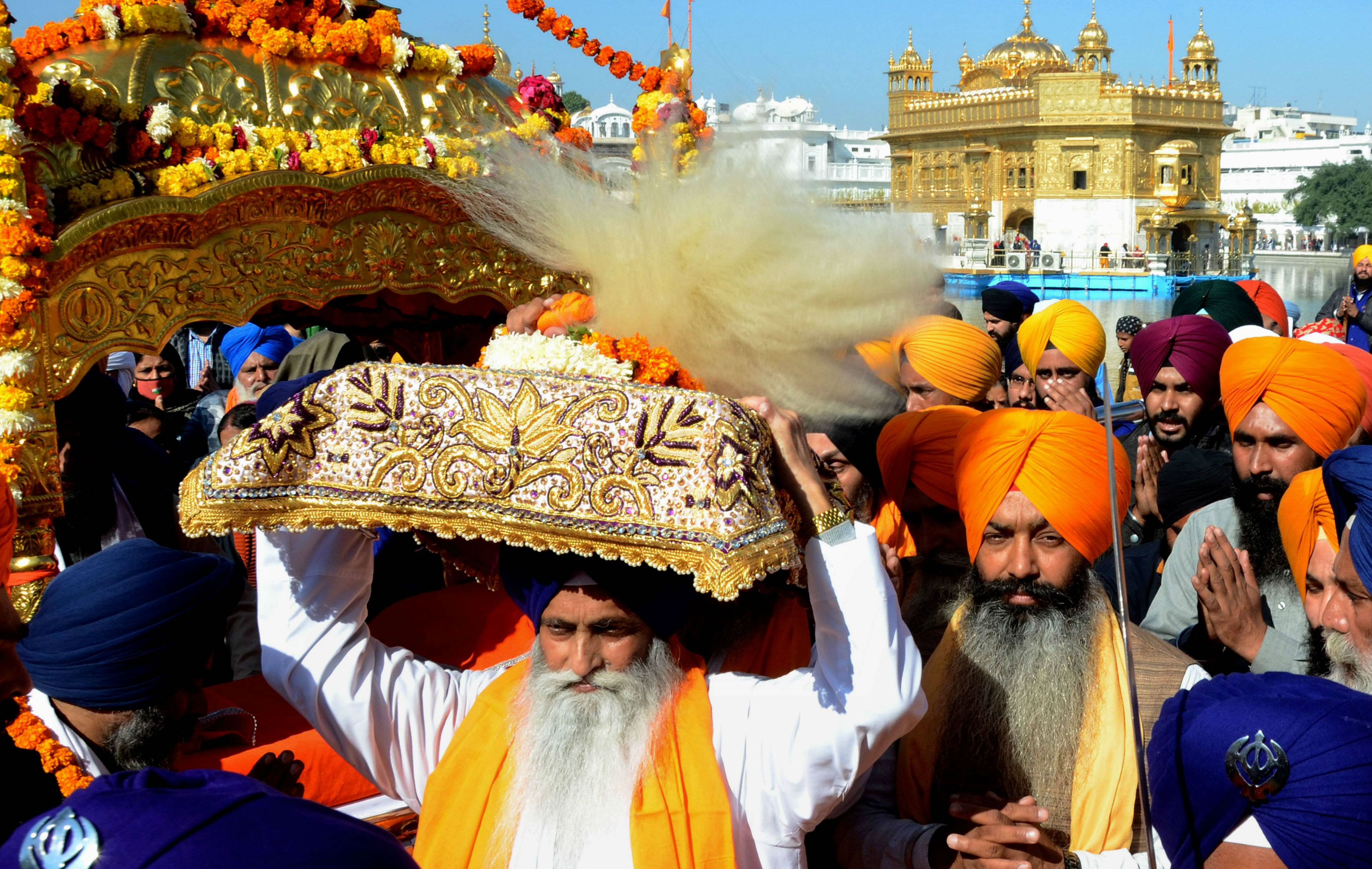
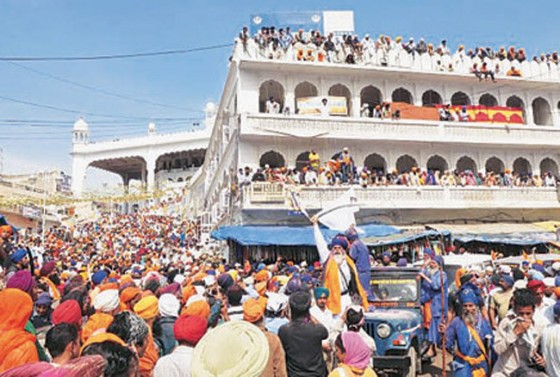
Guru Nanak Jayanti is celebrated with great fervor and devotion across the globe, particularly in India and among the Sikh diaspora. The celebrations typically span several days, culminating in a grand observance on the day of Gurpurab. In the days leading up to Guru Nanak Jayanti, many Gurudwaras, as Sikh temples are called, organise an Akhand Path, a continuous recitation of the Guru Granth Sahib, which lasts for 48 hours. This practice helps devotees immerse themselves in the teachings of Guru Nanak. Gurudwaras are adorned with flowers, lights, and colourful decorations in preparation for the celebrations. The atmosphere is filled with devotion and excitement as the community comes together to honour the Guru. Volunteers play a crucial role in organising events, preparing food for Langar, and ensuring that the celebrations run smoothly. The spirit of selfless service is at the heart of the preparations.

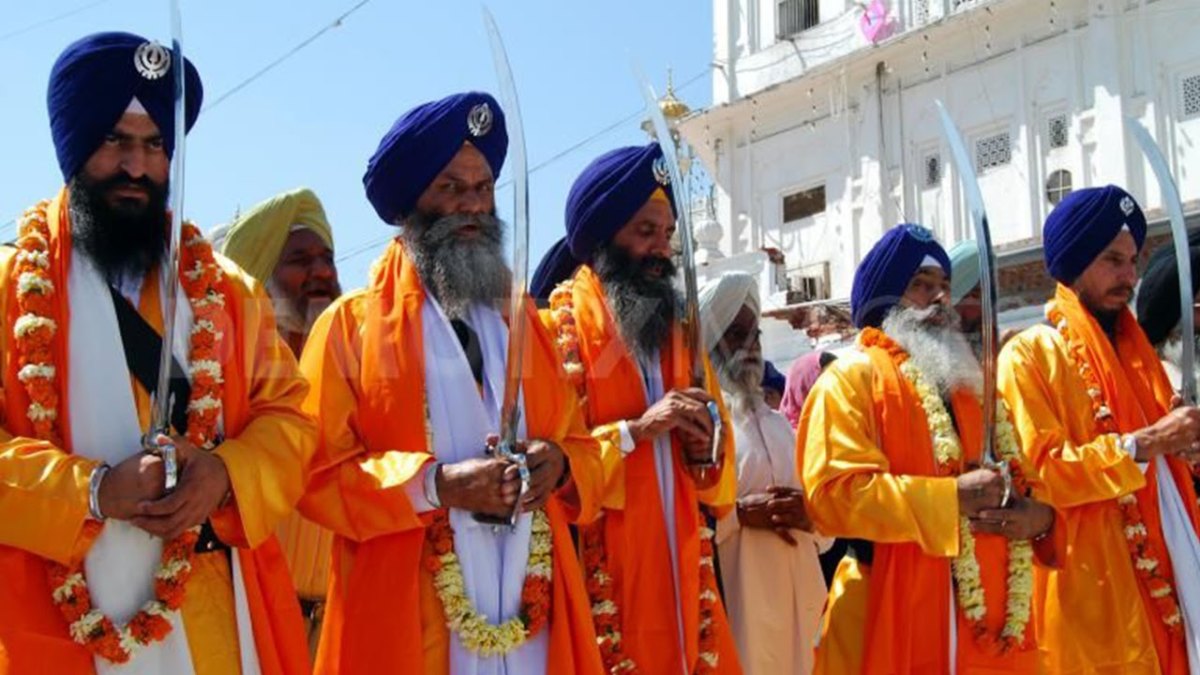
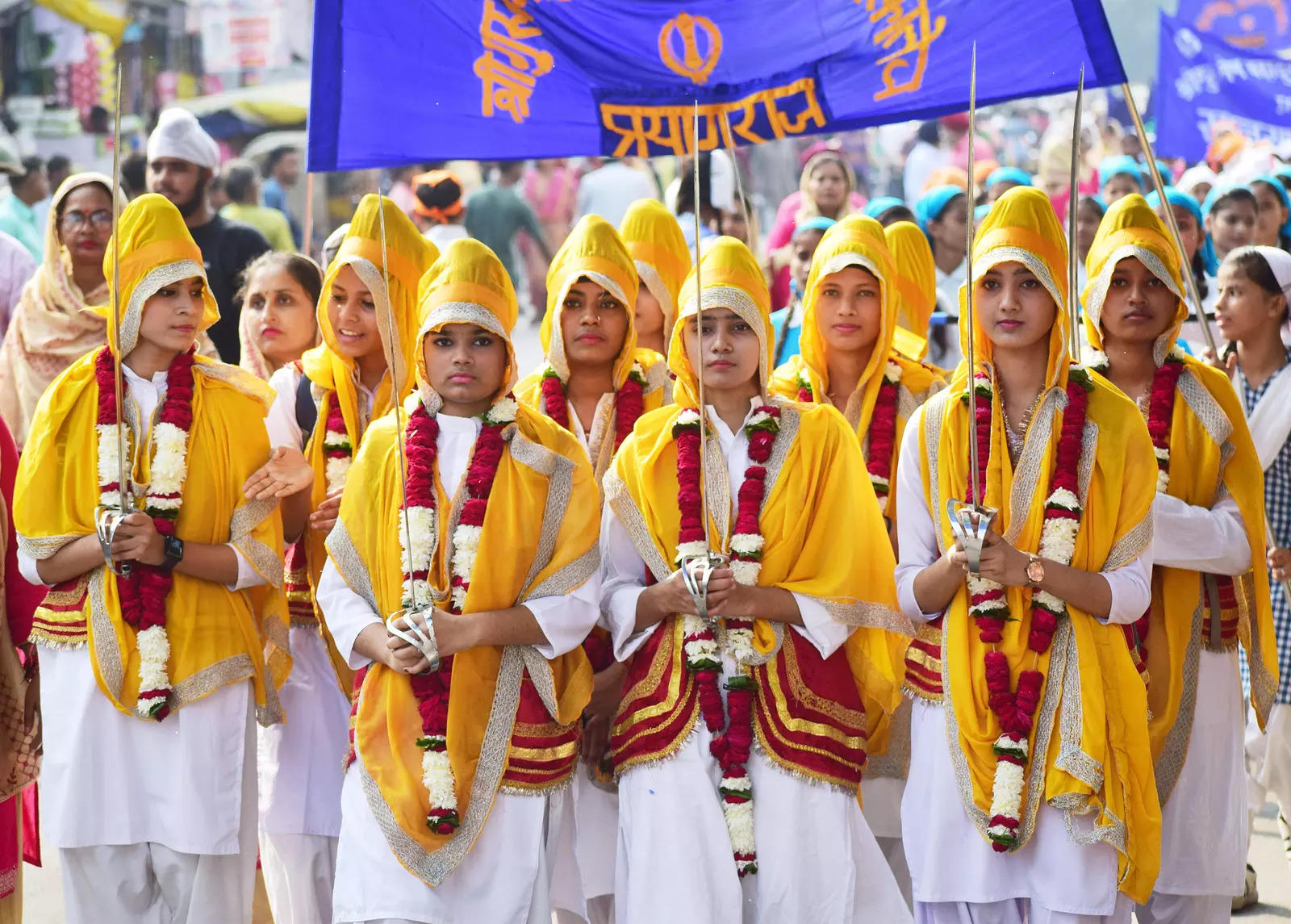
On Guru Nanak Jayanti, the day begins with early morning prayers and hymns or Asa-di-Var sung in Gurudwaras. Devotees gather to participate in the morning prayers, creating a sense of community and devotion. A day before Guru Nanak Jayanti, a Nagar Kirtan procession is held, led by the Panj Pyare or the Five Beloved Ones. The procession features the singing of hymns, the carrying of the Guru Granth Sahib in a palanquin, and the display of traditional martial arts. Participants often dress in traditional attire and carry the Nishan Sahib, the Sikh flag. One of the most significant aspects of the celebrations is the Langar, a community meal served to all attendees, regardless of caste, creed, or background. This practice embodies the principles of equality and selfless service promoted by Guru Nanak. 

Throughout the day, devotees participate in Kirtan or devotional singing and recitation of Gurbani which are hymns from the Guru Granth Sahib. These spiritual practices create an atmosphere of devotion and reflection. Many Sikhs engage in community service on Guru Nanak Jayanti, helping those in need and contributing to charitable initiatives. This aligns with Guru Nanak’s teachings of selfless service and compassion. In addition to religious observances, cultural programs and performances may be organised to celebrate Sikh heritage. These may include traditional music, dance, and storytelling that highlight the teachings of Guru Nanak.

Guru Nanak Jayanti is celebrated not only in India but also by Sikh communities around the world. Major cities with significant Sikh populations host grand celebrations that attract thousands of participants. These events often include processions, community meals, and cultural performances that showcase the rich traditions of Sikhism.

Guru Nanak Jayanti is a profound celebration of the life and teachings of Guru Nanak Dev Ji, the founder of Sikhism. This festival serves as a reminder of the values of equality, compassion, and selfless service that Guru Nanak championed throughout his life. As communities come together to honour his legacy, they reinforce the importance of unity and understanding in a diverse world. As one reflects on his wisdom and principles, we are inspired to embody the spirit of service, love, and respect for all humanity.
Festivals of India: Halla Mohalla

A Sikh festival that celebrates the martial spirit and bravery of the Khalsa, the community of initiated Sikhs, Halla Mohalla was started by the tenth Sikh Guru, Guru Gobind Singh, in the 17th century, as a way of training his soldiers and showcasing their skills. The festival is held every year in Anandpur Sahib, Punjab, where the Khalsa was founded. It coincides with the Hindu festival of Holi but has a distinct identity and meaning.

The Halla Mohalla festival traces its origins to the 17th century, during the time of Guru Gobind Singh, the tenth Sikh Guru. In response to prevailing social and political challenges, Guru Gobind Singh envisioned the festival as a platform to foster unity, resilience, and martial spirit among his followers. The term “Halla Mohalla” translates to “mock fight” or “mock battle,” reflecting the festival’s emphasis on martial arts, military exercises, and mock battles as a means of promoting physical fitness, discipline, and preparedness among Sikhs.

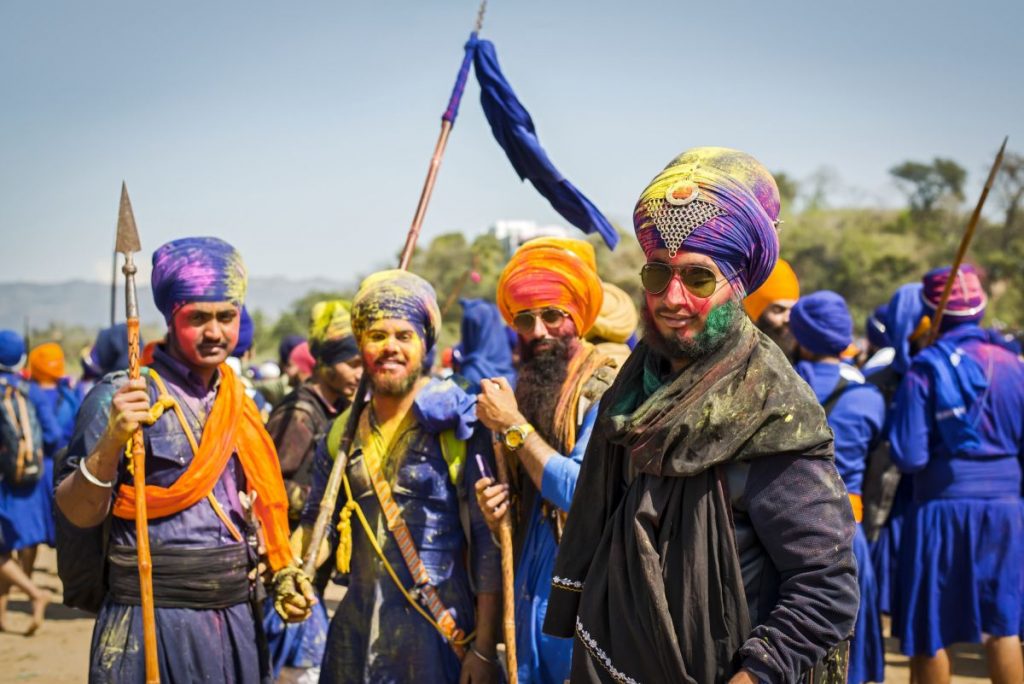
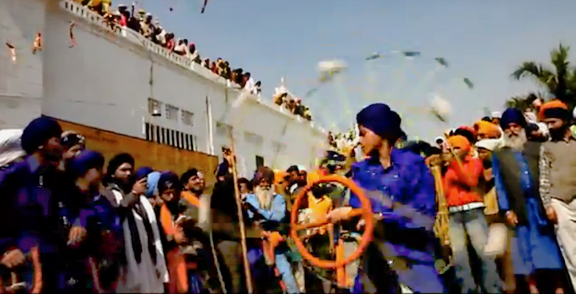
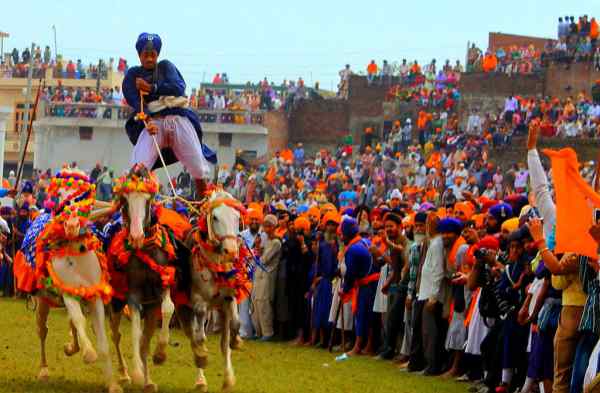
The main attractions of Halla Mohalla are the mock battles, the display of weapons, horseback riding, and the martial arts. The participants, called Nihangs, wear traditional blue robes and turbans and carry swords, daggers, spears, and rifles. They perform feats of agility, strength, and courage, such as breaking bricks with their hands, riding two horses at once, or throwing a spear from a moving horse. They also recite poems and hymns in praise of the Guru and the Khalsa.

Central to the Halla Mohalla festival are the awe-inspiring displays of Sikh martial arts, or Gatka, showcasing the agility, strength, and precision of Sikh warriors as they engage in mock battles and intricate swordplay. The festival kicks off with grand processions and parades, featuring Nihang Sikhs adorned in colourful attire, elaborate turbans, and ceremonial weapons, symbolizing the valour and chivalry of the Sikh warrior tradition.

Halla Mohalla takes place immediately after Holi, the Hindu festival of colours, often coinciding with or following the day after. Unlike Holi’s playful colour-throwing, Halla Mohalla focuses on martial displays, reflecting the Sikh tradition of being warriors and readiness for defence. It celebrates the formation of the Khalsa, a community of committed Sikhs, upholding principles like equality, service, and justice.

Amidst the festivities, Halla Mohalla also offers devotees an opportunity for spiritual reflection and enlightenment, with religious discourses, prayers, and kirtan or devotional music sessions held at gurdwaras, the Sikh temples throughout Anandpur Sahib. They also take part in the langar, the communal kitchen, where free food is served to everyone, regardless of caste, creed, or religion. The festival promotes the values of equality, service, and brotherhood among the Sikhs and society.

Anandpur Sahib, the birthplace of the Khalsa, serves as the epicentre of Halla Mohalla festivities, with pilgrims and devotees flocking to the sacred city to pay homage to Sikh tradition and heritage. At the heart of Halla Mohalla lies the sprawling Akhara complex, where Sikhs gather to engage in martial arts training, physical exercises, and spiritual rituals under the guidance of seasoned Nihang warriors. The festival is also marked by acts of seva, or selfless service and community feasts, where devotees come together to prepare and share the langar, or free communal meals, as a symbol of equality, unity, and solidarity.

Nihangs, also known as Akalis, are an esteemed order of Sikh warriors with a rich history dating back to the early days of Sikh military history. Nihangs are part of an armed warrior order within Sikhism, known for their distinctive blue attire and proficiency in martial arts. They played a crucial role in the military history of the Sikhs, often celebrated for their victories despite being outnumbered. Nihangs embody the spirit of fearlessness, commitment to justice, and readiness for martyrdom as taught by the Sikh Gurus. They are seen as the protectors of Sikh gurdwaras and the upholders of the faith, especially during times of conflict. Today, Nihangs also have a ceremonial role, representing the martial heritage and the spiritual ethos of the Sikh community. Nihangs hold a special place in Sikhism, symbolizing the courage, resilience, and unwavering dedication to the principles laid down by the Sikh Gurus. They are a reminder of the Sikh tradition of saint soldiers, committed to both spiritual and temporal duties.

For Sikhs around the world, Halla Mohalla serves as a time to reaffirm their commitment to the core principles of Sikhism: equality, justice, compassion, and service to humanity. The festival inspires future generations of Sikhs to embrace their heritage, uphold their traditions, and embody the spirit of courage, resilience, and compassion that defines the Sikh faith.
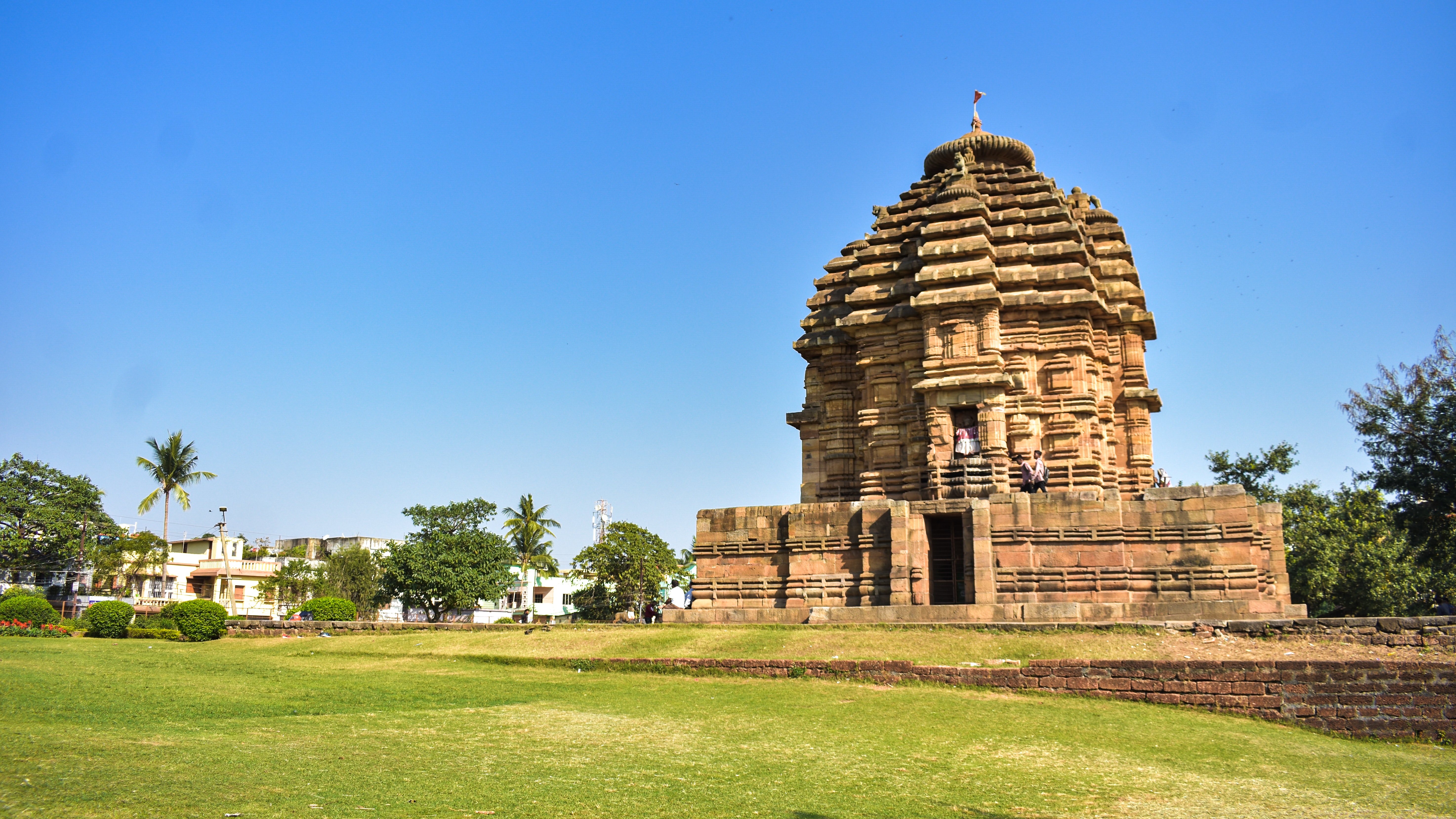
In an era of rapid change and globalisation, Halla Mohalla serves as a symbol of cultural resilience, preserving the rich heritage and identity of the Sikh community for generations to come. The festival also promotes interfaith understanding and dialogue, inviting people of all backgrounds to partake in the festivities and experience the richness and diversity of Sikh culture and tradition.

In the kaleidoscope of festivals that adorn India’s cultural landscape, Halla Mohalla shines as a beacon of Sikh valour, spirituality, and tradition. As pilgrims and devotees converge upon Anandpur Sahib to partake in the festivities, they are reminded of the timeless values of courage, compassion, and community that lie at the heart of the Sikh faith.

In a world marked by division and discord, Halla Mohalla stands as a testament to the power of unity, solidarity, and shared humanity. As we celebrate this cherished festival, let us embrace its message of peace, tolerance, and brotherhood, and strive to build a world where diversity is celebrated, differences are respected, and all people are treated with dignity and respect.

Travel Bucket List: India – Consolidated List of all States

As I started planning my travel, I started relying on my research for where to go and found it slightly ungainly to search through all the material I have to reach a specific destination. So here’s a consolidated list of all Indian states, in alphabetical order with the cities and towns next to each part which makes it easier to get to the place you are interested in.

Photo by Ravigopal Kesari on Unsplash

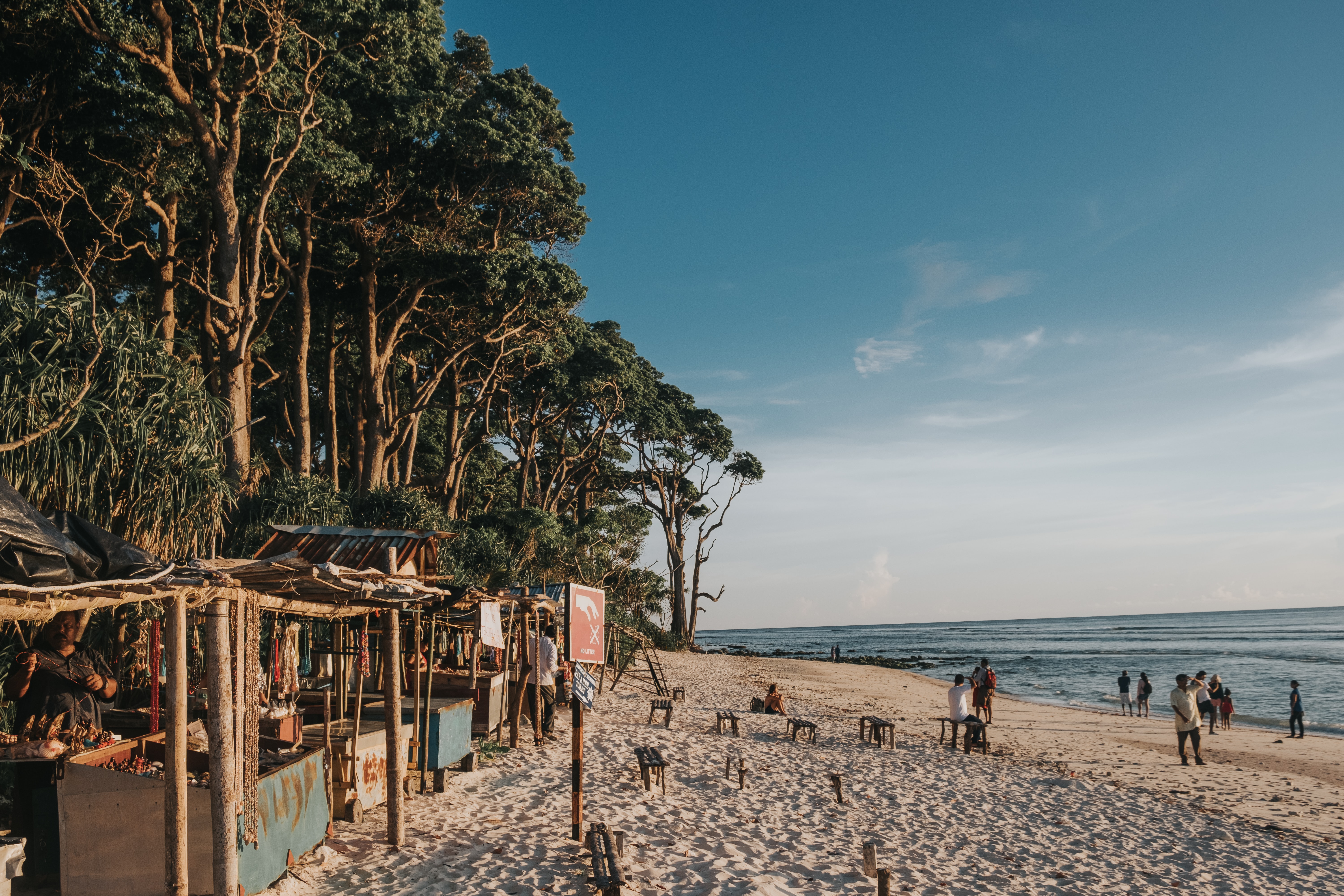
Andaman and Nicobar Islands
Part 1 – Introduction and Overview
Part 2 – Port Blair
Part 3 – Corbyn’s Cove Beach, Wandoor Beach, Viper Island, Ross Island, North Bay Island, Red Skin Island, Middle Andaman Island, Long Island, Baratang Island, Parrot Island, North Passage Island, Guitar Island
Part 4 – Aves Island, North Andaman Island, Diglipur, Stewart Island, Ross & Smith Island, Jolly Buoy Island, Havelock Island
Part 5 – Neil Island, South Andaman Island, Rutland Island, Little Andaman Island, Cinque Island, Barren Island, Narcondom Island, Kathchal Island, Campell Bay & Indira Point
Part 6 – Mahatma Gandhi Marine National Park, Chidiya Tapu, The Chidiya Tapu Biological Park, Mount Harriet National Park, Saddle Peak National Park, Campbell Bay National Park, Galathea National Park, Middle Button Island National Park, North Button Island National Park, South Button Island National Park

Photo by Gowrisha CV on Unsplash

Andhra Pradesh
Part 1: Introduction and Overview, Vishakhapatnam
Part 2: Araku Valley, Vizianagaram, Annavaram, Samalkot, Kakinada, Rajahmundry
Part 3: Amaravathi, Vijayawada, Machilipatnam
Part 4: Guntur, Chirala, Nagarjunakonda, Srisailam, Cumbum, Nellore
Part 5: Kurnool, Mantralayam, Gandikota, Tadipatri, Anantapur, Puttaparthi
Part 6: Lepakshi, Horsley Hills, Chittoor, Srikalahasthi, Tirupati

Photo by Mayur More on Unsplash

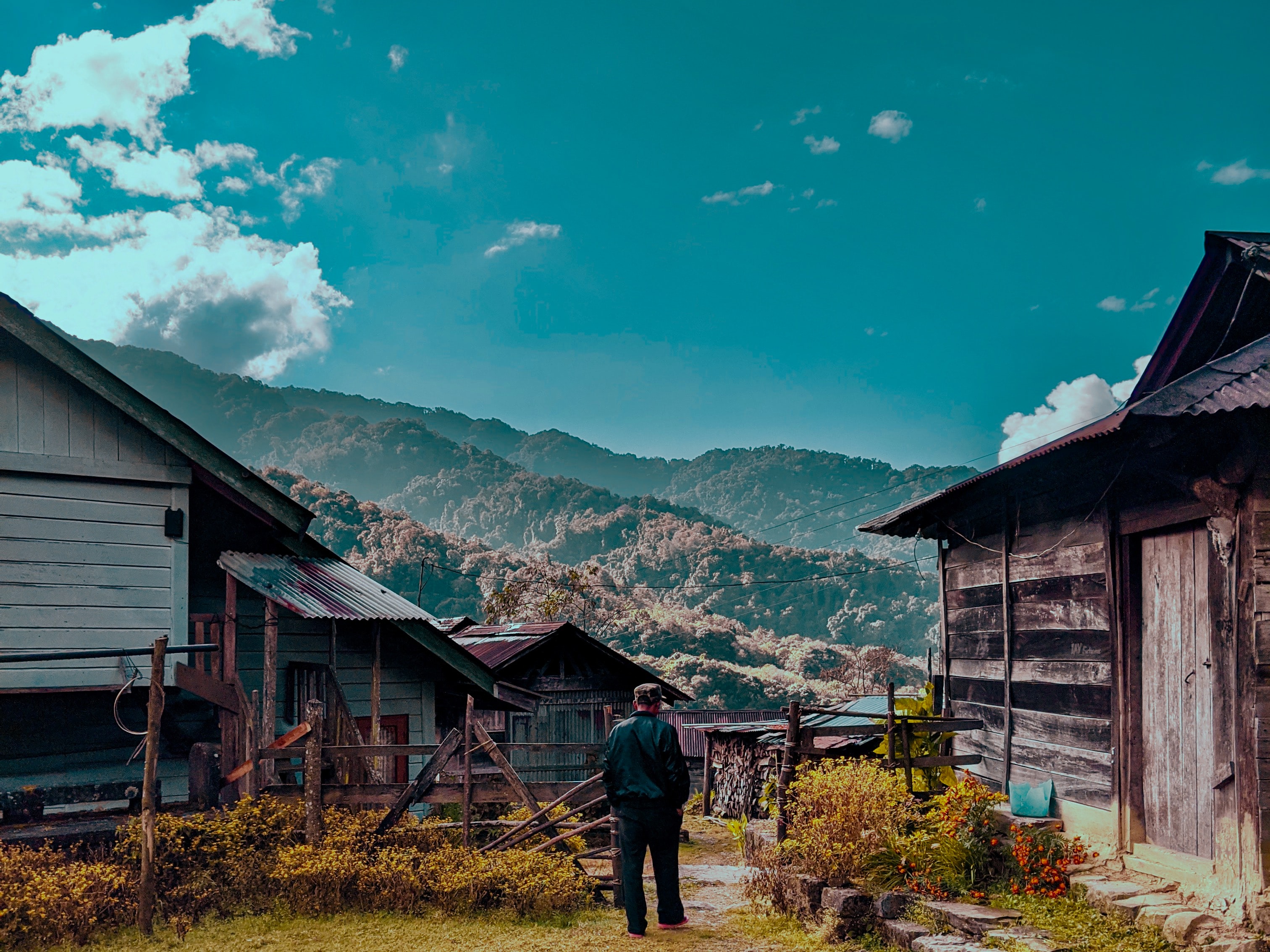
Arunachal Pradesh
Part 1: Introduction and Overview, Itanagar, Bhalukpong
Part 2: Bomdila, Tawang
Part 3: Ziro, Yinkiong, Mechuka, Roing, Tirap
Part 4: Khonsa, Changlang, Miao, Anini, Pasighat, Aalo, Daporijo, Anjaw, Tezu

Photo by Nilotpal Kalita on Unsplash

Assam
Part 1: Introduction and Overview, Guwahati, Dispur
Part 2: Kokrajhar, Bongaigaon, Goalpura, Barpeta, Nalbari, Hajo, Sualkuchi
Part 3: Darrang, Mayong and Morigaon, Nagaon, Tezpur, Jorhat
Part 4: Sivasagar, Majuli, Dhemaji, Dibrugarh, Tinsukia, Digboi
Part 5: Sadiya, Haflong, Jatinga, Diphu, Karimganj, Hailakandi, Silchar
Part 6: Raimona National Park, Manas National Park, Orang National Park, Kaziranga National Park, Nameri National Park, Dibru Saikhowa National Park, Dihing Patkai National Park

Photo by ARTO SURAJ on Unsplash

Bihar
Part 1: Introduction and Overview
Part 2: Patna
Part 3: Hajipur, Nalanda
Part 4: Rajgir, Sasaram, Kaimur
Part 5: Bodh Gaya, Vaishali
Part 6: Muzzafarpur, Sitamarhi, Madhubani, Lauriya Nandangarh, Bhagalpur, Valmiki National Park Tiger Reserve and Wildlife Sanctuary

Photo by Ayiman Mohanty on Unsplash

Chhattisgarh
Part 1: Introduction and Overview, Raipur, Champaran
Part 2: Bhilai, Durg, Rajnandgaon, Chirmiri, Madku Dweep, Bhoramdeo Temple, Guru Ghasidas National Park
Part 3: Achanakmar Tiger Reserve, Bilaspur, Raigarh, Korba, Ambikapur, Barnawapara Wildlife Sanctuary, Mainpat, Malhar
Part 4: Mahasamund, Sirpur, Rajim, Jagdalpur, Dhamtari, Dhamtari, Dantewada, Kanger Ghati National Park

Dadra and Nagar Haveli and Daman and Diu
Part 1: Introduction and Overview, Daman
Part 2: Diu
Part 3: Dadra and Nagar Haveli

Delhi
Part 1: Introduction and Overview, India Gate, Red Fort, Qutub Minar, Jantar Mantar, Rajghat
Part 2: Iron Pillar, National War Memorial, Rajpath, Rashtrapati Bhavan, Agrasen Ki Baoli, Ghalib Ki Haveli, Alai Darwaza/Minar, Bhool Bhulaiya ka Mahal, Purana Qila,
Part 3: Tughlaqabad Fort. Siri Fort, Feroza Kotla Fort, Swaminarayan Akshardham Temple, ISKON Mandir, Birla Temple, Chhatrapur Temple, Kalkaji Temple, Kali Bari Temple, Yogmaya Temple, Sri Digambar Jain Lal Mandir, Lotus Temple
Part 4: Jama Masjid, Quwwat-ul-Islam Mosque, Fatehpuri Masjid, Jamali Kamali Mosque and Tomb, Nizamuddin Dargah, Humayun’s Tomb, Safdarjung’s Tomb, Isa Khan’s Tomb, Hijron ka Khanqah, Nicholson Cemetery
Part 5: Gurudwara Bangla Sahib, Gurudwara Sis Ganj Sahib, Rakab Ganj Gurdwara, Sunder Nursery, Lodhi Gardens, Garden of Five Senses, National Rose Garden, Mehrauli Archaeological Park, Pradhanmantri Sangrahalaya, National Museum, Nehru Memorial Museum and Library, Rashtrapati Bhavan Museum, Indian War Memorial Museum, National Handicrafts Museum
Part 6: Indira Gandhi Memorial Museum, Sanskriti Museums, Charkha Museum, Sulabh International Museum of Toilets, Shankar’s International Dolls Museum, Museum of Archaeology, National Railway Museum, Museo Camera, National Gallery of Modern Art, Kiran Nadar Museum of Art, Museum of Illusions, National Zoological Park, National Bal Bhavan, Connaught Place, Chandni Chowk, Dilli Haat, Sarojini Market, Lajpat Nagar, Majnu ka Tila, Pragati Maidan

Photo by Sarang Pande on Unsplash

Goa
Part 1: Introduction and Overview
Part 2: North Goa, Vagator Beach, Anjuna Beach, Calangute Beach, Sinquerim Beach, Candolim Beach, Arambol Beach, Mandrem Beach, Morjim Beach, Miramar Beach, Siridao Beach, Bogdeshwara Temple, Mangeshi Temple, Mahalaxmi Temple, Fort Aguada, Chapora Fort, Reis Magos Fort, Basilica of Bom Jesus, Church of Our Lady of Immaculate Conception, Chapel of St. Catherine, Church of Mae De Deus, Goa State Museum, Houses of Goa Museum, Museum of Christian Art, Casino Palms, Chorao Island, Harvalem Waterfalls
Part 3: South Goa, Butterfly Beach, Betalbatim Beach, Agonda Beach, Mobor Beach, Hollant Beach, Palolem Beach, Cansaulim Beach, Colva Beach, Talpona Beach, Kakolem Beach, Benaulim Beach, Our Lady of Remedios Church, Saviour of the World Church, St. Alex Church, Shantadurga Temple, Tambdi Surla Mahadev Temple, Chandreshwar Bhoothnath Temple, Naval Aviation Museum, Goa Chitra Museum, Big Foot Museum, The Grande Island, Pequeno Island, Bhagwan Mahaveer Wildlife Sanctuary, Netravali Wildlife Sanctuary, Cotigao Wildlife Sanctuary, Dudhsagar Falls, Bamanbudo Waterfalls, Netravali Bubbling Lake, Cabo de Rama Fort, Chandor

Photo by Parth Kateliya on Unsplash

Gujarat
Part 1: Introduction and Overview
Part 2: Surat, Vapi, Udvada, Valsad, Bilimora, Navsari, Bharuch, Saputara
Part 3: Ahmedabad, Lothal, Vadodara, Anand
Part 4: Gandhinagar, Patan, Mehsana, Palanpur
Part 5: Rajkot, Jamnagar, Dwarka, Porbandar, Junagadh, Bhavnagar, Palitana,
Part 6: Kutch, Bhuj, Mandvi, Rann of Kutch, Anjar

Photo by Sooraj Dev on Unsplash

Haryana
Part 1: Introduction and Overview, Gurugram, Manesar, Sohna
Part 2: Faridabad, Nuh, Murthal, Rohtak, Meham
Part 3: Hisar, Panipat, Karnal
Part 4: Kurukshetra, Ambala
Part 5: Panchkula, Morni Hills, Narnaul

Photo by Naman Pandey on Unsplash

Himachal Pradesh
Part 1: Introduction and Overview, Shimla, Kufri, Fagu, Theog, Hatkoti Valley, Chanshal Valley
Part 2: Chail, Solan, Barog, Nahan, Sirmour, Paonta Sahib, Shoghi, Kasauli, Arki, Nalagarh, Dadasiba, Bilaspur, Dalhousie,
Part 3: Kangra, Khajjiar, Bharmour, Chamba, Tattapani, Jalori Pass, Jibhi, Mandi
Part 4: Trithan Valley, Bhuntar, Sainj Valley, Barot, Bir Billing, Palampur, Kasol, Nagar, Manikaran Sahib, Tosh, Parvati Valley
Part 5: Kullu, Manali, Dharamsala, McLeodganj
Part 6: Keylong, Pin Valley National Park, Spiti Valley, Narkanda, Mashroba, Kinnaur, Sarahan, Sangla Valley, Kalpa, Pangi Valley, Nako

Jammu & Kashmir and Ladakh
Part 1: Introduction and Overview, Kashmir, Srinagar, Gulmarg, Sonmarg, Pahalgam, Amarnath, Pulwama, Kupwara, Poonch, Anantnag, Baramulla, Dachigam National Park
Part 2: Jammu, Patnitop, Rajouri, Udhampur, Kathua, Katra, Vaishno Devi, Kishtwar
Part 3: Ladakh, Leh, Leh Palace, Thiksey Gompa, Pangong Lake, Magnetic Hill, Nubra Valley and Khardung La Pass, Kargil, Drass, Hemis High Altitude Wildlife Sanctuary, Lamayuru, Lake Tso Moriri

Photo by Aryan Singh on Unsplash

Jharkhand
Part 1: Introduction and Overview, Ranchi
Part 2: Hazaribagh, Bokaro Steel City
Part 3: Jamshedpur, Neterhat
Part 4: Dhanbad, Shikarji, Deoghar, Dumka

Karnataka
Part 1: Introduction and Overview
Part 2: Bengaluru
Part 3: Mysuru, Mangalore, Belgaum
Part 4: Hubli-Dharwad, Gulbarga, Bidar, Badami, Bijapur, Hassan, Shimoga, Hampi, Sharavathi Valley Wildlife Sanctuary, Bhadra Wildlife Sanctuary, Brahmagiri Wildlife Sanctuary, Nagarhole National Park, Bandipur National Park, Ranganathittu Bird Sanctuary, Jog Falls, Shivanasamudra Falls, Kodasalli Backwater
Part 5: Coorg, Chikmagalur, Sakleshpur, Kudremukh, Kemmanagundi, Kotagiri, Masinagudi, Devarayanadurga, Karwar, Devbagh, Kumta, Netrani Island, Murudeshwar, Maravanthe, St. Mary’s Island, Udipi
Part 6: Udipi, Kollur, Sringeri, Dharmasthala, Horanadu, Talakadu, Belur, Shravanbelagola, Gokarna, Murudeshwar, Koodli, Srirangapatna, Pattadakal, Aihole, Kalasa

Kerala
Part 1: Introduction and Overview
Part 2: Kasaragod, Kannur, Kozhikode
Part 3: Wayanad, Mallapuram, Palakkad
Part 4: Thrissur, Ernakulam, Alappuzha
Part 5: Kottayam, Idukki, Patanamthitta
Part 6: Kollam, Tiruvanathapuram

Photo by Sachin Benny on Unsplash

Lakshadweep Islands
Part 1: Introduction and Overview
Part 2: Aminidivi, Cora Divh, Sesostris Bank, Bassas de Pedro, Cherbaniani Reef, North Islet, Byramgore Reef, Chetlat Island, Bitra Par, Kilthan Island, Kadmat Island, Kadmat Beach, Elikalpeni Bank, Perumal Par, Amini Island
Part 3: Laccadive, Amindivi, Agatti Island, Bangaram, Pakshipitti, Andrott Island, Kavaratti, Kalpeni, Suheli Par
Part 4: Minicoy, Maliku Atoll, Investigator Bank, Viringili

Madhya Pradesh
Part 1: Introduction and Overview
Part 2: Bhopal
Part 3: Indore, Ujjain, Alampur
Part 4: Maheshwar, Omkareshwar, Mandu, Burhanpur
Part 5: Chanderi, Shivpuri, Orchha, Khajurao
Part 6: Gwalior, Jabalpur, Bhedaghat, Panchmarhi, Amarkantak, Bandhavgarh National Park, Kanha National Park, Pench National Park

Photo by Raj Rana on Unsplash

Maharashtra
Part 1: Introduction and Overview, Mumbai
Part 2: Pune
Part 3: Matheran, Lonavala, Khandala, Rajmachi, Lavasa, Kamshet, Mahabaleshwar, Panchgani, Kaas Plateau, Maval, Bhandardara, Chikhaldara, Bhimashankar
Part 4: Amravati, Aurangabad, Ajanta and Ellora Caves, Lonar, Chiplun, Kolhapur, Nagpur, Nanded, Nashik, Triambakeshwar, Shirdi, Shani Shinganapur, Raigad, Ratnagiri, Satara
Part 5: Dahanu, Alibaug, Kashid, Diveagar, Harihareshwar, Murud, Karade, Ganpatipule, Tarkarli, Vengurla, Tadoba National Park, Bhamragarh Wildlife Sanctuary, Chandoli National Park, Gugumal National Park, Navegaon National Park, Malvan Marine Sanctuary, Rehekuri Blackbuck Sanctuary

Photo by WAIKHOM JAMES on Unsplash

Manipur
Part 1: Introduction and Overview, Imphal
Part 2: Moirang, Tamenglong, Thoubal
Part 3: Chandel, Tengnoupal, Moreh, Kaina, Ukhrul, Mount Koubru, Baruni Hill, Thangjing Hill, Sadu Chiru Waterfall

Photo by Utkarsh B on Unsplash

Meghalaya
Part 1: Introduction and Overview
Part 2: Shillong
Part 3: Mawphlang, Cherrapunji, Nongpoh, Mawsynram
Part 4: Jowai, Mawlynnong, Dawki, Balpakram National Park, Williamnagar, Baghmara, Tura
Part 5: Khasi Hills, Jaintia Hills, Garo Hills

Photo by Vanlaldin puia on Unsplash

Mizoram
Part 1: Introduction and Overview, Aizwal, Falkawn Village
Part 2: Reiek, Hmuifang, Kolasib, Tamdil or Tam Lake, Mamit, Vantawng Falls, Serchhip
Part 3: Dampa Tiger Reserve, Lunglei, Champhai
Part 4: Murlen National Park, Phawngpui, Phawngpui National Park, Saiha,

Photo by Suraj Jadhav on Unsplash

Nagaland
Part 1: Introduction and Overview, Dimapur
Part 2: Kohima
Part 3: Mokokchung, Tuensang, Phek, Mon, Pfutsero

Photo by Ayiman Mohanty on Unsplash

Odisha
Part 1: Introduction and Overview, Bhubaneshwar, Dhauli
Part 2: Cuttack, Rayagada, Daringbadi, Berhampur, Jeypore
Part 3: Puri, Baripada, Sambalpur, Rourkela
Part 4: Konark, Paradeep, Gopalpur, Chandipur
Part 5: Lake Chilika, Tikarpada Wildlife Sanctuary, Satkosia Tiger Reserve, Bhitarkanika National Park & Wildlife Sanctuary, Simlipal National Park, Duduma Waterfalls, Chandaka Forest, Kotgarh Elephant Reserve, Karlapat Wildlife Sanctuary

Photo by nullvoid on Unsplash

Puducherry
Part 1: Introduction and Overview, Puducherry
Part 2: Karaikal, Mahé, Yanam

Photo by Prerna Sharma on Unsplash

Punjab
Part 1: Introduction and Overview
Part 2: Chandigarh, Sirhind
Part 3: Rupnagar, Patiala
Part 4: Ludhiana, Bhatinda
Part 5: Jalandhar, Kapurthala
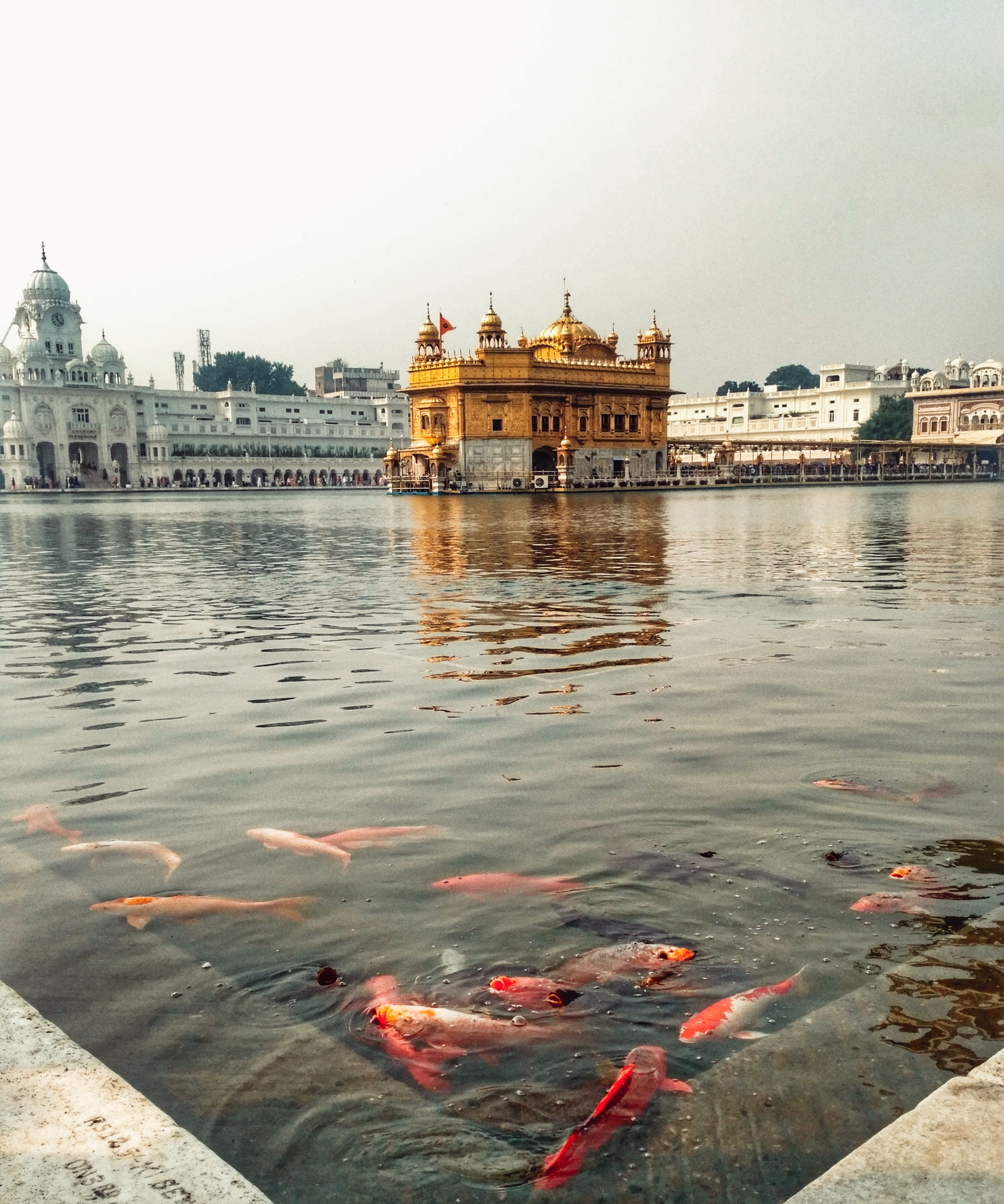
Part 6: Pathankot, Amritsar

Rajasthan
Part 1: Introduction and Overview, Jaipur, Udaipur
Part 2: Jodhpur, Jaisalmer, Sawai Madhopur, Pushkar

Photo by Apurba Nag on Unsplash

Sikkim
Part 1: Introduction and Overview
Part 2: Gangtok
Part 3: Tinkitam Rayong, Namchi, Barsey Rhododendron Sanctuary, Kabi Longstok, Tendong Hill, Aritar, Zuluk, Pangolakha Wildlife Sanctuary, Pelling, Yuksom, Ravangla
Part 4: Maenam Wildlife Sanctuary, Geyzing, Yangtey, Borong, Mangan, Chopta Valley, Lachung, Lachen, Yumthang Valley, Thangu Valley, Gurudongmar Lake, Cholamu Lake, Shingba Rhododendron Sanctuary, Khangchendzonga National Park, Fambong Lho Wildlife Sanctuary, Goecha La

Tamil Nadu
Part 1: Introduction and Overview, Chennai
Part 2: Coimbatore, Tiruchirappalli, Tiruppur, Tirunelveli
Part 3: Ooty, Kodaikanal, Yercaud, Coonoor, Yelagiri, Bellikkal
Part 4: Kanchipuram, Tiruvannamalai, Chidambaram, Vaitheeshwaran Kovil,
Part 5: Kumbakonam, Thanjavur, Swamimalai, Rameshwaram, Madurai
Part 6: Mahabalipuram, Kanyakumari, Mudumalai Wildlife Sanctuary, Hogenakkal Falls, Kutralam Falls

Photo by Aman Upadhyay on Unsplash

Telangana
Part 1: Introduction and Overview, Hyderabad Part 1
Part 2: Hyderabad Part 2
Part 3: Secunderabad
Part 4: Warangal, Nizamabad
Part 5: Khammam, Karimnagar, Adilabad, Mahbubnagar, Medak
Part 6: Nalgonda, Bhadrachalam, Koti Linga, Somasila, Vemulawada

Photo by Sourav Debnath on Unsplash

Tripura
Part 1: Introduction and Overview
Part 2: Agartala
Part 3: Kailashahar, Unakoti, Udaipur, Ambassa, Pilak Archaeological Sites, Chabimura, Mahamuni Pagoda, Manubankul, Buddhist Stupa, Boxanagar
Part 4: Baramura Eco Park, Kalapania Nature Park, Tepania Eco Park, Khumulwang Eco Park, Jampui Hills, Dumboor Lake, Dhalai, Rudrasagar Lake, Sepahijala Wildlife Sanctuary & Clouded Leopard National Park, Trishna Wildlife Sanctuary, Rajbari National Park, Rowa Wildlife Sanctuary, Gomati Wildlife Sanctuary

Uttar Pradesh
Part 1: Introduction and Overview, Noida, Loni, Ghaziabad, Meerut, Muzzafarnagar
Part 2: Hastinapur, Vrindavan, Mathura
Part 3: Fatehpur Sikri, Agra, Garhmukteshwar
Part 4: Aligarh, Firozabad, Jhansi, Piilbhit, Bithoor, Naimisharanya
Part 5: Kanpur, Lucknow
Part 6: Ayodhya, Sravasti, Prayagraj
Part 7: Chitrakoot, Vindhyachal, Varanasi, Sarnath, Kushinagar

Photo by Akshay syal on Unsplash

Uttarakhand
Part 1: Introduction and Overview, Dehradun
Part 2: Mussoorie, Dhanaulti
Part 3: Auli, Joshimath, Chopta, Tungnath, Ukhimath, Lansdowne, Nainital
Part 4: Sattal, Bhimtal, Naukuchiatal, Kausani, Ranikhet, Almora, Binsar, Jalna, Kasar Devi, Jageshwar, Champawat, Munsiyari, Pithorgarh
Part 5: Bageshwar, Chamoli, Mana, Badrinath, Pandukeshwar, Hemkund Sahib, Kedarnath, Gomukh, Madhyamaheshwar, Gangotri, Gauri Kund, Yamunotri
Part 6: Rudranath, Guptakashi, Nandprayag, Rudraprayag, Devprayag, Rishikesh, Haridwar, Roopkund Lake, Nelong Valley, Gangotri National Park, Kedarnath Wild Life Sanctuary, Valley of Flowers, Nanda Devi National Park, Govind Pashu Vihar Wildlife Sanctuary, Rajaji National Park, Jim Corbett National Park

Photo by Nitish Narayan on Unsplash

West Bengal
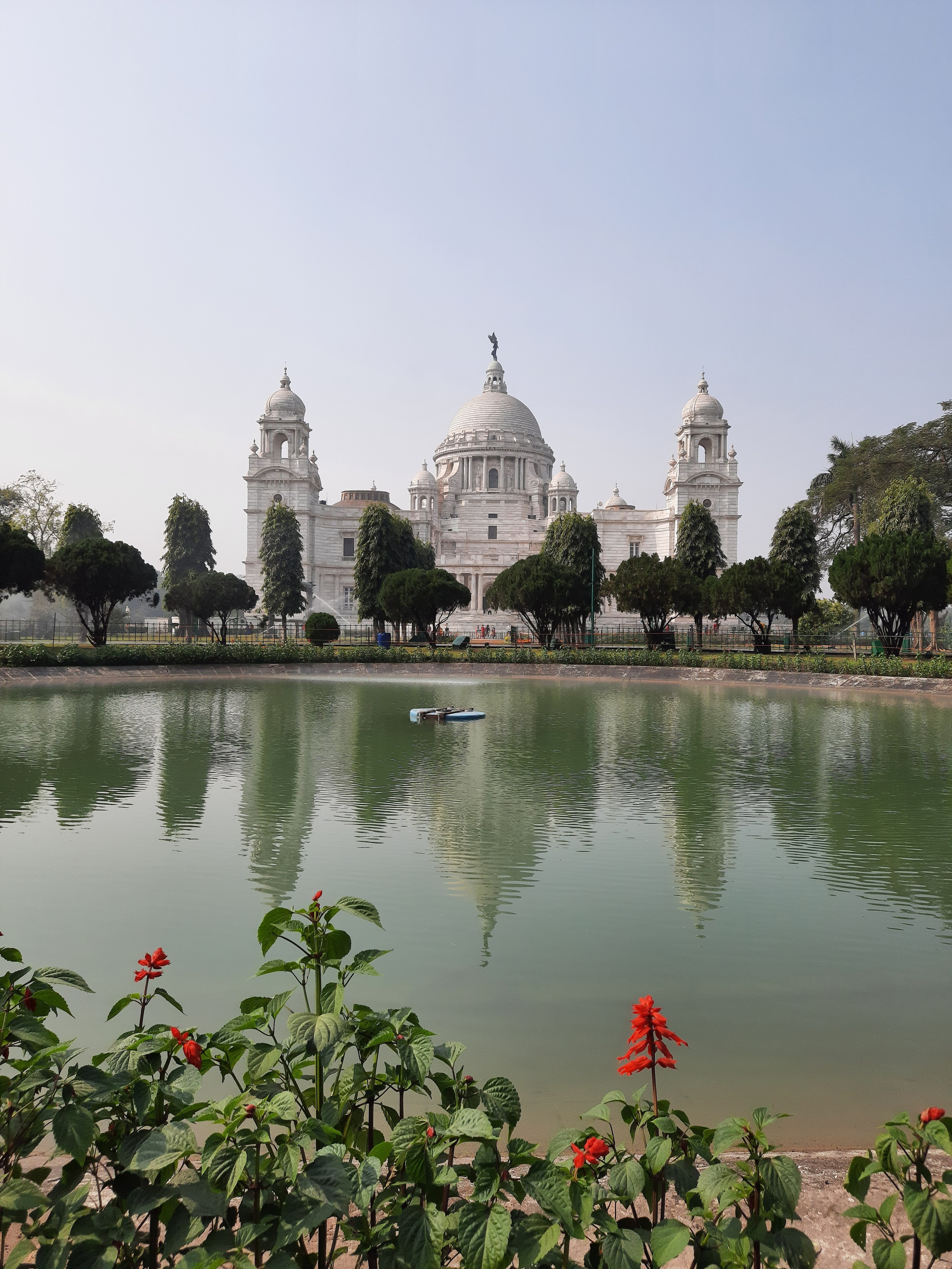
Part 1: Introduction and Overview, Kolkata
Part 2: Howrah, Barrackpore, Chandan Nagar, Chinsurah, Bardhaman, Haldia, Midnapore
Part 3: Shantiniketan, Durgapur, Jhargram, Asansol, Murshidabad, Mukutmanipur, Malda, Siliguri, Jalpaiguri, Cooch Behar, Bagdogra
Part 4: Kurseong, Mirik, Darjeeling, Tinchuley, Dooars, Kalimpong
Part 5: Rishyap, Lava and Lolegaon, Buxa Tiger Reserve, Rajabhatkawa, Jaldapara National Park, Jaldhaka, Chapramari Wildlife Sanctuary, Gorumara National Park, Neora Valley National Park, Lataguri, Purulia, Sonajhuri Forest, Deulti, Sundarbans, Mayapur, Nabadwipa, Bakreswar
Part 6: Bankura, Bishnupur, Jayrambati, Kamarpukur, Tarapith, Falta, Raichak, Taki, Piyali Island, Machranga Dwip, Kakdwip, Mousuni Island, Bakkhali, Junput, Mandarmani, Tajpur, Shankarpur

Fabrics and Sarees of India Part 2

In this part, we continue to check out more fabrics and sarees across India.

Karnataka

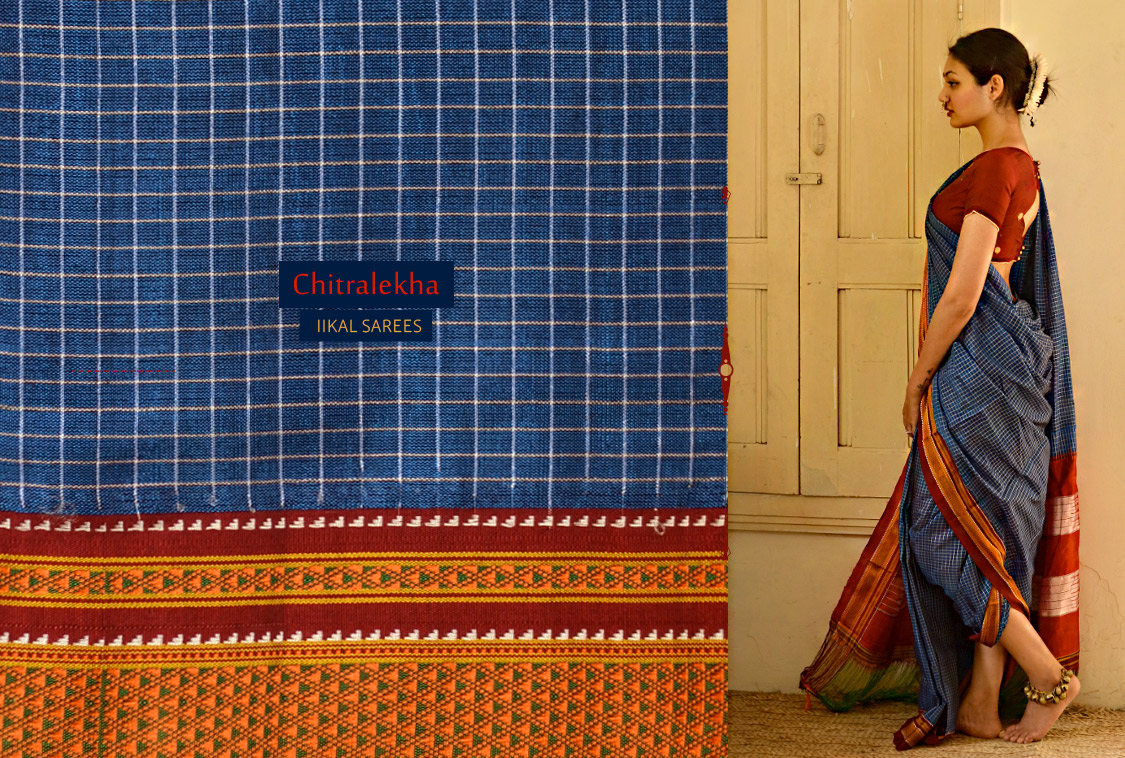
Ilkal Sarees: Known because it is produced in the town of Ilkal, an ancient weaving centre since the 8th century, the uniqueness of the Ilkal saree is in the joining of the body warp with the pallu warp with a series of loops locally called the tope teni technique. The border colour is very dominating and is usually red or maroon. The distinctive feature of the Ilkal saree is the use of a form of embroidery called Kasuti. The designs used in Kasuti reflect traditional patterns like palanquins, elephants, and lotuses which are embroidered onto the saree. The main body design is usually made up of squares and rectangles. The Ilkal saris are woven using cotton warp on the body and art silk warp for the border and pallu portion. In some cases instead of art silk, pure silk is also used. The Tope Teni seragu has been regarded as a state symbol and was greatly respected during festival occasions. The sarees that are made for bridal wear are made of a particular colour called Giri Kumukum which is associated with the sindoor worn by the wives of the priests in this region. The weaving of the Ilkal saree is a household enterprise involving the participation of female members. One Ilkal saree takes about seven days to weave and are produced on pit looms.

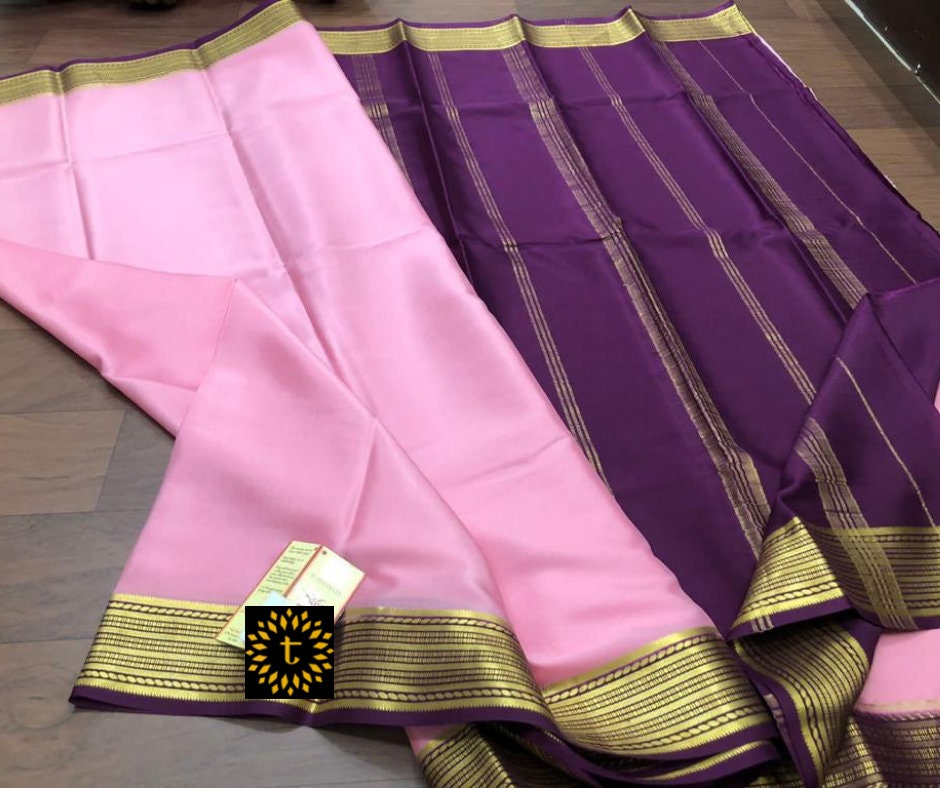
Mysore Silk: One of Karnataka’s most famous exports, the Mysore silk is synonymous with the city of Mysuru and the silk factory was founded in 1912 by Sri Nalvadi Krishnaraja Wodeyar, the Maharaja of Mysore. Initially, the silk fabrics were manufactured & supplied to meet the requirements of the royal family and ornamental fabrics to their armed forces. After Indian independence, the Mysore State Sericulture Dept took control of the silk weaving factory. The saree zari contains 65% pure silver and 0.65% of gold, which is also the most distinct feature of the saree, along with the use of genuine silk that gives it a natural sheen and rich texture. Karnataka produces almost 45% of the country’s mulberry silk. Mysore silk has also received geographical identification. Mysore Silks are also one of the most expensive silk sarees in India and this has led to the production of duplicate Mysore silk saree production and sales. To avoid these issues, KSIC has implemented a unique ID, hologram-based design, and unique identification barcodes woven on each saree produced.

Kerala

Kasavu Saree: Symbolic of Kerala’s tradition and culture, the traditional Kasavu saree was made by hand from cotton yarn with borders made of golden threads. Believed to have originated in the Buddhist era, the white and gold sarees are unique due to their natural hues, texture and gold border which adds to their elegance. No occasion in Kerala feels complete without the Kasavu saree. The term kasavu refers to the zari or gold thread used in the border of the saree and the name comes from a material used in the weaving and production of these sarees. The origin of the kasavu saree can be traced back to when women would wear a two-piece cloth called settu mundu, more popularly known as the mundum neriyathum. The mundum neriyathum rose in popularity during the Buddhist era, and its design has been inspired by the Greco-Roman attire, Palmyrene, a long piece of unstitched cloth with a coloured border.

The identity of the saree comes from the geographical cluster they are associated with. The Indian government has identified three clusters in Kerala – Balaramapuram, Chendamangalam and Kuthampully – that have been given a Geographical Indication or GI tag and all three clusters produce kasavu sarees. A plain saree with a simple border takes roughly around three to five days. Ones with motifs and heavier work take longer than that. The sarees are priced depending on the time taken on their production, along with the gold used in the zari or kasavu.

Madhya Pradesh

Chanderi: Emerging between the 2nd and 7th centuries, Chanderi sarees are produced from three types of fabrics – pure silk, cotton and silk cotton and are synonymous with the town of Chanderi which is on the boundary of Malwa and Bundelkhand. In the 11th century, the trade locations between Malwa, Medwa, central India and south Gujarat increased the region’s importance. Around 1350, Koshti weavers from Jhansi migrated to Chanderi and settled there and the textile business of Chanderi reached its peak during the Mughal period. Traditional coin, floral art, peacocks and modern geometric designs are woven into different Chanderi patterns. The saris are among the finest in India and are known for their gold and silver brocade or zari, fine silk, and opulent embroidery.

Maheshwari: Originating from the town of Maheshwar, the Maheshwari saree is made of silk and cotton in a variety of designs woven using brocade and zari. Dating to the 18th century, the sarees were initially made of pure silk, but over time, cotton also came to be used. An interesting story behind the origin of these sarees is that a famous queen had once ordered a large number of artisans and craftsmen from Surat and Malwa to design a unique saree of 9 yards, later termed the Maheshwari saree. These cloth pieces were used as special gifts for the royal guests of the palace. A unique feature of the Maheshwari saree is that each has a specific name of its own, which indicates its distinctness. The sarees may be plain at the centre and have neatly designed borders, or they may have different variations of stripes and checks. The sarees fall under 5 broad categories namely Chandratara, Chandrakala, Beli, Baingani Chandrakala and Parbi. The Baingani Chandrakala and Chandrakala are plain ones, while the Beli, Chandratara, and Parbi come with stripes or checks.

Maharashtra

Karvati: Hailing from the Vidarbha region, Karvati silks are made from Tussar with a grainy, textural feel. What is unique about the silk used in Karvati saris is that it is exclusive to this specific region that is rich in high-quality silk cocoons, straight from the wild. The tribes hailing from this area assume the responsibility of protecting the silk cocoons until they are ready to be harvested. The Tussar is unlike any other silk; it has a unique shade of deep yellow-brown.

The word karvat is a Marathi term that refers to a saw-tooth pattern. Karvati is the name lent to the style of the border rather than the fabric itself. What is different about the saree is the technique and the mixed usage of yarn. The border is woven out of mercerized cotton yarns with traditional temple motifs of various sizes, using an extra warp while the rest of the sari is woven using pure, hand-reeled Tussar silk which provides a texture that has irregular stubs all over. The saree is woven using a three-shuttle, tapestry style of weaving with a pit loom mounted with a wooden lattice dobby in the Nagpur style on the top of the loom. This means that it uses three different styles of weaving at the same time.

Paithani: Dating to the Satvahana Dynasty that ruled between the second century BC and the second century AD, Paithani sarees are fine silk handloom sarees get their name from the town in which they originated, Paithan in Aurangabad. Available in both six and nine yards, the most interesting part about the Paithani handloom is that both sides of the saree look the same, including the border and the pallu. This feature is the telltale sign of a handloom Paithani. As Paithani sarees are woven from naturally dyed threads, they can usually be found only in basic colours. Each saree usually has two dominating colours, one on the saree and the other on the border and pallu. The Paithani is characterised by borders of an oblique square design, and a pallu with a peacock design. Among other varieties, single-coloured and kaleidoscope-coloured designs are also popular. The kaleidoscopic effect is achieved by using one colour for weaving lengthwise and another for weaving width-wise.

The Paithani is a sari made of silk and zari with a plain weave, with weft figuring designs according to the principles of the tapestry. Traditionally, Paithanis had coloured, cotton muslin fields that often contained considerable supplementary zari patterning. However, in the 19th century, silk fields were also woven. Due to its proximity to the Ajanta caves, the influence of Buddhist paintings can be seen in the woven Paithani motifs. These sarees are made of silk in which there is no extra weft forming figures. Weaving could take between 18 and 24 months, depending upon the complexity of the design. In the days of Peshwas, the borders and the pallu were made of pure gold mixed with copper to give it strength spun into a fine wire called the zari. In recent times, zari is made of silver, coated with gold plating. In the border woven with a zari, ground-coloured silk patterns are added as supplementary weft inlay against the zari usually in the form of a flower or a creeping vine.

Odisha

Bomkai: Also known as the Sonepuri Saree, the Bomkai Saree is a handloom saree from the Bomkai village and has a GI tag. Usually made of cotton, these sarees are also made of silk for special occasions. During the time of Ramai Dev the then ruler of Patna, it was introduced in Sonepur. The borders and pallus are usually designed with fishes as it is believed to be a sign of success and affluence. The sari is normally dyed in red, black and white.

Khandua: A traditional bandha or ikat saree, Khandua is also known as Maniabandi or Kataki and is worn during weddings with a special type of fabric worn by Lord Jagannath which contain texts of the Geeta Govinda on them. The word Khandua in Odia translates to the cloth worn in the lower half of the body. Traditionally Kentuli Khandua is offered to Jagannath as lower cloth. The weaver communities of Maniabandha and Nuapatana of Cuttack traditionally wove this kind of fabric and during the rule of the Gajapatis, the sarees were made and transported to the Jagannath Temple. Nilakantha Deva, the King of Badakhemundi was offered khandua sari made of one piece of khandua silk called caukandika. Khandua is traditionally red or orange in colour with the red colour prepared naturally from the sal tree. The design motif has an auspicious elephant that represents Buddha surrounded by a trailing vine with peacocks in it, a large many-petaled flower, an animal  unique to Orissa known as Nabagunjara. The elephant in Khandua ikat from Nuapatana usually varies from elephant motives in ikat from the Sambalpuri saree as well as the ikat from other parts of Orissa. The Khandua has plain borders contrary to borders with motifs in the case of the other ikats from the state.

Pasapali: Also known as the Saktapar, the Pasapali saree is a bandha or Ikat handloom sari woven mainly in the Bargarh district. The name Pasapali is derived from pasa or gambling games using a chess board and these sarees have intricate check patterns of contrasting colours resembling the chess boards which gives it its name.

Sambalpuri: A traditional handwoven ikat where the warp and the weft are tie-dyed before weaving, the Sambalpuri saree is known for its incorporation of traditional motifs, all of which have deep symbolism in red, black and white that represent Odia culture. The high point of these sarees is the traditional craftsmanship of the Bandhakala, or the tie-dye art reflected in their intricate weaves, also known as Sambalpuri Ikkat. In this technique, the threads are first tie-dyed and later woven into a fabric, with the entire process taking many weeks. These sarees also have a Geographical Indication or GI tag associated with them. Traditionally, craftsmen created the ikats with images of flora or fauna or with geometrical patterns, but recently the ikats depict portraits and landscapes are also being designed. The unique feature of this form of designing is that the designs are reflected almost identically on both sides of the fabric. Once the fabric is dyed it can never be bleached into another colour. It is believed that this art migrated to western Odisha along with the Bhulia community who fled north India in 1192 after the fall of the Chouhan empire at the hands of the Mughals.

Punjab

Phulkari: Punjab’s folk embroidery, Phulkari which means floral work also includes motifs and geometrical shapes. In Punjabi, Phul means flower and Akari means the shape and so Phulkari means the shape and the direction of flowers which symbolise life. The main characteristics of Phulkari embroidery are the use of darn stitch on the wrong side of coarse cotton cloth with coloured silken thread. The traditional varieties of Phulkaris are large items of cloth and include Chope, Tilpatr, Neelak and Bagh. Sometimes, the Bagh is given separate categorisation of its own as on other varieties of a Phulkari, parts of the cloth are visible, whereas, in a Bagh, the embroidery covers the entire garment so that the base cloth is not visible. Today, in contemporary designs, the simple and sparsely embroidered dupattas and shawls made for everyday use, are referred to as phulkari, while clothing items that cover the entire body, made for special and ceremonial occasions such as weddings are called baghs or large gardens. The Phulkari continues to be an integral part of Punjabi weddings to the present day.

In the past, as soon as a girl was born, mothers and grandmothers would start embroidering Baghs and Phulkaris, which were to be given away at the time of her marriage. Depending on the status of the family, the parents would give a dowry of 11 to 101 Baghs and Phulkaris which were also passed from one generation to the next as heirlooms. The hallmark of Phulkari is making innumerable patterns by using long and short darn stitches. There were no pattern books and embroidery was worked entirely from the reverse of the fabric and the designs were not traced. Techniques and patterns were not documented but transmitted from word of mouth and each regional group was identified with the style of embroidery or design. The most favoured colour was red and its shades. Animals and birds represented success, beauty, pride, and goodwill and different fruits symbolised wealth, prosperity, and fertility. Wheat and barley stalks with ears were also common motifs. Silk and mulmul or soft cotton muslin fabrics were used because of their purity and longevity and it was believed that the virtue and character of a woman gave shape to the Phulkari.

There are different theories about the origin of Phulkari. One such belief is that this embroidery was prevalent in different parts of the country as far back as the 7th century, but survived only in Punjab. Motifs similar to the ones found in Phulkari are also found in Kashida of Bihar and some of the embroideries of Rajasthan. Another thought is that this style of embroidery came from Iran where it was called Gulkari, also meaning floral work.

Rajasthan

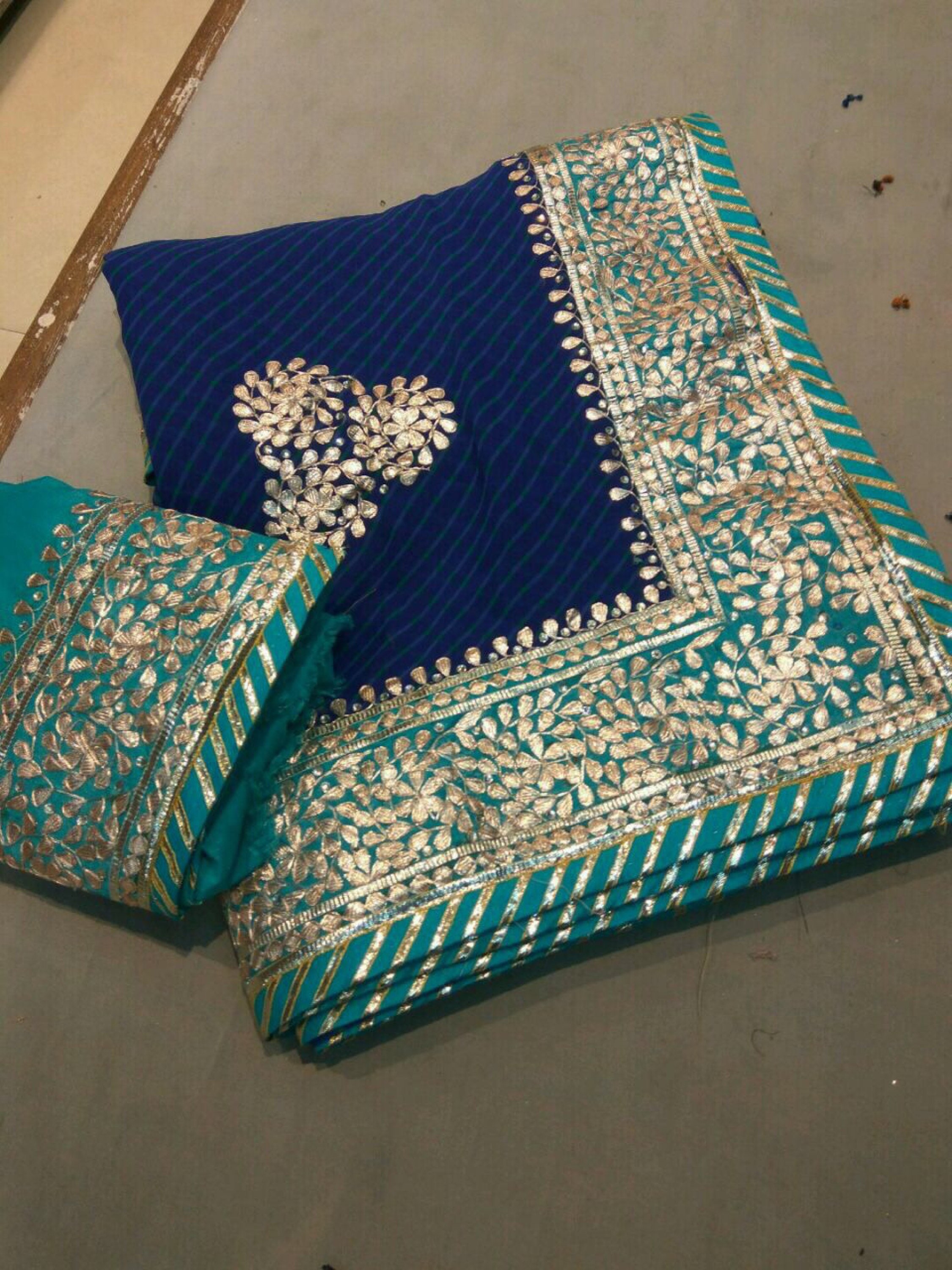
Gota Patti: Gota patti or gota work is a type of Indian embroidery that originated in  Rajasthan. Small pieces of zari ribbon are applied onto the fabric with the edges sewn down to create elaborate patterns. Gota embroidery is used extensively in South Asian weddings and formal clothes. Originally real gold and silver metals were used to embroider, but these were eventually replaced by copper coated with silver as it would become very expensive and today, even more, inexpensive options are available.

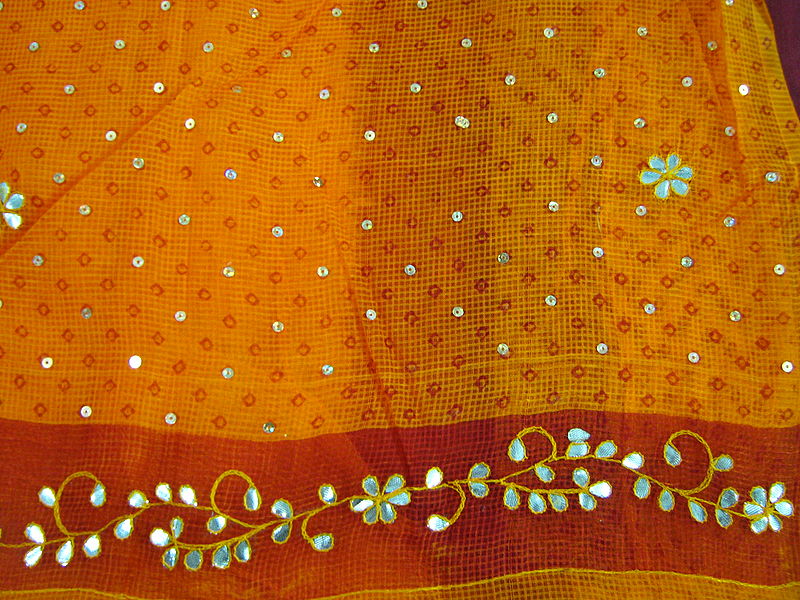
Kota Doriya: A handloom fabric, Kota Doriya is woven on a traditional pit loom in such a way that it produces square checks pattern on the fabric. The delicately wrought checks are locally known as khats. Onion juice and rice paste are smeared onto the yarn making it so strong that no additional finishing is needed. Kota Doriya sarees are made of pure cotton and silk and have square-like patterns known as khats on them. The chequered weave of a Kota sari is very popular with a very fine weave and weighs very little.

It is said that Jhala Zalim Singh of Kotah brought weavers from Mysore, in the mid-17th century, as they wove a characteristic small squared lightweight cotton fabric that looked like graph paper and was suitable for turbans. Since the weavers had come from Mysore, the fabric produced was called Kota Masuriya and was woven on narrow 8-inch looms to make the traditional paags or turbans and later on, broader looms were used for gossamer-light saris. Silk was added to the cotton in a 20:80 ratio approximately to give the sari strength. Nowadays hand woven silk Kota Doriya saris have also become popular. At first, the design known as a buti was small and regular but larger designs are now made according to fashion and taste. A very ornate saree can take one month to make and is an heirloom piece to be treasured. A genuine Kota Doriya sari will contain the GI mark woven in one corner indicating that it has been hand woven using real silver and gold thread.

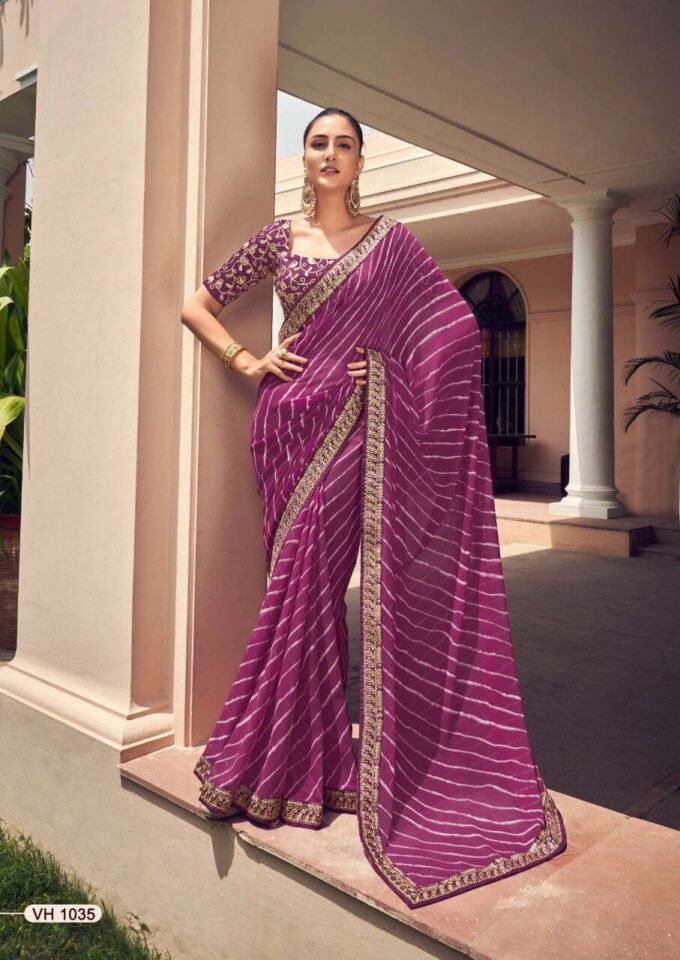
Leheriya: Leheriya is a traditional style of tie and dye practised in Rajasthan which is bright in colour, with a distinctive pattern. The word Leheriya comes from the word leher, meaning wave and the tie-dye technique results in diagonal stripes, which look like waves on the fabric. To create diagonal stripes, the craftsmen use a special method of resist-dyeing, where the material, is rolled up diagonally length-wise and then tied tightly at intervals before the actual dyeing process begins. Delicate, light fabrics such as thin cotton voile, fine silk and chiffon are preferred, as they allow the colour to penetrate through the rolled cloth. The fabric is wrapped around a wooden pole, usually while it is still wet or in a semi-dry state. The thread that ties up the fabric acts as a resist, yielding a pattern of diagonal stripes after dyeing. The thickness of the thread and the distance between the ties may be varied to obtain stripes of different widths.

An astounding variety of Leheriya fabrics are produced using this simple process. A panchranga or five-colour design is the most auspicious since the number five is considered special in Hindu scriptures. Another beautiful pattern is the satranga, flaunting the seven colours of the rainbow.

Tamil Nadu

Kanjeevaram: A silk saree which is worn on special occasions, the Kanjeevaram or Kanchipuram is made in the Kanchipuram region. This saree has also been recognised and given the Geographical Indication tag by the Indian government. The sarees are distinguished by their wide contrast borders with temple borders, checks, stripes and floral patterns as traditional designs. The patterns and designs in the Kancheepuram sarees are inspired by the images and scriptures in South Indian temples or natural features like leaves, birds and animals and have rich woven pallus showing the paintings of Raja Ravi Varma and the epics of Mahabharata and Ramayana. As of 2008, an estimated 5,000 families were involved in sari production with 25 silk and cotton yarn industries and 60 dyeing units in the region.

The saris are woven from pure mulberry silk thread, which along with the zari or gold thread comes from South India. To weave a Kanjeevaram saree. three shuttles are used. While the weaver works on the right side, his aide works on the left side shuttle. The border colour and design are usually quite different from the body. If the pallu has to be woven in a different shade, it is first separately woven and then delicately joined to the saree and the part where the body meets the pallu is often denoted by a zigzag line. In a genuine Kajeevaram silk saree, the body and the border are woven separately and then interlocked together. The joint is woven so strongly that even if the saree tears, the border will not detach and this differentiates the Kanjeevaram silk saree from the others. The sarees vary widely in price depending on the intricacy of work, colours, patterns, craftsmanship and materials used.

Koorainaadu: A traditional handloom weaving centre, Koorainadu sarees are by their checks and stripes pattern for which plain looms are used. It is made with pure silk and fine-twisted mercerized cotton yarn, in both warp and weft, in the ratio of 2:1, giving every Koorainadu saree a silk look. A peculiar characteristic of this saree is the formation of cotton checks by the interlacing of warp and weft during weaving which can be woven only by an experienced weaver. The sarees are hence stiffer and easier to hold the pleats which make them easier to wear. Koorainadu sarees are mostly worn by the womenfolk of the Hindu community green and yellow colours are used to make it auspicious and so it is often worn by married women wishing for long-lasting wedlock. The nine-yard Koorainadu saris are made with cotton or cotton and silk, in checks or striped patterns with a contrasting border in yellow. Saris with wide borders are called temple saris because they are offered to the deities in the temple.

Sungudi: Traditional cotton sarees from the Madurai area, Sungudi sarees are defined by the pattern of block prints and tie and dye designs. The origins of Sungudi can be traced back to the Sourashtrians who brought the art with them when they migrated to South India under the patronage of King Thirumalai Naicker in the 17th century. In Saurashtra, the word sungudi relates to the Sanskrit word sunnam meaning round, representing the circular dots that are printed on the fabric as a prominent and special motif.

The dots in the saris are said to be inspired by the cosmos which is why most Sungudi sarees remind one of a starry night. Tying the knots of the sari demands a great amount of precision from the craftsman. Ideally, a three-inch gap between the body and the zari border and also with the pallu lends a neat and symmetrical look to the crude dots. The designs are sometimes marked with a pencil on the fabric for ease in the process. The Sungudi art has seven basic designs that can be modified with different permutations and combinations to provide variety and highlight the creativity of the craftsman. The smaller the dot the better the expertise and this comes only with extensive practice and time. In the early days people used rudimentary methods like tying the knots with mustard or peppercorn seeds. Although this seems like a rural and unpolished method, its success lay in its simplicity. Authentic Sungudi is more than just tying knots. There is a lot of meticulousness that goes into producing a piece that looks effortless.  Once the knots are tied in the desired pattern, the sari is clamped which involves pleating, twisting, folding and wrapping it tightly before dyeing it for around two hours. Then the sari is subjected to two rounds of washing with cold water with an organic fixing agent followed by drying and ironing. The resultant fabric is a beautiful sheet like stars in the sky. In 2005 the art of Sungudi tie and dye got the GI recognition tag.

In the next part, the last one, we will do the last few states and also learn about some interesting saree drapes.

Festivals of India: Lohri

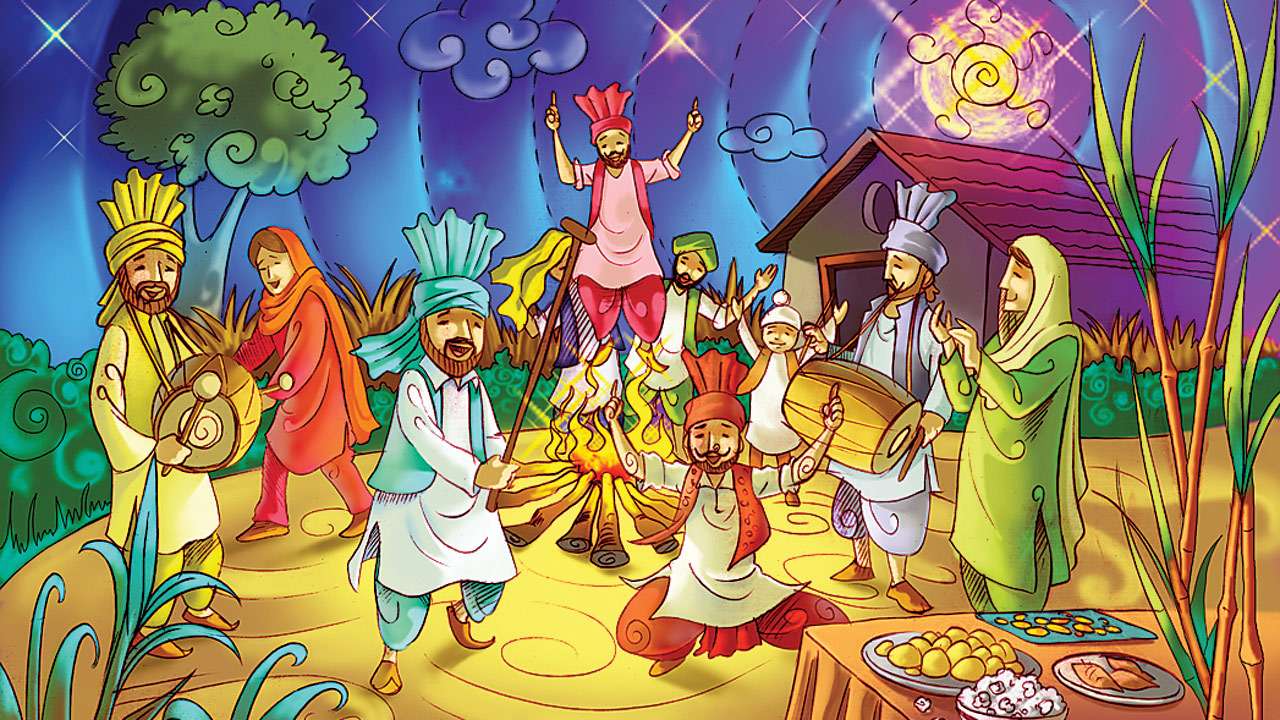
Today, Punjab will come together to celebrate the festival of Lohri. A celebration of the winter solstice, Lohri is is a popular Punjabi winter folk festival which is beloved in the Punjab region. The significance and legends about the Lohri festival are many and these link the festival to the region. It is believed by many that the festival commemorates the passing of the winter solstice. Lohri marks the end of winter, and is a traditional welcome of longer days and the sun’s journey to the northern hemisphere by Sikhs and Hindus in the region. Lohri is observed the night before Makar Sankranti, also known as Maghi, according to the solar part of the lunisolar Bikrami calendar and typically falls about the same date every year which is January 13 in the month of Paush and is set by the solar part of the lunisolar Punjabi calendar and in most years it falls around 13 January of the Gregorian calendar. An official restricted holiday in the Indian Punjab, Haryana and the National Capital Territory of Delhi, Lohri is not a holiday in the Pakistani Punjab, but It is, observed by Hindus, Sikhs and some Muslims there.

There are many folklores about Lohri which is the celebration of the arrival of longer days after the winter solstice. According to folklore, in ancient times Lohri was celebrated at the end of the traditional month when the winter solstice occurs with the day after Lohri celebrated as Maghi Sangrand.

The festival is ancient, originating in the regions near the Himalayan mountains where winter is colder than the rest of the subcontinent. Hindus traditionally lit bonfires in their yards after the weeks of the rabi season cropping work, socialised around the fire, sang and danced together as they marked the end of winter and the onset of longer days. After the night of bonfire celebrations, Hindus would mark Makar Sankranti and go to a sacred water body such as a river or lake to bathe. Over the years, however, instead of celebrating Lohri on the eve of when winter solstice actually occurs, Punjabis started to celebrate it on the last day of the month during which winter solstice takes place.

The festival’s ancient significance is both as a winter crop season celebration and a remembrance of the Sun deity or Surya. Lohri songs mention the Sun god asking for heat and thanking him for his return. Other legends explain the celebration as a folk reverence for the Lord of fire or Agni or the goddess of Lohri. Yet another folklore links Lohri to the tale of Dulla Bhatti. The central theme of many Lohri songs is the legend of Dulla Bhatti who lived in Punjab during the reign of Mughal emperor Akbar. He was regarded as a hero in Punjab, for rescuing Hindu girls from being forcibly taken to be sold in slave market of the Middle East. Amongst those he saved were two girls Sundri & Mundri, who gradually became a theme of Punjab’s folklore. As a part of Lohri celebrations, children go around homes singing the traditional folk songs of Lohri with Dulla Bhatti’s name included in them. One person sings, while others end each line with a loud “Ho!” sung in unison. After the song ends, the adult of the home is expected to give snacks and money to the singing troupe of youngsters.

Some people believe that Lohri has derived its name from Loi, the wife of Saint Kabir. There is a legend amongst some people that Lohri comes from the word ‘loh’, which means the light and the warmness of fire. Lohri is also called lohi in rural Punjab. According to another legend Holika and Lohri were sisters. While the former perished in the Holi fire, the latter survived with Prahlad. Eating of til or sesame seeds and rorhi or jaggery is considered to be essential on Lohri day. Perhaps the words til and rorhi merged to become tilorhi, which eventually got shortened to Lohri.

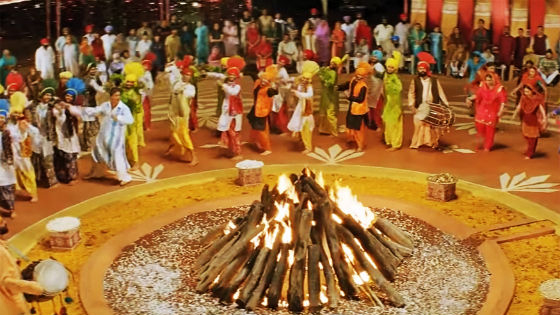
Lohri is celebrated with a bonfire, the lighting of which during this winter festival is an ancient tradition. Eating sheaves of roasted corn from the new harvest and celebrating the January sugarcane harvest is how Lohri is celebrated. Sugarcane products such as jaggery and gachak or peanut candy are central to Lohri celebrations, as are nuts which are harvested in January. The other important food items of Lohri are radishes and mustard greens. During this time, it is traditional to eat gajak, sarson da saag with makki di roti, radish, ground nuts and jaggery as well as til rice which is made by mixing jaggery, sesame seeds and rice. In some places, this dish is called Tricholi.

In various places of the Punjab, about 10 to 15 days before Lohri, groups of young and teenage boys and girls go around the neighbourhood collecting logs for the Lohri bonfire. In some places, they also collect items such as grains and jaggery which are sold and the sale proceeds are divided amongst the group. In some parts of Punjab, there is a popular “trick or treat” activity which is engaged in by boys to select a group member to smear his face with ash and tie a rope around his waist. The idea is for the selected person to act as a deterrent for people who refrain from giving Lohri items. The boys will sing Lohri songs asking for Lohri items. If not enough is given, the householder will be given an ultimatum to either give more or the rope will be loosened. If not enough is given, then the boy who has his face smeared will try to enter the house and smash clay pots or the clay stove.

During the day, children go from door to door singing folk songs. These children are given sweets and savories, and occasionally, money. Turning them back empty-handed is regarded inauspicious. Where families have newly-weds and new borns, the requests for treats increases. The collections gathered by the children are known as Lohri and consist of til, gachchak, crystal sugar, jaggery, peanuts and phuliya or popcorn. Lohri is then distributed at night during the festival. Sesame seeds, peanuts, popcorn and other food items are also thrown into the fire. For some, throwing food into the fire represents the burning of the old year and start the next year on Makar Sankranti

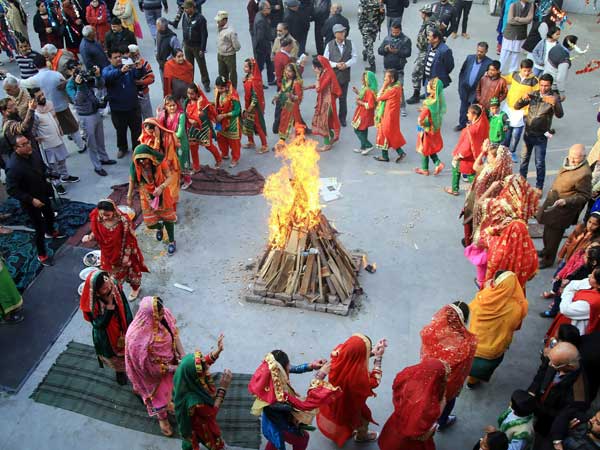
The bonfire ceremony differs depending on the location in Punjab. In some parts, a small image of the folk Lohri goddess is made with gobar or cattle dung decorating it, kindling a fire beneath it and chanting its praises. The folk Lohri goddess is believed to be an ancient aspect of the celebration, and is part of a long tradition of the winter solstice celebrations manifesting as a god or goddess. In other parts, the Lohri fire consists of cow dung and wood with no reference to the Lohri goddess. The bonfire is lit at sunset in the main village square. People toss sesame seeds, gur, sugar-candy and rewaries on the bonfire, sit around it, sing and dance till the fire dies out. Some people perform a prayer and go around the fire. This is to show respect to the natural element of fire, a tradition common in winter solstice celebrations. It is traditional to offer guests til, gachchak, jaggery, peanuts and phuliya or popcorn. Milk and water are also poured around the bonfire by Hindus to thank the Sun God and seeking his continued protection. Chants of “Aadar aye dilather jaye” meaning “may honour come and poverty vanish” are chanted while moving around the fire.

In the northern union territory of Jammu and Kashmir, Lohri in Jammu is special because of various additional traditions associated with it like Chajja making and dancing, hiran dance and preparing Lohri garlands. Young children prepare a replica of a peacock known as Chajja. They carry this Chajja and then go from one house to other house celebrating Lohri. In and around Jammu, a special hiran or deer dance is performed. Selected houses which have auspicious ceremonies prepare eatables and children wear special garlands made of groundnuts, dry fruits and candies on the day of the festival.

Among some sections of the Sindhi community, the festival is traditionally celebrated as Lal Loi. On the day of Lal Loee children bring wood sticks from their grandparents and aunts and light a fire burning the sticks in the night with people enjoying, dancing and playing around the fire. The festival is gaining popularity amongst other Sindhis where Lohri is not a traditional festival.